Livu Square Riga: Cat House & Guild Halls Guide
An Open Crossroads in Medieval Riga
Livu Square (Līvu laukums) spans roughly 0.5 hectares in the heart of Old Town Riga (Vecrīga). Framed by Kaļķu, Meistaru, and Zirgu streets, this public plaza sits within the UNESCO-inscribed Historic Centre of Riga. Unlike authentic medieval spaces such as Town Hall Square or Dome Square, which are defined by tight historical enclosures, Livu Square is a modern postwar opening. It functions as an airy crossroads linking Riga's central boulevard ring with the historic merchant quarter.
Riga self guided walking tour with Ciceru
2 hours9 stopsAudio guideStart any day, at your own paceTicket on your phone · 30-day refundFrom Lost River to Postwar Plaza
Through the 16th century, the ground beneath the square was occupied by the Rīdzene River, the vital trade waterway that gave Riga its name. Over centuries, the river narrowed, was built over, and was covered by residential and merchant blocks. The built environment stood until 1941, when World War II bombardment leveled the area.
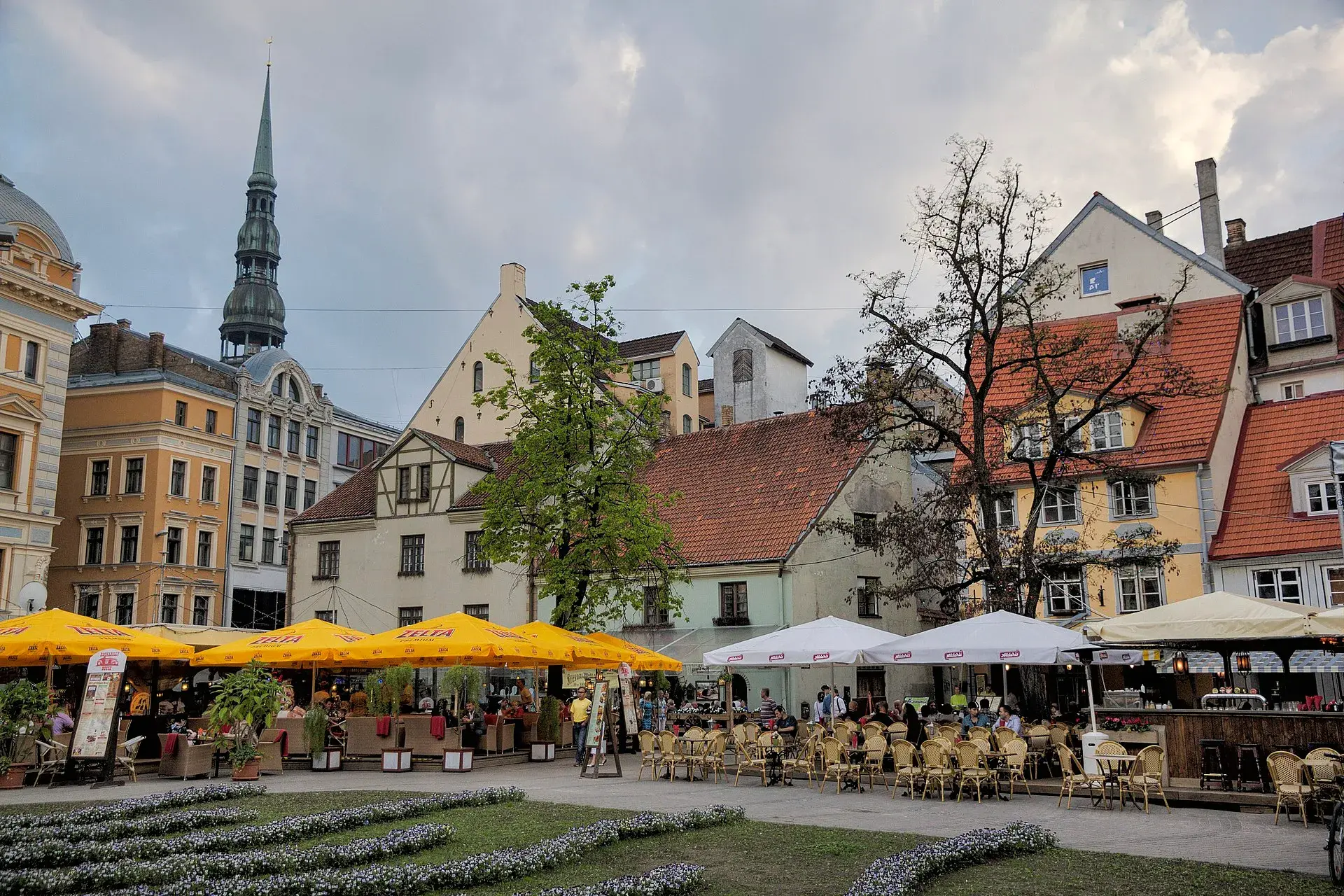
In 1950, architect Pāvels Seļeckis designed a landscaped public space over the cleared debris. It was initially named Philharmonic Square, honoring the Latvian State Philharmonic that operated in the adjacent Great Guild. Landscape architect Kārlis Barons redesigned the plaza in 1974, introducing pedestrian paths, rest zones, and a fountain pool. On February 29, 2000, the Riga City Council officially renamed the space Līvu laukums to honor the region's indigenous Livonian people. In 2003, architect Ausma Skujiņa reimagined the grounds with flowing, undulating flowerbeds. Today, these curved plantings—often filled with blue-toned blooms in summer—trace the submerged course of the Rīdzene River directly beneath visitors' feet.
The Guild Halls and the Cat House
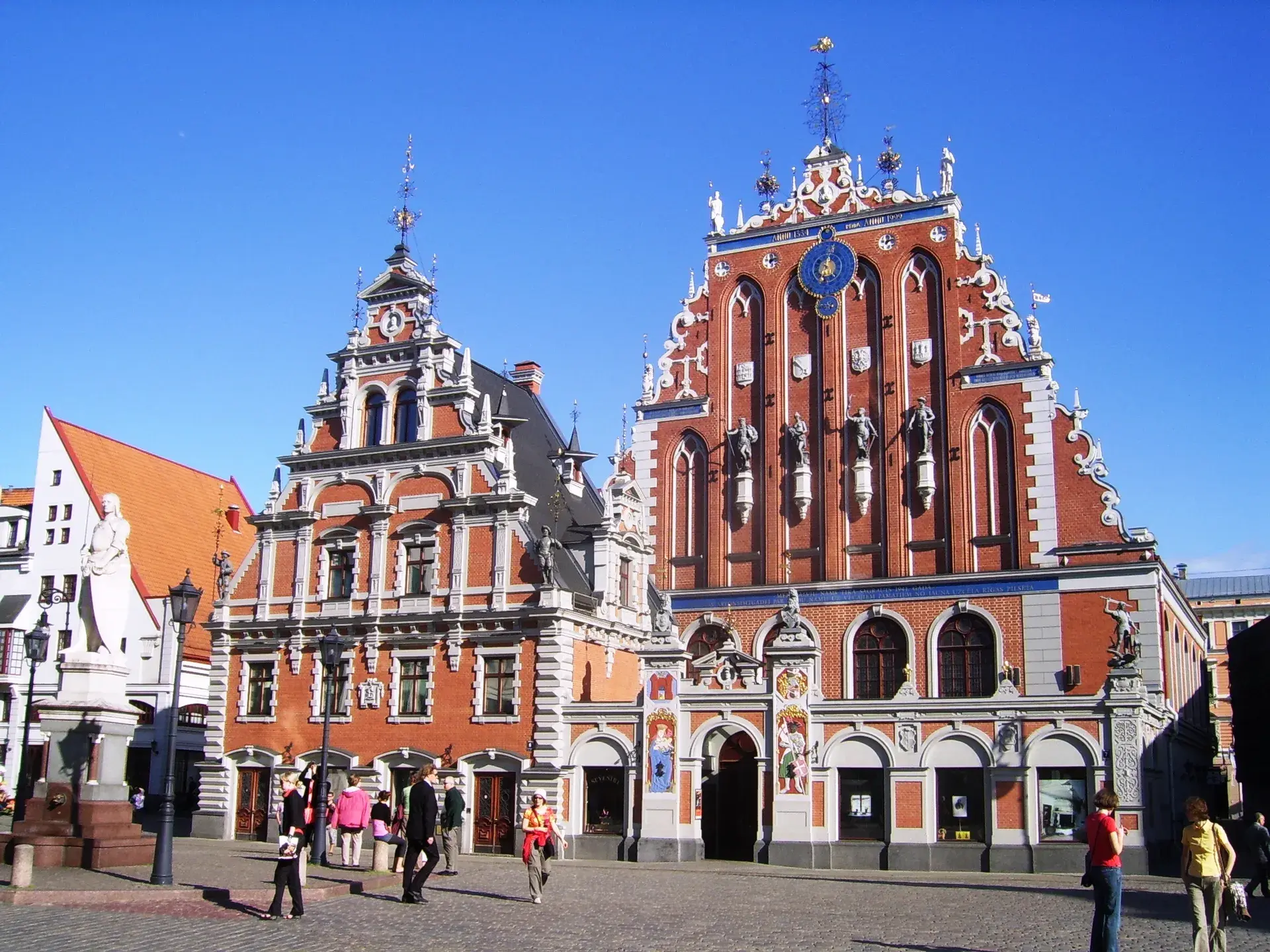
Livu Square is bounded by some of Riga's most distinctive architecture, notably the Great Guild, the Small Guild, and the Mikhail Chekhov Riga Russian Theatre. Just across the square stands the Cat House (Kaķu nams), renowned for the arched copper felines mounted upon its turrets. According to local tradition, a wealthy Latvian merchant commissioned the sculptures with their backsides deliberately facing the Great Guild after German guild masters denied him membership.
The square's perimeter holds further architectural secrets. Several café interiors housed within the building rows along Meistaru Street incorporate exposed, preserved masonry sections from Riga's medieval defensive walls.
Cultural Milestones and Daily Life
The square also preserves modern cultural history. A commemorative plaque installed in 2016 marks the former site of Kaļķu iela 11, the building where the very first film screening in Riga took place in 1896.
Throughout the year, the plaza remains a bustling focal point of central Riga. From late morning into the evening, open-air restaurant terraces, café seating, and street musicians animate the area. During the warmer months, the square accommodates artisan souvenir stalls and outdoor concerts, while the winter season brings a public ice rink and holiday market stalls.
FAQ
Why was Livu Square created?
The square was created after World War II bombardment destroyed the residential and merchant quarters on the site in 1941. In 1950, architect Pāvels Seļeckis designed a landscaped public plaza over the cleared rubble.
What is the legend behind the Cat House?
Local lore says a Latvian merchant placed copper cat sculptures on the roof with their backsides facing the neighboring Great Guild as an act of defiance after he was excluded from membership.
What does the wavy landscaping in Livu Square represent?
The undulating flowerbeds, designed in 2003 by architect Ausma Skujiņa, trace the underground path of the former Rīdzene River, which flowed through the site until it was covered over centuries ago.