Trakai Island Castle: A Lithuanian Icon Reborn
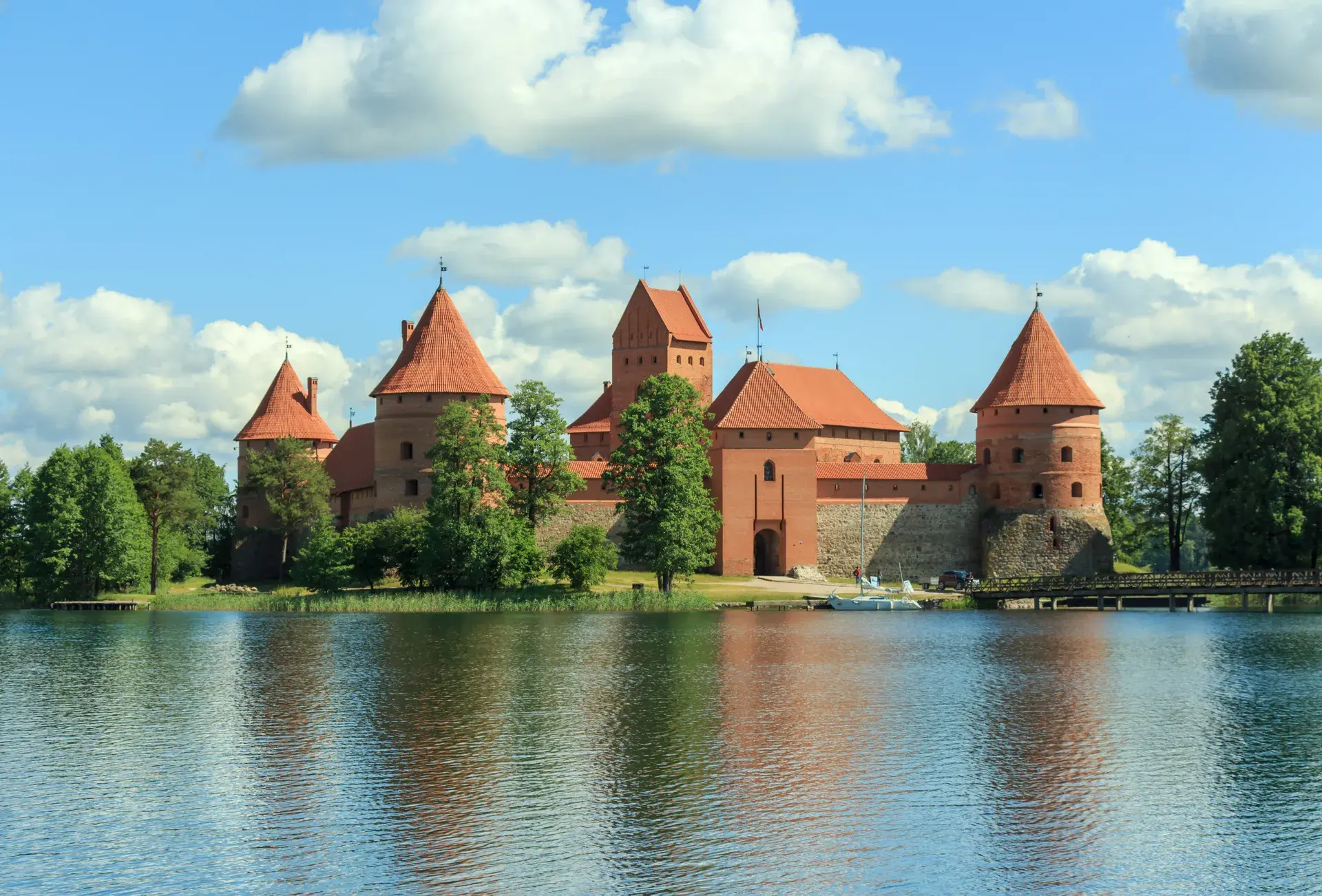
Rising from the tranquil waters of Lake Galvė, Trakai Island Castle presents a formidable sight with its red-brick Gothic towers and imposing walls. Connected to the shore by a wooden footbridge, this majestic structure is a pivotal symbol of Lithuanian heritage and a testament to centuries of history.
A Storied History: From Fortress to Ruin
Construction of Trakai Island Castle began in the mid-14th century under the direction of Grand Duke Kęstutis, who intended it as a fortified residence and treasury. Built on what was then a group of three small islands, the castle's strategic design proved so effective that it was never conquered by enemies. The architecture is primarily Gothic, featuring red bricks, with some Romanesque elements and stone foundations.
Kęstutis's son, Vytautas the Great, completed the major construction around 1409. He expanded the fortress with two additional wings and a formidable 35-meter, six-storey donjon tower. During this golden age, the castle served as a prominent royal residence and cultural center, hosting foreign envoys and Vytautas's cousin, King Jogaila, on numerous occasions. The Lithuanian Metrica, the state's historical records, were kept here until 1511. Vytautas the Great died within the castle walls in 1430.
After the Battle of Grunwald in 1410, the castle's military importance waned. By the 16th century, it was repurposed as a prison for nobles. The castle suffered extensive damage during wars with Muscovy in the mid-17th century, after which it fell into ruin and was neglected for centuries.
A Symbol Reborn: The 20th-Century Reconstruction
The magnificent medieval castle visible today is not an ancient structure preserved through time, but a grand and diligent 20th-century reconstruction. After centuries in ruins, a major restoration project was initiated by Lithuania in 1946, facing resistance from Soviet authorities.
The meticulous reconstruction aimed to restore the castle to its 15th-century appearance. The central palace was rebuilt by 1962 under the guidance of architect B. Krūminis, and the restoration of the forecourt was completed in 1987 under Stasys Mikulionis. This effort transformed the ruins back into a potent symbol of Lithuanian national identity.
The Castle Today: A Cultural Hub
Currently, Trakai Island Castle serves as the Trakai History Museum. Its halls house various expositions displaying medieval weaponry, chainmail, and religious art, offering a glimpse into the Grand Duchy of Lithuania. The castle is a major tourist attraction, drawing thousands of visitors annually.
Beyond its museum function, the castle is a vibrant venue for concerts, festivals, and exhibitions. The surrounding Lake Galvė provides year-round recreational opportunities. In winter, the frozen lake is popular for ice skating, while warmer months see visitors enjoying boating, kayaking, and yachting, which offer unique perspectives of the castle from the water.
FAQ
When was Trakai Island Castle built?
Construction began in the mid-14th century under Grand Duke Kęstutis. Major works were completed around 1409 by his son, Grand Duke Vytautas the Great.
Is Trakai Island Castle the original structure?
No, the castle fell into ruin after being destroyed in the 17th century. The structure seen today is a meticulous 20th-century reconstruction based on its 15th-century appearance, with major work completed between 1961 and 1987.
What is inside Trakai Island Castle now?
The castle houses the Trakai History Museum, which features exhibitions of medieval items like weaponry, chainmail, and religious art. It also serves as a venue for cultural events, concerts, and festivals.