Iglesia de San Servacio in Valladolid, Yucatan
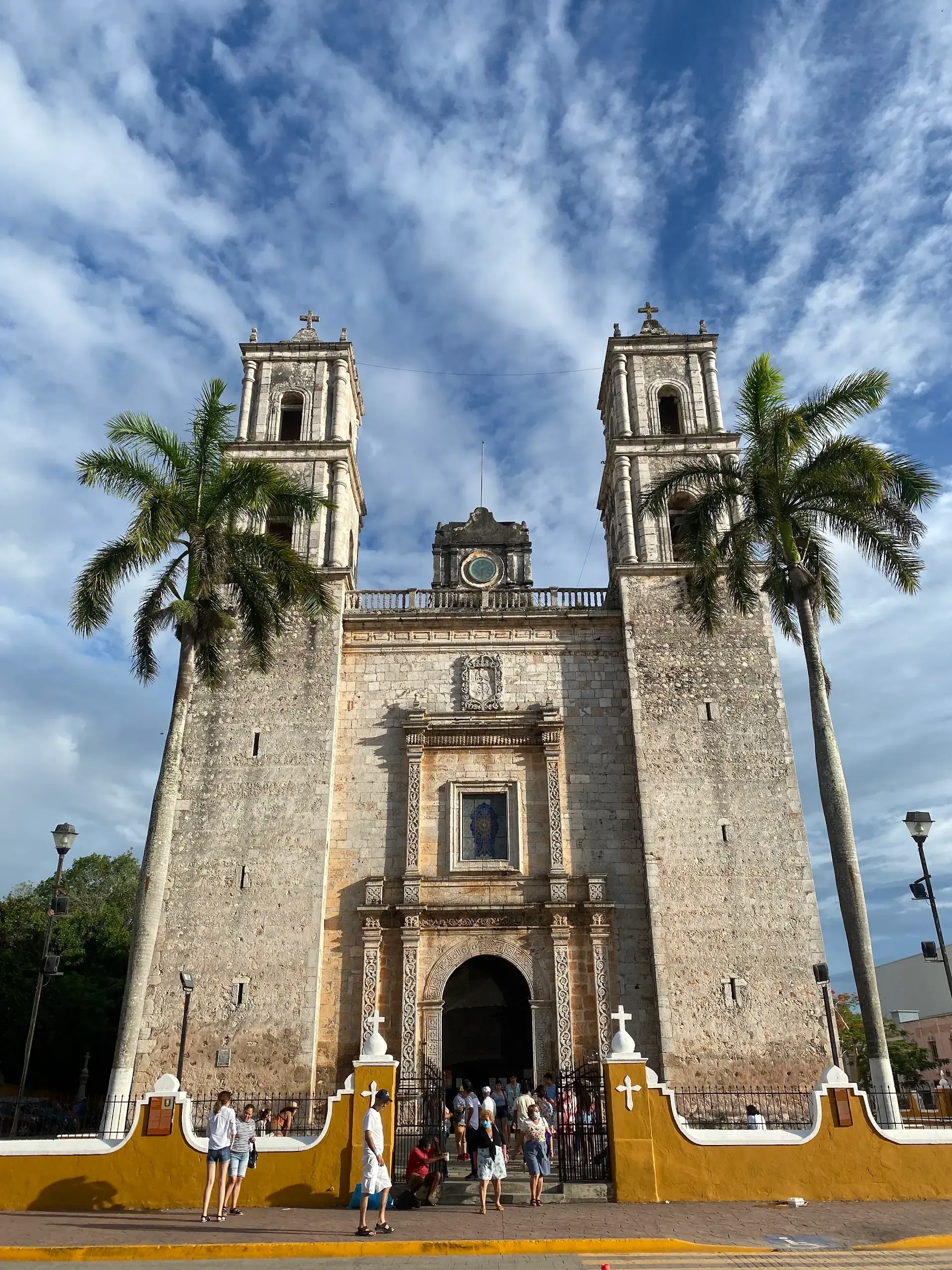
The Iglesia de San Servacio is a historic Catholic church characterized by an imposing stone facade and twin bell towers. Founded in 1545 and rebuilt in the 1700s right on the main square, it is situated on the south side of Parque Principal Francisco Cantón Rosado in Valladolid, Yucatán. The structure forms the traditional starting point for the city's classic walking route toward the Calzada de los Frailes. Originally established by Father Francisco Hernández during the settlement of the inland Maya city of Zací, the church holds a dramatic past that permanently altered its architectural design.
The Crime of the Mayors
In July 1703, the church became the site of a violent historical event known as the "Crime of the Mayors." Deposed mayor Fernando Hipólito de Osorno and his associate Gabriel Covarrubias sought sanctuary inside the building to escape political persecution. However, newly elected magistrates led a mob into the sacred space and mortally beat the men.
Following this desecration, Bishop Pedro de los Reyes Ríos declared the building profaned by bloodshed and ordered its demolition in 1705. When reconstruction commenced in 1706, the building's layout was rotated 90 degrees. Consequently, the Iglesia de San Servacio faces directly north into the main plaza, unlike traditional colonial Yucatecan churches that face west. This reorientation ensured that the new altar would not stand over the bloodstained ground of the 1703 murders.
Fortress Walls and Maya Masonry
Like many 16th-century structures in the city, the foundation and walls of the church incorporate recycled limestone masonry dismantled from the pre-Hispanic Maya pyramids of ancient Zací. During the 1706 rebuild, stone statues representing Saint Peter and Saint Paul, which had originally framed the main western portal in the 1545 building, were moved to the side exterior walls.
The Spanish colonial barrel-vaulted church features an austere limestone facade bearing a carved stone royal coat of arms, complete with arabesques, a crown, a hawk, and a palm. The building's thick walls later served a defensive purpose. Vertical portholes and narrow gun slits remain visibly cut into the facade and twin three-tier square bell towers. These additions allowed the church to function as a fortress for colonial forces during the Caste War that began in 1847.
A Living Civic Landmark
Today, the Iglesia de San Servacio operates as an active Roman Catholic parish, hosting daily masses, liturgies, baptisms, and weddings. The interior is highlighted by a Baroque and Churrigueresque retablo. Between the upper belfries rests a 19th-century public clock, maintained to this day by local clockmaker families.
In the evenings, warm exterior floodlights illuminate the twin towers against the dark Yucatecan sky. The church serves as a primary visual anchor and gathering space, overseeing the park benches and food carts that fill the adjacent central plaza.
FAQ
Why does the Iglesia de San Servacio face north?
The church faces north because it was rotated 90 degrees during its 1706 reconstruction. This was done to ensure the new altar would not be positioned over the bloodstained ground where two men were murdered inside the original church during the 1703 "Crime of the Mayors."
What is the architectural style of the Iglesia de San Servacio?
The church features a Spanish colonial barrel-vaulted design with an austere limestone facade, twin three-tier square bell towers, and a Baroque and Churrigueresque altarpiece inside. Its foundation also incorporates recycled limestone masonry from ancient Maya pyramids.
Are there any military features on the church?
Yes, vertical portholes and narrow gun slits are cut into the thick limestone masonry of the facade and towers. These features were utilized when the church served as a defensive fortress during the Caste War starting in 1847.
Discover Valladolid like never before
Dive into Valladolid hidden stories and secret spots with Ciceru interactive tours.
Explore tour
Audioguide
Quizzes
Maps
Solo
Couples
Groups & families

© Photo by Jaime Andrés Duque Londoño via Google Maps · Google Places