Monument to the Mestiza: Valladolid's Cultural Symbol
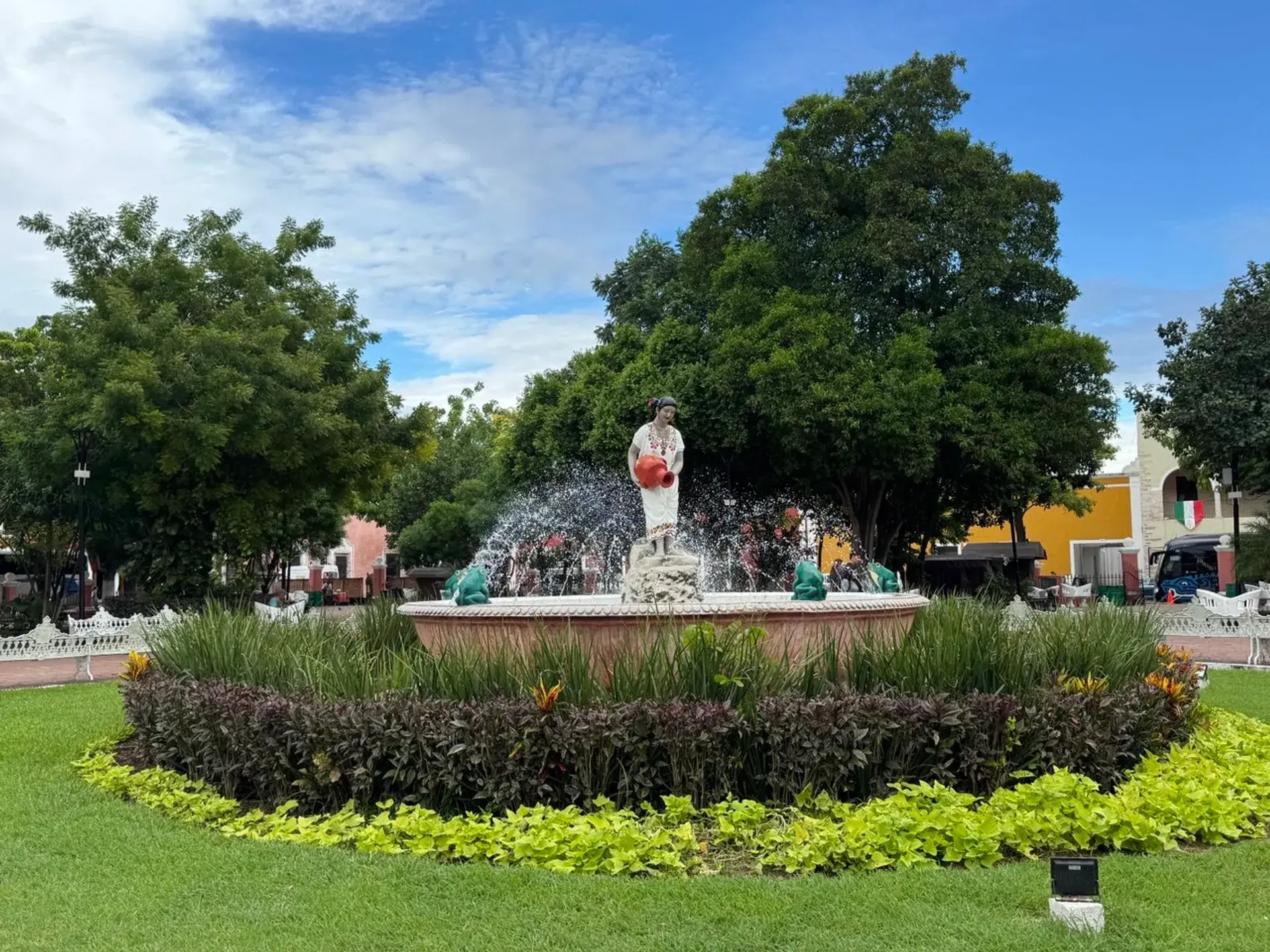
At the very center of Valladolid, a tribute to Yucatecan women stands exactly where a massive Maya pyramid once anchored the ancient city. Located in the middle of Parque Principal Francisco Cantón Rosado, the Monument to the Mestiza is a life-sized stone sculpture that celebrates the biological and cultural fusion of Maya and Spanish heritage. The surrounding park was established directly over the central ceremonial platform of the pre-Hispanic Maya settlement of Zací, which was dismantled during the Spanish conquest to build nearby colonial structures.
Origins and Commission
During a 1924 visit to Valladolid, Yucatán Governor José María Iturralde Traconis and local figures debated what type of monument should anchor the town square. Following the advice of poet Luis Rosado Vega to honor Yucatecan women rather than military figures, the governor commissioned the project. Sculptor Manuel Cachón Cimá created the figure in Mérida, drawing inspiration from an oil painting at the Escuela de Bellas Artes that depicted a woman pouring water from a pitcher onto flowers.
The completed sculpture was transported by railway from Mérida to Valladolid to inaugurate the revamped central fountain. However, the current statue is actually a replica. In the mid-20th century, the original figure was temporarily removed to make way for an obelisk dedicated to the martyrs of the June 4, 1910 uprising. The replica of La Mestiza was later reinstated to its rightful place.
Cultural Symbolism and Design
The monument stands inside a functioning stone fountain basin, marking the precise visual midpoint of Valladolid's central axis between the municipal palace, colonial arcades, and the parish church of San Servacio.
The figure holds a traditional earthen water jug, known as a cántaro. Her carved stone dress accurately depicts the three distinct pieces of the traditional Maya-Yucatecan ceremonial attire: the jubón, the hipil, and the fustán. Surrounding the fountain are iconic white, S-shaped "tú y yo" (confidente) benches. These unique seats, designed to allow seated pairs to converse face-to-face, were installed as part of the same 1924 beautification project.
The Heart of the City
Today, the Monument to the Mestiza operates as the primary gathering point for locals and tourists. The sound of water splashing into the basin mingles with the daily bustle of the shaded public park.
In the evenings, the area around the fountain is filled with the aromas of melting Edam cheese and sweet batter from marquesita carts and nearby citrus stalls. On weekends, the monument serves as a vibrant backdrop for performances of the traditional jarana dance, maintaining its status as Valladolid's central visual and cultural landmark.
FAQ
Where is the Monument to the Mestiza located?
The monument is located in the center of Parque Principal Francisco Cantón Rosado in Valladolid, directly over the former central ceremonial platform of the ancient Maya settlement of Zací.
Is the statue of La Mestiza the original from 1924?
No, the current statue is a replica. The original 1924 sculpture was temporarily replaced in the mid-20th century by an obelisk dedicated to the martyrs of the 1910 uprising before a replica of La Mestiza was reinstated.
What is the woman in the monument wearing?
The figure is dressed in the traditional Yucatecan ceremonial gala attire known as el terno, which consists of three distinct pieces: the jubón, the hipil, and the fustán. She is also holding a traditional earthen water jug called a cántaro.
Discover Valladolid like never before
Dive into Valladolid hidden stories and secret spots with Ciceru interactive tours.
Explore tour
Audioguide
Quizzes
Maps
Solo
Couples
Groups & families

© Photo by Tommaso Moleri via Google Maps · Google Places