Suli An: 15th-Century Ottoman Inn in Skopje
Located in the heart of Skopje's Old Bazaar, Suli An is a mid-15th-century Ottoman caravanserai that once anchored the bustling trade networks of the Balkan provinces. Covering approximately 2,100 square meters, this massive stone structure stands as a testament to the city's rich commercial history.
Built for the Ottoman Trade Network
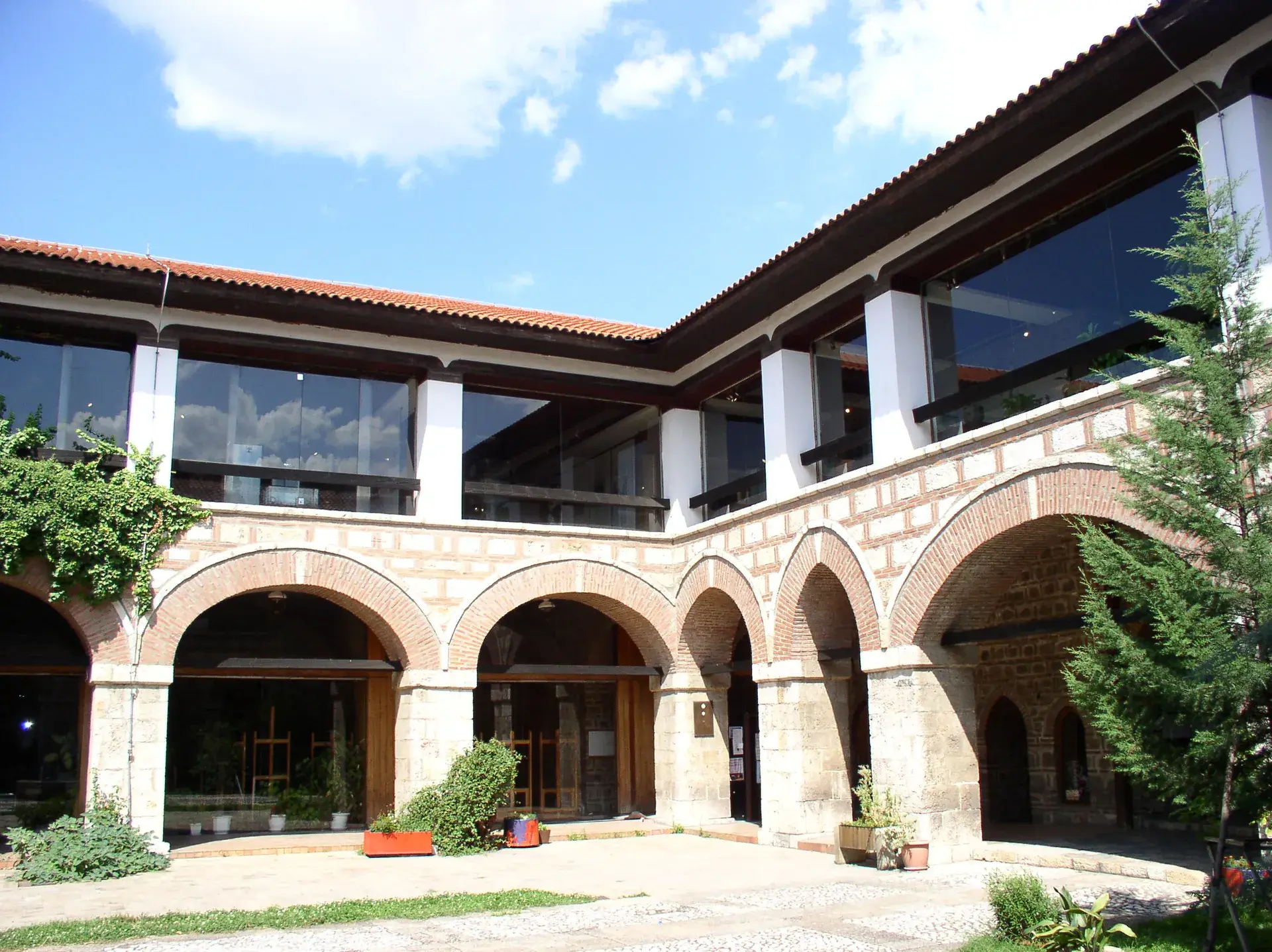
Commissioned by Isa-Beg Isaković in the 15th century, Suli An provided secure shelter for traveling merchants, their animals, and valuable trade goods. The structure follows a classic Ottoman caravanserai design, featuring massive stone walls arranged around a central open courtyard.
The building was strictly organized by function. The ground floor contained vaulted rooms used primarily for stabling animals and storing merchandise. Meanwhile, the upper-floor rooms served as sleeping quarters, offering a safe haven for overnight travelers crossing the Ottoman Empire.
The Story of the "Watery Inn"
The name Suli An originates from the Turkish phrase Sulu Han, which translates to "watery inn" or "inn with water." This unique title was earned because a small branch of the Serava River originally ran directly alongside the building.
The river provided a critical water source for weary merchants and their pack animals. Although the watercourse shifted away in later centuries, the historic name remains a permanent fixture of the Old Bazaar.
Suli An Today: Art and History
Despite surviving centuries of fires, regional conflicts, and natural disasters, Suli An suffered severe structural damage during the devastating 1963 Skopje earthquake. A major restoration project in 1972 successfully preserved its architectural fabric.
Today, the quiet interior courtyard is framed by two levels of stone arches, where light filters onto weathered masonry. The building currently houses the Faculty of Fine Arts of Ss. Cyril and Methodius University, with the courtyard frequently hosting student studios, temporary art exhibitions, and public cultural performances.
The site also contains the Museum of the Skopje Old Bazaar. This museum displays an array of historical tools, traditional craft products, and artifacts that document the long commercial history of the surrounding district.
Heart of the Old Bazaar
Situated across the Vardar River from modern central Skopje, accessible via the historic Stone Bridge, the Old Bazaar is one of the largest and oldest preserved Ottoman commercial quarters in the Balkans outside of Istanbul.
Its historical significance is vast. In 1660, the renowned Ottoman travel writer Evliya Çelebi visited the area and recorded more than 2,150 shops organized by guild. He described a vibrant commercial hub featuring clean, stone-paved lanes and merchants who decorated their storefronts with potted hyacinths, violets, and roses. Today, Suli An remains a vital landmark within this centuries-old quarter.
FAQ
When was Suli An built?
Suli An was commissioned in the mid-15th century by Isa-Beg Isaković to support growing Ottoman trade networks in the Balkan provinces.
Why is the building called the 'watery inn'?
The name derives from the Turkish phrase Sulu Han, meaning 'watery inn.' It was named for a branch of the Serava River that originally flowed directly alongside the structure to provide water for travelers and their animals.
What is inside Suli An today?
Today, Suli An is home to the Faculty of Fine Arts of Ss. Cyril and Methodius University and the Museum of the Skopje Old Bazaar, which displays historical tools and artifacts related to the area's commercial past.
Was Suli An damaged in the 1963 Skopje earthquake?
Yes, the structure suffered severe structural damage during the 1963 earthquake. It underwent major restoration in 1972 to preserve its historic Ottoman architecture.