Mustafa Pasha Mosque: Skopje's Ottoman Jewel
A 15th-Century Imperial Endowment
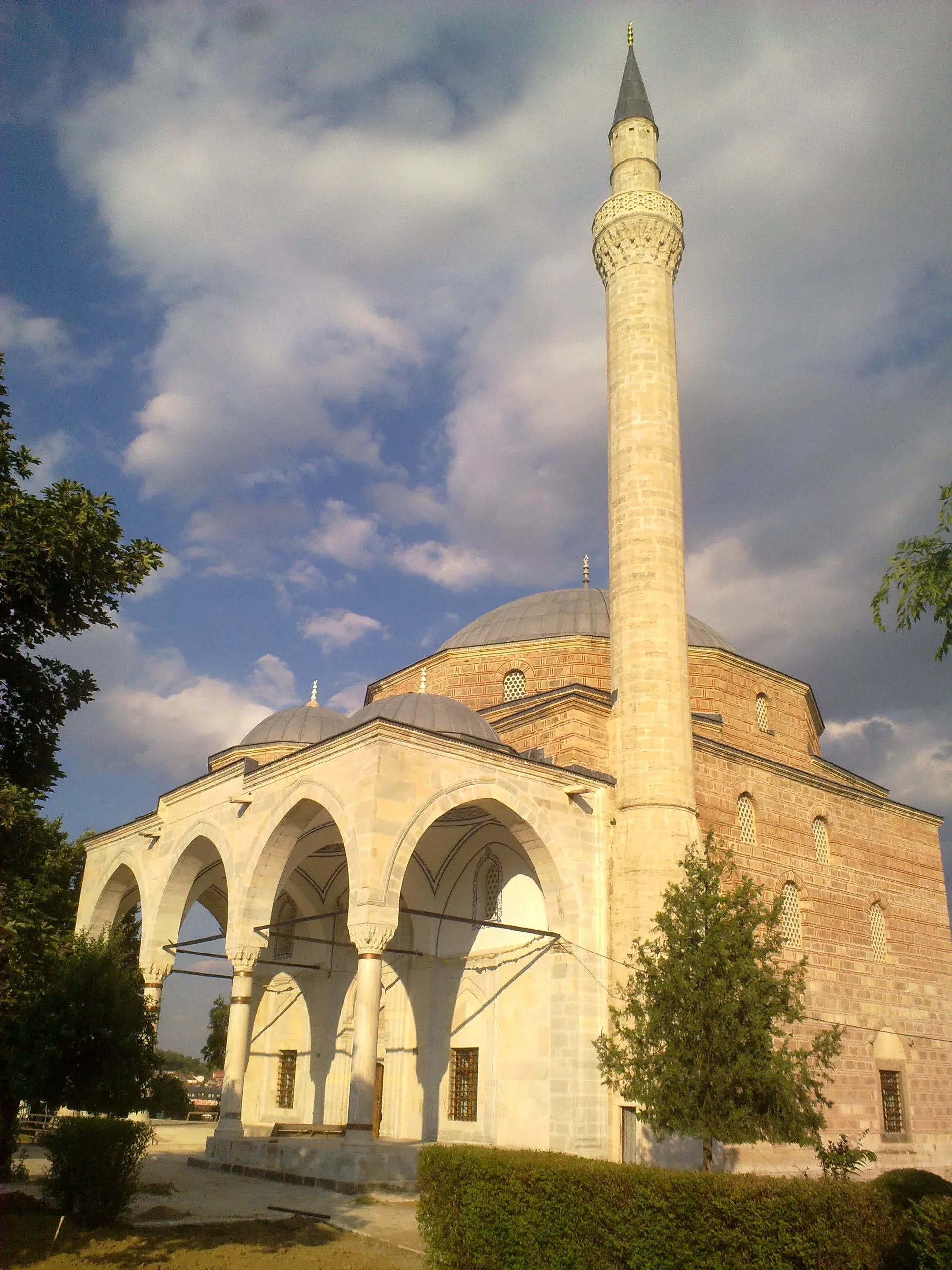
Perched on a plateau directly above the Old Bazaar, the Mustafa Pasha Mosque stands as one of Skopje's most pristine Ottoman monuments. Erected in 1492 by Çoban Mustafa Pasha, a vizier to Sultans Bayezid II and Selim I, the site survived centuries of change. Its founding date remains carved on a marble plaque over the main portal, later documented in a legal waqfname between 1514 and 1515.
Unlike many regional structures, the mosque retains its original 15th-century form without major structural additions. Although it sustained damage during the disastrous 1963 Skopje earthquake, a comprehensive five-year restoration funded by the Turkish government agency TİKA successfully concluded in 2011.
Classic Ottoman Architecture
The structure exemplifies early imperial Ottoman architecture, built with an opus cloisonné exterior of alternating chiselled stone and double brick. The building features a 20-meter square plan crowned by a 16.3-meter main dome, alongside a slender 47-meter limestone minaret.
A white marble porch, supported by four columns creating three pointed arches and topped with three smaller domes, marks the entrance. Inside the prayer hall, the walls are decorated with intricate 16th-century grey-and-blue floral paintings and calligraphic Quranic levhas.
The Mausoleums and Rose Garden
The mosque's high vantage point creates a striking contrast between the bustling trade streets of the Old Bazaar below and the serene atmosphere of the courtyard. The public grounds feature a traditional fountain and a well-maintained rose garden.
Originally part of a larger complex that included a caravanserai and soup kitchen, today the surviving grounds house the mosque, a türbe (mausoleum), and a surviving sarcophagus. The 1519 mausoleum of Mustafa Pasha is notable for its entirely white marble exterior, a highly unusual feature for Ottoman tombs in North Macedonia. Nearby lies an intricately carved stone sarcophagus believed to belong to his daughter, Umi, adorned with detailed Persian calligraphic inscriptions and rumi vegetative motifs.
Visiting the Active Mosque
Serving as an architectural anchor between the Skopje Fortress and the historic trade district, the grounds offer sweeping panoramic views across the tiled roofs of the Old Bazaar and over the Vardar River toward modern central Skopje.
The site continues to function as an active Sunni mosque hosting daily prayers and community services. Non-Muslim heritage visitors are permitted to enter outside of prayer times, provided they adhere to customary modesty rules and remove their shoes before entering the prayer hall.
FAQ
When was the Mustafa Pasha Mosque built?
The mosque was erected in 1492 by Çoban Mustafa Pasha, a prominent vizier under Ottoman Sultans Bayezid II and Selim I.
Can non-Muslims visit the Mustafa Pasha Mosque?
Yes, non-Muslim heritage visitors are allowed to enter the mosque outside of daily prayer times. Visitors must observe customary modesty rules and remove their shoes before entering.
What is unique about Mustafa Pasha's mausoleum?
Built in 1519, the mausoleum is highly unusual among Ottoman tombs in North Macedonia because its exterior is entirely faced in white marble.