The Stone Bridge (Kamen Most): Skopje's Iconic Landmark
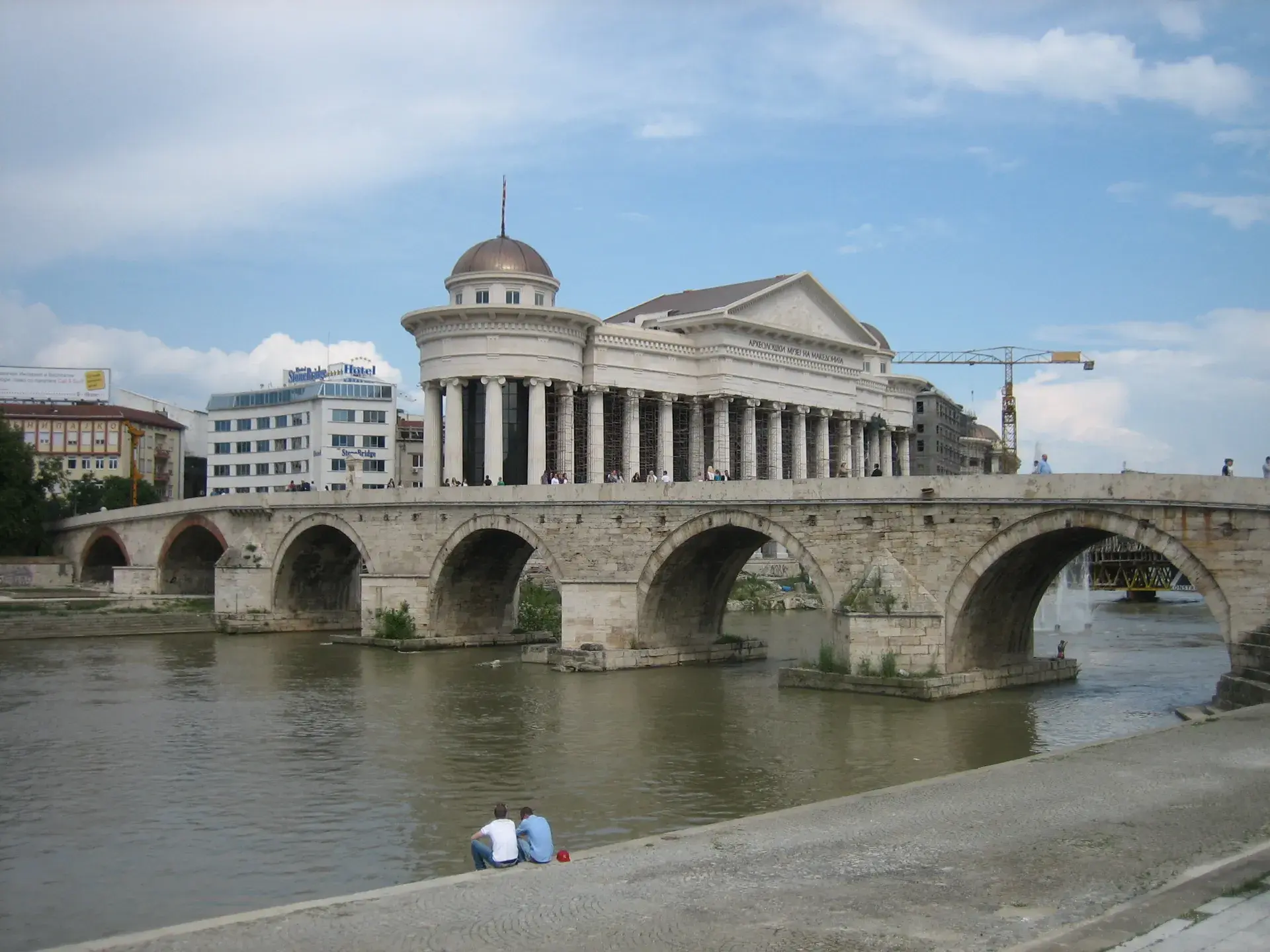
Spanning the Vardar River on 15th-century stone arches, Skopje's most iconic symbol bridges the gap between the city's modern center and its ancient Ottoman bazaar. Known locally as Kamen Most in Macedonian and Ura e Gurit in Albanian, the Stone Bridge is the central walking axis of the capital. The structure is deeply ingrained in the city's identity, serving as the primary symbol on Skopje's official coat of arms and flag.
Architectural Design and Hidden Features
Built from chiselled travertine stone blocks, the Stone Bridge stretches approximately 214 meters in length and 6 meters in width. The pale masonry spans the water via massive stone piers and 12 to 13 semicircular arches.
The bridge harbors several unique structural elements. The central masonry pier contains hollow interior chambers, which were designed to reduce the structural weight on the foundation while simultaneously housing defensive cannon positions. Above, a reconstructed mihrab-shaped watchtower overlooks the crossing. Directly opposite this watchtower is an exterior balcony built over masonry consoles. Constructed during the Ottoman era, this balcony was originally created to serve as a resting point for pedestrians crossing the river.
Six Centuries of Resilience
Archaeological evidence points to the bridge having 6th-century origins on Roman foundations, built after a devastating earthquake in 518 AD. However, the present architecture is a 15th-century Ottoman construction, widely attributed to Sultan Mehmed II, though historical inscriptions and waqf documents also link it to Sultan Murad II.
The Stone Bridge has survived numerous historical trials. A severe earthquake in 1555 heavily damaged four of its main piers, prompting immediate repairs. In 1689, it served as the execution site for the anti-Ottoman rebel leader Karposh. Local lore notes that during the Balkan Wars, the structure was sometimes referred to as "Dušan's Bridge," a diplomatic ruse aimed at convincing Serbian commanders that the crossing was a relic of Serbian Emperor Stefan Dušan, effectively sparing it from destruction as an Ottoman monument. Later, in November 1944, retreating Nazi German forces planted explosives on the structure, but local city notables successfully persuaded commanders to disarm the charges.
A Cultural Connector
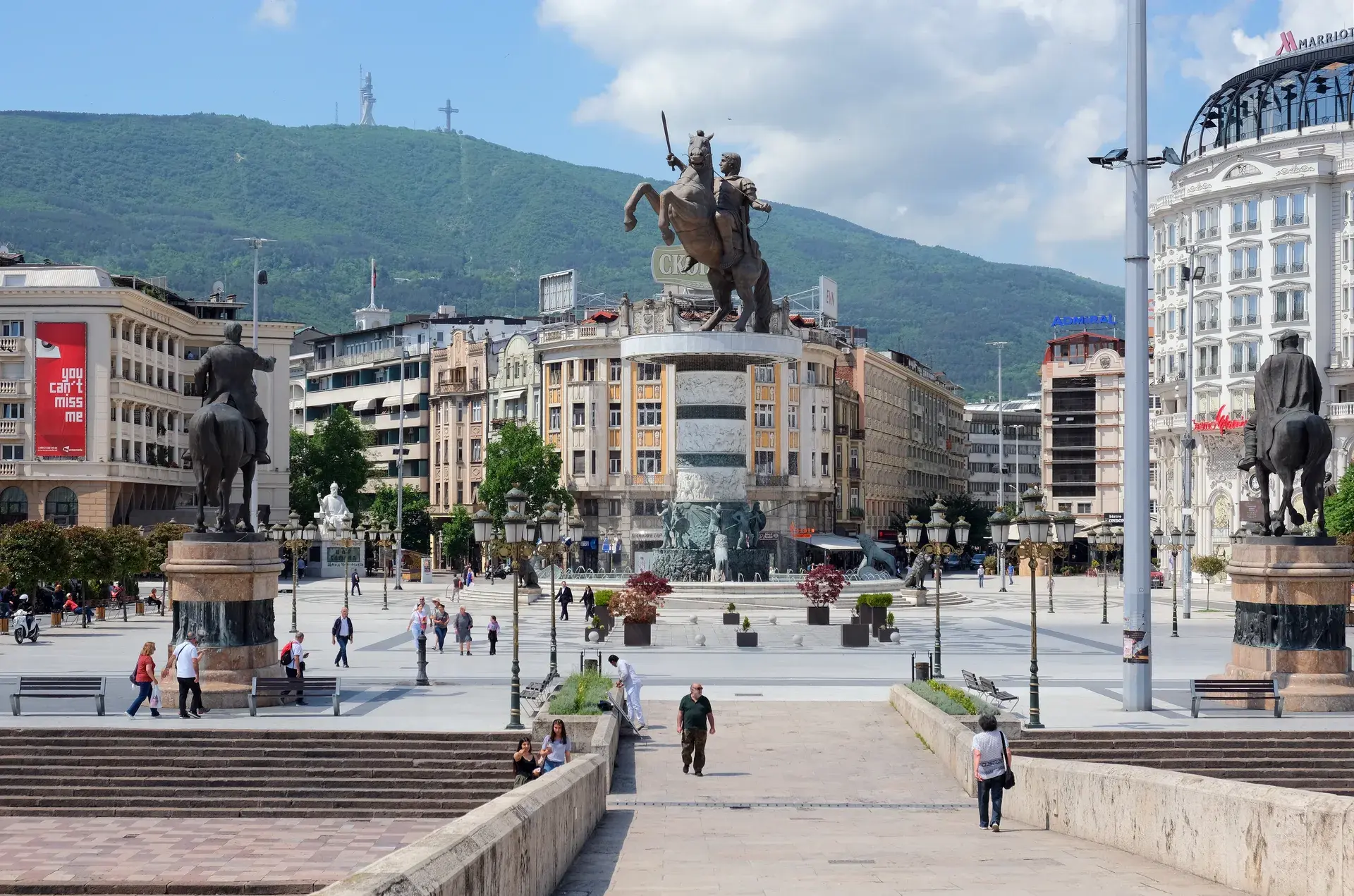
Today, the bridge functions strictly as a pedestrian thoroughfare following a major seven-year restoration that began in 1994. The watchtower was later reconstructed in 2008. The crossing acts as a physical and cultural boundary in Skopje, joining two distinct urban atmospheres. It links the modern, Western-influenced Macedonia Square on the south bank with the historic, Ottoman-era shopfronts and stone-paved alleys of the Old Bazaar on the north bank.
Beyond its function as a river crossing, the Stone Bridge is a popular civic gathering spot. It provides a scenic viewpoint over the Vardar riverfront and regularly serves as a dramatic backdrop for cultural events, including the annual Skopje Summer Festival.
FAQ
How old is the Stone Bridge in Skopje?
While archaeological evidence suggests 6th-century origins on Roman foundations after an earthquake in 518 AD, the current structure is primarily a 15th-century Ottoman construction built during the reign of Sultan Mehmed II or Murad II.
How long is the Stone Bridge?
The bridge measures approximately 214 meters in length and 6 meters in width, spanning the Vardar River with 12 to 13 semicircular arches.
Is the Stone Bridge open to cars?
No, the Stone Bridge functions strictly as a pedestrian thoroughfare. It was permanently closed to vehicle traffic during a major restoration project that began in 1994.