Julian Tuwim Monument: The Poet's Bench in Łódź
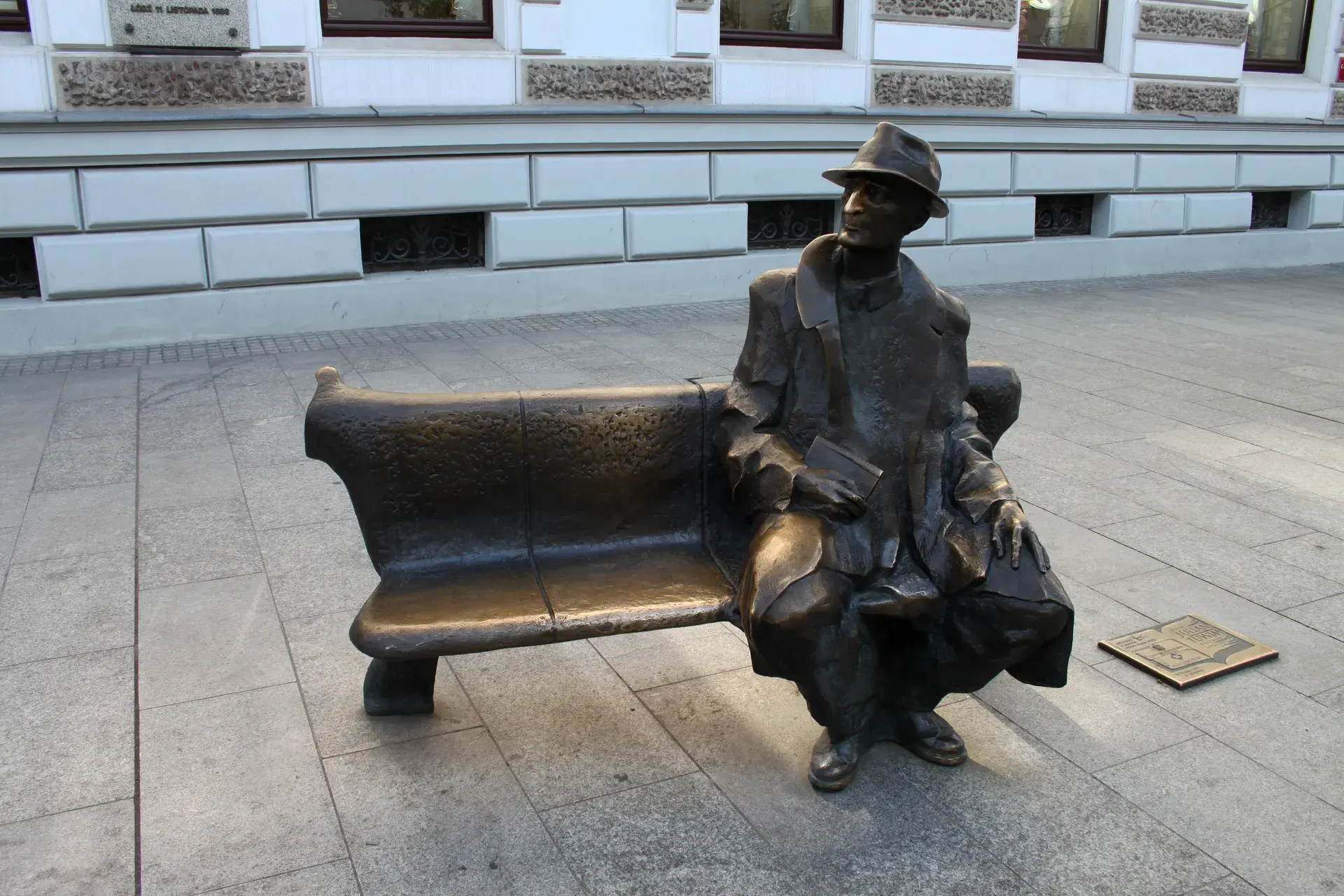
Before monuments required towering pedestals, the city of Łódź decided to invite its most famous poet to simply take a seat on the sidewalk. The Julian Tuwim Monument, widely known as "Tuwim's Bench" (Ławeczka Tuwima), is a life-size bronze and gunmetal sculpture located at Piotrkowska Street 104. Unveiled on April 10, 1999, the statue depicts the famous Polish poet casually sitting on a bench, perfectly integrated into the bustling pedestrian promenade.
A Pioneer of Public Art
Created by sculptor Wojciech Gryniewicz, the bench was the inaugural installation of the "Gallery of Great Citizens of Łódź" (Galeria Wielkich Łodzian). In the late 1990s, the city sought to bring historical figures off traditional pedestals and directly into pedestrian spaces. Tuwim's Bench served as the pioneer project for this interactive initiative.
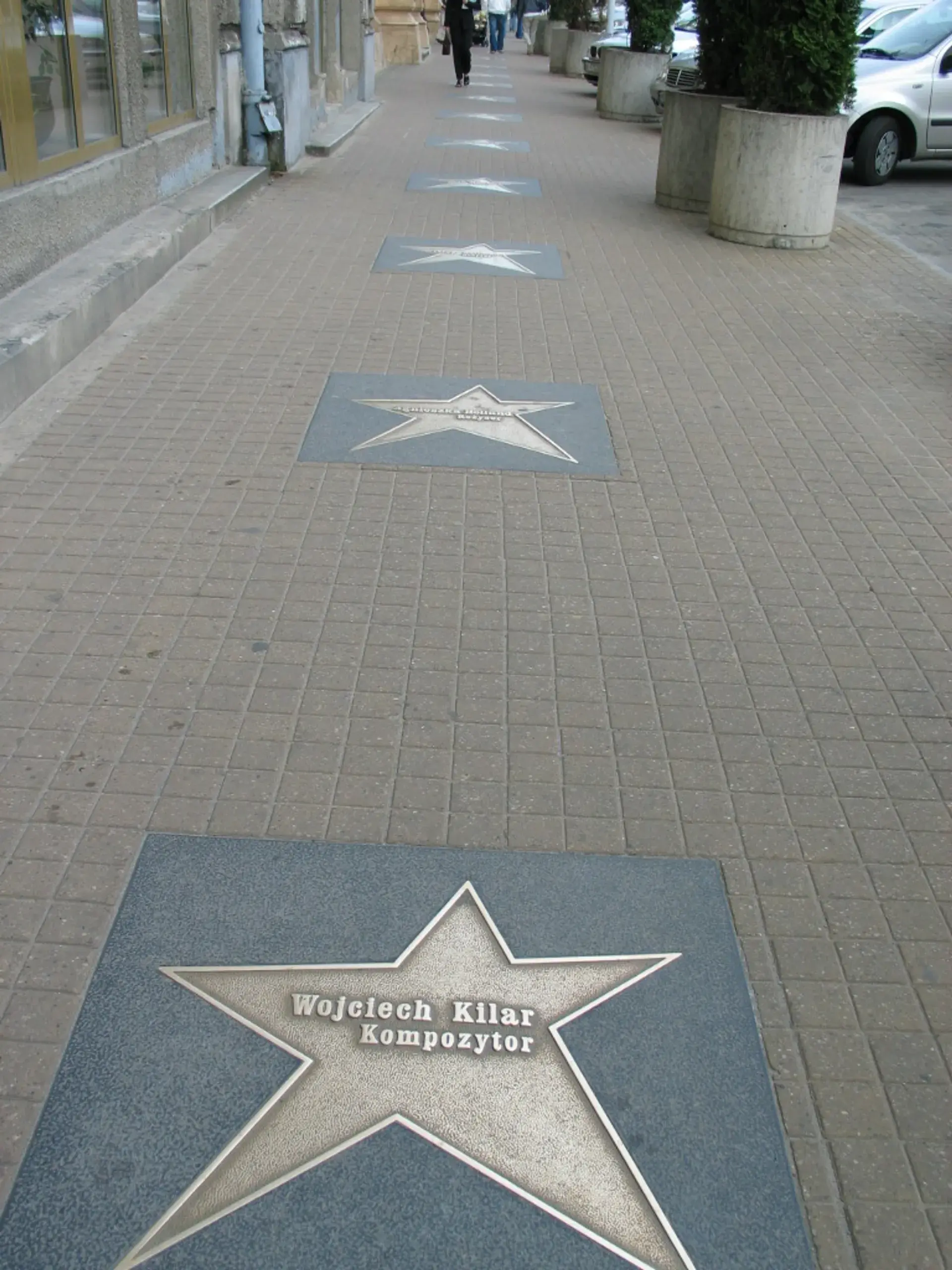
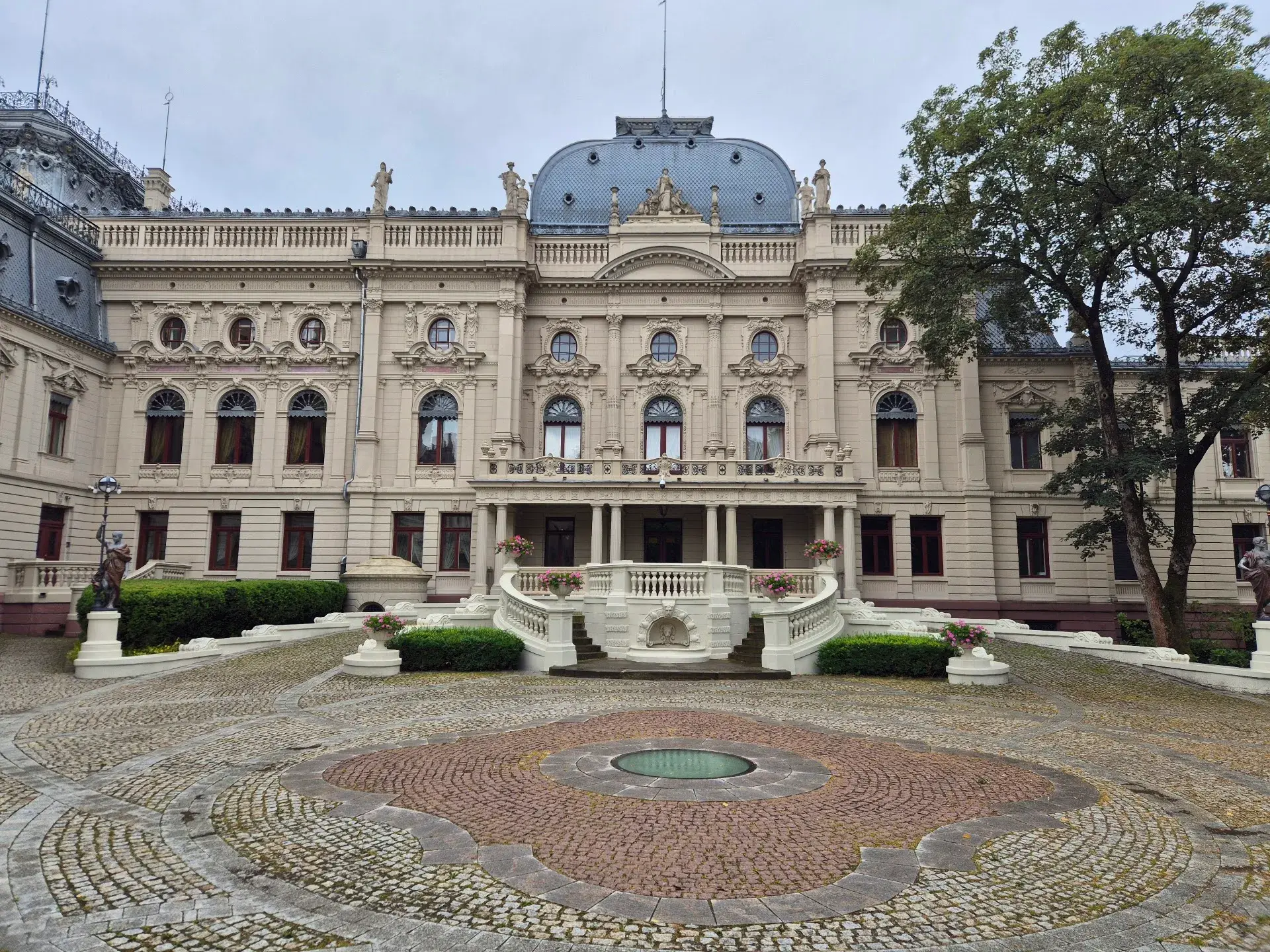
Today, the monument anchors a walking route connecting similar street sculptures, including Artur Rubinstein's Piano and Władysław Reymont's Trunk. Positioned directly in front of the grand 19th-century Juliusz Heinzel Palace, the artwork physically juxtaposes the city's historical textile-baron architecture with its rich 20th-century literary history.
The Poet's Connection to Łódź
Julian Tuwim was born in Łódź in 1894 to an assimilated Polish-Jewish family. He lived in the city until leaving for university in Warsaw in 1916. Tuwim eventually became a central figure of the interwar Skamander literary group and a beloved author of classic Polish children's poetry, such as "Lokomotywa" and "Pan Hilary".
Despite spending much of his life in Warsaw and enduring World War II in exile across France, Brazil, and the United States, Tuwim maintained a deep emotional bond with his hometown. This enduring connection is prominently referenced in his epic poem "Kwiaty polskie" (Polish Flowers).
Bronze Details and Local Lore
The life-size figure is deliberately sculpted with his body angled toward the empty side of the bench and his head turned slightly. This precise posture creates the visual impression that the poet is actively listening to a conversation partner. The empty space routinely invites passersby and tourists to sit beside the literary icon for photographs.
Over the decades, a persistent local tradition has developed around the sculpture. It is widely believed that rubbing the tip of Tuwim's bronze nose brings good luck, creative inspiration, or success in everyday affairs. The constant friction from thousands of hands has left the tip of the nose distinctively smooth and polished to a golden shine, which contrasts sharply with the darker, weathered patina covering the rest of the bench.
A Lasting Civic Symbol
The bench operates as an accessible, round-the-clock public attraction and is recognized for its ongoing civic importance. In a 2018 urban planning study, the monument was formally catalogued as an item of contemporary cultural heritage.
Its design has even inspired municipal honors. Miniature cast replicas of the bench were once used as official awards for promoting the city during the administration of city president Krzysztof Jagiełło. Furthermore, Wojciech Gryniewicz won a national tourism souvenir prize in 2004 for his mini-statue design of the famous bench.
FAQ
Where is the Julian Tuwim Monument located?
The monument is located at Piotrkowska Street 104 in Łódź, directly in front of the 19th-century Juliusz Heinzel Palace.
Who created Tuwim's Bench in Łódź?
The life-size bronze and gunmetal sculpture was created by Polish artist Wojciech Gryniewicz and was officially unveiled on April 10, 1999.
Why is Julian Tuwim's nose shiny on the statue?
A local tradition claims that rubbing the bronze nose of the poet brings good luck and creative inspiration. The friction from thousands of hands touching it over the years has polished the tip of the nose to a distinct golden shine.
What is the Gallery of Great Citizens of Łódź?
It is an initiative that places historical figures on interactive, street-level bronze monuments along Piotrkowska Street. Tuwim's Bench was the inaugural installation of this project in the late 1990s.