Executioner's Bastion: Košice Medieval Fortress
What is today known as a bastion was originally built as a massive barbican, designed to absorb cannon fire and protect the gates of a royal free city. Located on Hrnčiarska and Stará baštová Streets in the Old Town, the Executioner's Bastion (Katova bašta) stands as the largest and best-preserved remnant of Košice's medieval fortifications. Positioned just off Crafts Lane, the site serves as a physical testament to the city's historical status as a heavily fortified military stronghold in Upper Hungary.
A History of Defense
Commissioned after 1441 by Ján Jiskra of Brandýs, the structure began as a freestanding semicircular barbican to protect the Painted Gate. Between 1461 and 1471, it underwent a radical reconstruction. The expansion transformed it into a massive artillery fortification equipped with earthen embankments and cannon chambers.
This robust design represents an architectural transition between the medieval roundel and the bastion systems of the 16th century. Despite its modern name, it functioned primarily as a barbican rather than a bastion. The title "Executioner's Bastion" was not applied until the 19th century, stemming from the structure's close proximity to the former official apartment of the Košice city executioner.
Architectural Features
The bastion features a massive semicircular stone exterior characterized by thick, curved walls. These defenses lead inward to vaulted ground-floor cannon chambers. Designed to withstand heavy assaults, the fortifications successfully protected the city for centuries before the structure finally lost its military role by the late 18th century.
The Museum and Exhibitions
In 1935, work began to adapt the fortress into a museum. Today, it operates under the management of the East Slovak Museum. The vaulted ground floor houses the Košice Casemates exhibition, which displays a fascinating collection of historical firearms and cannons.
The upper-level space, known as Galéria bašta, hosts rotating art and history exhibits. Additionally, the interior courtyard operates as a public cultural venue, frequently utilized for concerts, historical reenactments, and lectures.
The Rodošto House Replica
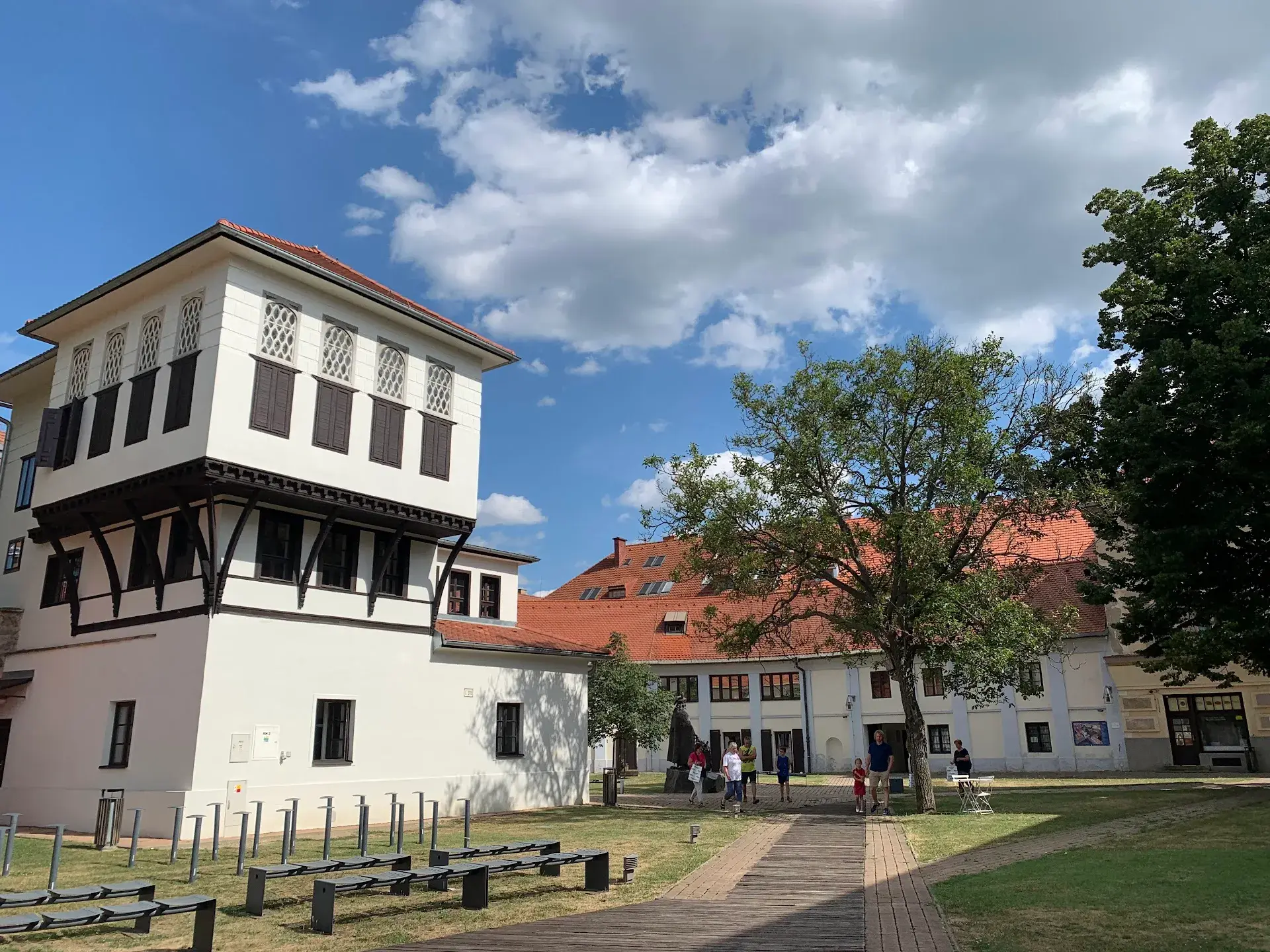
Between 1940 and 1943, an intriguing addition was made to the complex's northern end: Rodošto, a replica of the Turkish exile house belonging to the anti-Habsburg rebellion leader Francis II Rákóczi. In 2006, a bronze sculpture of Rákóczi was installed in front of the adjoining Rodošto house, further enriching the site's historical landscape.
FAQ
Why is it called the Executioner's Bastion?
The name was applied in the 19th century because the structure was located near the former official apartment of the Košice city executioner.
What is inside the Executioner's Bastion?
The bastion is part of the East Slovak Museum. It features the Košice Casemates exhibition of historical firearms on the ground floor and the Galéria bašta art and history exhibits on the upper level.
When was the Executioner's Bastion built?
The structure was initially commissioned after 1441 as a freestanding semicircular barbican. It was later rebuilt between 1461 and 1471 into a massive artillery fortification with earthen embankments.