National Theatre Košice: A Neo-Baroque Landmark
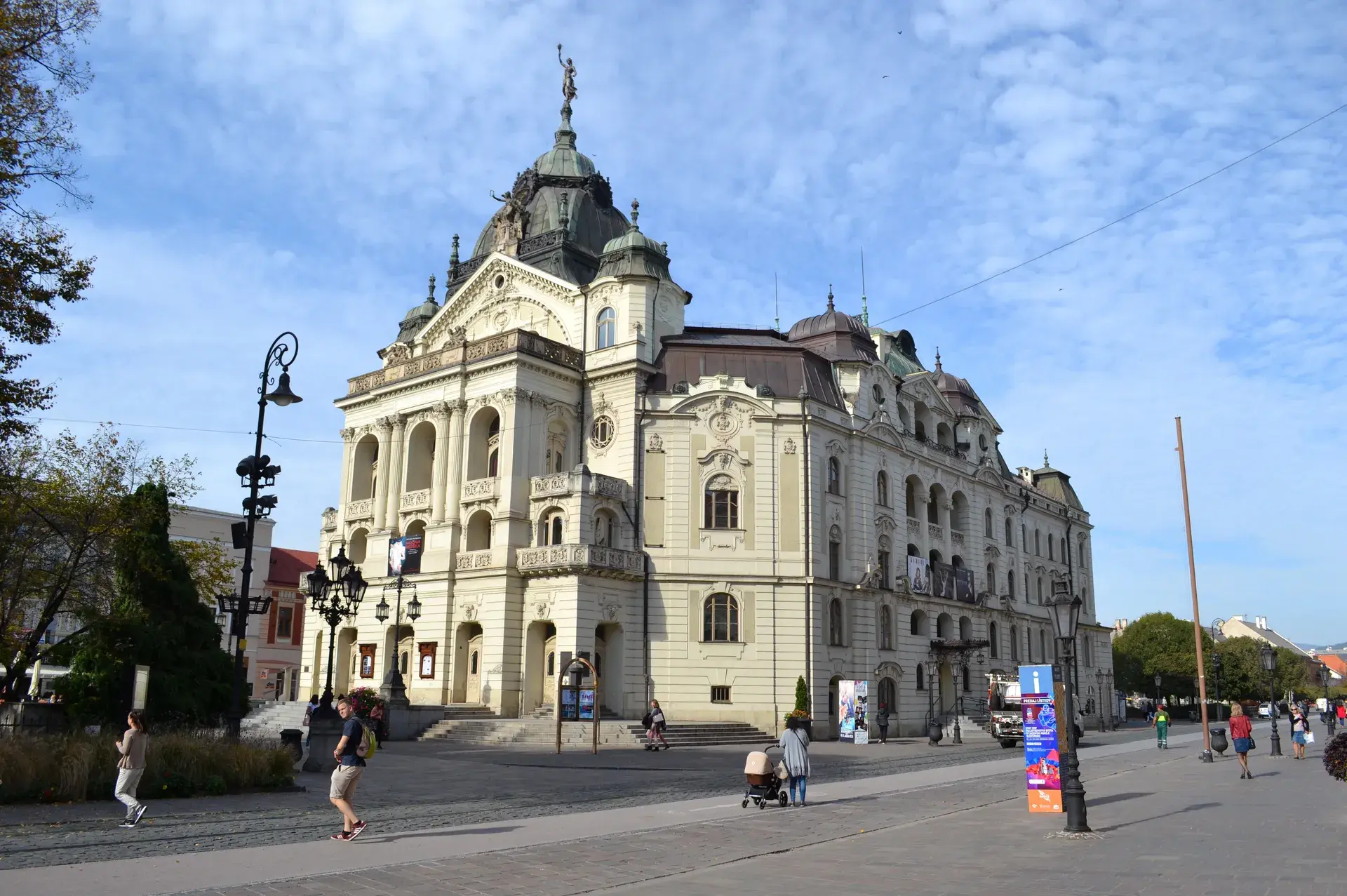
The first production of the Slovak National Theatre did not take place in the nation's capital, but rather in Košice. This surprising 1920 milestone highlights the enduring significance of the National Theatre Košice (formerly known as the State Theatre Košice), an architectural masterpiece anchoring the city's historic core. The milestone occurred here because the Bratislava theatre was still occupied by a Hungarian ensemble at the time. Located at Hlavná 58, the 1899 building is a central civic landmark along Košice's spindle-shaped pedestrian promenade, positioned near the Singing Fountain and St. Elisabeth Cathedral.
Neo-Baroque and Secessionist Architecture
Designed by architects Adolf Láng and Antal Steinhardt, the National Theatre features a pastel Neo-Baroque facade accented with balustrades, arcades, and eclectic Secessionist (Art Nouveau) ornaments. The exterior is adorned with figure allegories crafted by sculptor E. Mayer. The structure is famously crowned by a copper dome bearing a statue of Aurora. This copper figure symbolically holds a torch to protect the arts, while structurally functioning as the building's active lightning rod.
Inside, the main hall features a lyre-shaped auditorium and stage enveloped in gilded plaster ornaments. The architectural triumph of the interior is the vaulted ceiling, painted by Viennese artist Peregrin Gastgeb. These intricate frescoes depict scenes from four William Shakespeare plays: Othello, Romeo and Juliet, King Lear, and A Midsummer Night's Dream.
A History of Fire and Rebirth
The land beneath the theatre originally housed Košice's medieval town hall, which had fallen out of municipal use by the 16th century. Between 1788 and 1790, the city's first dedicated stone theatre opened on the site, featuring a 500-seat auditorium, a redoute assembly hall, and a café. During a live show in 1884, a fire broke out, sparking severe safety concerns that eventually led to the venue's closure in 1894 and demolition in 1897.
Construction on the current structure began immediately, culminating in its official inauguration on September 28, 1899. Decades later, director Ján Borodáč re-established professional Slovak theatre at the location in 1945 following World War II as the East Slovak National Theatre, which was later renamed the State Theatre in 1955.
The Theatre Today
Today, the National Theatre Košice operates as a state-funded cultural institution under Slovakia's Ministry of Culture. It serves as a multi-ensemble performing arts center hosting regular opera, ballet, and drama productions. Performances take place across two distinct venues on Hlavná Street. While grand productions utilize the historic 1899 main stage at Hlavná 58, the institution also operates the Small Stage (Malá scéna) in a nearby Art Nouveau building at Hlavná 41.
FAQ
When was the National Theatre Košice built?
The current theatre building was constructed between 1897 and 1899, officially inaugurating on September 28, 1899. It replaced a previous theatre on the site that was demolished due to safety concerns following a fire.
What is painted on the ceiling of the National Theatre Košice?
The vaulted ceiling of the main auditorium features painted frescoes by Viennese artist Peregrin Gastgeb. The artwork depicts scenes from four William Shakespeare plays: Othello, Romeo and Juliet, King Lear, and A Midsummer Night's Dream.
What is the statue on the roof of the National Theatre Košice?
A copper statue of Aurora sits atop the main dome of the theatre. The figure symbolically holds a torch to protect the arts, and it also functions practically as the building's active lightning rod.