Žobrákov dom: History of the Beggar's House
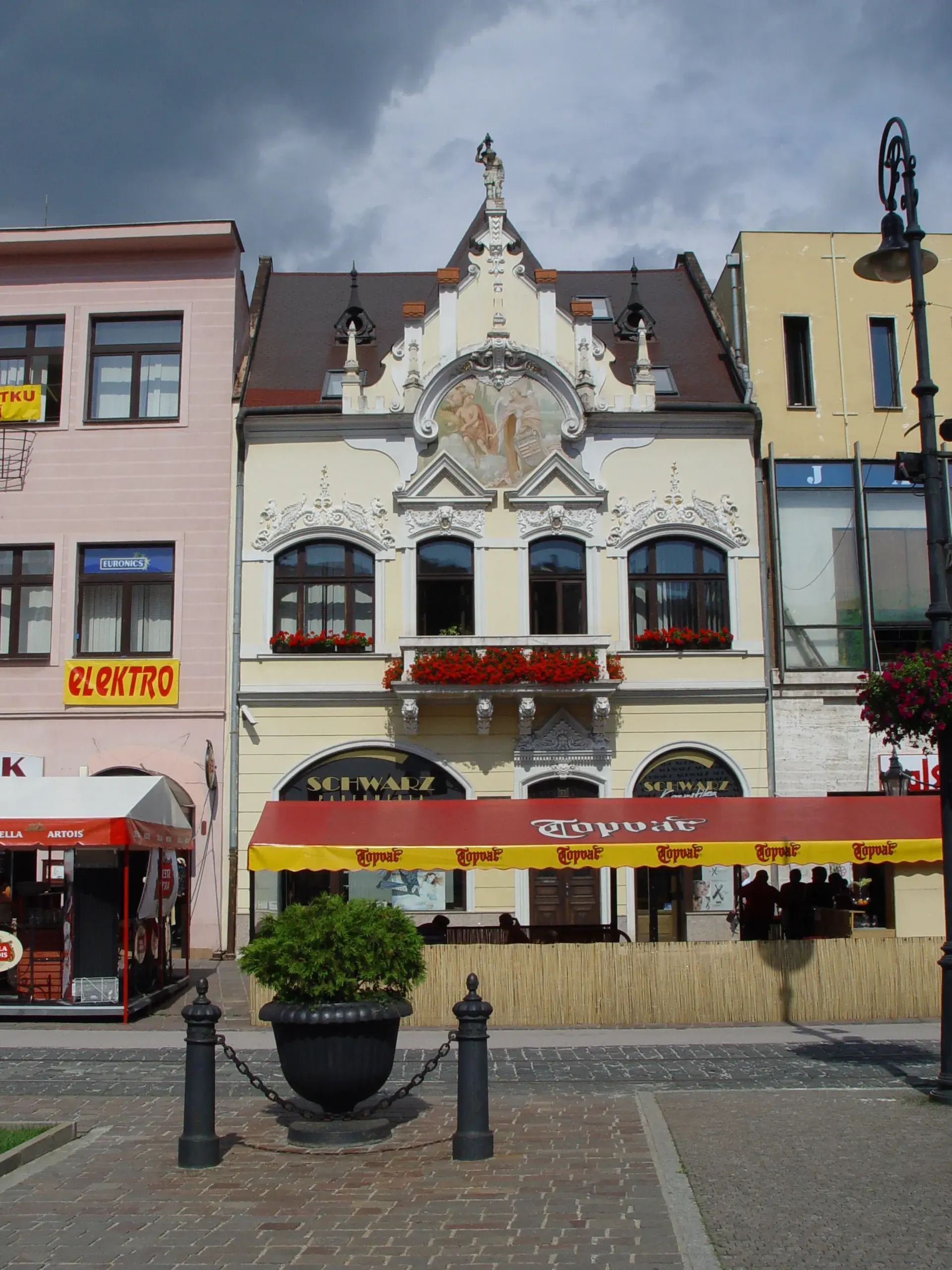
The famous Beggar's House of Kosice was actually built for a merchant. Set directly along the pedestrian spine of Hlavná ulica at number 71, Žobrákov dom stands opposite the Baroque Plague Column. This prominent landmark bridges the city's medieval town geography with its late 19th-century Art Nouveau development.
Medieval Origins to Art Nouveau
The building sits on 14th-century Gothic foundations, originally serving as a medieval townhouse. It underwent Baroque modifications in 1720 and 1760 before receiving a major reconstruction in 1898. This late 19th-century redesign transformed the property into a Romantic-Art Nouveau style, adding rich ornamentation and a distinctive balcony supported by four scroll consoles.
The Hidden Fresco
During the 1898 reconstruction, local artist Július Éder painted a colorful allegorical mural on the facade. The artwork depicts Mercury, the Roman patron deity of commerce, alongside a harvest scene and an angel holding the Košice coat of arms.
In 1956, workers plastered over the vibrant mural with grey cement rather than restoring it. The painting remained hidden for nearly four decades. In 1995, the artwork was rediscovered and restored as part of a major citywide heritage campaign preceding Pope John Paul II's visit to Košice.
The Legend of the Beggar
According to local tradition, the house was financed entirely by tax-free charitable donations collected by a remarkably clever beggar. This enduring legend claims the beggar placed the prominent hat-tipping statue on the roof to permanently thank, or mock, the townspeople who funded his prime real estate.
Despite the building's popular name, historical analysis reveals the 1.4-meter-tall roof statue actually depicts a merchant. The figure features a carved trader's purse at his right hip, a detail that aligns perfectly with the facade's mural honoring the Roman god of trade.
Modern Use
Today, the historic building maintains its commercial roots. The ground and upper floors of Žobrákov dom currently house a commercial jewelry store and a wedding ring showroom.
FAQ
Why is the building called the Beggar's House?
According to local legend, the house was built by a clever beggar who funded the property entirely through tax-free charitable donations. However, historical evidence and the building's architectural details indicate it was actually built for a prosperous merchant.
What does the statue on top of Žobrákov dom represent?
The 1.4-meter-tall statue depicts a man tipping his hat. While the popular legend claims it is a beggar thanking or mocking his donors, the statue actually represents a merchant, evidenced by a carved trader's purse at his right hip.
What is the history of the facade's painting?
The allegorical mural was painted by Július Éder in 1898, depicting the Roman god Mercury, a harvest scene, and the Košice coat of arms. It was covered with grey cement in 1956 and remained hidden until it was restored in 1995 ahead of Pope John Paul II's visit.