Bilboko Donejakue Katedrala & Done Jakue Plazatxoa
A Medieval Gathering Place
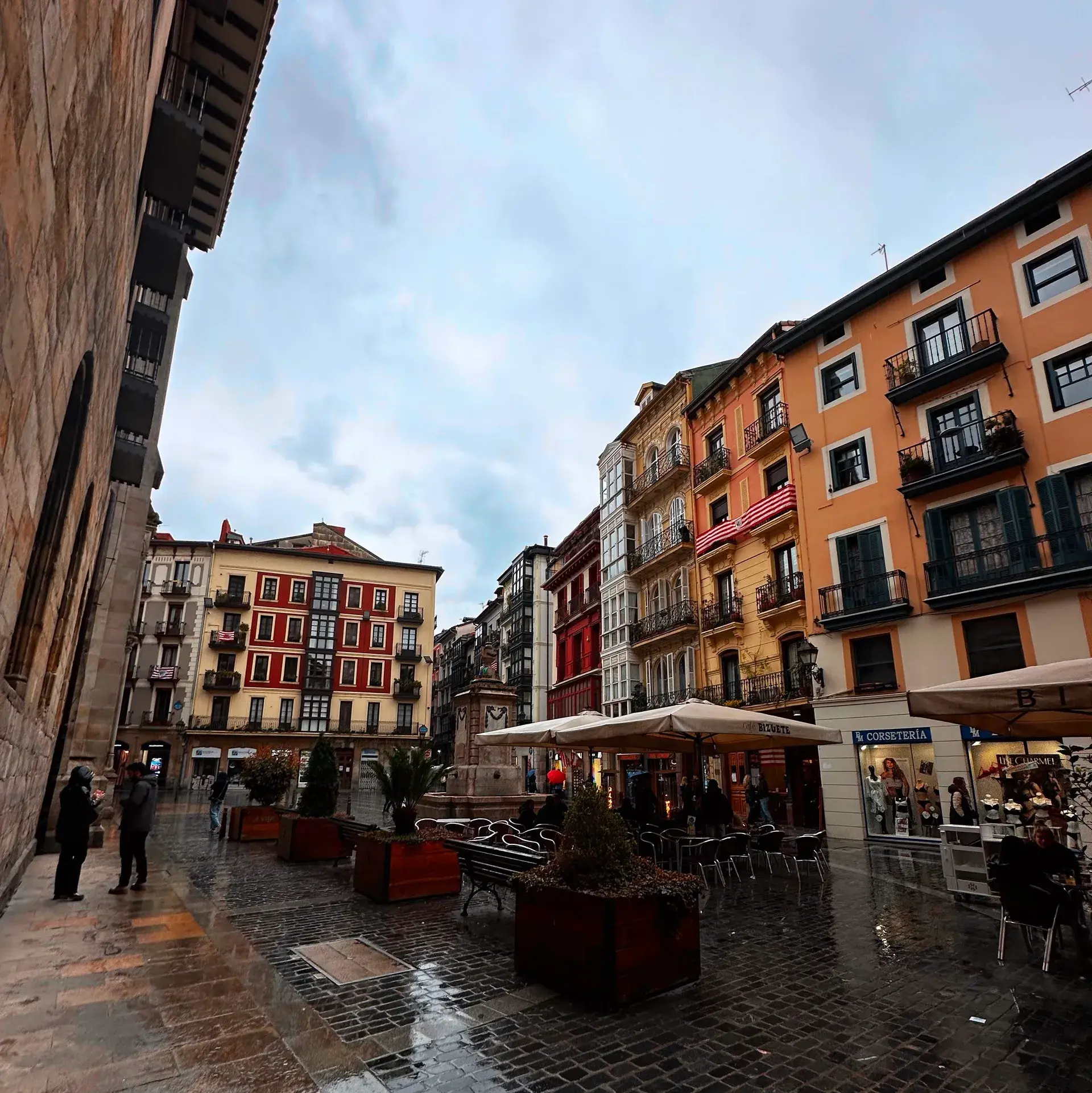
Long before Bilbao was formally chartered as a town in 1300, coastal pilgrims were already gathering at this exact spot. Today, Done Jakue Plazatxoa, also known as the Plazuela de Santiago, anchors the historic Casco Viejo. Surrounded by enclosed 19th-century residential buildings with multi-story balconies, this pedestrian plaza connects the Siete Calles network and serves as the primary waypoint for the Catedral Basílica de Santiago (Bilboko Donejakue Katedrala).
The Neo-Gothic Cathedral Facade
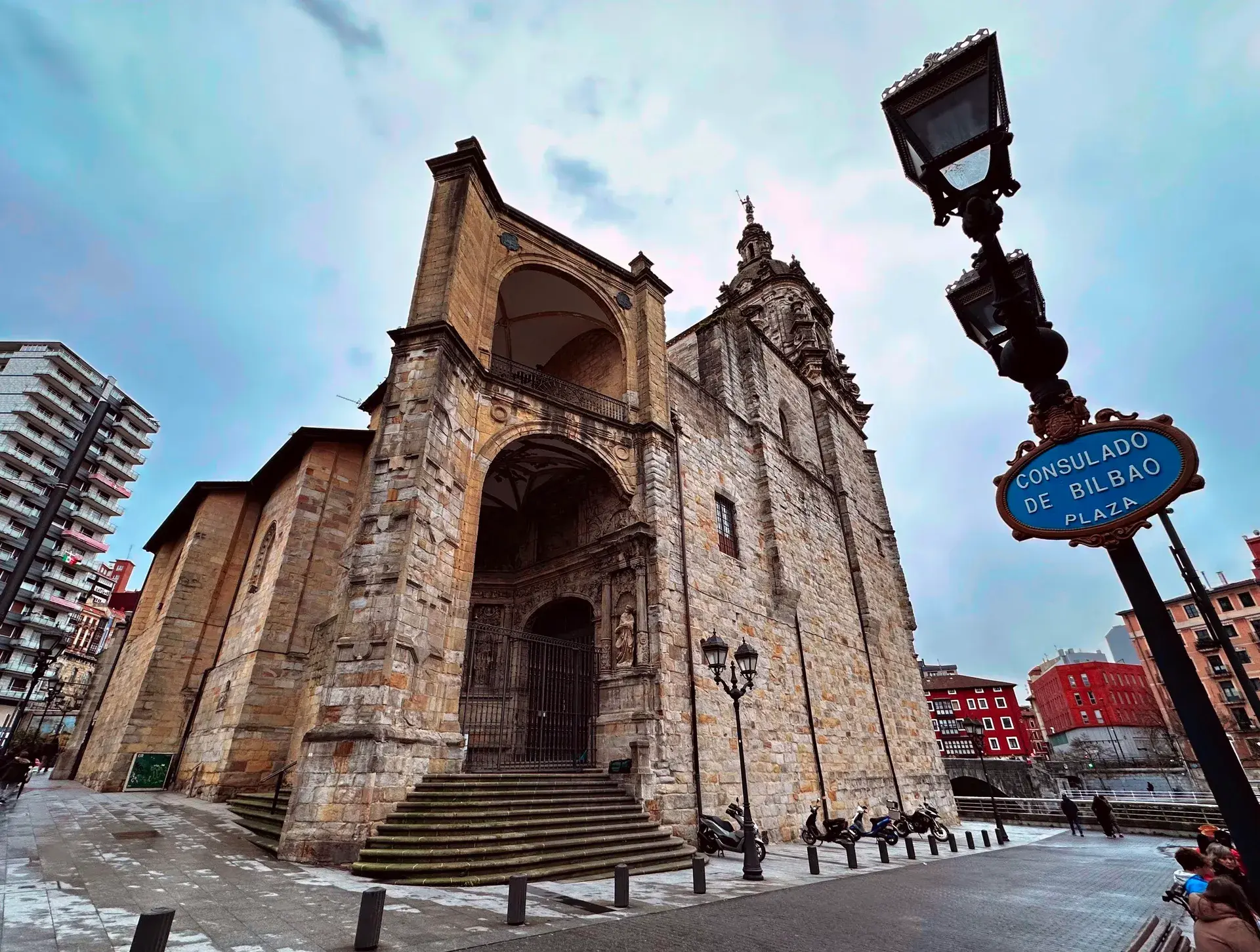
The main Gothic temple of the cathedral, which is the city's oldest church building, was constructed between the late 14th and early 16th centuries. It replaced an earlier shrine dedicated to Saint James, who was later declared Bilbao's patron saint in 1643. The towering limestone steeple and western facade that overlook the plaza today were rebuilt in a striking Neo-Gothic style by Basque architect Severino de Achúcarro, a project completed in 1887.
The Enlightenment-Era Fountain
At the center of the square stands the Fuente de Paret, an ornamental neoclassical fountain designed in 1785 by painter and architect Luis Paret y Alcázar. The monument was erected during the reign of King Carlos III as part of an Enlightenment-era municipal hygiene initiative to bring fresh water into the dense medieval street grid. The fountain features a cruciform shaft carved from fossil-rich Ereño red jasper, accented with white marble panels and bronze garlands. While it originally featured free-flowing spouts to supply water to both humans and working pack animals, it now operates with closed plumbing. Its upper tier bears the civic inscription "Por el bien público" (For the public good).
The Pilgrims' Gate
Recognized as a key urban stop on the Camino del Norte, the cathedral and the northern pilgrimage routes were designated a UNESCO World Heritage site in 2015. While the plaza faces the cathedral's main portal, a significant piece of Camino history is located above an adjacent door called the Puerta del Ángel, which connects the medieval Gothic cloister directly to the street. Above this entrance is a stone carving of a Jacobean scallop shell, the quintessential badge of the pilgrimage. Locals traditionally refer to this entrance as the Puerta de los Peregrinos (Pilgrims' Gate), as travelers walking the northern route specifically used this door to request shelter and blessings.
FAQ
When was the Catedral Basílica de Santiago built?
The main Gothic temple was constructed between the late 14th and early 16th centuries. The Neo-Gothic tower and western facade were later rebuilt and completed in 1887.
What is the fountain in Done Jakue Plazatxoa?
The Fuente de Paret is a neoclassical fountain designed in 1785 by Luis Paret y Alcázar. Made from Ereño red jasper and white marble, it was built as part of an 18th-century municipal hygiene effort.
Why is the Puerta del Ángel important to pilgrims?
Also known as the Puerta de los Peregrinos, this door was traditionally used by travelers on the Camino del Norte to enter the sanctuary and request shelter or a blessing. It is marked by a carved Jacobean scallop shell.