Plaza Miguel de Unamuno: Bilbao's Home of Basque Rap
Long before modern hip-hop, Basque poets were squaring off in the streets of Bilbao using complex, improvised rhymes. Today, Plaza Miguel de Unamuno connects the city's architectural origins with this living oral heritage, serving as the bustling northeastern gateway to the Casco Viejo (Old Quarter).
The Original A Cappella Rap Battles
Plaza Miguel de Unamuno functions as a traditional outdoor stage for bertsolaritza, an ancient Basque art of rhyming oral poetry. Bertsolaris (improvisers) stand before audiences to create a cappella verses on the spot without musical backing.
The performers must strictly adhere to complex metric schemes and rhymes while debating assigned topics. This historic cultural practice mirrors early rap battles and remains a staple during Bilbao's seasonal festivals and major celebrations like Aste Nagusia (Great Week), when the square fills with the echoing cadence of sung Basque verses.
Historical Roots and Changing Names
The open square has undergone multiple identity shifts over the centuries. It was originally named Plaza de la Cruz after a 16th-century convent. By 1925, it became Plaza de los Auxiliares, and under the Franco regime in 1937, it was changed to Plaza Brigadas de Navarra.
Following Spain's transition to democracy in 1980, the plaza was renamed to honor Miguel de Unamuno. A tall stone column featuring a bronze bust of the Generation of '98 intellectual, sculpted by Victorio Macho, now watches over the space. Unamuno himself was born in 1864 just meters away at Calle Ronda 16, a street that traces Bilbao's old medieval defensive wall.
Museums and the Pilgrimage Staircase
Surrounding the plaza is a collection of Bilbao's prominent cultural institutions. The Euskal Museoa (Basque Museum) is housed in the 17th-century former Jesuit College of San Andrés, a complex that transitioned into municipal welfare centers before becoming a public museum. Among its regional ethnographic displays is the pre-Roman Mikeldi zoomorphic idol.
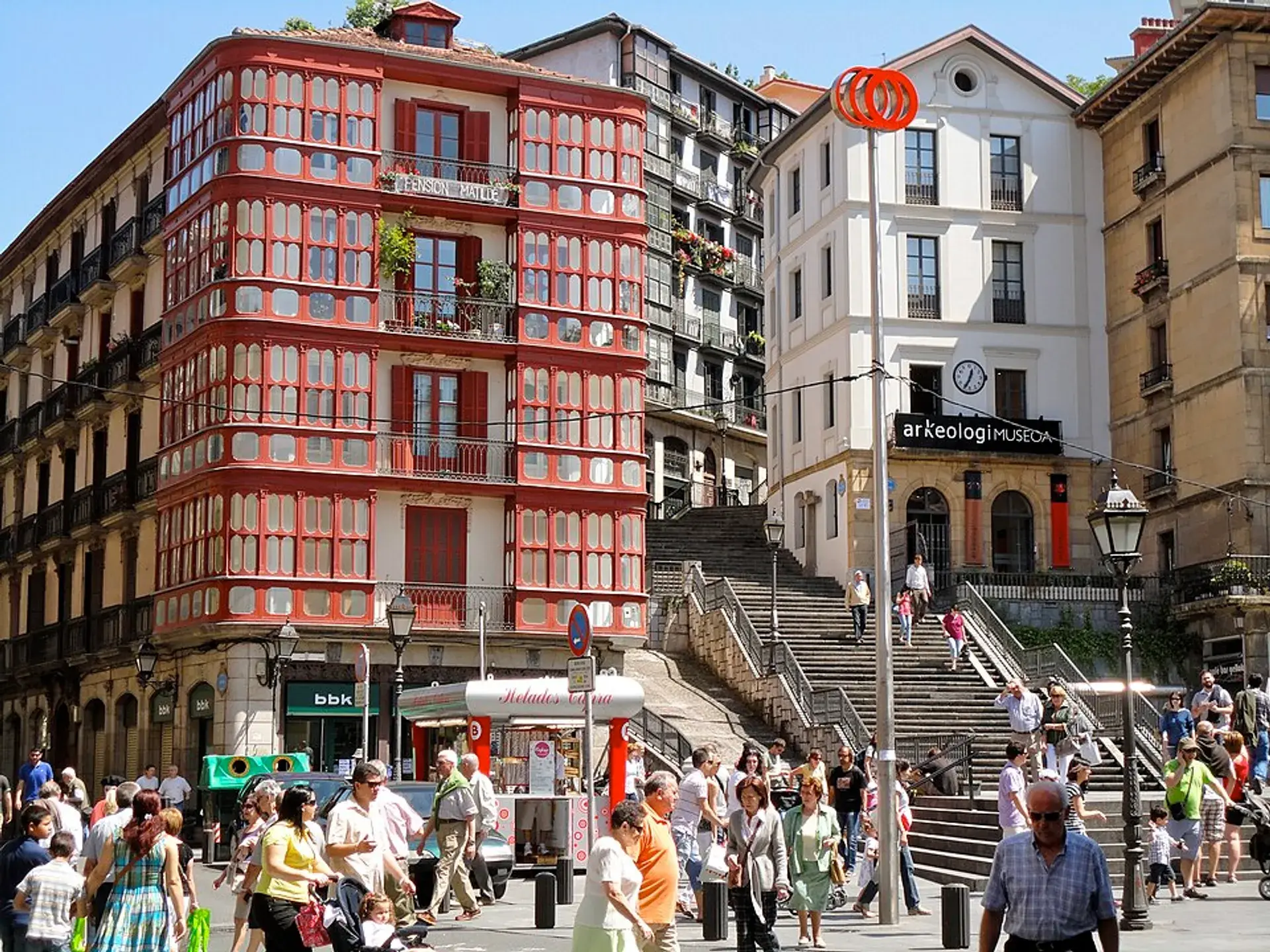
At the rear corner of the square begins the Calzadas de Mallona. Constructed in the mid-18th century, this steep stone staircase features over 300 steps. It was originally built as a pilgrimage pathway connecting the old town to the Mallona cemetery site and the Basilica of Begoña. The square is also home to the Arkeologi Museoa, dedicated to regional archaeological heritage.
A Bustling Social Meeting Point
As the intersection where Bilbao's seven historic medieval streets meet the base of the surrounding hills, Plaza Unamuno is a vibrant center for daily life. The area is heavily trafficked by commuters utilizing the adjacent Metro Casco Viejo station.
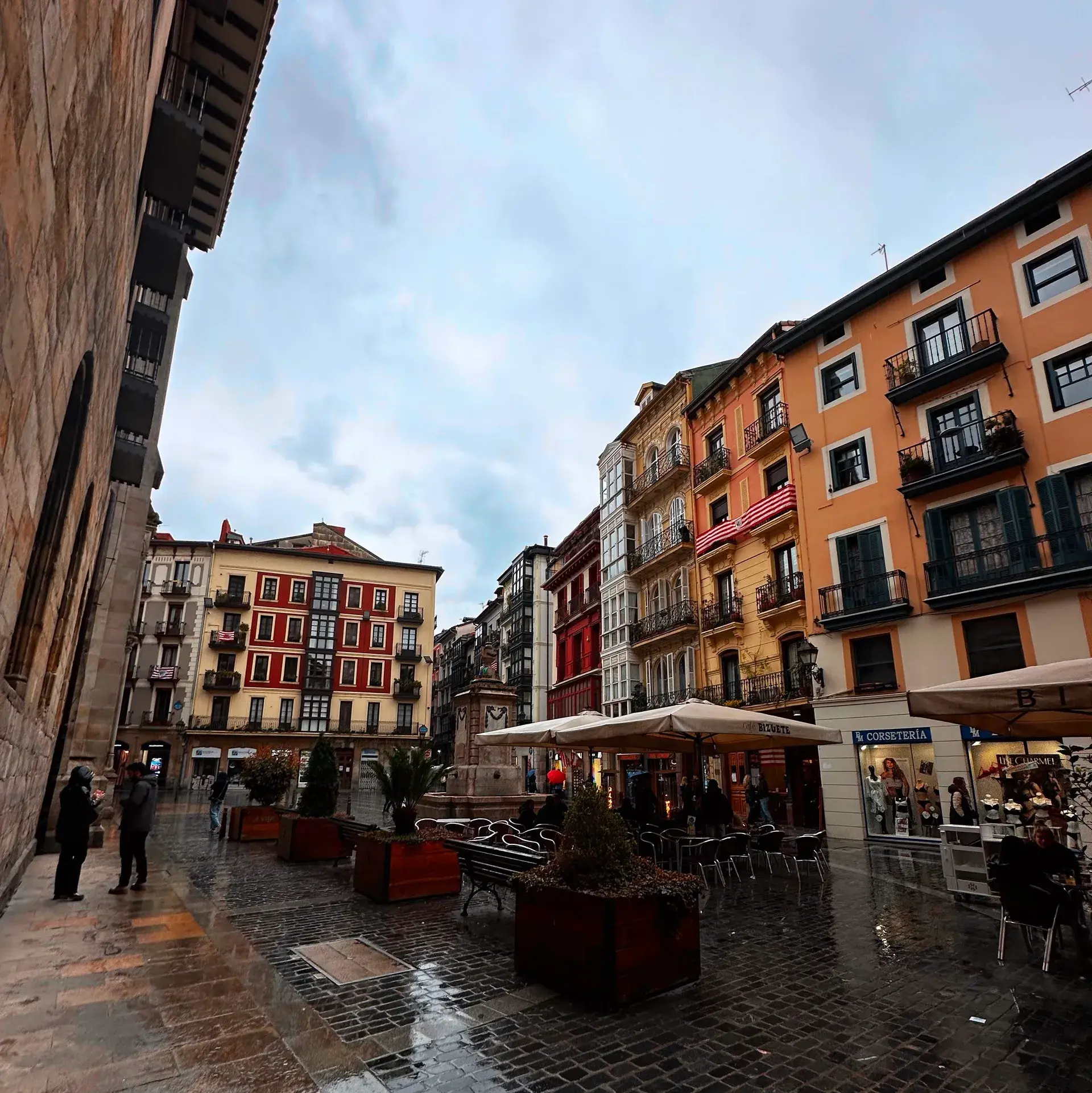
The square is packed with outdoor bar terraces and pintxo establishments. Amidst the chatter of the crowds, the plaza frequently hosts traditional Basque street musicians and txikiteo singing groups, cementing its status as an enduring social and cultural hub in Bilbao.
FAQ
What is bertsolaritza?
Bertsolaritza is an ancient Basque tradition of improvised, rhyming oral poetry performed without musical backing. Performers adhere to strict metric schemes to debate assigned topics, similar to early a cappella rap battles.
Who is Miguel de Unamuno?
Miguel de Unamuno was a leading intellectual and writer of the Generation of '98. He was born in 1864 just meters from the square at Calle Ronda 16. A bronze bust of him sits atop a stone pillar in the plaza.
What are the Calzadas de Mallona?
The Calzadas de Mallona is a historic mid-18th-century stone staircase with over 300 steps that begins at the rear corner of the square. It was originally built as a pilgrimage pathway leading to the Basilica of Begoña.
What museums are located at Plaza Miguel de Unamuno?
The square is surrounded by the Euskal Museoa (Basque Museum), housed in a 17th-century former Jesuit College, and the Arkeologi Museoa (Archaeology Museum of Bizkaia).