Statue of King Alfonso II: The First Camino Pilgrim
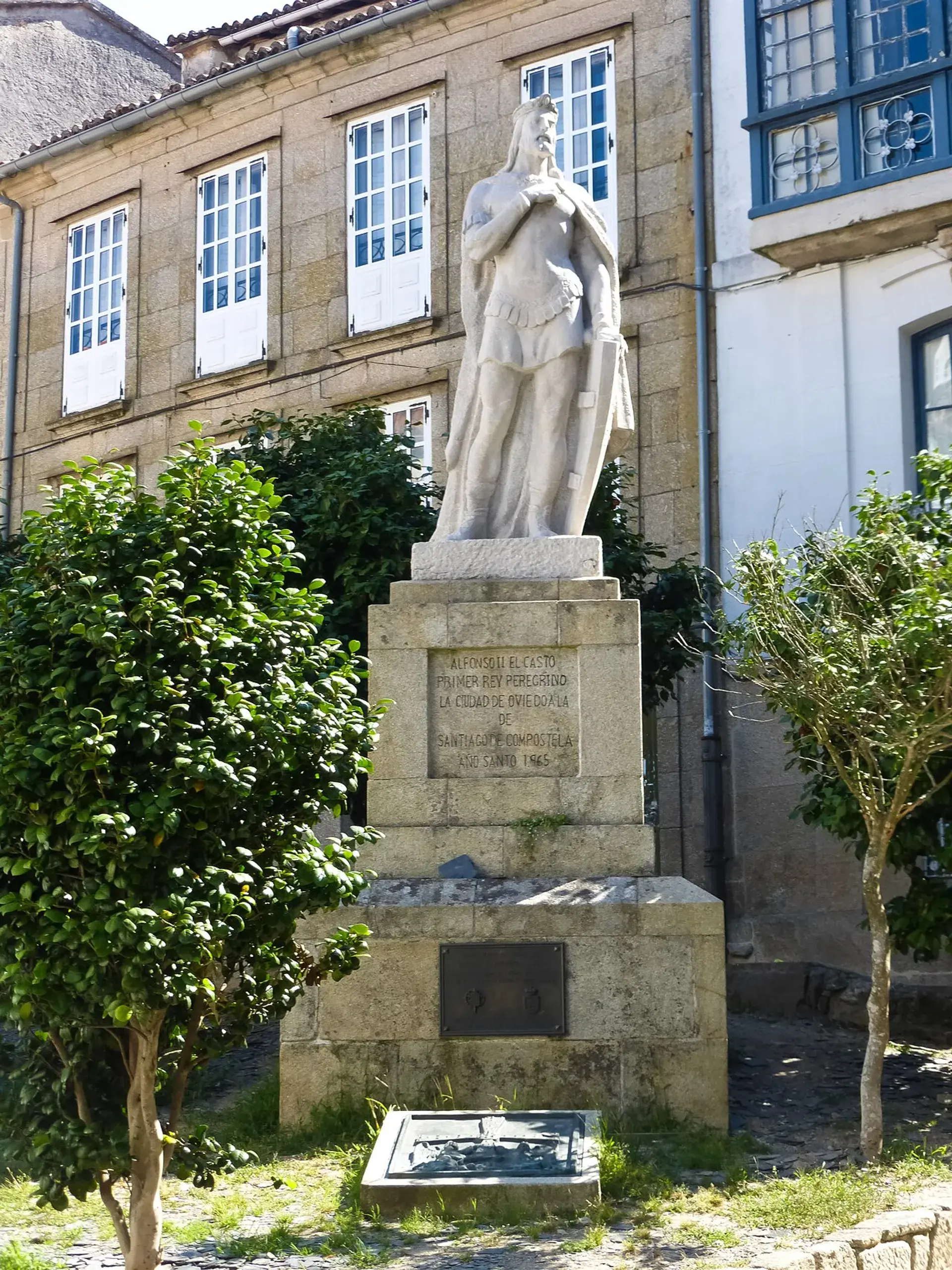
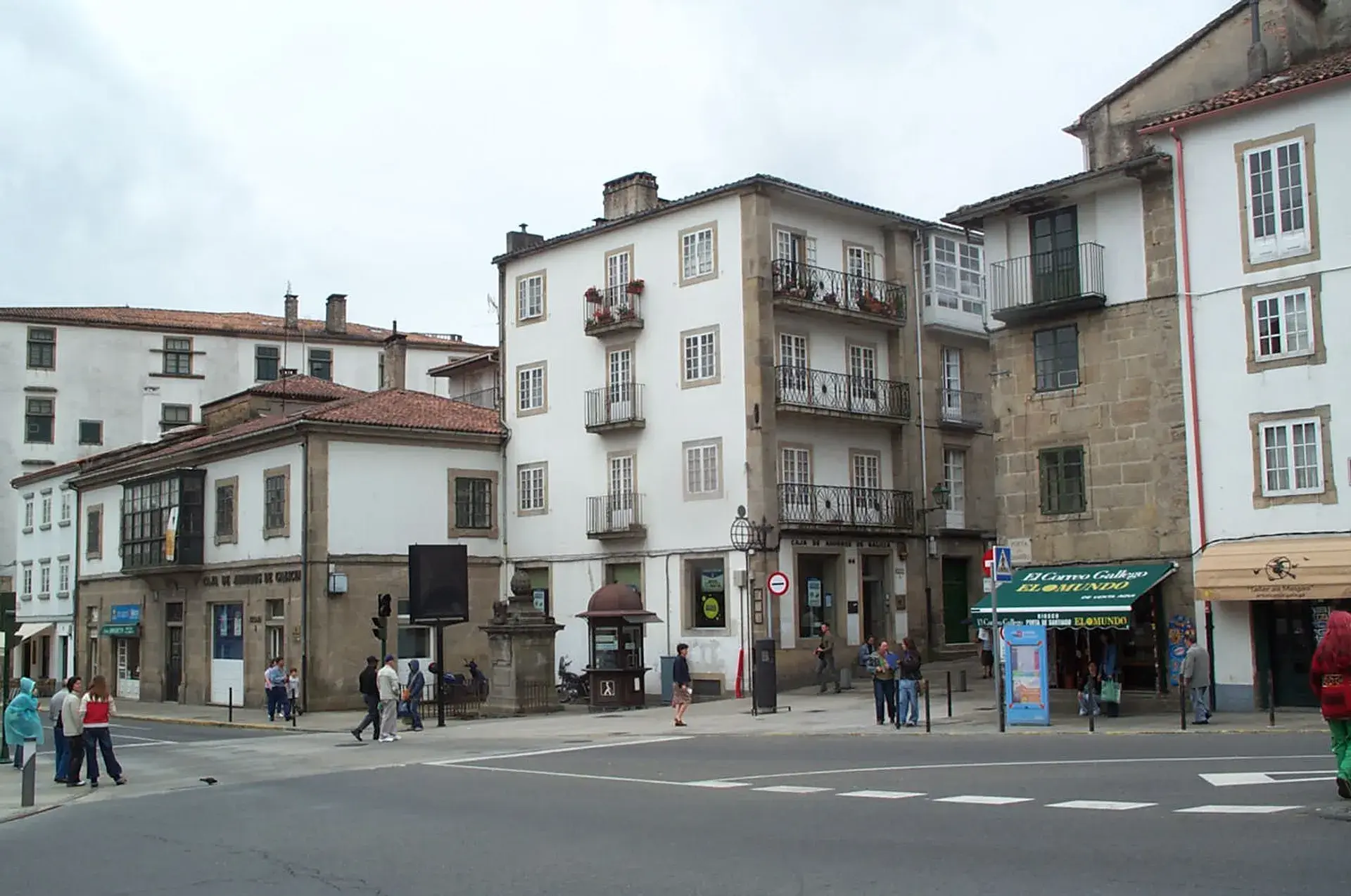
In Santiago de Compostela's Praza de Entrepaciñas, a monument stands in tribute to a pivotal figure in the city's history: King Alfonso II of Asturias, known as 'El Casto' (The Chaste). This statue commemorates the monarch whose journey in the 9th century initiated the world-renowned pilgrimage route, the Camino de Santiago.
The Reign of Alfonso II, 'The Chaste'
King Alfonso II reigned over the Kingdom of Asturias from 791 to 842 AD. His 50-year rule was marked by political stability, continuous military campaigns against the Emirate of Córdoba, and diplomatic relations with leaders like Charlemagne. Born around 759, he earned the epithet 'the Chaste' for his austere personal life. He reportedly never consummated his marriage and left no descendants, a notable trait for a monarch of his time.
The First Pilgrim and the Camino Primitivo
A defining moment of his reign occurred around 813 AD when Bishop Theodomir of Iria Flavia reported the discovery of the tomb of the Apostle St. James. To authenticate the claim, King Alfonso II embarked on a journey of over 300 kilometers from his capital, Oviedo, to the site. This act made him the first recorded pilgrim to Compostela and established the route now known as the Camino Primitivo, or the Original Way.
A Monument with a Twin
The bronze statue honoring the king in Santiago de Compostela was inaugurated in 1965. It is situated in a garden near the old University building. Interestingly, this statue is a replica. The original sculpture was created in 1942 by Víctor Hevia Granda and is located in Oviedo, the city that served as the starting point for Alfonso II's historic pilgrimage. The monument serves as a tangible link to the origins of the Camino, attracting locals, tourists, and pilgrims.
Founding a Pilgrimage Destination
After verifying the tomb's discovery, Alfonso II ordered the construction of a small church over the relics to safeguard them. This first temple, consecrated in 834 AD, was a modest structure described in texts as being made 'de piedra y barro' (of stone and mud). This was not just a religious act but also a strategic one. It legitimized the site, aiming to unite the Christian kingdoms of the Iberian Peninsula and attract settlers. His actions laid the foundation for the development of Santiago de Compostela into a major spiritual center and led to the eventual construction of the grand cathedral that stands today.
FAQ
Who was King Alfonso II of Asturias?
King Alfonso II, 'the Chaste', was the King of Asturias from 791 to 842 AD. He is recognized as the first official pilgrim to the tomb of St. James, thereby initiating the Camino de Santiago.
Why is the statue of Alfonso II in Santiago de Compostela a replica?
The statue in Santiago is a replica of a 1942 work by sculptor Víctor Hevia Granda. The original is located in Oviedo, the capital of Asturias and the starting point of King Alfonso II's pilgrimage, creating a symbolic link between the two cities.
Why was King Alfonso II called 'the Chaste'?
He earned the nickname 'el Casto' or 'the Chaste' due to his austere Christian life. It is reported that he never consummated his marriage and had no children.
What was the first church built over St. James's tomb?
King Alfonso II ordered the construction of the first temple. It was a modest church made of stone and mud, consecrated in 834 AD, which was later replaced by a larger basilica under Alfonso III.