San Martiño Pinario: A Monumental Monastery in Santiago
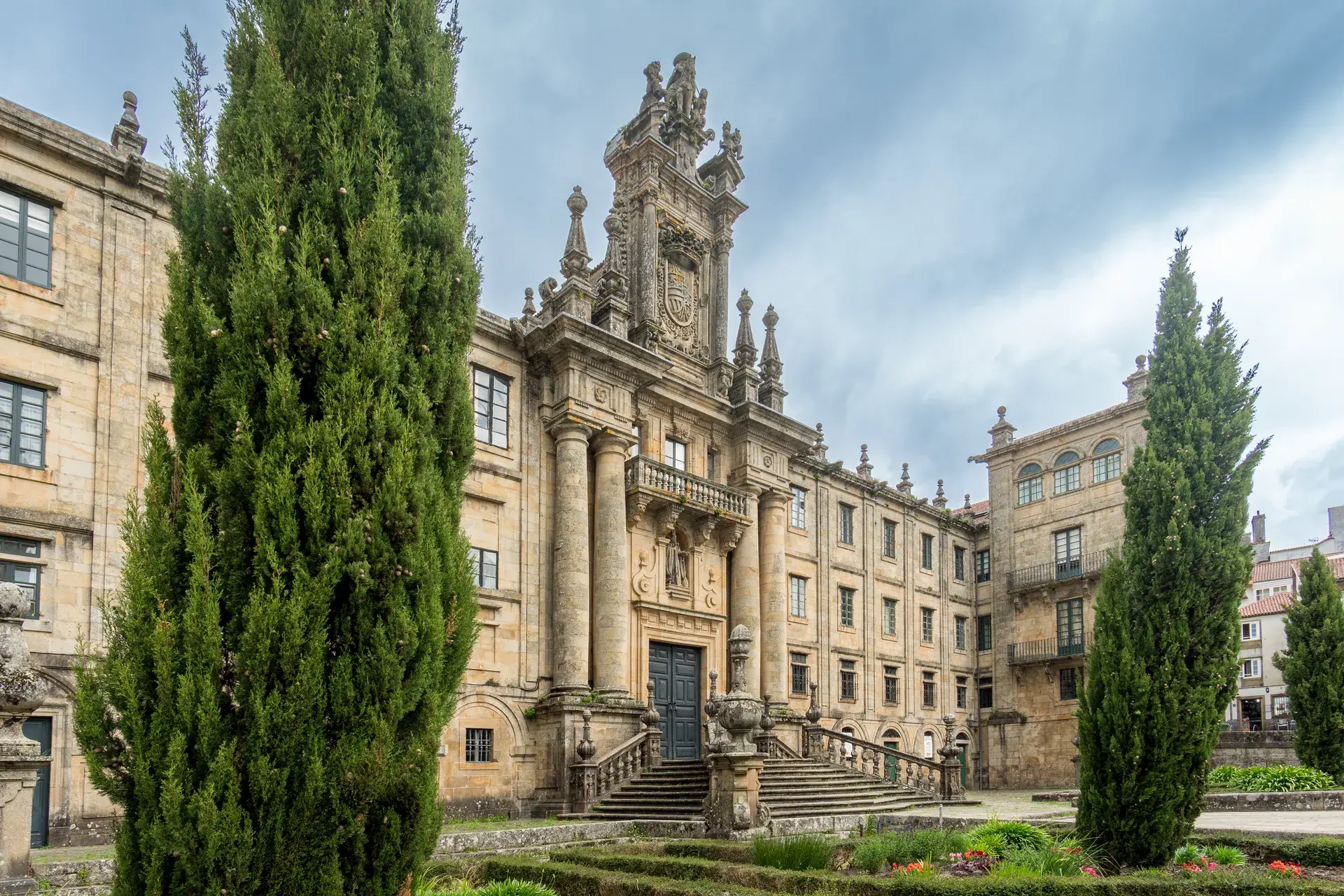
Standing opposite the north facade of the Santiago de Compostela Cathedral, the Igrexa de San Martiño Pinario is a colossal monument to monastic power and artistic achievement. As the second-largest monastery in Spain, its vast structure tells a story of centuries of religious, cultural, and economic influence in Galicia.
A History of Power and Reconstruction
The monastery's origins date to around 899 AD, when a community of Benedictine monks was established after being relocated to make way for the construction of a new cathedral. An early Romanesque church on this site was consecrated in 1102 by Bishop Diego Gelmírez. By the end of the 15th century, San Martiño Pinario had become the wealthiest and most powerful monastic institution in Galicia, controlling most other monasteries in the region.
This immense prosperity fueled a near-complete reconstruction of the complex beginning in the 16th century. The building seen today is largely a product of this extensive project, which spanned centuries and involved a succession of prominent architects. The monastery's history took a dramatic turn in 1835 with the Ecclesiastical Confiscations of Mendizábal, which led to its closure and the expulsion of the Benedictine community.
Architectural Grandeur and Rivalry
The architecture of San Martiño Pinario is a magnificent blend of Renaissance, Baroque, and Neoclassical styles. The main facade of the church, designed by Fray Gabriel de las Casas starting in 1697, is a Baroque masterpiece. The overall complex, however, showcases the work of numerous masters, including Mateo López, Bartolomé Fernández Lechuga, and Fernando de Casas y Novoa.
Despite its grandeur, the monastery's design reflects a historical rivalry with its powerful neighbor. The cathedral chapter of Santiago successfully opposed plans by architect José Peña de Toro to build taller towers for the monastery's church. This was done to ensure that the Santiago Cathedral would remain the visually dominant structure in the city's skyline.
Remarkable Interior Features
Inside, the church holds several artistic treasures. The main altarpiece is an ingenious double-faced work by Fernando de Casas y Novoa, the same architect who designed the Cathedral's famous Obradoiro facade. It presents a distinct, elaborate composition towards the public in the nave and a separate one towards the choir for the exclusive use of the monastic community.
The magnificent Renaissance choir stalls, now located in the high choir, have their own unique history. They were originally crafted for the Santiago de Compostela Cathedral but were moved to San Martiño Pinario in the 1940s, where they have remained since 2004 after restoration.
The Monastery Today
San Martiño Pinario continues to be a vital part of Santiago de Compostela's spiritual and academic life. The complex currently houses the Major Seminary of the Archdiocese and the Diocesan Archive. It also serves as a university facility with classrooms for the Department of Theology and Social Work. A portion of the building operates as a hotel, while another section is a museum of religious art, displaying collections of paintings, sculptures, liturgical items, and the monastery's historic pharmacy.
FAQ
Why is San Martiño Pinario so large?
By the late 15th century, it had become the wealthiest and most powerful monastery in Galicia. This wealth funded its massive expansion, making it the second-largest monastery in Spain, covering approximately 20,000 square meters.
What is the connection between San Martiño Pinario and the Santiago Cathedral?
The monastery was founded for monks displaced by the Cathedral's construction. They also had a historical rivalry; the Cathedral chapter successfully prevented the monastery from building taller towers so it would not overshadow the Cathedral.
What is unique about the main altarpiece in the church?
Designed by Fernando de Casas Novoa, the main altarpiece is double-faced. It has one ornate side facing the public in the nave and a separate design facing the choir, which was intended for the monastic community.
Where did the choir stalls in San Martiño Pinario come from?
The Renaissance choir stalls were not originally made for the monastery. They were created for the Santiago de Compostela Cathedral and were moved to San Martiño Pinario in the 1940s.