Igrexa de San Paio de Antealtares: A History in Santiago
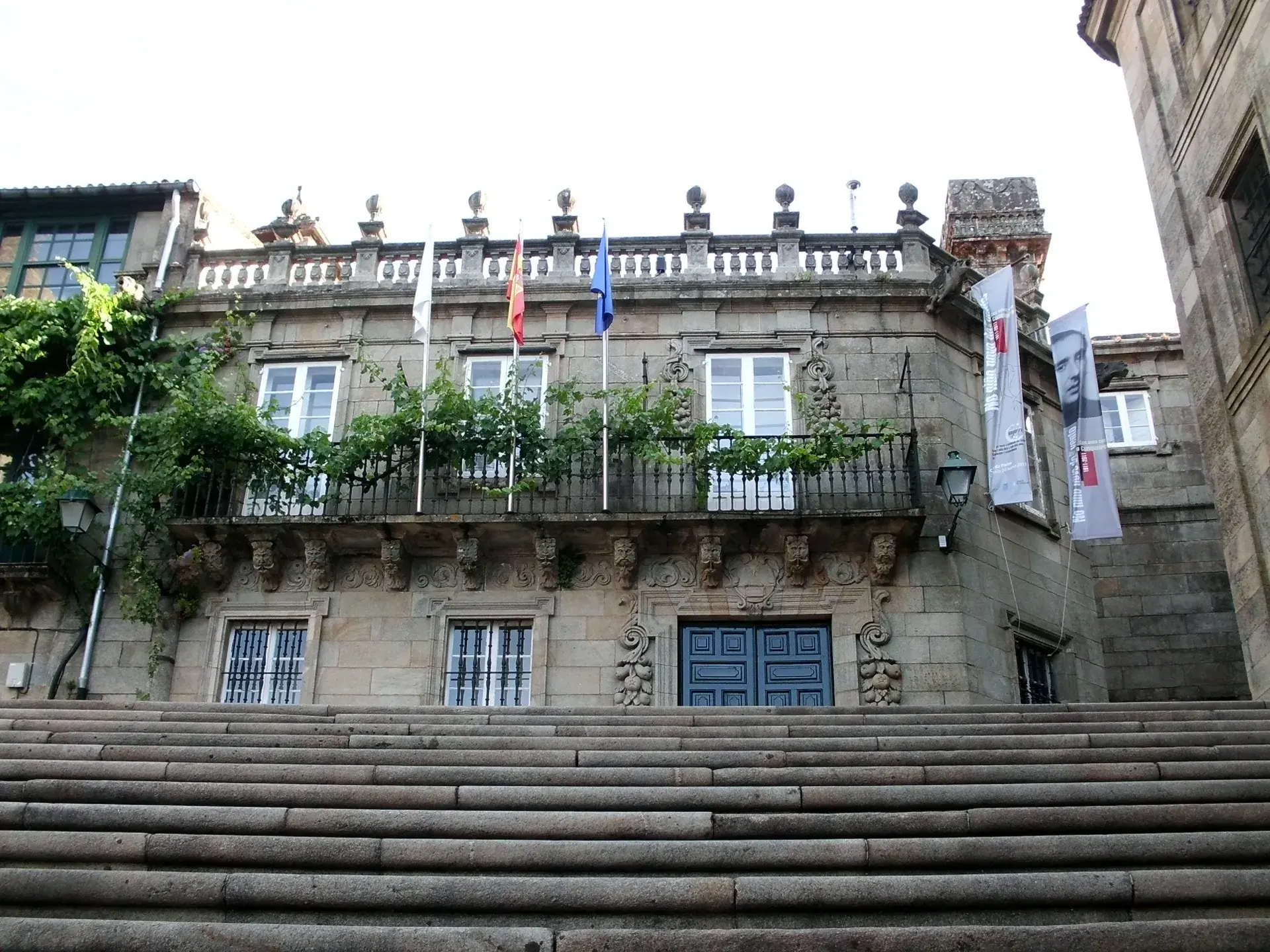
The Igrexa de San Paio de Antealtares stands as a significant landmark on A Quintana Square in Santiago de Compostela. Its commanding Baroque facade hints at a deep history intertwined with the city's most sacred site. Originally established to protect the tomb of Saint James, the monastery has evolved over centuries into the active religious and cultural institution it is today.
A History of Guardianship
The Monastery of San Paio de Antealtares was founded around 814 AD by King Alfonso II. Its name, meaning "before the altar," reflects its original purpose: twelve Benedictine monks were tasked with safeguarding the newly discovered tomb of the Apostle St. James and conducting liturgical services. The monastery endured significant challenges, including destruction during Almanzor's raid in 997, which required its complete reconstruction.
In 1499, a major transformation occurred. Following a period of decline for the monks, the monastery was reformed and became a Benedictine nunnery for cloistered nuns. It grew in prominence during the 17th and 18th centuries, attracting women from noble families whose donations contributed to its status and architectural grandeur.
Baroque Architecture and A Quintana Square
The present structure is a masterpiece of Baroque architecture, largely constructed between 1599 and 1744. Renowned architects like Fernando de Casas y Novoa and Lucas Ferro Caaveiro contributed to its design. The church itself was designed by Friar Gabriel de las Casas between 1703 and 1707.
The monastery faces A Quintana Square, a space that was developed around 1611 from a former medieval cemetery. The square is famously divided into two levels: the upper "Quintana de Vivos" (Quintana of the Living) and the lower "Quintana de Mortos" (Quintana of the Dead), a direct reference to its past use for burials.
The Monastery Today
San Paio de Antealtares remains an active Benedictine monastery, home to a community of approximately 40 cloistered nuns. They continue to participate in daily liturgy, and the sounds of their Gregorian chants can be heard from the church. The monastery also operates a student residence, a hostel, and a nursery school.
Within the monastery is the Museum of Sacred Art, which is accessible from the upper level of the plaza. The museum's collection contains significant artifacts, including the primitive altar believed to have once stood with the sarcophagus of the Apostle Santiago.
The Holy Door
The monastery overlooks the rear of the Santiago Cathedral and the Holy Door (Porta Santa). This special entrance is only opened during Jacobean Holy Years, which occur when St. James's Day (July 25th) falls on a Sunday. On the preceding December 31st, the Archbishop of Santiago ceremonially opens the door, allowing pilgrims to pass through for the entire year to obtain plenary indulgence. While the tradition of indulgence dates to the 12th century, the current Holy Door and its Baroque facade were constructed in the 16th and 17th centuries, respectively.
FAQ
What does the name 'Antealtares' mean?
The name 'Antealtares' translates to 'before the altar.' It refers to the monastery's original 9th-century mission to guard the tomb and altar of the Apostle St. James.
Is the Monastery of San Paio de Antealtares still active?
Yes, it is an active Benedictine monastery with a community of approximately 40 cloistered nuns who perform daily liturgy, including Gregorian chant. The complex also includes a student residence, hostel, and nursery.
What is the most important artifact in the Museum of Sacred Art?
The museum's most significant exhibit is the primitive altar that is believed to have originally accompanied the sarcophagus of the Apostle Santiago.
When does the Holy Door open?
The Holy Door is opened only during Jacobean Holy Years, which happen when July 25th falls on a Sunday. It is ceremonially opened on December 31st of the prior year and remains open for the entire Holy Year. The next Holy Year is scheduled for 2027.