O Peregrino Escondido: The Hidden Pilgrim of Santiago
In Santiago de Compostela, on a wall of the great Cathedral, a mysterious figure appears after dark. This is O Peregrino Escondido, or 'The Hidden Pilgrim.' It is not a sculpture carved in stone but an ephemeral optical illusion, a silhouette that has become a powerful symbol for the countless pilgrims who complete their journey here.
An Accidental Phenomenon
The image of the Hidden Pilgrim is an entirely accidental creation. The silhouette is a shadow cast by a granite support column for the Cathedral's lightning rod system, which was first installed in the late 19th century. The interplay between the column's shape and the city's nocturnal lighting forms the distinct figure of a pilgrim holding a staff.
The granite column itself was meticulously carved to blend seamlessly with the historic architecture of the Cathedral. However, its placement and the subsequent addition of artificial lighting unintentionally gave birth to this beloved local curiosity.
Legends of the Shadow
Over time, several legends have emerged to explain the mysterious shadow. One popular tale claims it is the soul of an errant pilgrim, condemned to eternally watch over others arriving at the Cathedral. Another story speaks of a priest who fell in love with a cloistered nun from the nearby Convento de San Paio de Antealtares. He would wait for her every night in this spot, and his shadow remains as a testament to his unfulfilled love.
A more dramatic narrative identifies the shadow as Leonard du Revenant, a 15th-century French fugitive who sought forgiveness for his crimes in Santiago. According to the legend, he was condemned to an eternal vigil at the Cathedral. For many, the figure simply symbolizes the unseen spiritual presence that accompanies pilgrims on their long walk, becoming visible only at the journey's end.
A Modern Point of Interest
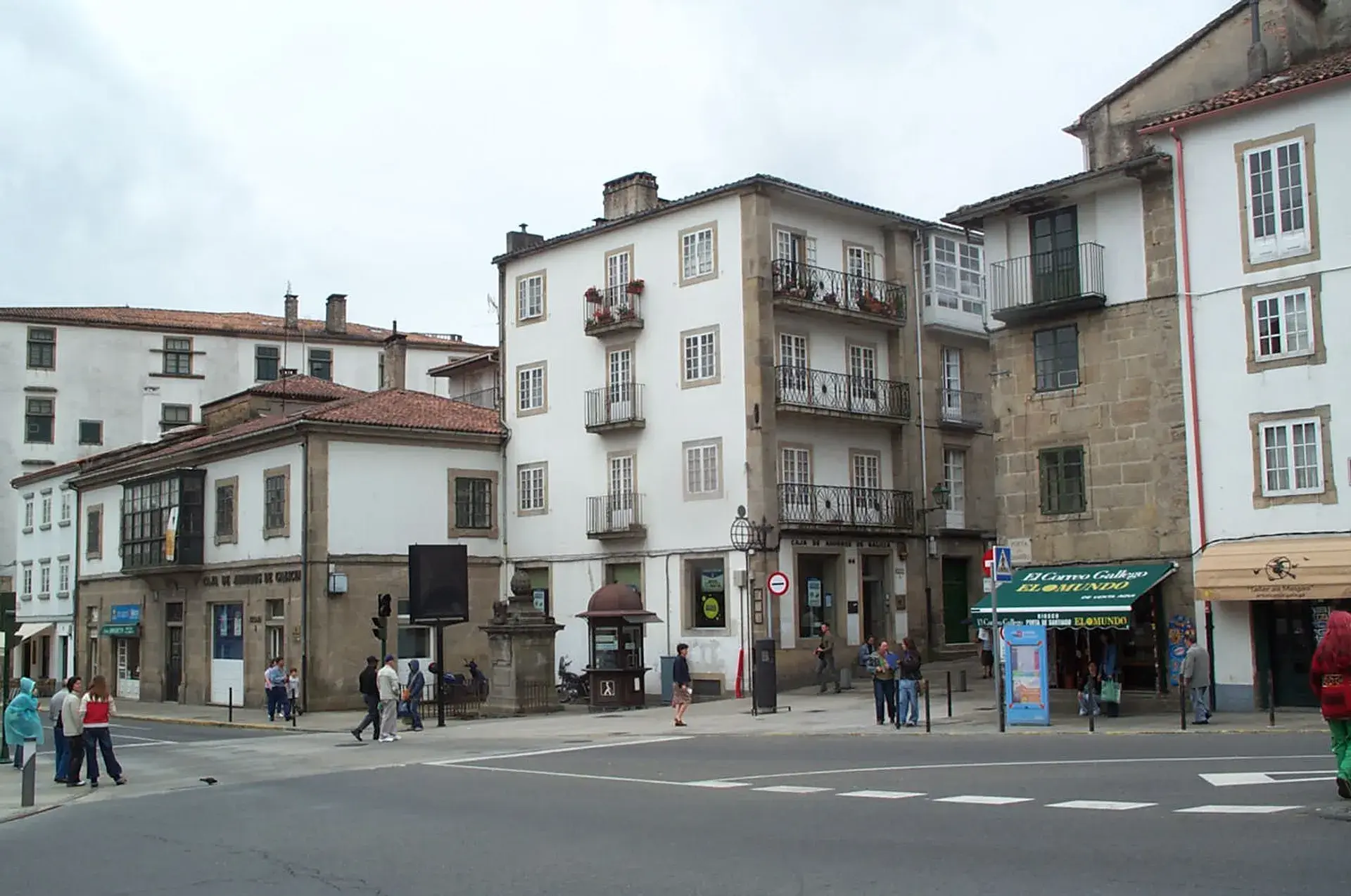
Today, O Peregrino Escondido is a celebrated nocturnal attraction for both pilgrims and tourists. After dusk, visitors gather in the Praza da Quintana to witness and photograph the elusive figure. The square itself has a rich history, once being divided into the 'Quintana de Vivos' (Square of the Living) and 'Quintana de Mortos' (Square of the Dead), as it served as a burial ground.
The shadow offers a moment of reflection, a tangible, though fleeting, connection to the city's mystical side. It enriches the narrative of the Camino de Santiago, adding a layer of subtle magic to the culmination of a pilgrim's quest.
FAQ
What is O Peregrino Escondido?
O Peregrino Escondido, or 'The Hidden Pilgrim,' is an optical illusion. It is a shadow resembling a pilgrim with a staff that appears at night on a wall of the Cathedral of Santiago de Compostela.
Where can you see the Hidden Pilgrim?
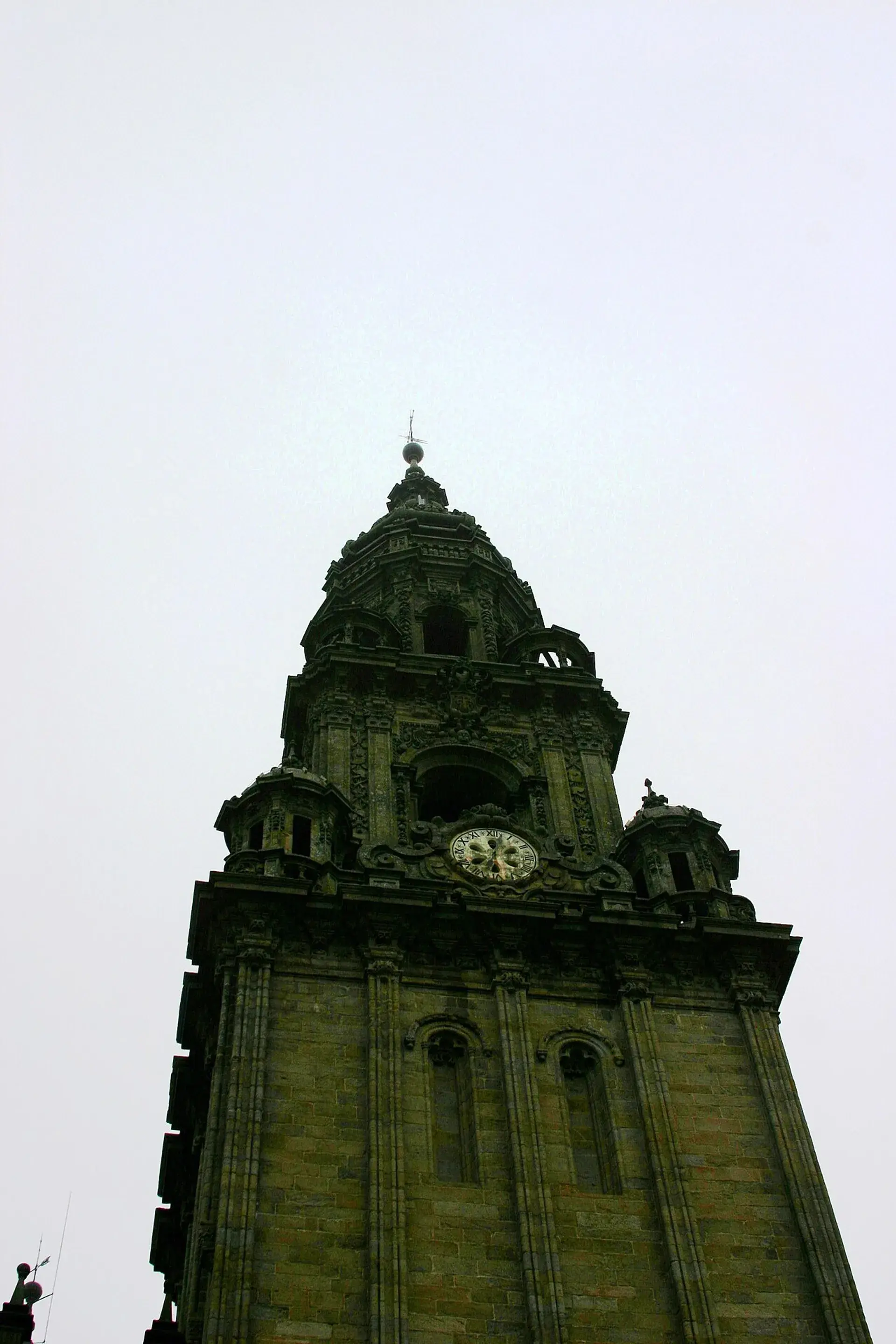
The shadow is visible after dark in the Praza da Quintana, appearing on the Cathedral wall near the Puerta Real and the Torre do Reloxo (Clock Tower).
Was the Hidden Pilgrim shadow created on purpose?
No, the shadow is an accidental phenomenon. It is created by the interplay of light and shadow from a granite support column for a lightning rod, which was installed in the late 19th century.
What does the Hidden Pilgrim symbolize?
The Hidden Pilgrim symbolizes the unseen presence that accompanies pilgrims on their journey, the enduring spirit of the Camino de Santiago, and the countless individuals who have completed the pilgrimage.