Praza das Praterías: Santiago's Silversmiths' Square
Praza das Praterías, or Silversmiths' Square, is one of the four principal squares surrounding the magnificent Santiago de Compostela Cathedral. This historic plaza is defined by its unique collection of architectural treasures, including the Cathedral's only intact Romanesque facade, an ornate fountain, and a surprisingly deceptive Baroque building.
A History Forged in Silver
The square's name originates from the medieval silversmith guilds whose workshops once lined the area beneath the Cathedral's cloister. Established in the 11th century as part of Archbishop Diego Gelmírez's urban plan, it became a vibrant commercial hub. Artisans, including leather workers, jet carvers, and scallop shell vendors, catered to the pilgrims arriving from the Camino de Santiago. The square's current layout, a blend of Renaissance and Baroque styles, evolved from the 16th to the 19th centuries. Its history also includes turmoil; popular uprisings in the early 12th century caused severe damage to the Cathedral's south facade, which required significant reconstruction.
Architectural Highlights
Praza das Praterías serves as a condensed display of Santiago's layered history, showcasing Romanesque, Gothic, and Baroque styles. The southern facade of the Cathedral, known as the Puerta de las Platerías and dating to 1103 AD, is the Cathedral's only remaining original Romanesque doorway.
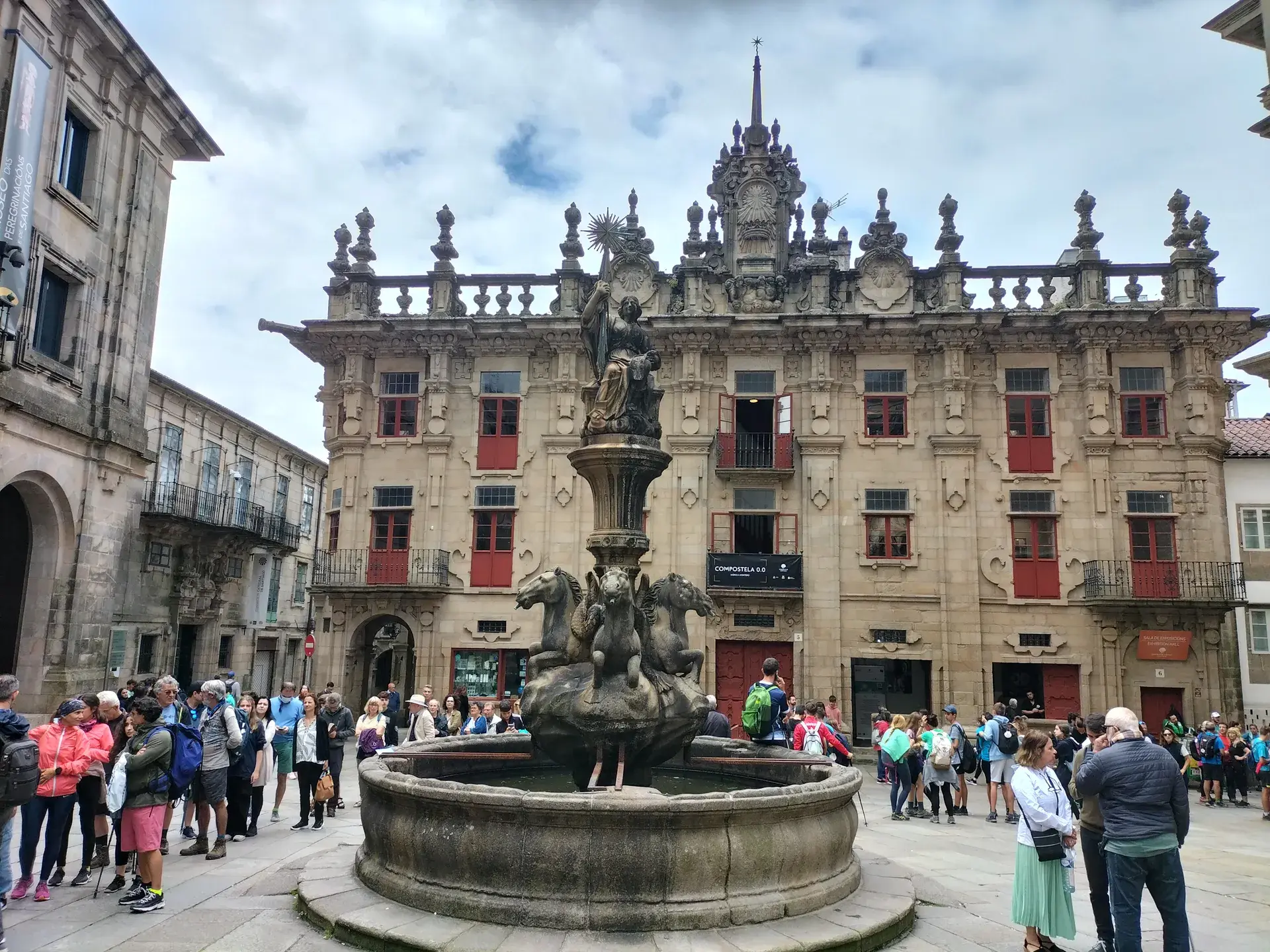
In the center stands the Fonte dos Cabalos (Fountain of Horses), added around 1825. This fountain, featuring four horse heads, famously inspired Federico García Lorca's poem 'Dance of the Moon in Santiago.'
Facing the Cathedral is the Casa do Cabildo, a Baroque guildhall house completed in 1758. Designed by Clemente Fernández Sarela, this grand building holds a secret: it is a purely scenographic facade, only about three meters deep, constructed to beautify and frame the square. Other notable structures include the Romanesque Pazo de Xelmírez (1120-1134) and the partially visible Berenguela (Clock Tower).
The Square Today
Praza das Praterías remains a bustling public space for locals, tourists, and pilgrims. It is a popular gathering point, with street performers and musicians often adding to the lively atmosphere. The surrounding area is filled with restaurants, cafes, and shops selling local crafts and religious artifacts, and some silversmiths still operate here. The Casa do Cabildo now serves as an art exhibition space. For many modern pilgrims, the square is a primary entry point into the Cathedral, especially while other entrances undergo restoration.
FAQ
Why is it called Praza das Praterías?
The square is named for the medieval silversmiths (praterías) who established their workshops and sold their wares to pilgrims in this area.
What is the most surprising feature of the square?
The Casa do Cabildo, a grand Baroque building, is actually a decorative facade only about three meters (10 feet) deep, built to enhance the square's appearance.
What is historically significant about the Cathedral facade in this square?
The southern facade in Praza das Praterías, the Puerta de las Platerías, is the Santiago de Compostela Cathedral's only original Romanesque doorway, dating back to 1103 AD.
What is the Fonte dos Cabalos?
The Fonte dos Cabalos, or Fountain of Horses, is the central fountain in the square, built in the 1820s. It is known for its four horse heads and for inspiring a poem by Federico García Lorca.