Kindlifresserbrunnen: Bern's Child Eater Fountain
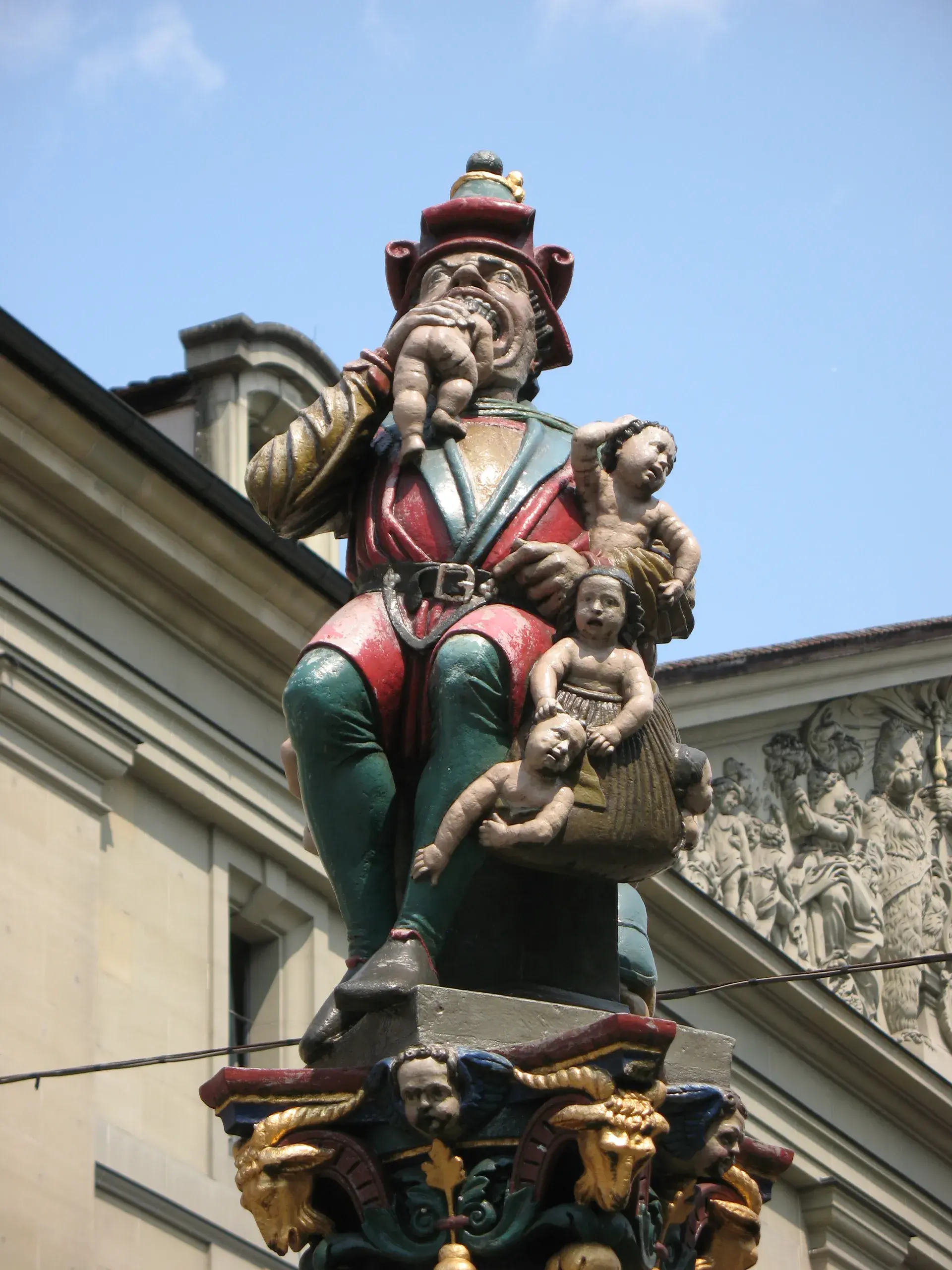
A brightly painted, 16th-century ogre devouring a sack of infants stands over a functioning drinking fountain at the center of a busy plaza. Located on Kornhausplatz in the Old City of Bern, Switzerland, the Kindlifresserbrunnen (Child Eater Fountain) is a captivating and chilling public landmark. Sculpted in 1545–1546 by Swiss Renaissance artist Hans Gieng, the monument features a seated giant shoving a naked child headfirst into his jaws while a sack of frightened infants rests slung over his shoulder.
A Bizarre Masterpiece of the Swiss Renaissance
The painted stone sculpture sits atop an ornate Corinthian-style column over a water basin. Its vivid polychrome colors stand in stark contrast to the gray-green molasse sandstone architecture of the surrounding Old Town. Directly beneath the terrifying ogre, a decorative frieze wraps around the column's base. Attributed to Hans Rudolf Manuel Deutsch, this band depicts small, upright bears dressed in full Swiss Renaissance armor, carrying halberds, and playing military instruments.
The Kindlifresserbrunnen is one of over 100 public fountains in Bern, belonging to a famous group of 16th-century painted allegorical figure fountains that line the historic streetscape. Today, the sound of running water spouting from the central column mixes with the rumble of Bern’s modern tram network crossing Kornhausplatz.
Theories Behind the Child Eater
The fountain originally replaced an older 15th-century wooden structure and was initially known simply as the Platzbrunnen (Plaza Fountain). The name Kindlifresserbrunnen first appeared in historical records in 1666. Because the definitive historical intent behind the figure was never recorded, its meaning remains the subject of widespread debate.
Various theories attempt to explain the gruesome depiction. Some believe it is a carnival bogeyman designed as a visual warning to frighten children away from dangerous city trenches and bear pits. Others suggest it is a mythological representation of the Titan Cronus devouring his children. Alternative interpretations propose it is a political allegory representing foreign powers or Cardinal Schiner consuming the Swiss cantons, or a local myth about the jealous elder brother of Bern’s founder, Duke Berchtold V von Zähringen.
Modern Controversies and Context
Scholars have also raised concerns that the statue reflects anti-Semitic blood libel tropes. The ogre wears a pointed hat that bears a strong resemblance to a medieval Judenhut, a mandatory headpiece forced upon Jewish populations in some parts of medieval Europe. Acknowledging this debate, the City of Bern affixed an explanatory information plaque in front of the fountain in 2024 to provide historical context regarding the potentially anti-Semitic imagery.
Hidden Curiosities and Cultural Impact
Despite its grim subject matter, the fountain has maintained an enduring cultural presence. It notably served as the central motif for the 1973 French-language novel L'Ogre by Swiss author Jacques Chessex.
Physical preservation of the fountain has also yielded historical surprises. During relocation works for tram renovations in 1997, conservators made an unexpected discovery: the fountain's original 16th-century date was found engraved directly into the floor of the basin. Today, the fountain continues its original civic purpose, operating as a functional landmark that provides fresh drinking water to the public.
FAQ
Where is the Kindlifresserbrunnen located?
The Kindlifresserbrunnen is located on Kornhausplatz in the Old City of Bern, Switzerland.
Who created the Kindlifresserbrunnen?
The fountain was sculpted by Swiss Renaissance artist Hans Gieng between 1545 and 1546.
What does the Child Eater Fountain represent?
Its exact meaning is unknown, but theories suggest it could be a carnival bogeyman meant to frighten children, a depiction of the Titan Cronus, a political allegory, or a reflection of medieval anti-Semitic tropes.
Can you drink the water from the Kindlifresserbrunnen?
Yes, the fountain still functions today and provides fresh, potable drinking water in the center of Kornhausplatz.