Derry Walls: Ireland's Complete 17th-Century Ramparts
The Maiden City's Intact Renaissance Ramparts
Derry features the only completely intact circuit of historic defensive town walls remaining in Ireland. Ranking among the best-preserved Renaissance-era ramparts in Europe, the fortifications encircle the city's historic core, enclosing a Renaissance grid plan centered on a central square known as The Diamond. The curtain wall extends approximately 1.5 kilometres (1 mile) in circumference, with widths varying between 3.5 and 10 metres and heights reaching up to 8 metres.
The defenses were commissioned under King James I following the 1608 rebellion of Sir Cahir O'Doherty, which had destroyed the previous unfortified settlement. Built between 1613 and 1619 under master mason Peter Benson, the project was financed by The Honourable The Irish Society—a consortium of City of London livery companies formed during the Plantation of Ulster—to protect English and Scottish settlers.
The Great Siege of 1689
The fortifications were put to their most consequential test during the Williamite War. In December 1688, thirteen Protestant apprentice boys seized the keys of the city and closed Ferryquay Gate against approaching Jacobite forces loyal to King James II. This act initiated the Great Siege of Derry in 1689, which lasted 105 days.
Besieged by artillery bombardment and widespread starvation, thousands of inhabitants perished before English relief ships broke through a defensive boom across the River Foyle to end the blockade. Because the defensive ring held firm against this and other seventeenth-century assaults without ever being breached, Derry earned its enduring title: "The Maiden City."
The Historic Gates
The defensive circuit contains seven distinct gates that span different centuries of urban development. Four of these are original seventeenth-century entrances: Bishop’s Gate, Ferryquay Gate, Butcher Gate, and Shipquay Gate.
As the city expanded in subsequent centuries, three additional gates were inserted into the ramparts: New Gate during the 1790s, Castle Gate between 1805 and 1808, and Magazine Gate in 1888. Bishop’s Gate itself was completely dismantled and rebuilt in 1789 as a neoclassical triumphal arch. Designed by architect H.A. Baker to commemorate the centenary of the closing of the gates, the arch features carved keystone river heads sculpted by Edward Smyth representing the River Foyle and the River Boyne.
Europe’s Documented Artillery and "Roaring Meg"
The ramparts retain Europe’s largest collection of historic cannons with documented origins, foundries, and donors. Among the 24 surviving pieces mounted along the battery platforms, many bear the seventeenth-century coats of arms and crests of the London livery companies that financed them, including the Merchant Taylors, Grocers, and Fishmongers.
The most celebrated of these guns is "Roaring Meg," an 18-pounder cannon mounted on the Double Bastion overlooking the Bogside district. Presented in 1642 by the Fishmongers' Company, the cannon achieved local fame during the 1689 siege for its deafening report, which bolstered the morale of the defenders while intimidating besieging troops.
Preservation and Modern Public Heritage
Although still legally owned by The Honourable The Irish Society, the Derry Walls have been maintained in State Care since 1955, standing as the largest upstanding Monument in State Care in Northern Ireland. Today, conservation and management are handled through a joint partnership involving the Northern Ireland Department for Communities, Derry City and Strabane District Council, Visit Derry, and the community organisation Friends of the Derry Walls.
During the late-twentieth-century Troubles, sections of the ramparts served as physical barriers and fortified military posts. Following this period of division, the elevated stone ramparts have transitioned into an open, accessible public trail and neutral civic space, offering clear views outward into the Bogside and across the River Foyle.
FAQ
Why is Derry known as "The Maiden City"?
Derry earned the nickname "The Maiden City" because its defensive walls were never breached or captured during several seventeenth-century sieges, including the 105-day Great Siege of 1689.
How many gates are set into the Derry Walls?
There are seven gates: four original seventeenth-century entrances (Bishop’s, Ferryquay, Butcher, and Shipquay) and three later additions (New Gate, Castle Gate, and Magazine Gate).
What is the history behind the cannon known as "Roaring Meg"?
Presented in 1642 by the Fishmongers' Company of London, Roaring Meg is an 18-pounder cannon situated on the Double Bastion that became renowned for its powerful roar during the 1689 siege.
Who manages and preserves the Derry Walls today?
Owned by The Honourable The Irish Society and protected in State Care since 1955, the walls are collaboratively managed by the Northern Ireland Department for Communities, Derry City and Strabane District Council, Visit Derry, and the Friends of the Derry Walls.
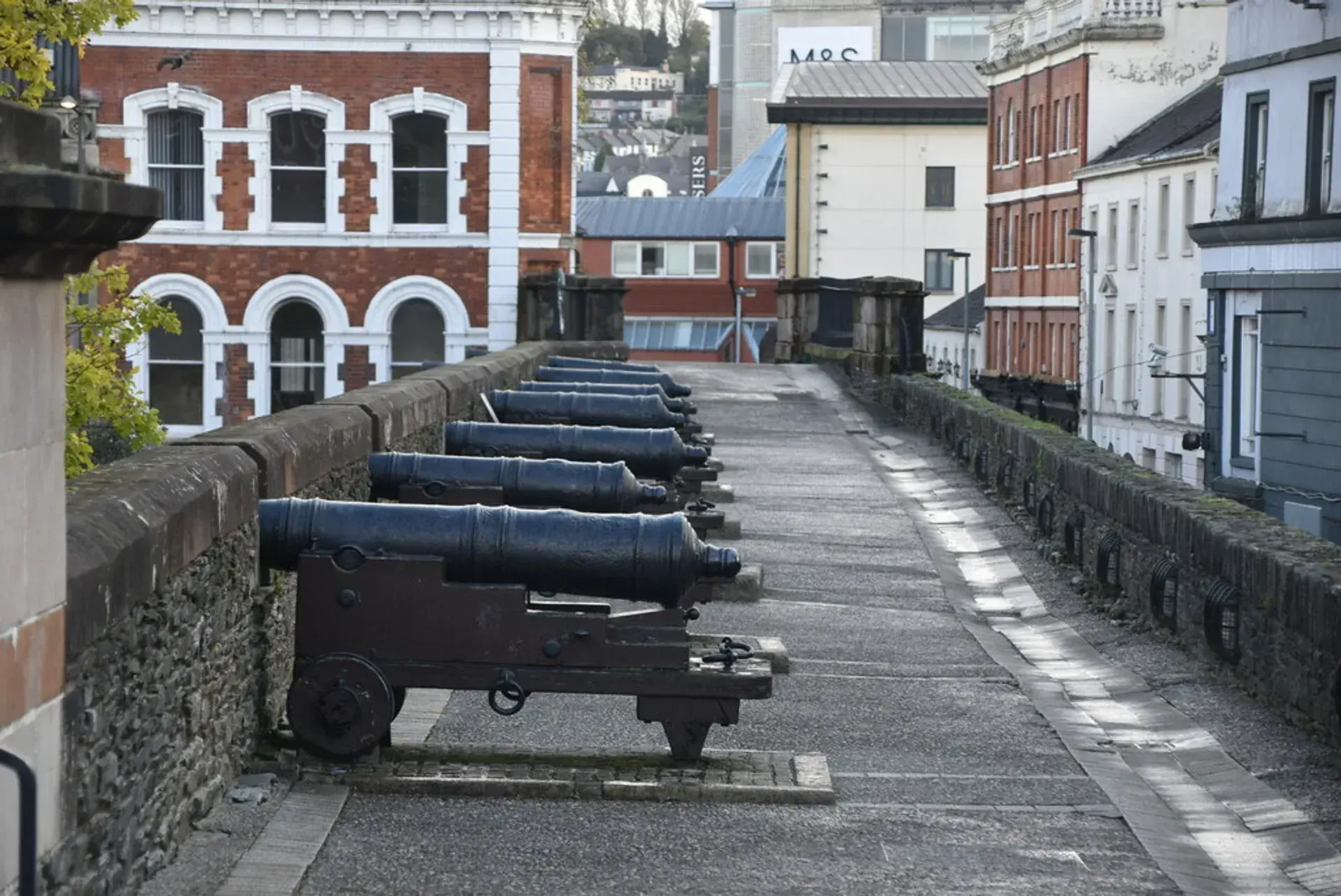

Tours featuring Derry Walls: the 17th-century ramparts that were never breached
More places in Derrylondonderry
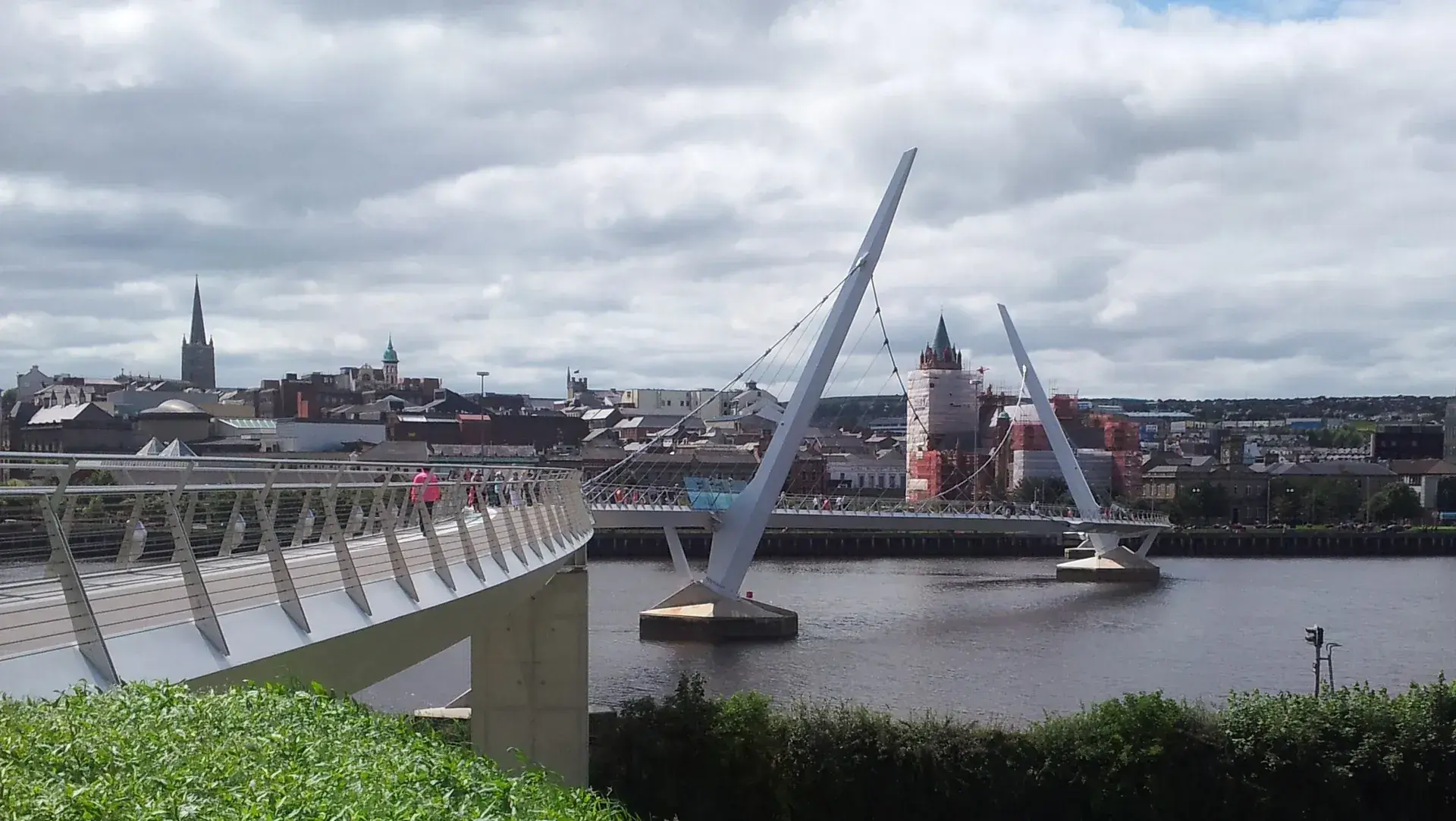
The Peace Bridge: the 2011 footbridge across the Foyle
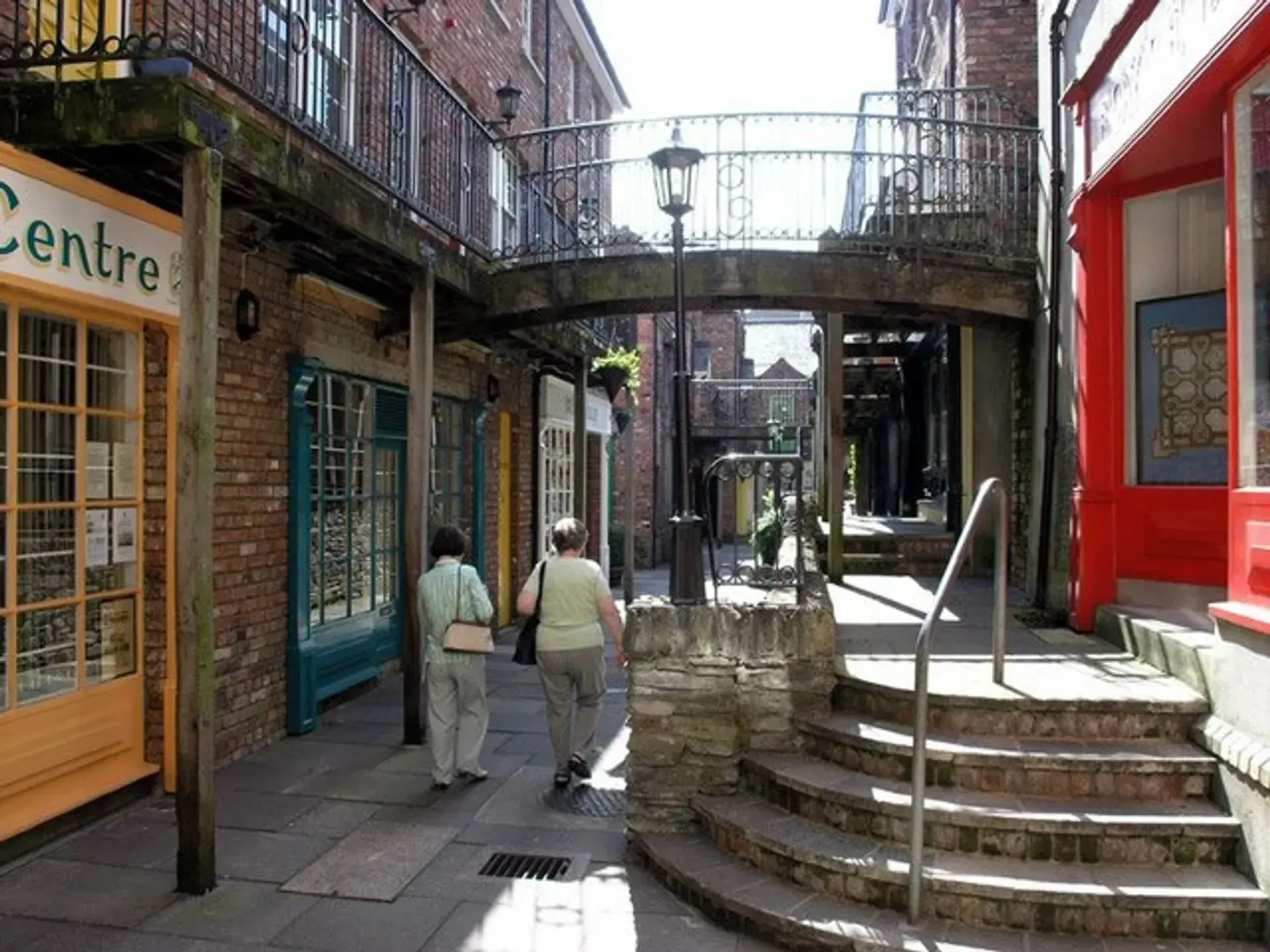
Craft Village: a small square of shops tucked inside the walls