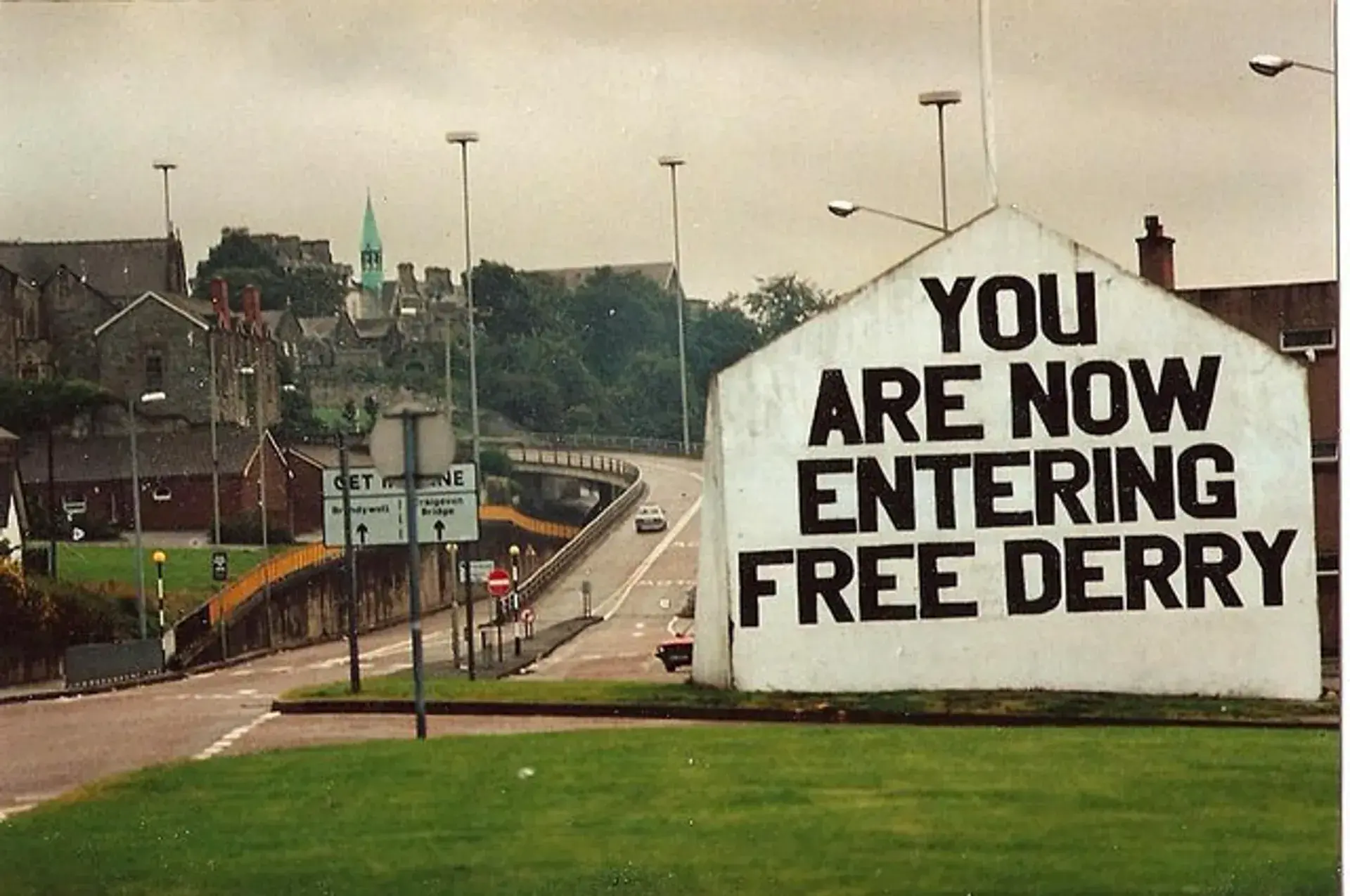
Free Derry Corner: Bogside Civil Rights Landmark
Free Derry Corner is a freestanding whitewashed masonry gable wall positioned on a central reservation at the intersection of Lecky Road, Rossville Street, and Fahan Street in the Bogside area of Derry. Originally the external wall of No. 33 Lecky Road, a nineteenth-century terraced home, it stands isolated on a traffic island as one of the most recognized civil rights monuments in Ireland.
The Creation of the Slogan
The famous inscription, "You Are Now Entering Free Derry," was first applied in the early morning hours of January 5, 1969, following incursions by the Royal Ulster Constabulary into the Bogside during civil rights demonstrations. Activist and writer Eamonn McCann suggested the wording, borrowing the phrase directly from the student-led Free Speech Movement at the University of California, Berkeley, where campaigners had displayed signs reading "You Are Now Entering Free Berkeley."
Teenager Liam Hillen painted the original informal lettering onto the gable. For decades, popular memory credited local painter John "Caker" Casey with the initial graffiti, though historical records later clarified Hillen's role in the January action. In August 1969, ahead of an official visit by British Home Secretary James Callaghan, Casey redid the slogan in bold, professional black typography against a clean white backdrop, creating the enduring visual design seen today.
An Autonomous Enclave and Bloody Sunday
Between 1969 and 1972, the wall marked the primary threshold of "Free Derry," a self-declared autonomous nationalist enclave. During this period, local residents closed the area to security forces, maintaining community barricades and street patrols. This self-governing status ended in July 1972 when the British Army launched Operation Motorman to dismantle the barricades.
Earlier that year, on January 30, 1972, Free Derry Corner served as the designated rallying destination for a major civil rights march. British paratroopers opened fire on demonstrators in the surrounding streets, shooting dead 13 unarmed civilians, with a 14th victim succumbing to injuries later. The event, known as Bloody Sunday, cemented the wall's status as a focal point of civil rights commemoration.
Preservation as a Standalone Monument
In the mid-1970s, the aging terraced houses along Lecky Road were slated for demolition under an urban redevelopment and slum-clearance program. Recognizing the historical significance of No. 33's gable end, Bogside residents mobilized to prevent its destruction. The remainder of the terrace was demolished in 1975, leaving the lone residential gable wall preserved intact amidst modern road infrastructure.
Contemporary Role and Setting
Today, Free Derry Corner operates as an active civic canvas. While regularly returned to its traditional black-on-white appearance, the facade is periodically repainted to highlight international solidarity campaigns and social causes, including Palestinian solidarity, LGBTQ+ Derry Pride, and organ donation awareness. The rear face of the structure serves as an informal noticeboard for local Bogside announcements.
The traffic island surrounding the wall features memorials dedicated to the 1981 hunger strikers and victims of the conflict. Located at the base of the hill directly below the city's seventeenth-century stone walls, Free Derry Corner is closely integrated into the area's wider commemorative landscape, which includes the twelve Troubles-era murals of the People's Gallery along Rossville Street and the nearby Museum of Free Derry in Glenfada Park.
FAQ
What inspired the slogan painted on Free Derry Corner?
The slogan was adapted by activist Eamonn McCann from the Free Speech Movement at the University of California, Berkeley, where students had used signs reading 'You Are Now Entering Free Berkeley.'
Who painted the Free Derry Corner wall?
Teenager Liam Hillen painted the initial slogan on January 5, 1969. In August 1969, local painter John 'Caker' Casey repainted the lettering into the iconic, professional black-and-white typography.
Why does the wall stand alone on a traffic island?
The wall was originally part of a nineteenth-century terraced house at No. 33 Lecky Road. When the rest of the street was demolished during slum clearance in 1975, residents campaigned to keep the historic gable wall standing.

Tours featuring Free Derry Corner: the gable wall that became a civil rights landmark
More places in Derrylondonderry
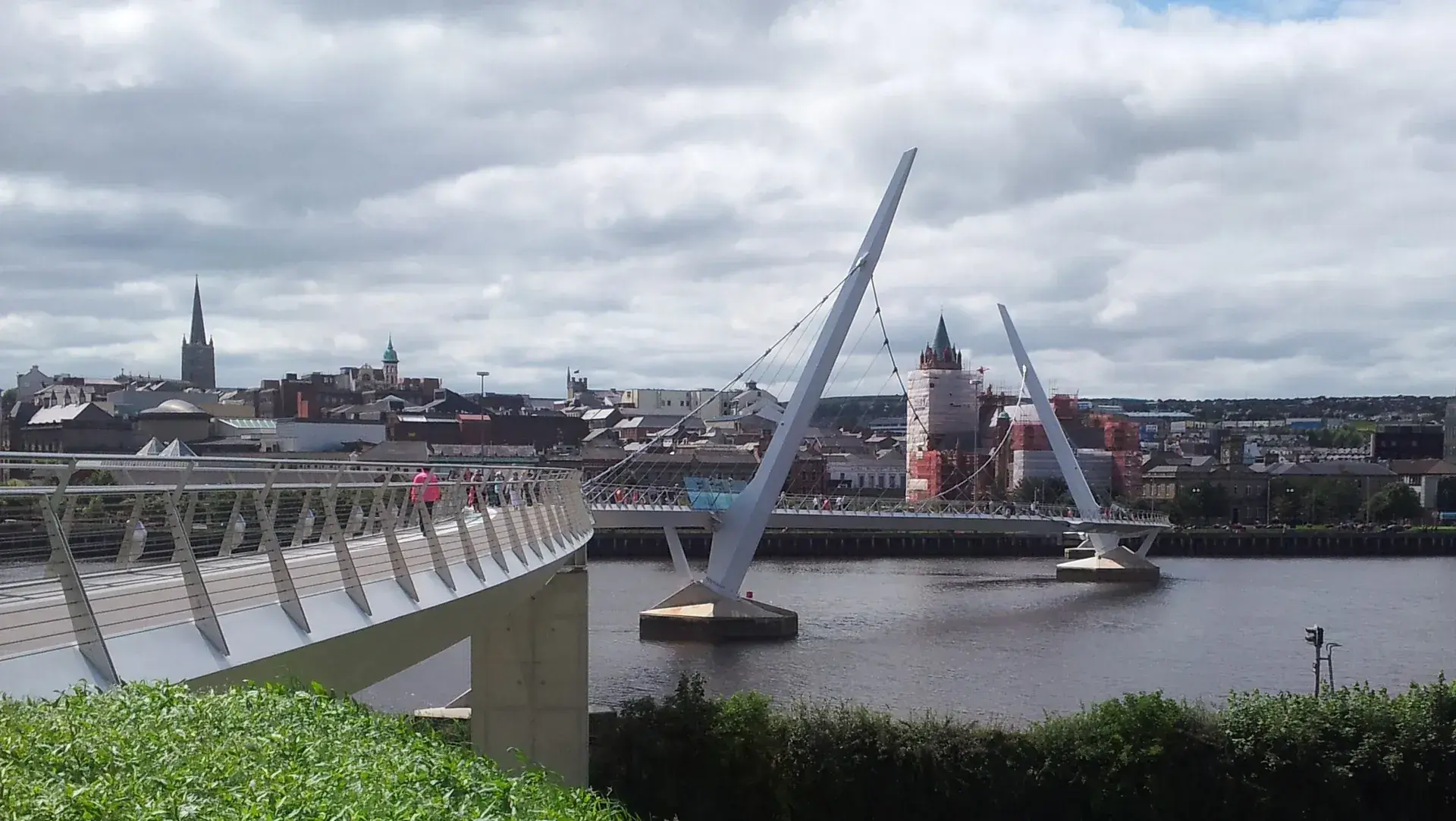
The Peace Bridge: the 2011 footbridge across the Foyle
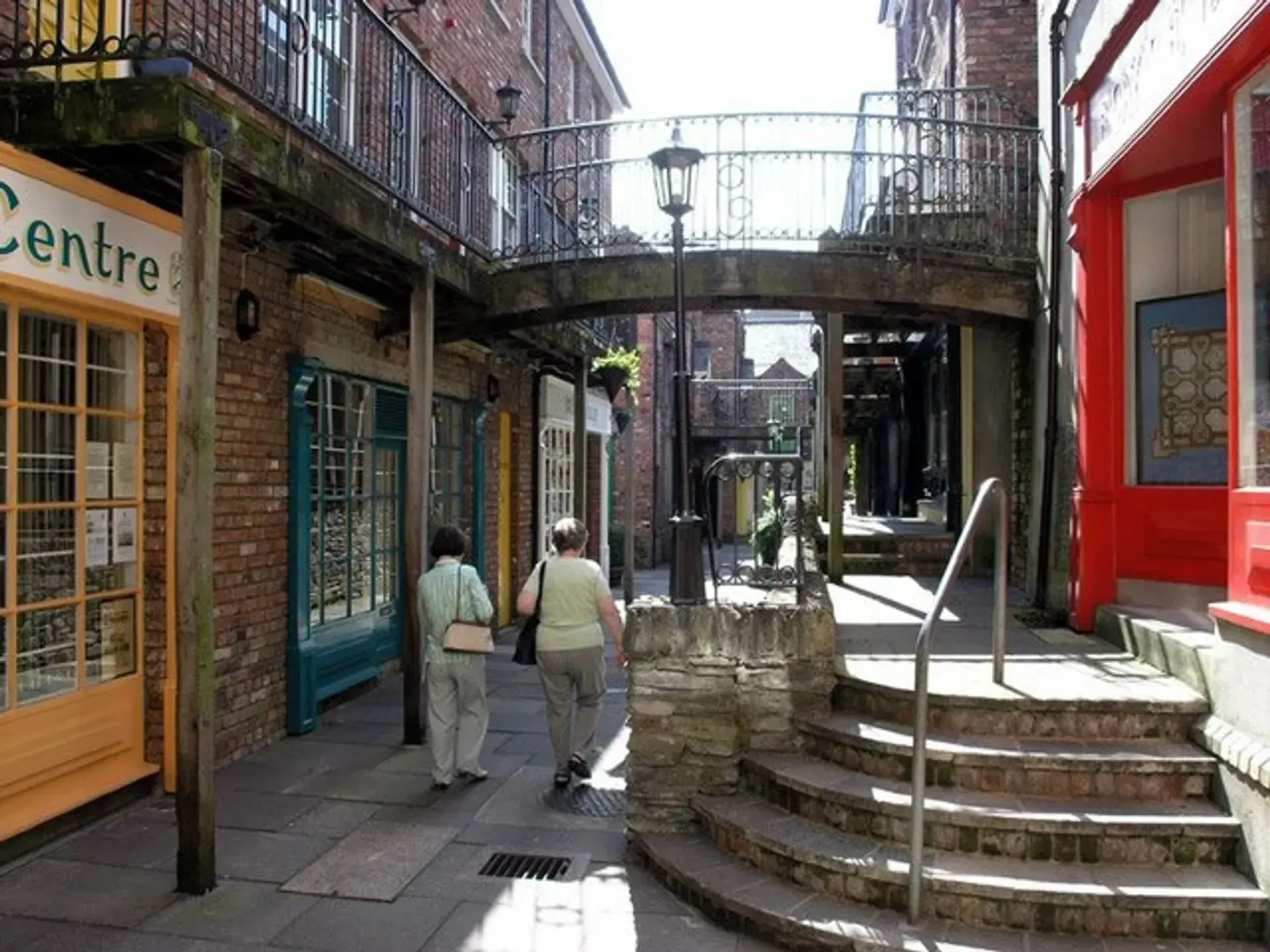
Craft Village: a small square of shops tucked inside the walls