St. Columb's Cathedral: Derry's Historic 1633 Church
Origins and Planter's Gothic Architecture
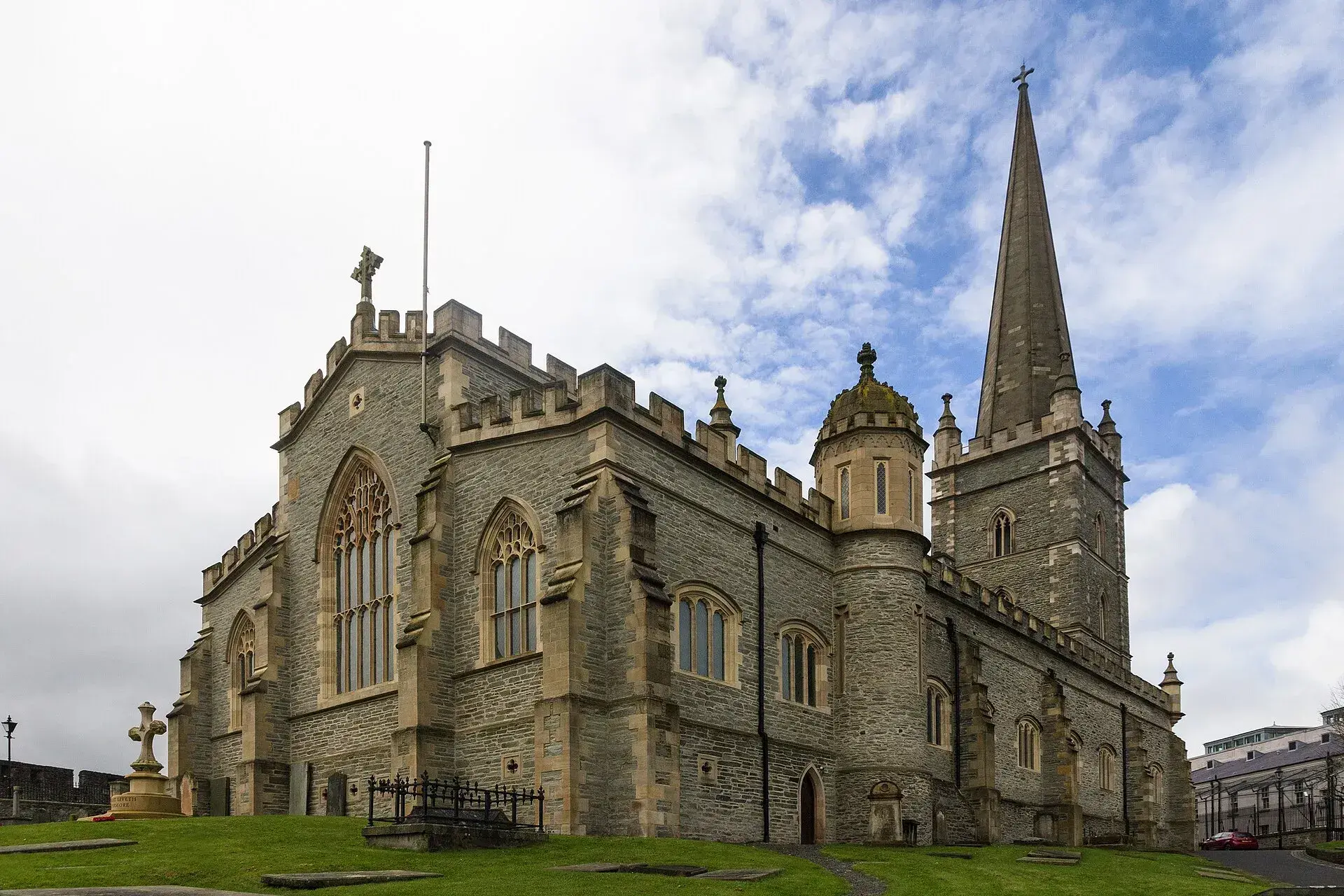
Perched on the highest point in the southern quadrant of Derry's historic city walls, St. Columb's Cathedral on London Street stands as the oldest surviving building within the walled city. Constructed between 1628 and 1633 by master builder William Parrot, the cathedral was commissioned by The Honourable The Irish Society during the Plantation of Ulster. It holds distinction as the first post-Reformation Protestant (Anglican) cathedral built in the British Isles.
Erected in the Planter's Gothic style using local stone, the cathedral succeeded the medieval church of Templemore. The earlier church ruins were dismantled in 1600 by English commander Sir Henry Docwra to furnish stone for the city's early ramparts and fortifications. An inscribed foundation stone set into the cathedral porch commemorates its Plantation origins, reading: "If stones could speake, then London’s prayse should sound, Who built this church and cittie from the grounde."
Structural Growth and Interior Heritage
The 17th-century footprint originally comprised the nave and the base tower. The cathedral expanded over the centuries, beginning with the addition of an upper spire in 1821, followed by a reconstructed chancel in 1887 and the completion of a chapter house in 1910. The interior features high timbered ceilings added in 1887 resting on carved stone corbels depicting the faces of historic bishops and deans, complemented by 19th-century carved oak stalls, encaustic floor tiles, and stained-glass memorials.
The cathedral tower houses what is regarded as the oldest peal of bells in Ireland, originally presented by King Charles I in 1638. The building is also closely tied to Cecil Frances Alexander, the Victorian hymnwriter behind "All Things Bright and Beautiful" and "Once in Royal David’s City," whose husband, William Alexander, served as Dean and later Bishop of Derry.
The Siege of Derry and Historic Relics
Due to its commanding elevation, St. Columb's Cathedral played a vital military role during the Siege of Derry (1688–1689). The structure served as both an observation post and a target for Jacobite artillery. City defenders mounted a cannon atop the cathedral tower and stripped lead from the roof to cast musket ammunition.
A dramatic reminder of the conflict rests in the entrance porch: a hollow artillery mortar shell fired into the churchyard during the siege. Instead of containing gunpowder, the shell held a written proposal offering terms of surrender, which the defenders formally rejected. The chapter house and museum collections also house the original 17th-century locks and keys to the Derry city gates, famously shut by thirteen Apprentice Boys in December 1688.
Sacred Treasures and Modern Role
Among the cathedral's prized civic and ecclesiastical artefacts is a silver-gilt chalice and paten gifted by the City of London in 1613. Predating the cathedral structure by two decades, this communion set remained in liturgical use into the 21st century. In the nave, historical military flags hang from the walls, deliberately left untreated in accordance with regimental custom so they may decompose naturally over time.
Today, St. Columb's Cathedral remains an active place of worship, functioning as the mother church of the Church of Ireland Diocese of Derry and Raphoe and the parish church of Templemore. In addition to holding regular Anglican services, the cathedral operates as a heritage visitor site and hosts cross-community civic events and commemorations.
FAQ
Why is St. Columb's Cathedral historically significant?
Completed in 1633, it is the first post-Reformation Protestant cathedral constructed in the British Isles and the oldest surviving building within the historic walls of Derry.
What role did St. Columb's Cathedral play during the Siege of Derry?
During the 1688–1689 siege, the cathedral served as an observation post and artillery target. Defenders mounted a cannon on the tower and stripped lead from the roof to cast musket ammunition.
What unusual artillery relic is preserved at the cathedral?
An artillery mortar shell on display in the entrance porch was fired into the churchyard during the 1689 siege containing a message with surrender terms, which the city defenders rejected.

Tours featuring St. Columb's Cathedral: the 1633 church at the centre of the siege
More places in Derrylondonderry
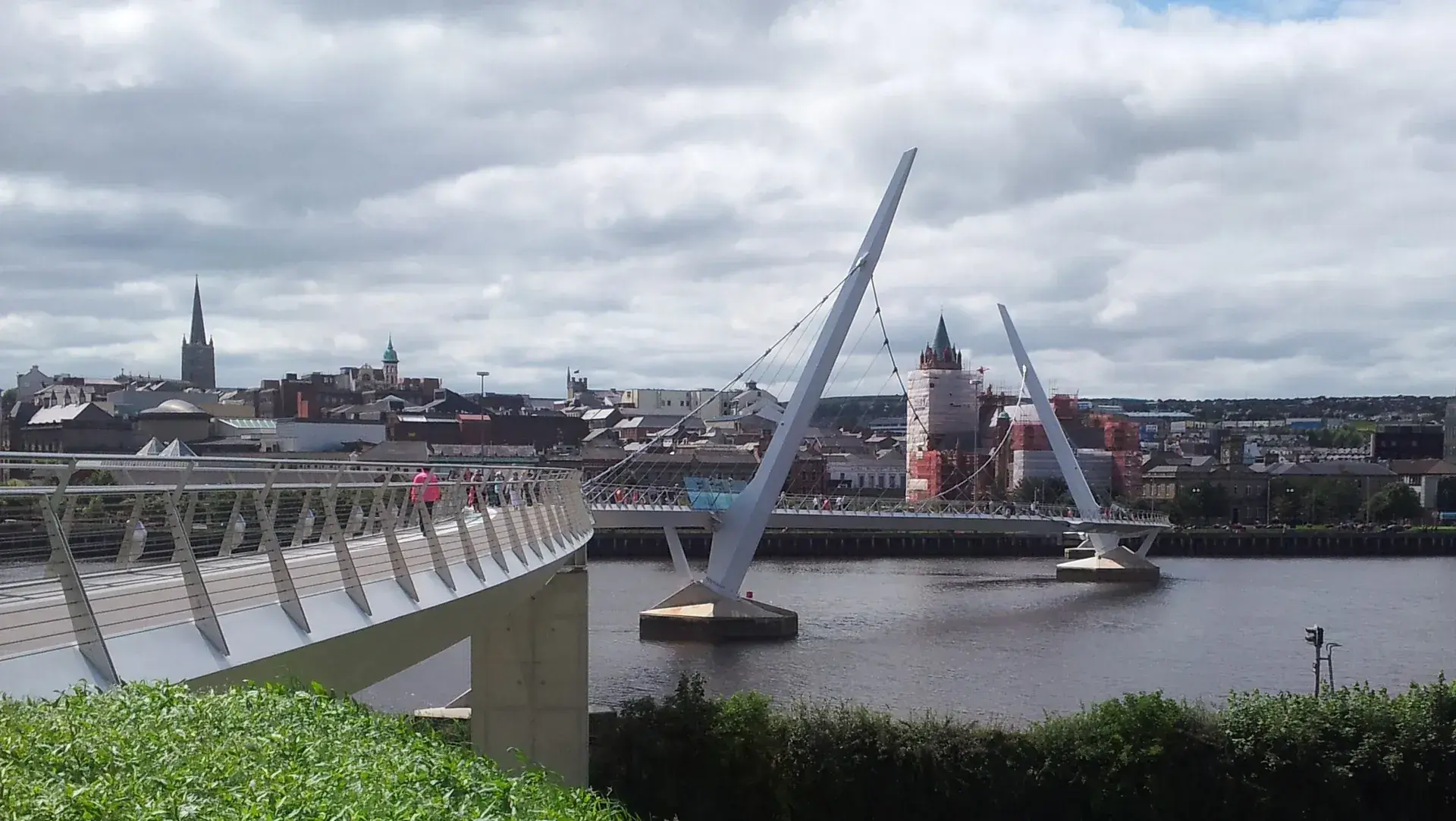
The Peace Bridge: the 2011 footbridge across the Foyle
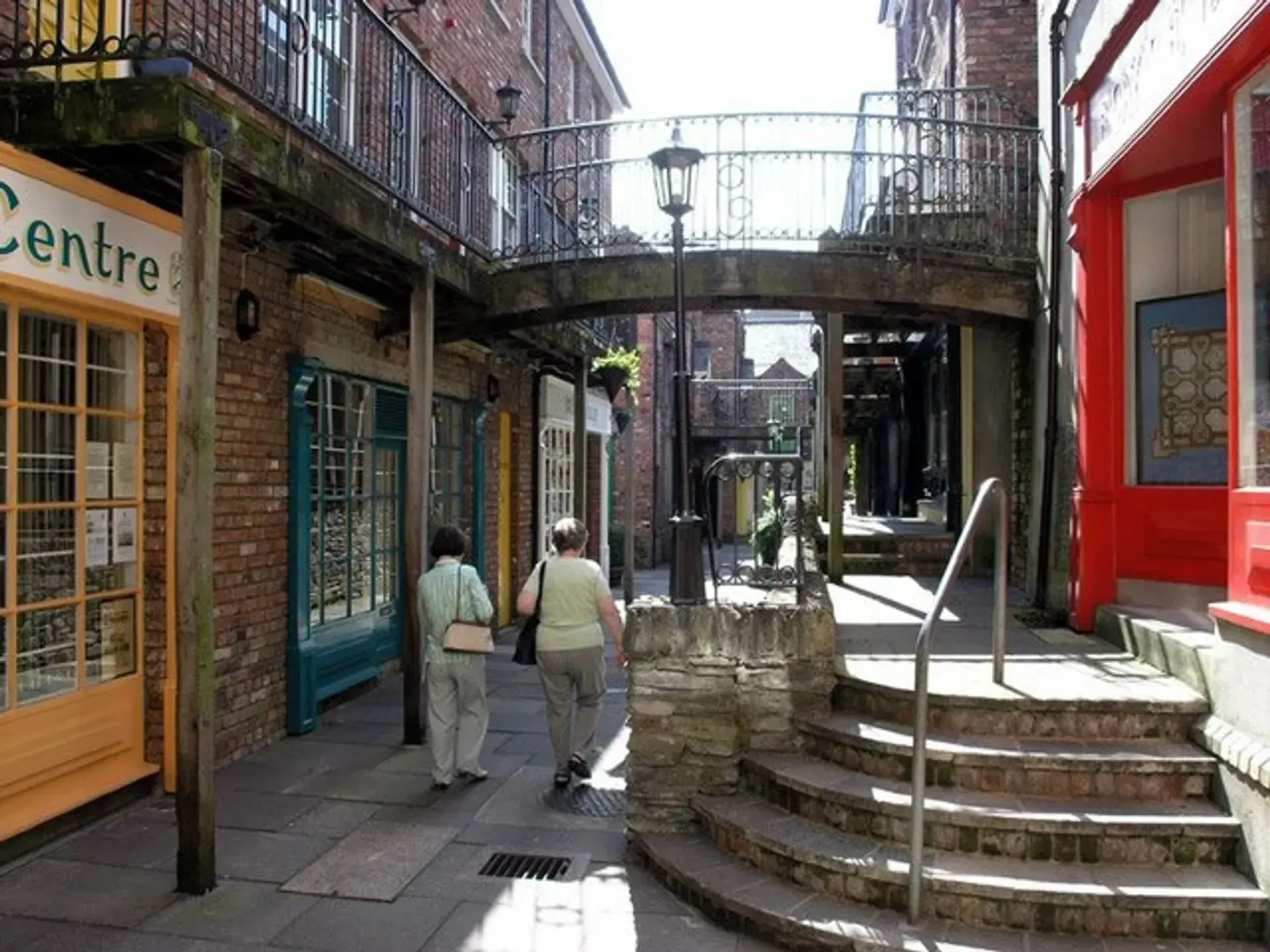
Craft Village: a small square of shops tucked inside the walls