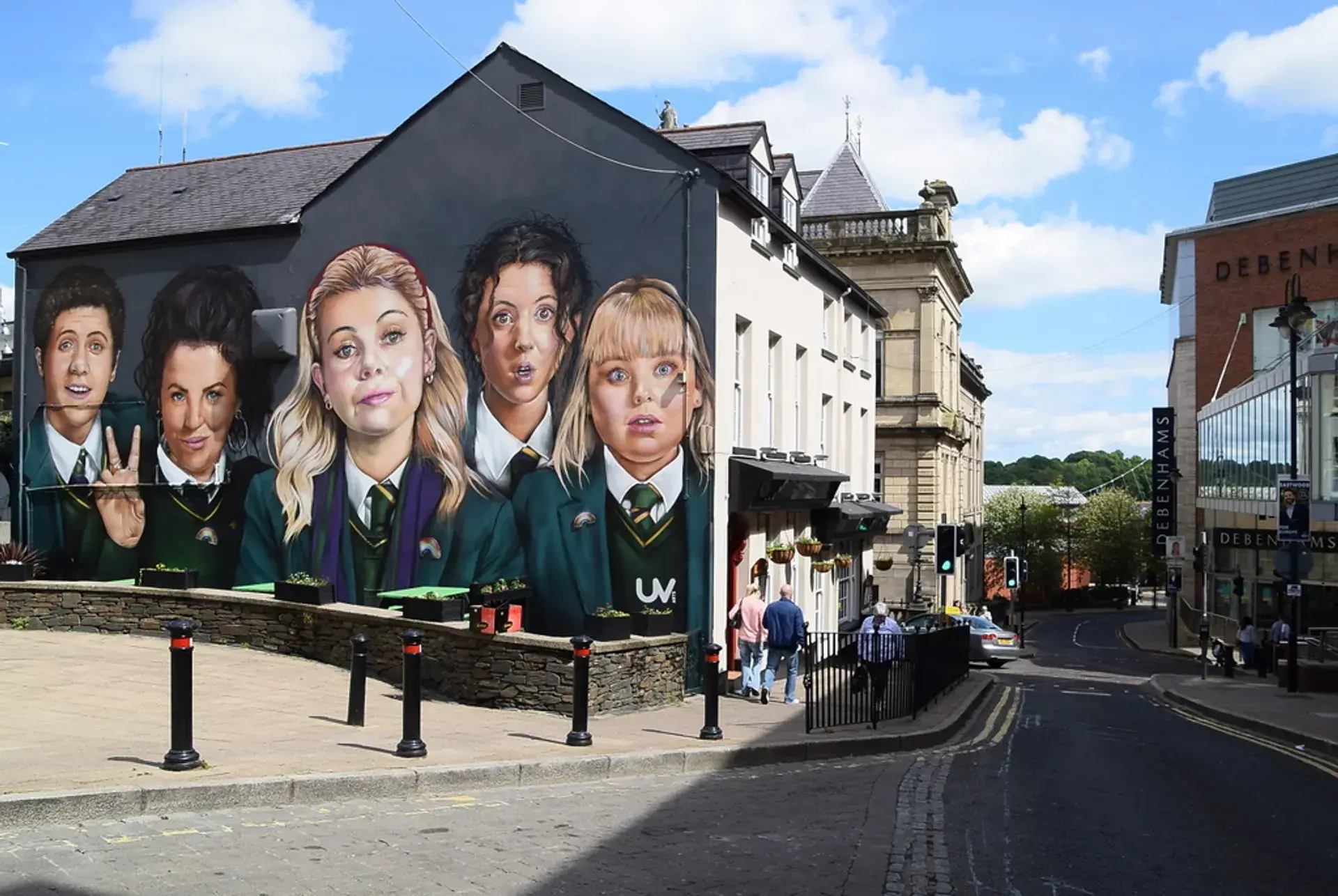
The Diamond: Derry's Historic Walled City Square
The Center of the Renaissance Grid
The Diamond is the central historic public square of Derry/Londonderry in County Londonderry, Northern Ireland. Laid out between 1613 and 1619 during the Plantation of Ulster, Derry was established as Ireland's first planned city, funded by London livery companies under the Honourable The Irish Society.
Forming the hub of a classic Renaissance grid plan, the square is aligned with four primary streets that radiate outward to the four original gates in the seventeenth-century city walls. Bishop Street leads to Bishop's Gate, Ferryquay Street to Ferryquay Gate, Butcher Street to Butcher's Gate, and Shipquay Street to Shipquay Gate. Despite the geometric implication of its name, The Diamond is not diamond-shaped. In Ulster Plantation settlements, the word historically denoted a square or rectangular central marketplace. Derry's layout served as an influential blueprint for early colonial town planning across the Atlantic, including William Penn's design for Philadelphia.
From its elevated hilltop position, sightlines plunge down the surrounding streets, notably down Shipquay Street toward the Guildhall tower and the River Foyle. Major interior landmarks, including St. Columb’s Cathedral, are situated within a brief walk of the square.
Civic Evolution and Lost Town Halls
For nearly three centuries, The Diamond served as the seat of local municipal government. The city's first municipal Town House and Market House was erected at the center of the square in 1622. That original civic building was destroyed during the 105-day Siege of Derry in 1689. Rebuilt in 1692, the surrounding space was known for a period as King William’s Square.
A third town hall was constructed in 1825 and occupied the site until its demolition in 1910. Following the removal of the building, municipal administration moved outside the city walls to the Victorian Guildhall at Shipquay Place. The vacant central space in The Diamond was initially repurposed as an ornamental garden before becoming the site for a permanent civic monument.
The Diamond War Memorial
In 1925, the City War Memorial Fund secured permission to install a cenotaph in the center of the square. Sculpted from Portland stone and bronze by Vernon March to designs by Vernon and Sydney March, the Diamond War Memorial was unveiled on June 23, 1927. The monument features bronze figures of an infantry soldier representing the Army and a sailor representing the Navy flanking the base, crowned above by a winged figure representing Victory. Miniatures of the memorial sculpted by Vernon March are preserved nearby inside St. Columb’s Cathedral.
Four bronze panels commemorate 756 citizens who died during World War I, and the monument was later rededicated to honor the casualties of World War II without additional names inscribed. Historical research by the Diamond War Memorial Project confirmed that the 756 First World War casualties represent both Catholic and Protestant, nationalist and unionist traditions in nearly equal balance. Only one woman is commemorated among the inscribed names.
Architecture and Contemporary Use
The Diamond remains the commercial crossroads and pedestrian gathering hub of the walled city, connecting surrounding financial institutions, retail thoroughfares, cafes, and traditional pubs. It also functions as a central venue for civic events, guided historical tours, and seasonal festivals.
Architecturally, the square is overlooked by the former Austin’s Department Store. Dating to 1906–1907, the Edwardian Freestyle commercial building features a distinctive corner octagonal tower. The retail business itself was established in 1830 and claimed to be the world's oldest independent department store.
FAQ
Why is the square called The Diamond if it is square?
In settlements founded during the Plantation of Ulster, the term 'Diamond' historically referred to a square or rectangular central marketplace rather than a diamond shape.
Who created the Diamond War Memorial?
The memorial was designed by siblings Sydney and Vernon March. Vernon March sculpted the Portland stone and bronze monument, which was unveiled in June 1927.
What stood in The Diamond before the war memorial was built?
A succession of municipal town halls stood on the site starting in 1622. After the third town hall was demolished in 1910, the space briefly served as an ornamental garden before the cenotaph was erected.
How did The Diamond influence urban planning abroad?
The Renaissance grid system developed in Derry—centering on a central square connected to four perimeter gates—served as an influential prototype for colonial town layouts, including William Penn's plan for Philadelphia.
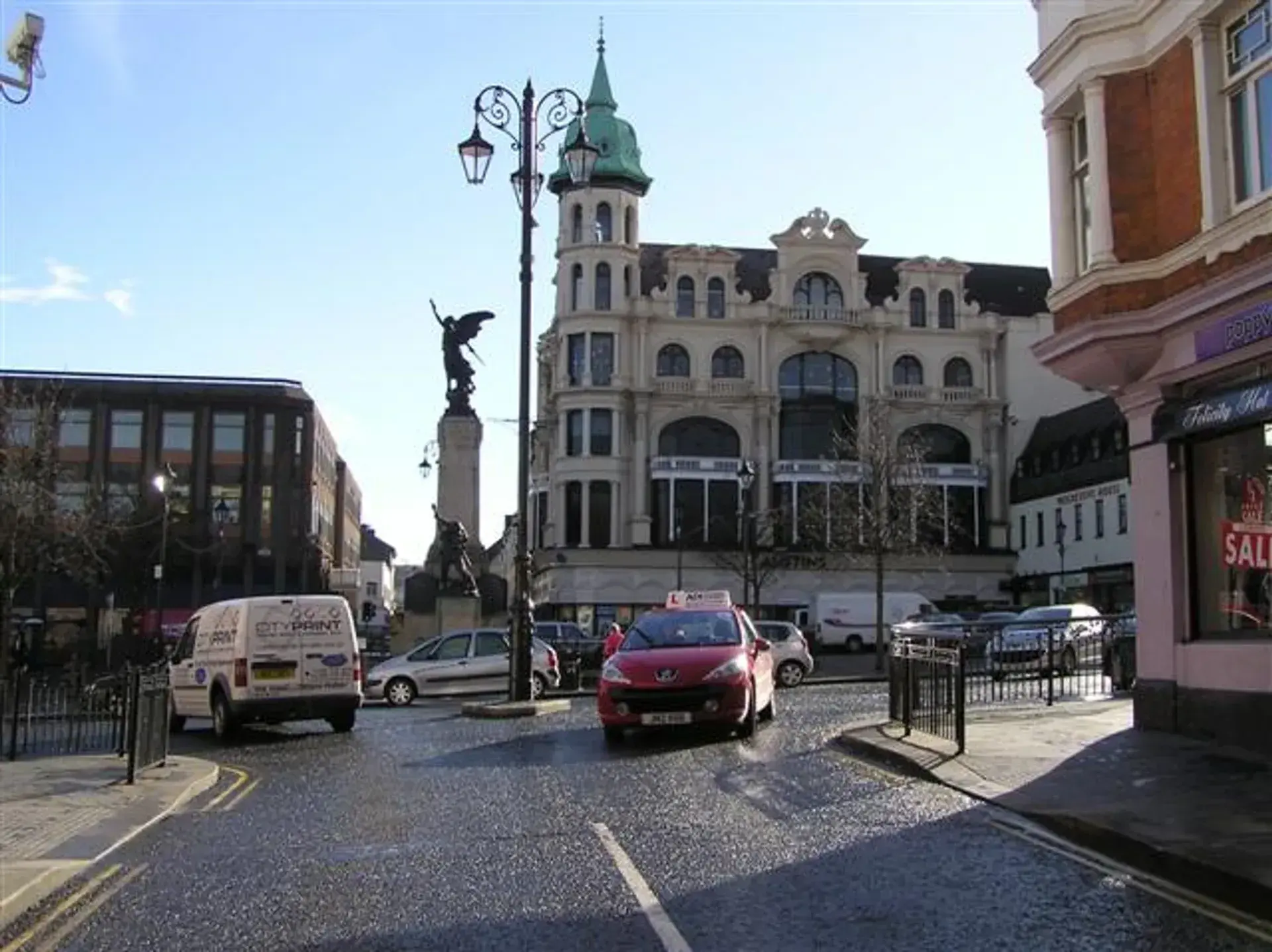

Tours featuring The Diamond: the square at the heart of the walled city
More places in Derrylondonderry
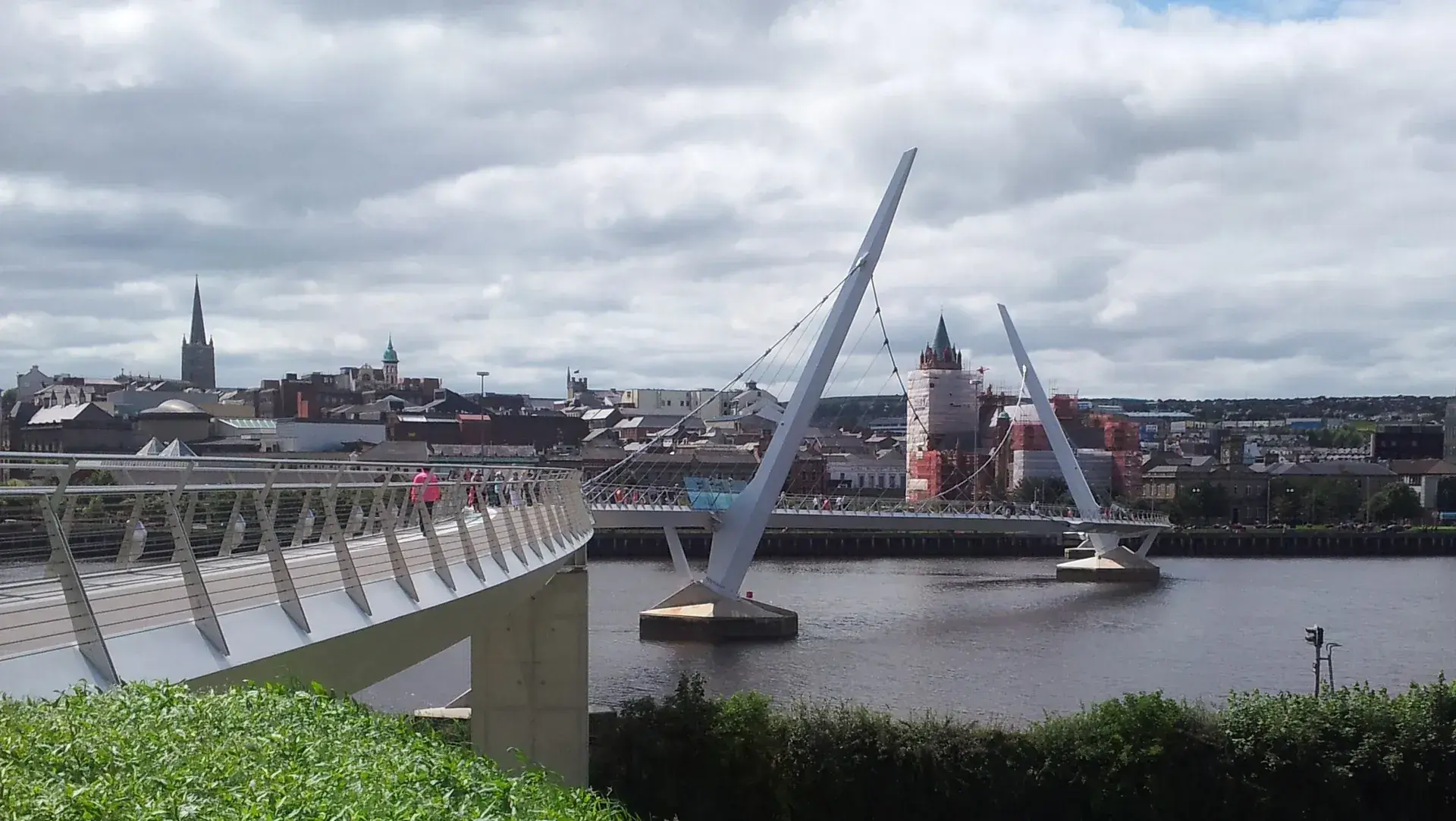
The Peace Bridge: the 2011 footbridge across the Foyle
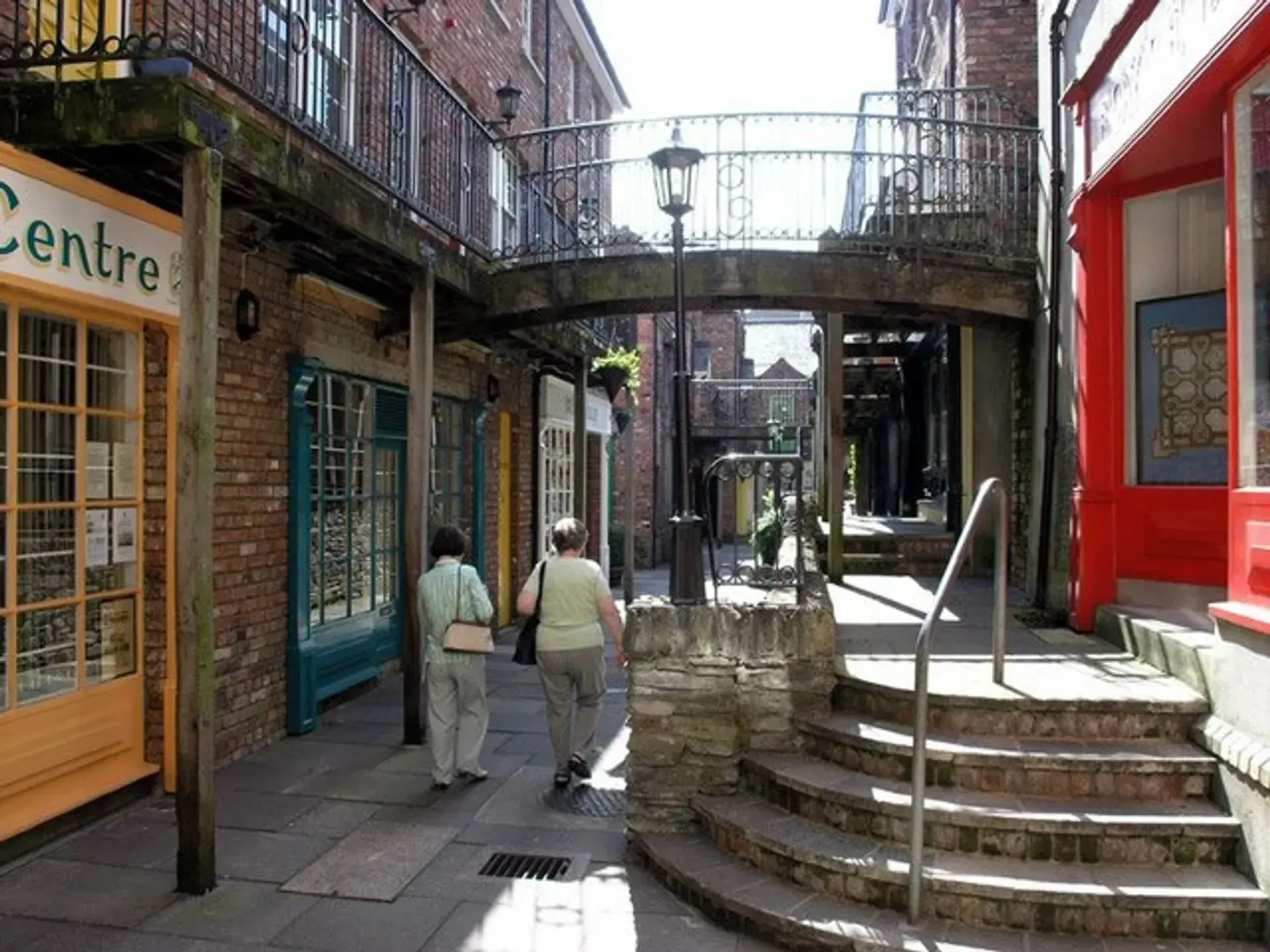
Craft Village: a small square of shops tucked inside the walls