Massachusetts State House: The Beacon Hill Dome
The Hub on Beacon Hill
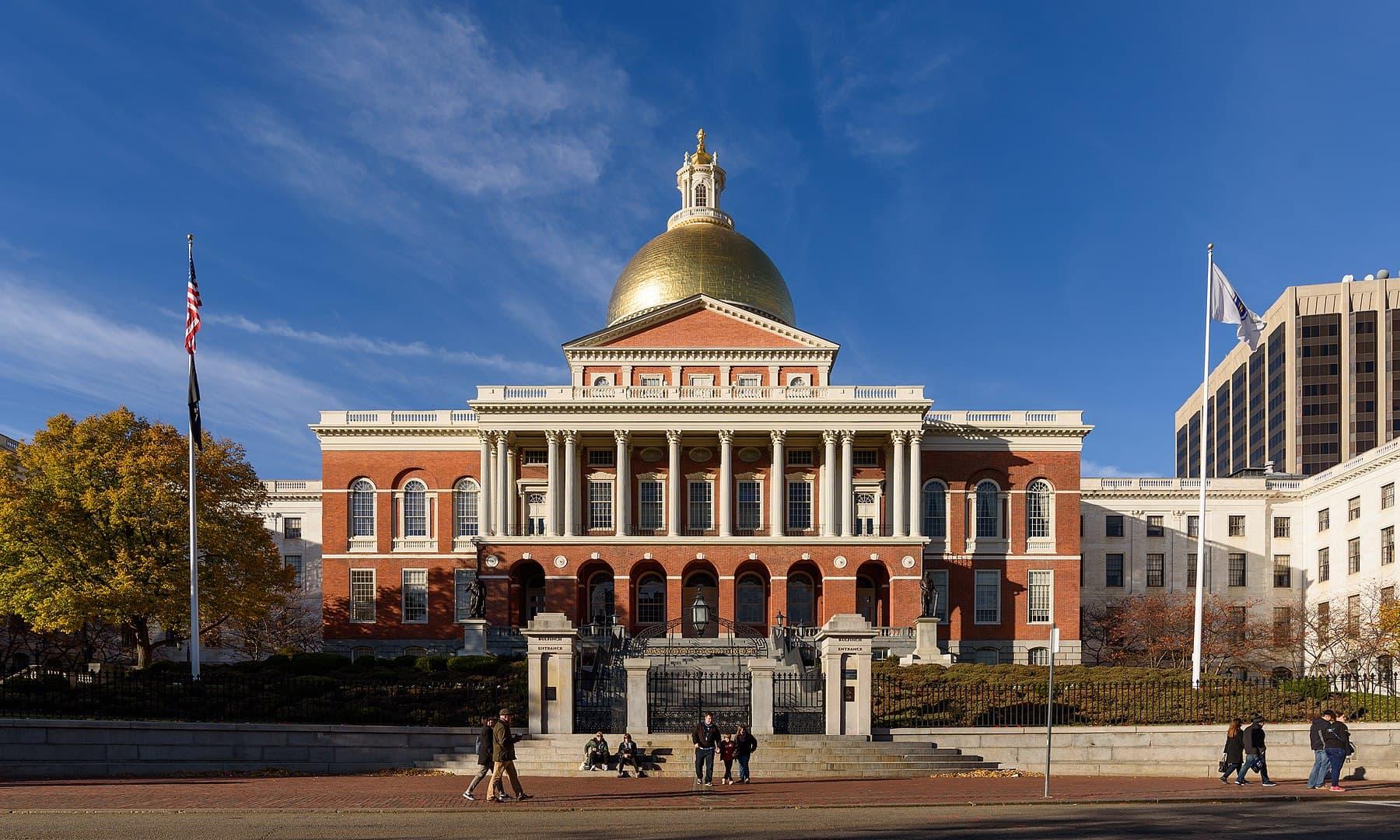
Perched atop Beacon Hill at 24 Beacon Street, the Massachusetts State House overlooks Boston Common and serves as the physical divider between the city's 19th-century residential quarter and the downtown commercial core. In 1858, author Oliver Wendell Holmes declared the building the "hub of the solar system," giving rise to Boston's long-standing moniker, "The Hub."
Designated as a National Historic Landmark, the capitol occupies 6.7 acres of former pasture land once owned by John Hancock, Massachusetts' first governor under the state constitution. Serving as the second official stop along the historic Freedom Trail, the building represents the commonwealth's historical passage from colonial grazing land to constitutional government.
Boston Freedom Trail self guided walking tour with audio guide
2.5 hours17 stopsAudio guideStart any day, at your own paceTicket on your phone · 30-day refundCharles Bulfinch and Federal Architecture
Commissioned to replace the 1713 Old State House, the capitol provided the Commonwealth of Massachusetts with a dedicated seat of republican government after the American Revolution. Boston-born architect Charles Bulfinch drew inspiration from European Neoclassical and Palladian civic buildings, establishing the American Federal style that he later brought to the U.S. Capitol in Washington, D.C.
Construction began in 1795. On July 4, 1795, Governor Samuel Adams and Grand Master of Masons Paul Revere laid the cornerstone. The red-brick building with its white Doric portico was completed in January 1798, creating a classic civic silhouette that contrasts sharply against the modern high-rises behind Beacon Hill.
The Evolution of the Gilded Dome
The iconic dome underwent significant transformations before achieving its modern appearance. The original wooden structure was shingled and painted lead gray, but persistent water leaks prompted an overhaul. In 1802, Paul Revere and Sons manufactured copper sheathing to seal and waterproof the dome.
The dome was first gilded in gold leaf in 1874 and was re-gilded with 23-karat gold leaf in 1997. During World War II, the gleaming surface was temporarily coated with dull gray and black paint to prevent directional reflections from acting as a navigational target for enemy aircraft during coastal blackouts. At the dome lantern's apex sits a gilded wooden pinecone, an emblem representing both the early timber trade and the District of Maine, which remained part of Massachusetts until 1820.
Legislative Milestones and the Sacred Cod
Throughout the 19th and 20th centuries, the State House functioned as a prominent assembly ground for political reform. Its legislative chambers hosted early debates concerning the 1850 Fugitive Slave Law and women's suffrage, and in 1855, the legislature enacted a ban on racially segregated public schools in Massachusetts.
Suspended within the House of Representatives chamber is the "Sacred Cod," a five-foot carved pine effigy presented in 1784 by merchant John Rowe to recognize the maritime industry's role in the commonwealth's prosperity. The carving drew widespread attention in April 1933 when members of the Harvard Lampoon disguised themselves as visitors, clipped the fish from its suspension wires, and smuggled it out in a florist's box, prompting a multi-day police search before its safe recovery.
Modern Seat of Government and Public Access
The building continues to function as the working capitol of Massachusetts. It contains the executive offices of the Governor, the Senate chamber, and the 160-seat House of Representatives.
Public operations remain open to visitors throughout the year. The Secretary of the Commonwealth's State House Tours Division coordinates free 40- to 45-minute architectural and legislative tours on weekdays. Members of the public can also attend committee hearings and legislative sessions through security checkpoints located at the Beacon Street and Bowdoin Street entrances.
FAQ
Why was the Massachusetts State House dome painted black during World War II?
During World War II, the dome was covered in dull gray and black paint to stop reflections from functioning as a visible navigation beacon for enemy aircraft during coastal air-raid blackouts.
What does the pinecone on the State House dome represent?
The gilded wooden pinecone at the peak of the dome lantern commemorates the early colonial timber trade and honors the District of Maine, which was part of Massachusetts until 1820.
What is the Sacred Cod?
The Sacred Cod is a five-foot wooden fish carved from pine and suspended in the House of Representatives chamber. Donated in 1784 by merchant John Rowe, it honors the maritime industry that underpinned Massachusetts' early economic growth.
More places in Boston
boston, united-states
Boston Common Visitor Center: where the trail begins
Boston Common Visitor Center: where the trail begins
boston, united-states
Park Street Church: the steeple on Brimstone Corner
Park Street Church: the steeple on Brimstone Corner
boston, united-states
Granary Burying Ground: the city’s famous names