
Tips and tours for explorers and travellers
Rennes City Guide
Ciceru's Rennes route runs through Place du Champ-Jacquet's leaning half-timbered houses, Place Sainte-Anne, and the Hôtel de Ville and Parlement de Bretagne, both rebuilt in stone and granite after the 1720 fire flattened the old quarter.
- Country
- France
- Language
- French
- Currency
- Euro (EUR)
- Plug
- type C/E
- Time zone
- Europe/Paris
- Emergency
- 112, 17, 15, and 18
- Tap water
- Safe to drink
- Dialling code
- +33
The stops
Things to do in Rennes
Ciceru's Rennes walk concentrates on the historic centre: the timber-framed streets around Place du Champ-Jacquet and Place Sainte-Anne, and the stone civic buildings, the Hôtel de Ville and the Parlement de Bretagne, that replaced them after 1720.
Portes Mordelaises
The Holy See
Jean Leperdit
The City Hall
Palais du Commerce
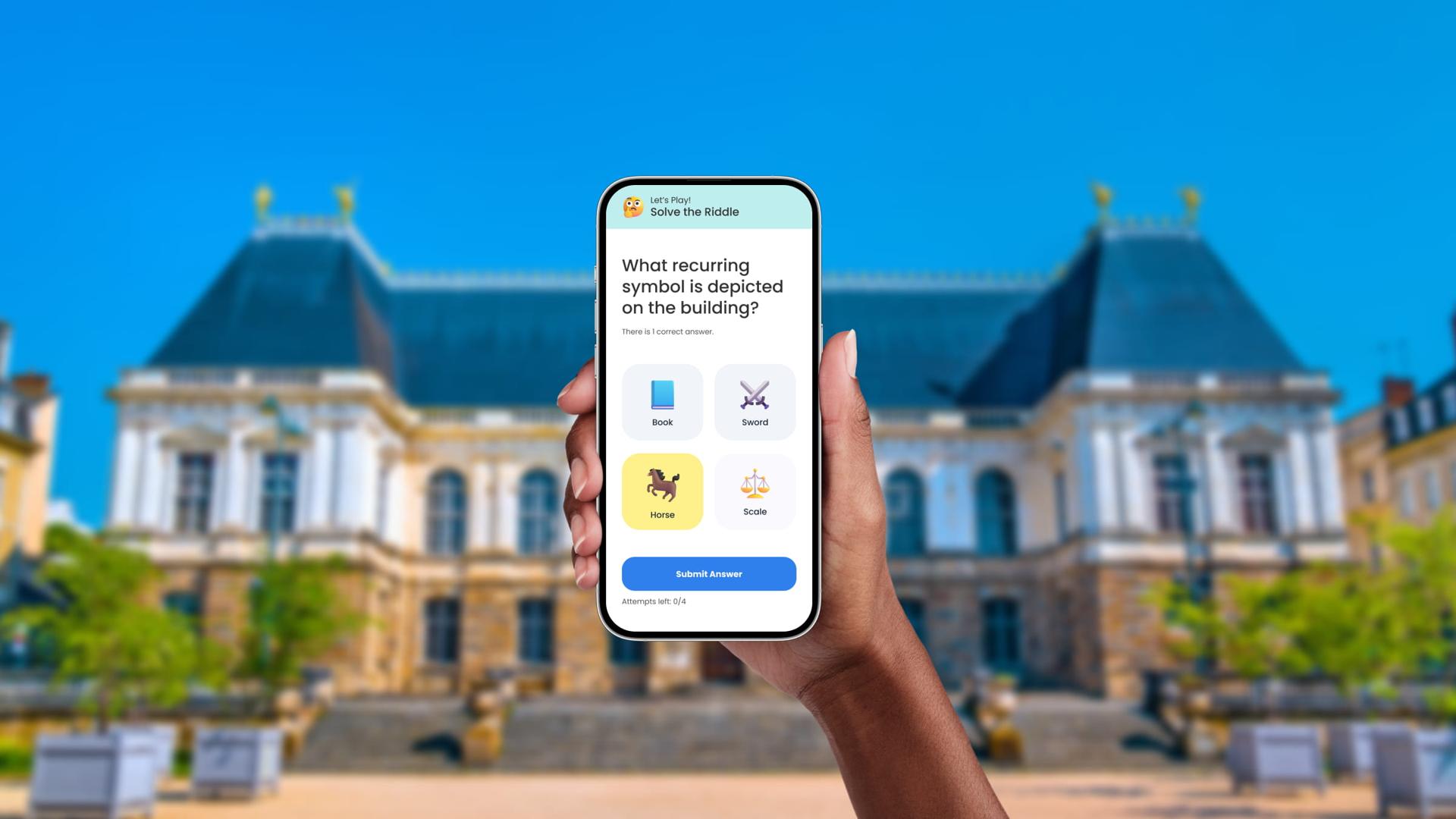
The Parliament of Brittany
<p>Standing before the imposing façade of the Parlement of Brittany, you are not just looking at a building; you are witnessing a key chapter in the story of Rennes and its place in the broader tapestry of French history. The Parlement of Brittany, established in 1554, was more than a court of law—it was the very heart of Brittany's resistance to centralization and a powerful symbol of the region's unique identity. The integration of Rennes into the Kingdom of Brittany in the early medieval period set the stage for centuries of tension between the fiercely independent Breton nobility and the centralizing ambitions of the French monarchy. This building stands as a testament to that struggle.</p> <p>During the Old Regime, Brittany was one of the few provinces that retained significant autonomy within the Kingdom of France. The nobles of Brittany, through the Parlement, vigorously defended their "Brittany freedom," a set of privileges that protected their rights and local customs from being overridden by royal edicts. This balance of power was delicate, often tense, and the Parlement of Brittany was at the center of it all, mediating between the demands of the French crown and the rights of the Breton people. It was a time when the notions of regional identity and centralized power were in constant conflict, with Rennes often at the forefront of these battles.</p> <img src="https://storage.googleapis.com/ciceru-assets-stg/db499b03-0bd0-4a07-afa1-d2ee7f363c5f/nQ2rVkJx-zUSom62V-Ouverture_des_Etats_de_Bretagne.webp" alt="undefined" style="height: auto;width: 320px"/> <blockquote>The States of Brittany - <a href="https://commons.wikimedia.org/wiki/File:Ouverture_des_Etats_de_Bretagne.jpg" target="_self"><ins>Source</ins></a></blockquote> <p>One of the most significant events in this ongoing struggle was the Stamped Paper Revolt of 1675. Sparked by the imposition of new taxes by Louis XIV, the revolt was a dramatic assertion of Brittany’s resistance to the central government’s overreach. The Parlement of Brittany, caught between the demands of the people and the orders of the king, became a flashpoint for this unrest. Though the revolt was eventually suppressed, it marked a critical moment in the long history of Brittany's defiance against centralized authority, a defiance that would continue to simmer until the French Revolution.</p>
Saint-Germain
Saint George Palace
Your private guide, in your pocket
Ready to walk these?
- Self-guided, start now or laterSelf-guided, start now or later and pause whenever you like
- Offline audio, 7 languagesOffline audio stories in 7 languages
- 30-day money-back guarantee30-day money-back guarantee
- 500MB global eSIM included500MB global eSIM included
from
€7.00
1 self-guided tour in Rennes
Weather & crowds
Best time to visit
June to August is warmest and driest: 24.0°C highs against under 51mm of rain a month, though the city's roughly 70,000 students leave for summer. May reaches 19.3°C with less rain than autumn. October to February is Rennes' wet run, 66mm to 73mm a month, coldest in January and February at 9.2-10.2°C highs.
Winter
Dec–Feb3–10°C/ 38–49°F
Few visitorsWet
- Lices market with no queues
- Cold, 9-10°C highs, wettest run of the year
Spring
Mar–May7–16°C/ 44–61°F
Getting busierOccasional rain
- Mild, 16°C highs by May
- Rain most weeks, no dry stretch yet
Summer
Jun–Aug13–24°C/ 56–75°F
BusyDry
- Driest, warmest months
- University city empties out in summer
Early autumn
Sep–Oct10–20°C/ 51–67°F
BusyWet
- Rain returns fast after August
Late autumn
Nov6–13°C/ 43–55°F
Few visitorsWet
- Wettest month, short daylight
Transport
How to get to & around Rennes
Paris Montparnasse
| TGV inOui / OUIGO (high speed) | 1h25 | ~€16.00 |
|---|
Gare de Rennes
| Walk to Place de la Mairie | 20 min | €0.00 |
|---|---|---|
| Metro Line A to Sainte-Anne | 5 min | €1.70 |
| Velo STAR self-service bike | 10 min | €1.00 |
Metro & bus (STAR)
Best defaultOne ticket, €1.70, covers an hour of transfers across metro lines A and B and every bus. Tap a bank card at the gate. Line A opened in 2002, Line B in 2022, running 5:20am to 12:40am.
Walking
Compact centreGare de Rennes to the tourist office is about 20 minutes on foot, and most of Ciceru's stops sit inside that stretch of the pedestrianised old town.
Velo STAR bikes
50 stationsSelf-service bikes cost €1.00 for an hour or €2.00 for 24 hours from 50 stations across the city, run by the same STAR network as the metro and bus.
Taxi
Station ranksRanks wait outside Gare de Rennes at the west exit, alongside the car rental desks. Useful once the metro stops running for the night.
Historic centre shuttle
Reduced mobilityA free electric shuttle loops through the pedestrianised old town for anyone who cannot manage the cobbled streets on foot.
Tap a bank card for the €1.70 STAR ticket and walk the flat 20 minutes between the station and the old town. You will rarely need the bikes or a taxi in daylight hours.
Budget
How much does it cost to visit Rennes?
Rennes runs cheap by French standards: a galette-saucisse street snack, the local buckwheat-crepe-and-sausage staple, costs €2.50 to €3.00, and a STAR ticket covers an hour of unlimited metro and bus transfers for €1.70. Budget €10.00 to €20.00 for a casual lunch and expect cards to work almost everywhere except small market stalls.
| Coffee (cappuccino at a cafe) | €2.00–€5.00 |
|---|---|
| Weekday lunch, inexpensive restaurant | €10.00–€20.00 |
| Draught beer, 0.5L | €6.00–€8.00 |
| Galette-saucisse street snack | €2.50–€3.00 |
| STAR single ticket, 1 hour | €1.70 |
| Velo STAR bike, 1hr to 24hr | €1.00–€2.00 |
Cash or card?
Cards are accepted at nearly every till, including STAR's own gates, which take a contactless bank card directly with no separate transit card needed. Keep €10 to €20 in cash for stalls at the Marche des Lices on Saturdays.
Where to stay
Where to stay in Rennes
Centre historique
First visit, on footThe half-timbered streets around Champ-Jacquet and Sainte-Anne hold most of Ciceru's stops, plus the granite Parlement de Bretagne. Flat, pedestrianised, loud near Sainte-Anne's bars at weekends.
Sainte-Anne and Rue Saint-Michel
NightlifeOne of the centre's densest runs of bars, a few steps from the historic core. Lively most nights thanks to the student population, quiet again by mid-morning.
Thabor, Saint-Helier
Quiet, green streetsBorders the 10-hectare Jardin du Thabor botanical garden. Residential and calm, with the centre a 15 to 20 minute walk or one metro stop away.
Villejean, Beauregard
Budget stays, studentsHome to Rennes' university campuses and much of its roughly 70,000 students. Cheaper beds, but 20 minutes or more from the old town by metro Line A, and quiet outside term time.
The tours
Rennes, one story at a time
€72 hours
Rennes Self-Guided Historical Walking Tour
 Fabio Ferrari
- Audio
- Quizzes
- Multiplayer
- Free eSIM
Scratch to win
Give it a scratch
Something good might be under there. If you win, we'll show you how to use it.
One prize per traveller. Good for 2 years.
Word of mouth
What travellers say

Safety
Is Rennes safe?
Rennes is a mid-sized university city rather than a theft hotspot: France's national travel advice does not single it out for any specific warning. The patterns that apply are the ones that apply everywhere in France, distraction theft in crowds and opportunistic bike theft in a city where tens of thousands of students cycle to class and leave bikes locked outside bars all evening.
Bike theft
Rennes' roughly 70,000 students cycle constantly, which is exactly why bike theft is a common complaint from residents. Lock a rented or Velo STAR bike through the frame at a fixed stand, not just the wheel.
Crowds and markets
Distraction theft, one person diverting you while another goes into a bag, is the pattern France's national guidance warns about generally. It applies at the Saturday Marche des Lices and around Sainte-Anne on weekend nights.
Reporting a theft
File online through the Interior Ministry's pre-plainte-en-ligne service (masecurite.interieur.gouv.fr) for a theft with no known suspect. It produces the official report insurers usually ask for.
Medical help
Call 112, the European emergency number, which works even without a French SIM, or 15 for the SAMU ambulance service. 17 reaches the police directly for anything short of a medical emergency.
Good to know
Good to know
Marche des Lices is Saturday only
Place des Lices fills with Rennes' big weekly market every Saturday morning. Go on any other day and you get a car park and a handful of permanent shopfronts, nothing like the Saturday version.
Sunday shuts the centre down
France's default rule keeps most independent shops closed on Sunday. Supermarkets can open nationwide until 13:00, but boutiques and many restaurants in the historic centre do not follow that exception.
Tap your card for transport
STAR's metro and bus gates take a contactless bank card directly. There is no ticket machine to find and no app to install before you arrive.
Tourist tax paid at the property
Rennes Métropole has charged a taxe de séjour since 2004, paid at check-in, not the room rate. It is a flat rate by star classification, or a percentage for unclassified stays. One aparthotel near the centre charges €1.32 per night.
Worth reading
Read more about Rennes

Story10 min read
Free and Cheap Coworking Spaces in Rennes for Laptop Work
Last updated: August 2026
Read moreStory4 min read
What Are the Secrets of Place du Champ Jacquet?
A Square in Rennes Where History Leans Literally
Read moreStory3 min read
Why Is There a Big Empty Niche in the City Hall of Rennes?
Rennes City Hall isn’t just a place where politicians shuffle papers and make decisions; it's a survivor. Its story starts with one of the most dramatic episodes in Rennes'…
Read moreQuestions
Rennes FAQ
June to August is warmest and driest, 24.0°C highs against under 51mm of rain a month, though the city's roughly 70,000 students leave for summer. May reaches 19.3°C with less rain than the autumn months, which run wetter from September through February.
TGV inOui and OUIGO's high-speed trains both cover Paris Montparnasse to Gare de Rennes in about 1 hour 25 minutes. OUIGO's high-speed fares start from €16.00 and rise closer to departure. A separate, slower OUIGO Train Classique service takes about 1h47 and runs €10.00 to €49.00, so check which product a cheap fare belongs to before booking.
Yes. Gare de Rennes to the tourist office is about a 20 minute walk, and the half-timbered streets around Place du Champ-Jacquet and Place Sainte-Anne that hold most of Ciceru's stops are pedestrianised and flat.
Yes. France applies the EU's Drinking Water Directive, the bloc's legal framework requiring tap water to be safe for human consumption in every member state, including France, so Rennes' tap water needs no filtering or bottled alternative.
A single STAR ticket, €1.70, covers an hour of unlimited transfers between metro lines A and B and every bus. Tap a contactless bank card directly at the gate; there is no separate ticket machine or app to set up first.
It is Rennes' big weekly market, filling Place des Lices and the surrounding streets every Saturday morning only. Come any other day and you find a car park and a handful of permanent shopfronts instead. It sits a short walk from the half-timbered streets Ciceru's route covers, so it is worth timing a visit around if your trip includes a Saturday.
Yes, in the sense that violent crime against visitors is rare and France's national travel advice does not flag Rennes specifically. The usual precautions apply around the bars near Sainte-Anne and Rue Saint-Michel: watch your belongings in crowds and take normal care walking home late.
Almost everywhere, including directly on the STAR metro and bus gates with a contactless bank card. Keep €10 to €20 in cash for stalls at the Saturday Marche des Lices, where card readers are less common.