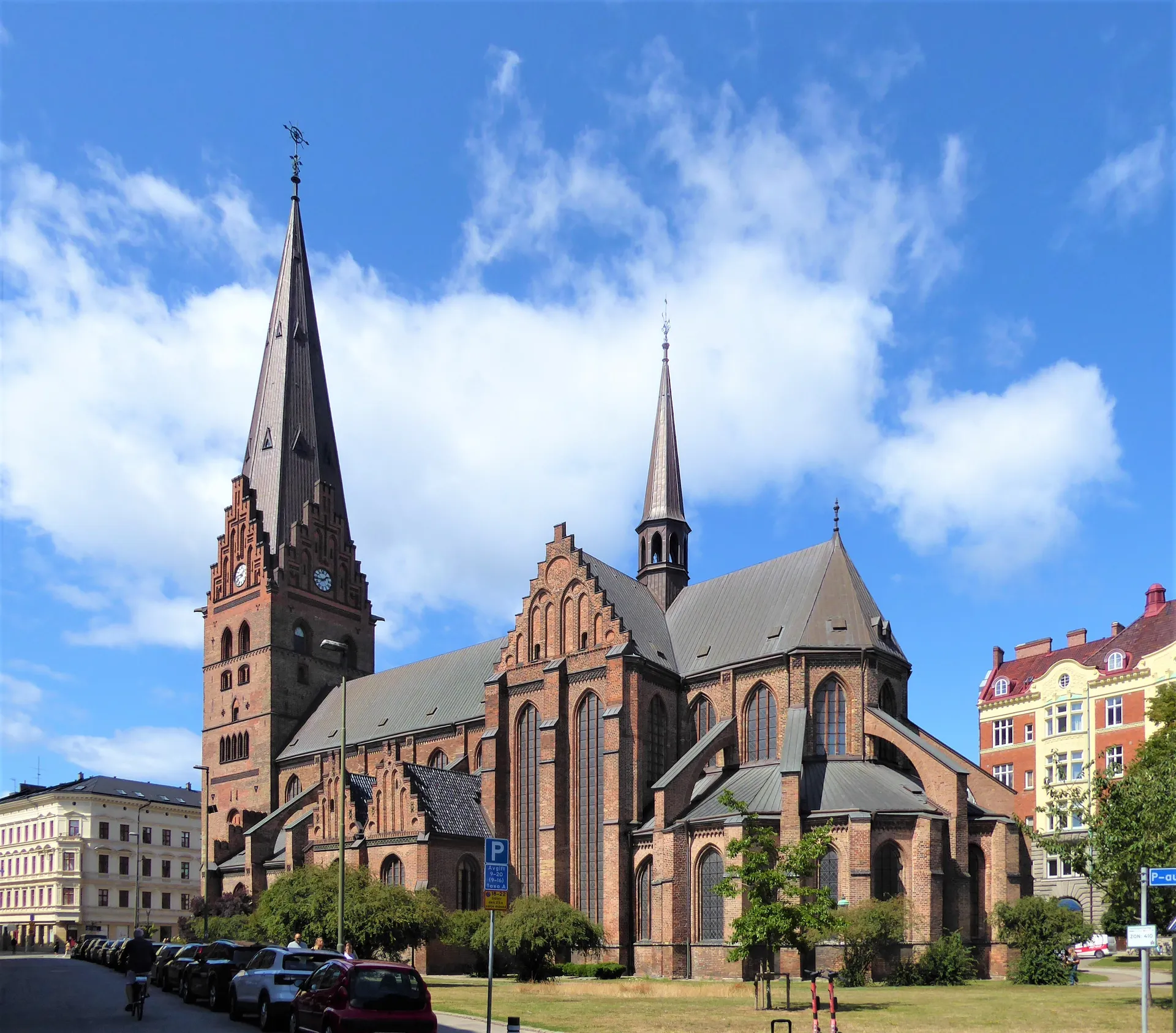
Sankt Petri Kyrka (St. Peter's Church)

Tips and tours for explorers and travellers

Malmö City Guide

Ciceru walks Malmö from Stortorget, the market square laid out in the 1530s, through Lilla Torg and the 1590s Hedmanska gården to Malmöhus Castle, the medieval fortress Christian III rebuilt in Renaissance style.

Country
Sweden
Language
Swedish
Currency
Swedish Krona (SEK)
Plug
type C/F
Time zone
Europe/Stockholm
Emergency
112
Tap water
Generally safe
Dialling code
+46

The stops

Things to do in Malmö

Our Malmö routes concentrate on two areas: the medieval core around Stortorget, Lilla Torg and Sankt Petri Kyrka, where the Hedmanska gården houses the Form/Design Center, and the stretch from Malmöhus Castle's ramparts along the canal to Malmö Live, home to the Malmö Symphony Orchestra since 2015.

The station of steam and glass

<p>Welcome to Malmö. You are standing at the threshold of a city that refuses to stand still. From its days as a gritty industrial port to its current life as a design-savvy, green-tech hub, Malmö has always been about transformation. There is no better place to start our walk than right here, where the world arrives and the city begins.</p> <p>If train stations had memory, Malmö Central would be a psychologist’s dream. This brick-and-steel behemoth, opened in 1856, was born during the industrial hustle. That was the point when the city helped funnel in laborers, ideas, and the unmistakable aroma of ambition.</p> <p>At its core, the station symbolized connection. Not just of tracks, but of Malmö to the larger, steam-belching machine that was 19th-century Europe. By 1915, nearly 100,000 people called Malmö home, and each was somehow touched by the station’s whoosh-and-rattle soundtrack.</p> <p>Today, the station wears a glass hat known as the Glass Hall. It is a shimmering modern appendage added to its older, stoic frame. Commuters and tourists now drift through this airy dome like caffeinated particles in a snow globe. It is sleek, functional, and one can easily imagine it smells faintly of cinnamon rolls and suitcase wheels meeting tile.</p> <p>No single figure defines it, but you could argue that Malmö’s labor force left the biggest imprint. With suitcases in hand and factory dreams in tow, they shaped this space. While no grand battles were fought here, the emotional ones over goodbyes and reunions were just as noisy.</p> <p>Local nostalgia whispers about the station as a place of helixed fates. Swedes leaving for America, war refugees arriving, and Copenhageners coming over for cheaper coffee. One quirk is that the original 19th-century building still stands. It remains Gothic and grim beside the glassy newbie, looking like an old general reluctantly chaperoning a start-up.</p> <p>Also, if you are headed across the Øresund to Copenhagen, you will want this place. The tunnel-train connection takes just 35 minutes. Not bad for a city that was once powered by salted fish.</p> <p>From transit to transcendence, our next stop leads us to the medieval grandeur of Sankt Petri Kyrka.</p>
The gothic giant

<p>Sankt Petri isn’t so much a church as it is Malmö’s answer to a medieval mixtape. It is heavy on brick, ambition, and the kind of theological scale that dominates the skyline. Built in the early 14th century, it was modeled after Lübeck’s Marienkirche. This was a shout-out to Malmö’s Hanseatic League connections and its obsession with German architecture. Or, more accurately, its envy.</p> <p>Back when herring was the bitcoin of the Øresund economy, this Gothic giant was a place for both prayer and power deals. Merchants hobnobbed with mayors near these heavy doors, and post-Reformation Swedes eventually replaced Catholic pageantry with Lutheran restraint. Imagine going from opera to minimalist jazz. It is the same setting, just less incense.</p> <p>One likely parishioner was Jörgen Kock. As a mint master, mayor, and general overachiever, Kock surely walked these grounds while plotting Malmö’s municipal dominance. His political footprint outlived his moral footprint.</p> <p>Today, St. Peter’s remains an architectural jaw-dropper. While we stand outside, know that the nave houses one of the largest wooden altarpieces in Scandinavia. It was crafted in 1611 and stretches an impressive fifteen meters toward the ceiling. There is also a legend, likely engineered over coffee, that secret tunnels run from the crypts to other civic buildings. Probably not true. But Malmö does love a good underground rumor.</p> <p>The spire you see now gives the church a somewhat stockier silhouette than its builders intended. It is actually a late 19th-century replacement, standing in for predecessors that succumbed to storms and gravity. It looks less like it is reaching for heaven and more like it is bracing for the wind.</p> <p>It is not flashy. It doesn’t need to be. It has survived wars, reformations, and a few ill-conceived renovation attempts. That is enough drama for one church roof.</p> <p>From sacred pulpit to civic plaza, let’s walk toward the pulse point of Malmö’s public life—Stortorget.</p>

The grand stage of power

<p>If Malmö were a theater, Stortorget would be its stage manager: stoic, central, and always surrounded by drama. Laid out in the 1530s by local power player Jörgen Kock (mint master, because of course he was), the square was super-sized to become the largest market square in Northern Europe. Think of it as the region’s original open-air LinkedIn.</p> <p>It has seen proclamations, parades, protests, and probably more than a few public hangovers. When the Swedes took over Skåne in 1658, it became the site for a very unsubtle monument to the new landlord. This is the equestrian statue of King Karl X Gustav in dramatic mid-stride. Horses do not lie.</p> <p>Kock himself left a permanent mark nearby. His grand Renaissance home, Kocksa Huset, sits just around the corner from this plaza. Thanks to him, and the convent he flattened to build this square, you are standing on centuries of commercial hustle.</p> <p>Nowadays, Stortorget plays host to slightly less visceral events such as food festivals, live bands, and pop-up markets. You might also spot teenagers pretending not to notice each other at the fountain. The buzz is still civic, just with better espresso.</p> <p>Local whimsy insists one cobblestone brings good luck if you can find it. Rumor has it the stone migrates, which sounds like a legend designed to waste people's lunchtime.</p> <p>This expansive plaza is not just a name. It is a statement. Whether you are a monarch, a merchant, or a guy holding overpriced gelato, you are part of its ongoing performance.</p> <p>Just off the square's edge, a more ornate chapter in Malmö's commercial life awaits at Apoteket Lejonet.</p>

The pharmacy of the lions

The medieval living room

<p>If Stortorget is Malmö’s formal handshake, Lilla Torg is its after-hours wink. It was created in 1590 not because the main square was too large, but because the city’s trade had simply burst its seams. Stortorget was overflowing, so this "Little Square" became the necessary overflow valve for grocery goods, crafts, and the daily hustle of burghers' wives.</p> <p>Do not let the cobblestones fool you, as this square has reinvented itself more than once. In the early 20th century, a massive covered market hall was built here, effectively swallowing the open medieval space for decades. It was not until 1968 that the hall was demolished, and the 16th-century style was retrofitted back into being. It was essentially gentrification by way of nostalgia.</p> <p>The buildings here, especially the Hedmanska gården complex, stand like well-dressed dinner guests who refuse to leave the party. One of them hosts the Form/Design Center, just in case you need some Scandinavian minimalism with your cappuccino.</p> <p>Today, Lilla Torg is less of a marketplace and more of Malmö’s unofficial lounge. It is dense with restaurants and bars, which makes it the city’s top choice for people-watching, networking, and possibly regrettable texts.</p> <p>Urban legend insists that couples who share a cinnamon bun here are destined for lifelong happiness. This says a lot about both Swedish romance and baked goods.</p> <p>The square’s nickname, "Malmö’s Ibiza," may oversell the vibe. There are fewer glow sticks and more wine glasses here. But come summer, it earns the comparison. History sleeps under every stone, even if the square now dreams in espresso foam.</p> <p>Before we leave the cobbled conviviality of Lilla Torg behind, take a few steps into design-driven modernity at the Form/Design Center.</p>

Old timber and new design

<p>Tucked inside Hedmanska Gården, a historic courtyard where 16th-century merchants once tallied profits and gossip, the Form/Design Center is proof that Malmö does not just adapt. It rebrands. Once a city of boilers and blueprints, now it sells sustainability and good lighting angles.</p> <p>This center is not your grandmother’s museum, unless she was a Scandinavian minimalist with strong opinions on plywood. As Malmö shed its shipbuilding skin and embraced a "city of knowledge" persona, this spot emerged as a creative nerve center. It exhibits architecture and industrial design inside buildings that date back to the 1590s.</p> <p>If the courtyard feels heavy with history, one can almost imagine the spirit of a 17th-century burgher rolling his eyes at the modern concepts housed within. It creates a stark contrast, as if the old merchants are baffled by chairs that cost more than their oxen ever did.</p> <p>Sensory dissonance is the name of the game. We see ancient timber framing and yellow ochre plaster wrapping around a core of cutting-edge design concepts.</p> <p>Form/Design is not just a building. It is a clever exclamation point in Malmö’s evolving sentence. It is a monument to reinvention hiding behind medieval craftsmanship. Here, the past and future share the same address, and neither has to compromise on aesthetics.Tucked inside Hedmanska Gården, a historic courtyard where 16th-century merchants once tallied profits and gossip, the Form/Design Center is proof that Malmö does not just adapt. It rebrands. Once a city of boilers and blueprints, now it sells sustainability and good lighting angles.</p> <p>This center is not your grandmother’s museum, unless she was a Scandinavian minimalist with strong opinions on plywood. As Malmö shed its shipbuilding skin and embraced a "city of knowledge" persona, this spot emerged as a creative nerve center. It exhibits architecture and industrial design inside buildings that date back to the 1590s.</p> <p>If the courtyard feels heavy with history, one can almost imagine the spirit of a 17th-century burgher rolling his eyes at the modern concepts housed within. It creates a stark contrast, as if the old merchants are baffled by chairs that cost more than their oxen ever did.</p> <p>Sensory dissonance is the name of the game. We see ancient timber framing and yellow ochre plaster wrapping around a core of cutting-edge design concepts.</p> <p>Form/Design is not just a building. It is a clever exclamation point in Malmö’s evolving sentence. It is a monument to reinvention hiding behind medieval craftsmanship. Here, the past and future share the same address, and neither has to compromise on aesthetics.</p> <p>Creativity stays onstage as we continue to Malmö Live, where the city trades toolkits for timpani.</p>

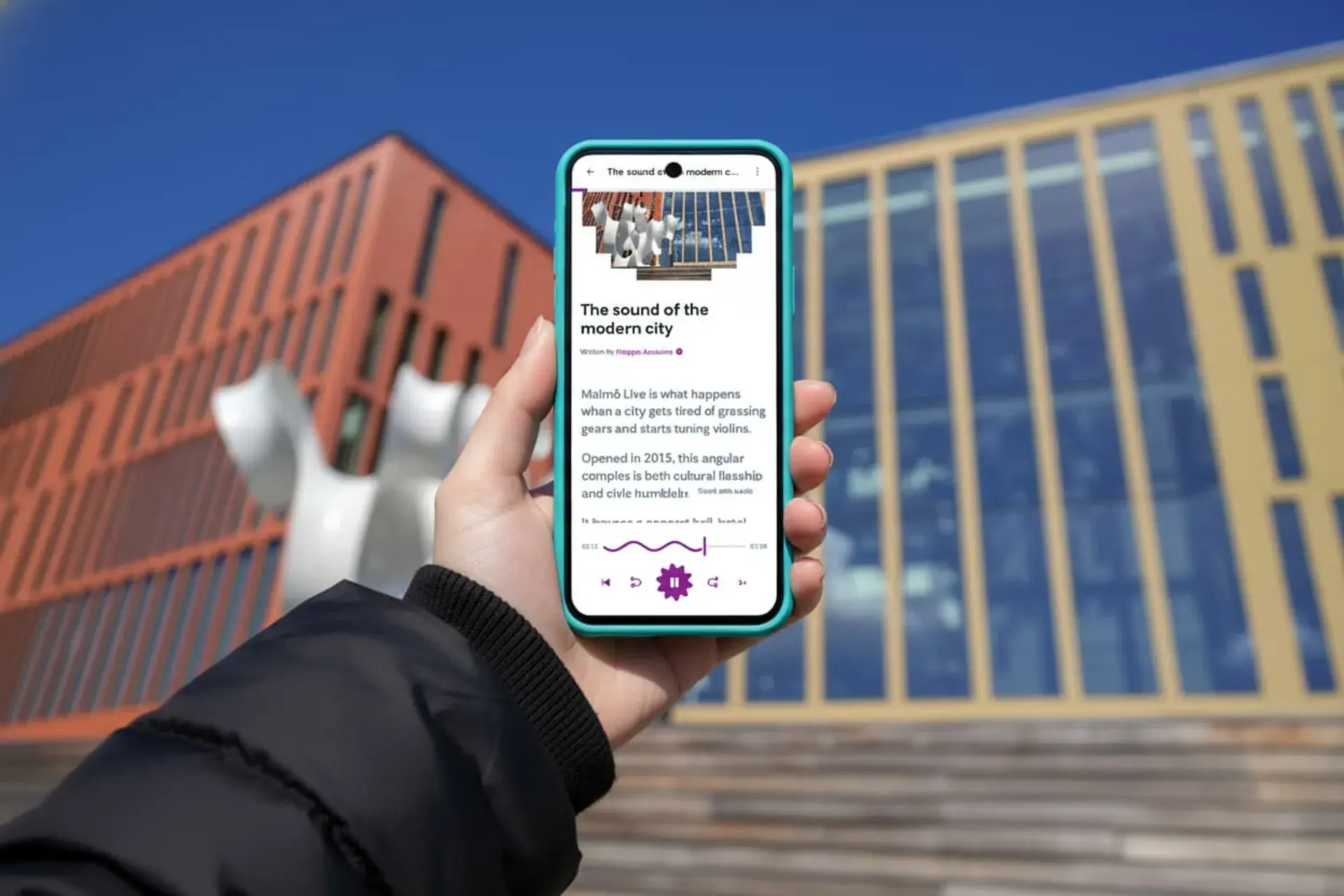
The sound of the modern city

<p>Malmö Live is what happens when a city gets tired of greasing gears and starts tuning violins. Opened in 2015, this angular complex is both cultural flagship and civic humblebrag. It houses a concert hall, hotel, conference center, and a healthy dose of architectural swagger.</p> <p>The project is a keystone in Malmö’s identity rehab. After the collapse of its smoky industrial sector, the city dusted itself off and declared that it is creative now. Malmö Live took that mission literally. It raised sharp glass walls and colorful cubic volumes where shipyard clang once echoed.</p> <p>The Malmö Symphony Orchestra calls it home. There is a myth among local concertgoers that the acoustics inside are so precise, they could make a kazoo sound majestic. This remains unverified, but it is plausible.</p> <p>From the street, the building resembles a series of mismatched blocks stacked by a giant hand. The hotel tower buzzes with visiting diplomats, wedding guests, and business conference survivors looking for strong coffee.</p> <p>Its bold, geometric exterior startles passersby who are used to more baroque scenery, but that is the point. It insists on being noticed. It is a distinctly 21st-century answer to Malmö's 19th-century façades. It serves as a glass manifesto that says Malmö is not just historic, but capable of throwing symphonies now.</p> <p>Malmö Live did not land with a cannon blast. It arrived with a cello note, and that is exactly the reinvention Malmö wanted to hear.</p> <p>And now, from newly minted culture to centuries-old brick, we finish our walk at Malmöhus Castle and its contemplative gardens.</p>

The fortress of kings and prisoners

<p>We have reached our final stop, and fittingly, it is a place that has endured it all. Malmöhus Castle is a survivor with boundary issues. Built, burnt, rebuilt, raided, and generally mistreated since the 14th century, it began life as a Danish stronghold courtesy of King Eric. The current Renaissance version owes itself to Christian III of Denmark, who in the 16th century decided Malmö deserved something grand and fortified. Possibly in that order.</p> <p>After the Treaty of Roskilde in 1658 handed Skåne to Sweden, the castle's days of royal glitz were over. It became a prison. In Malmö's version of irony, this meant the furniture got cheaper but the tenants stayed longer.</p> <p>Christian III left his architectural autograph on the heavy masonry. Later came the anonymous souls in shackles and Swedish guards pacing below weather-thrashed turrets. Over centuries, its moats and bastions were less about grandeur and more about damage control from the next war or next winter.</p> <p>Today, it is the anchor of the Malmö Museums complex. While the fortress itself houses history and art, the wider district hosts everything from technological exhibits to a submarine in a nearby hall. The surrounding Slottsträdgården, once a militarized zone, is now so peaceful that sunbathers routinely forget they are lying next to an old dungeon.</p> <p>There is talk of "The Grey Lady." She is a ghost presumed to wander the corridors in search of peace or better lighting. Castle management neither confirms nor charges admission.</p> <p>Stand near the water’s edge and you might catch the scent of damp earth and the canal. It reminds you that centuries here hold a particular humidity. This place is the city’s oldest contradiction. It is royal, grim, bucolic, and pedestrian all at once.</p> <p>Like Malmö itself, Malmöhus has been everything. It was a fortress, a prison, a museum, and a photobomb backdrop. History still lingers here. It is mostly polite, occasionally peevish, but always present.</p> <p>By journey’s end, Malmö begins to feel less like a city and more like a paradox carefully stitched together. We have traveled from glass halls and Gothic naves to leafy squares and concert halls, all without leaving earshot of the Øresund. What emerges is a portrait of reinvention where industrial bones are reshaped into spaces for design, music, and memory. Malmö does not erase its past. It reframes it, sometimes behind modern glazing, sometimes beneath centuries-old timber. Here, even the ghosts have civic pride.</p> <p>From all of us at Ciceru, thank you for exploring Malmö’s timeline with us, from Hanseatic bricks to tomorrow’s glass. We hope you enjoyed the stories, the sea breeze, and the reinvention. We cannot wait to walk with you again soon. Hejdå!</p>

Your private guide, in your pocket

Ready to walk these?

  • Self-guided, start now or later
  • Offline audio, 7 languages
  • 30-day money-back guarantee
  • 500MB global eSIM included

from

€5.00

1 self-guided tour in Malmö

See the tours

Plan the days

How many days in Malmö? A perfect 1-day itinerary

Day 1

Walk Malmö’s old town, canals and coast

Walk the central streets, cross the cycle network and finish by the water, using Skånetrafiken when the harbour districts stretch the route.

€5.00 →

Weather & crowds

Best time to visit

May and June offer the best trade off: 17 to 20°C by day and the driest weeks of the year, 34 to 41mm. July and August are warmer, 22 to 23°C, but wettest too, up to 73mm in August, when Malmöfestivalen fills the streets. December brings only about 7 hours of daylight.

Winter

Dec–Feb

0–4°C/ 31–39°F

Few visitorsOccasional rain
  • Only about 7 hours of daylight in December
Recommended

Spring

Mar–May

4–12°C/ 39–54°F

Getting busierDry
  • Driest season of the year
  • Sea stays too cold to swim before June

Summer

Jun–Aug

13–22°C/ 55–71°F

BusyWet
  • Long evenings past 22:00
  • Malmöfestivalen in August
  • Wettest months: 62 to 73mm in July and August

Don't miss

  • Malmöfestivalen, the city's street festival (7 to 14 August 2026)

Early autumn

Sep–Oct

9–15°C/ 47–60°F

Getting busierWet
  • Warm sea, thinner crowds
  • Rain picks up through October, 64.5mm

Late autumn

Nov

3–8°C/ 38–46°F

Few visitorsOccasional rain
  • Only 7.6°C by day and rain most weeks

Transport

How to get to & around Malmö

CPH Airport (Kastrup)

How to get to & around Malmö
Öresundståg to Malmö C20-25 minDKK 96.00

Copenhagen H

How to get to & around Malmö
Öresundståg to Malmö C35 minDKK 96.00

Malmö Airport (Sturup)

How to get to & around Malmö
Flygbussarna airport bus to Malmö C40-50 minSEK 139.00
Fixed price taxi to the centre25-30 minSEK 429.00

Walking

Flat and compact

Stortorget, Lilla Torg and Malmöhus Castle sit within a 15 minute walk of Malmö C. The old town is flat and largely pedestrianised, so you rarely need transport in the centre itself.

Malmö by Bike

Malmö by Bike

Malmö has 537km of segregated cycle lanes citywide. Malmö by Bike docks issue a PIN the moment you pay online by card, no Swedish BankID needed: a 24 hour pass costs 80 kr.

Bus (Skånetrafiken)

App or card only

Skånetrafiken buses take no cash at all: buy in the app or tap a payment card onboard. A single ride in the city zone costs around 32 kr.

Taxi

Metered, cards work

Metered from a 44 kr starting fee plus 16 kr per km. Worth it late at night or with luggage from Sturup, where the fare into the centre is fixed in advance instead.

Walk the compact centre and use Malmö by Bike for the harbour. Skånetrafiken buses take no cash, only the app or a card, and a single ride costs about 32 kr.

Budget

How much does it cost to visit Malmö?

Coffee and beer stay reasonable by Nordic standards, but a dagens lunch runs 109 to 190 kr. There is no tourist tax in Sweden, unlike Copenhagen across the water. The steadiest saving is transport: a Skånetrafiken single costs about 32 kr and Malmö by Bike is 80 kr for 24 hours, both by app or card, never cash.

How much does it cost to visit Malmö?
Coffee at a caféSEK 27.00–SEK 42.00
Weekday lunch (dagens lunch)SEK 109.00–SEK 190.00
Draught beerSEK 39.00–SEK 75.00
Skånetrafiken single ticketSEK 32.00
Malmö by Bike, 24 hour passSEK 80.00
Taxi across the centre~SEK 90.00–~SEK 150.00
Taxi from Sturup airportSEK 429.00

Cash or card?

Cash is rarely used and Skånetrafiken buses refuse it outright: pay by app or tap a card. Sveriges Riksbank confirms cash use keeps falling nationwide. Carry a card for Systembolaget too, since beer over 3.5% and all wine and spirits are sold only there.

Where to stay

Where to stay in Malmö

Gamla Staden

First visit, everything close

Stortorget, Lilla Torg and Sankt Petri Kyrka sit a few minutes from each other and from Malmö C. Weekend nights around Lilla Torg's bars run loud until late, and rooms here cost the most.

Möllevången

Cheap eats, local life

Möllevångstorget's market dates to the 1930s labour movement. 37% of residents were born outside Sweden, and its unsafe reputation outruns the crime figures. 15 minutes on foot from Stortorget.

Västra Hamnen

Modern design, waterfront

Built from 2001 on former Kockums shipyard land around the 190 metre Turning Torso. The boardwalk suits summer swimming, but it is 25 to 30 minutes on foot from the old town and windy off the sound.

Triangeln

Shopping, a second station

Trains from Copenhagen also call at Triangeln, one stop from Malmö C, and the district around it is dense with modern flats and a large shopping centre. It has little of the old town's character.

The tours

Malmö, one story at a time

Scratch to win

Give it a scratch

Something good might be under there. If you win, we'll show you how to use it.

One prize per traveller. Good for 2 years.

Word of mouth

What travellers say

4.4 on Google
See all reviews
  • Fabulous walking tour around the main areas of Dubrovnik old city.we were able to stop and listen as many times as we needed as there was also written information too

    Karen BakerGoogle review

  • A great way to discover the hidden gems in Sorrento. It provides history, cultural context and a flavour of the place. We would have missed so much had we wandered round without this valuable guide. Thank you for the research and information.

    alison ryeGoogle review

  • This was a good tour. I used the Spanish tour to practice my Spanish and it was helpful because you could slow it down and listen to it multiple times. This tour is what it says it will be

    LilyGoogle review

  • Macht Spaß! Toll, im eigenen Tempo zu den verschiedenen Sehenswürdigkeiten zu schlendern.

    Cécile BlumenbärGoogle review

  • Cute and informative tour of several athenian landmarks

    Ginny GlezouGoogle review

  • Merci pour ce bel après-midi à Weimar en votre compagnie. Belle expérience, merci!

    Helene CazalsGoogle review

  • All very well written and illustrated. Perhaps some of the 'history' was a little 'contrived', i.e. the successes and achievements of the certainly key protagonists slightly embellished, and the selection of a distinctly pedestrian monument to Otto, the second last, pointless! More on the classic architectural, perhaps even planning and development of the old city, would have been very welcome. Otherwise, it was great and the quizzes interesting and fun.

    Mel CadmanGoogle review

  • I’ve made two tours of Barcelona and I liked them pretty much, quite fun!

    Tugce UcarGoogle review

  • Ein kurzweilige und interessante Stadtrunde, die auch mit Kindern gut zum Erkunden einlädt.

    Anja KöppenGoogle review

Safety

Is Malmö safe?

Violent crime rarely touches visitors. UK and other advisories note gang related crime, including knife crime, shootings and explosions, in Malmö, but it is concentrated in specific residential areas away from the centre and the routes Ciceru covers. The everyday risk here is pickpocketing at crowded transit points, not violence, and the police publish exactly where and how it happens.

Transit hubs

Swedish police name train and bus stations, airports and hotel check-ins as the main pickpocketing spots, often worked by pairs using a staged distraction. Keep bags in front and cards in an inner pocket around Malmö C and Triangeln.

Gang related violence

UK advisories report gang related crime, including knife crime, shootings and explosions, in Malmö. It is concentrated in specific outer residential areas, not the centre, and visitors are not the targets.

Cycle lanes

Malmö has 537km of dedicated cycle lanes running beside the pavement, marked only by a painted line or low kerb. Look both ways before stepping onto one: bikes move fast and do not always stop for pedestrians.

Reporting a theft

For an insurance claim you need a police report. Call the non-emergency line, 114 14, or report online if you hold a Swedish ID; without one, go in person to a police station, such as the one on Drottninggatan.

Medical help

Call 112 for an emergency. For non-urgent advice, 1177 (+46 771 117 700 from abroad) has nurses on call around the clock. EU and EEA visitors need only their EHIC; everyone else should carry travel insurance.

Good to know

Good to know

ID checks crossing from Denmark

Sweden's border checks on Öresundståg trains from Copenhagen run through 11 November 2026. Police typically check IDs at Hyllie, the first stop: carry a passport or national ID card, not just a driving licence.

Systembolaget closes Sundays

Beer over 3.5%, wine and spirits are sold only at Systembolaget, the state monopoly, open Monday to Saturday and closed Sundays and public holidays. Supermarkets stock only weaker folköl.

Malmö by Bike needs no Swedish ID

Unlike bike schemes in some other cities, Malmö by Bike issues a PIN the moment you pay online by card: no Swedish personal number or BankID required, so visitors can use it from the first day.

Questions

Malmö FAQ

The Öresundståg train runs roughly every 20 minutes and takes 20 to 25 minutes to Malmö C. A single adult ticket is 96 DKK, sold by DSB or Skånetrafiken and valid for the whole cross border trip. It is Sweden's main airport link, since Malmö's own Sturup airport is 30km away and served only by Flygbussarna buses, at 139 kr, or a fixed price taxi.

Ready to go?

Self-guided audio tours across Malmö.

See the tours in Malmö