
Tips and tours for explorers and travellers
New York City Guide
New York is a five-borough city where a $3 OMNY tap can carry you across the subway network, JFK adds an $8.75 AirTrain gate, and a Central Park year runs from −2.3°C January lows to 29.4°C July highs.
- Country
- United States
- Language
- English
- Currency
- US Dollar (USD)
- Plug
- type A/B
- Time zone
- America/New_York
- Emergency
- 911
- Tap water
- Safe to drink
- Dialling code
- +1
The stops
Things to do in New York
New York is straightforward to navigate without a car: the subway and local buses cover the city’s visitor essentials, while walking works best between adjacent districts.
The Provincetown Playhouse: The birthplace of modern American drama
Washington Square Park: The heart of the Village
Washington Mews: The artists' hidden alley
18 West 11th Street: The house the radicals blew up
Jefferson Market Library: The Gothic courthouse turned library
Julius' Bar: The Sip-In before Stonewall
Stonewall National Monument: Where Pride began
Marie's Crisis: Thomas Paine's last address
Your private guide, in your pocket
Ready to walk these?
- Self-guided, start now or laterSelf-guided, start now or later and pause whenever you like
- Offline audio, 7 languagesOffline audio stories in 7 languages
- 30-day money-back guarantee30-day money-back guarantee
- 500MB global eSIM included500MB global eSIM included
from
€7.00
2 self-guided tours in New York
Weather & crowds
Best time to visit
September and October offer the strongest temperature compromise, but hotel demand is high. April and May are attractive before peak summer heat; January–February is the clearest value period, with regular freezing nights.
Winter value season
Jan–Feb-2–6°C/ 28–43°F
Few visitorsOccasional rain
- Lowest-rate hotel season
- Freezing nights are normal
Spring build-up
Mar–Apr2–17°C/ 36–63°F
BusyOccasional rain
- Milder April afternoons
- March can still feel wintry
Warm busy season
May–Aug13–29°C/ 55–84°F
Few visitors
- Warm evenings
- July average high is 29.4°C
Fall & holiday peak
Sep–Dec1–25°C/ 34–77°F
Few visitors
- Warm September start
- Temperatures fall fast by December
Transport
How to get to & around New York
JFK Airport
| AirTrain & LIRR | 30–35 min + transfer | $14.00 |
|---|---|---|
| AirTrain + subway | NOT FOUND | $11.75 |
| Yellow Taxi to Manhattan | NOT FOUND | $70.00 |
EWR Airport
| AirTrain & NJ Transit | 30 min | $17.25 |
|---|---|---|
| Newark Airport Express | about 50 min | $23.50 |
LGA Airport B/C
| Q70 LGA Link + subway | NOT FOUND | $3.00 |
|---|
Subway & Bus
Best default$3 per ride; tap the same OMNY card or device for transfers and the rolling $35 seven-day cap.
Walking
Adjacent areasBest paired with subway; Manhattan distances are manageable locally but the five-borough city is too spread out to walk as a complete system.
Yellow Taxi
Luggage / late trips$3 initial meter charge plus distance and time rates. Best for late nights or luggage, but mandatory surcharges and traffic make it costly.
Driving
Poor visitor defaultLower Manhattan congestion charges, heavy traffic, and expensive parking make renting a private car unnecessary for most sightseeing trips.
Use OMNY on the subway and local buses as the default; walk between nearby stops and use a regulated taxi only when luggage, accessibility needs, or a late journey makes the premium worthwhile.
Budget
How much does it cost to visit New York?
Transport basics are highly predictable with the $35 weekly OMNY cap, but accommodation is the big budget variable. The 2025 citywide hotel ADR was $334, and stays face a combined 14.75% tax burden. Taxis add several location and time surcharges that can make short trips expensive.
| Subway or local bus ride | $3.00 |
|---|---|
| Express bus ride | $7.25 |
| Taxi (5 km, no waiting) | ~$15.00–~$20.75 |
| NYC hotel room fee (per day) | $2.00 |
| NYS hotel unit fee (per day) | $1.50 |
Cash or card?
OMNY accepts contactless bank cards and devices citywide. Exact-change cash was accepted on buses as of mid-2026, but the MTA plans to phase out bus cash acceptance later in the year.
Where to stay
Where to stay in New York
Midtown
First visit & transportPuts you amid the densest transit and arrival network. Highly efficient, but heavy on visitor and business activity rather than a residential feel.
Upper West Side
Quieter ManhattanProvides a more residential base while retaining strong north-south subway access, though it requires longer journeys to Lower Manhattan or Brooklyn.
Long Island City
Outer-borough baseClose to Manhattan by subway, offering a slightly different perspective, but many sightseeing days will begin with an East River crossing.
Williamsburg
Nightlife & local feelHighlighted for its dining, shops, and music venues. Less convenient for repeated trips to central Manhattan than staying in Manhattan itself.
Downtown Brooklyn
Brooklyn + transportIncludes Brooklyn Heights and Boerum Hill with strong subway connectivity, though Manhattan trips still require crossing the river.
The tours
New York, one story at a time
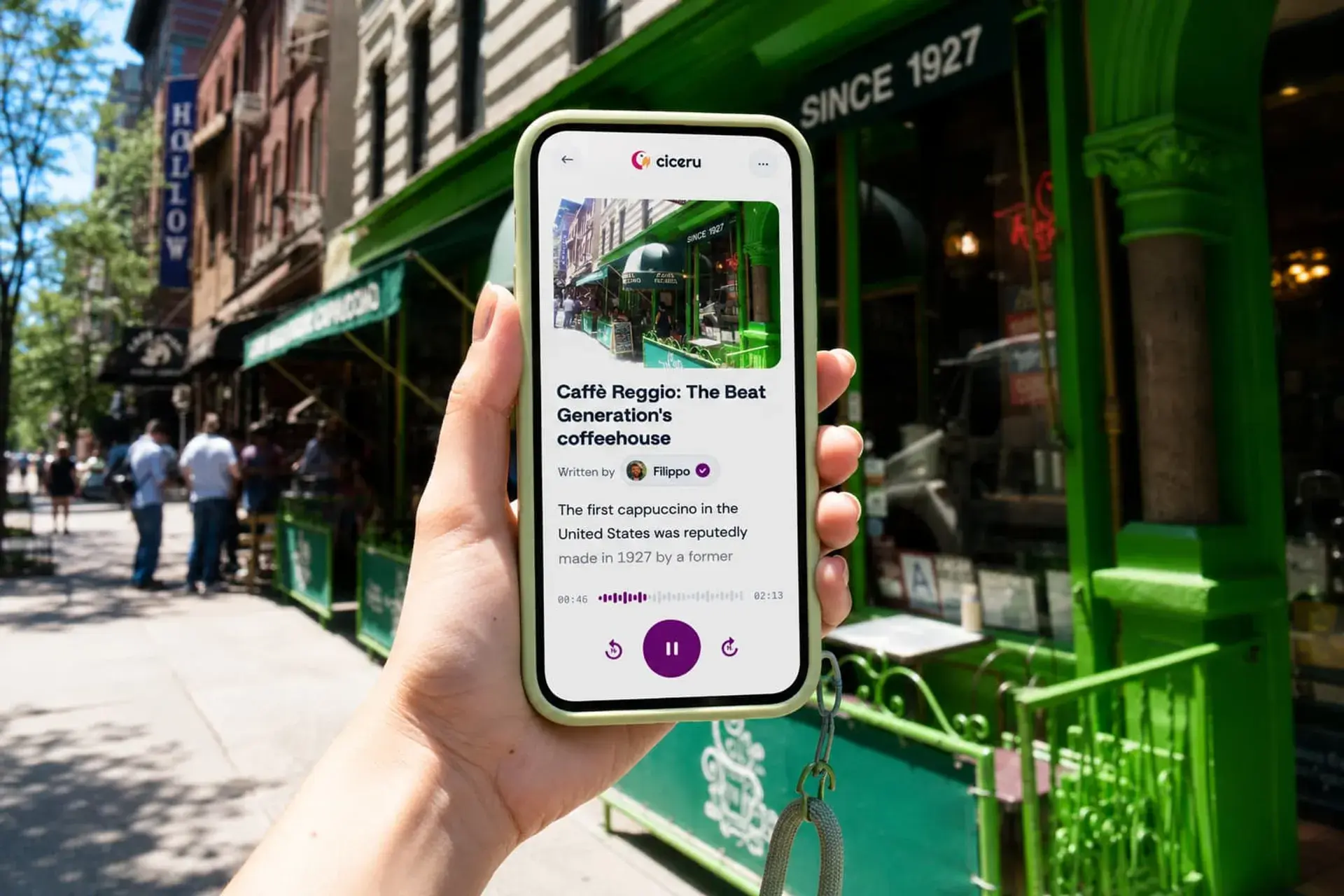
€72 hours
New York: greenwich village's bohemian rhapsody, a self-guided walking tour with audio and quizzes
 Filippo Anzivino
- Audio
- Quizzes
- Multiplayer
- Free eSIM
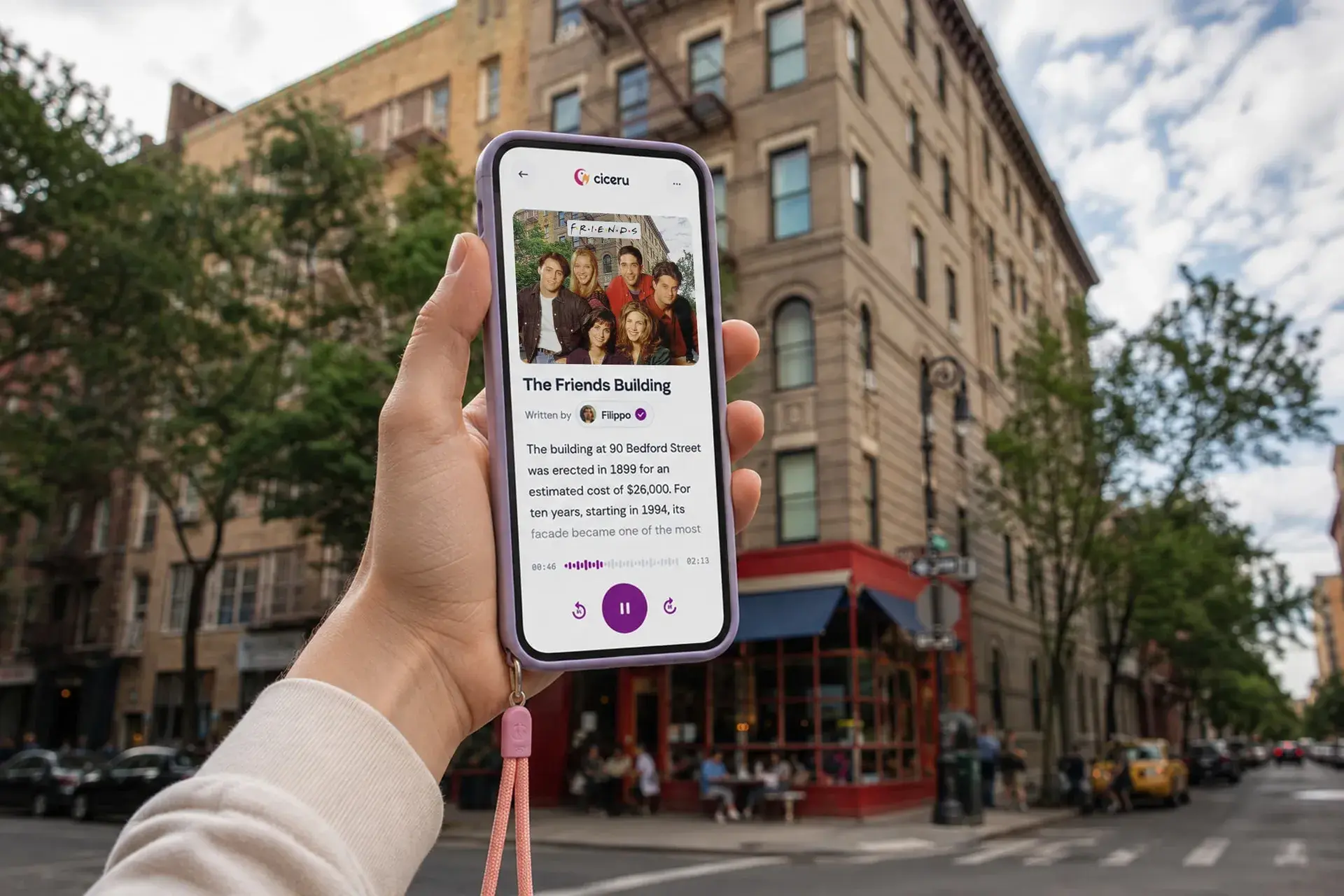
€71.5 hours
New York's West Village: a self-guided Friends & Sex and the City filming-locations walking tour, with audio and quizzes
Filippo Anzivino- Audio
- Quizzes
- Multiplayer
- Free eSIM
Scratch to win
Give it a scratch
Something good might be under there. If you win, we'll show you how to use it.
One prize per traveller. Good for 2 years.
Word of mouth
What travellers say

Safety
Is New York safe?
New York City is generally suitable for routine tourism with normal big-city precautions. The clearest visitor-specific warnings concern unsolicited transport, transit incidents, extreme heat, flash flooding, and coastal storms.
Airport ride solicitation
At JFK, LGA, or EWR, ignore anyone approaching in arrivals asking whether you need a ride. Use the official taxi line or a ride booked through a licensed app or dispatcher.
Extreme heat
During summer heat alerts, use air conditioning, stay hydrated, and follow NYC Emergency Management guidance on cooling centers.
Flooding & coastal storms
Do not walk or drive through standing water or enter flooded subway stations. Near the waterfront, follow Notify NYC during the August–October storm season.
Good to know
Good to know
MetroCard is legacy
You can no longer buy or refill MetroCards as of 2026. Tap a contactless card, phone, or wearable using OMNY instead.
The fare cap follows you
The $35 subway and local bus cap is a rolling seven-day benefit tied to your specific payment device. There is no need to buy a separate weekly pass.
Manhattan cars pay extra
Taxi fares include a congestion-pricing charge when entering the zone south of 60th Street, on top of other state and improvement surcharges.
JFK is rebuilding
Construction reroutes road access and ride-app pickups frequently. Terminals 5 and 7 currently require a free AirTrain ride to Howard Beach for pickup.
Questions
New York FAQ
No. MetroCard sales and refills ended on January 1, 2026. Use OMNY by tapping the same contactless credit or debit card, phone, wearable, or OMNY Card. Existing MetroCards can temporarily be spent down during the transition.
$3.00 for most riders. Using the same OMNY payment method also gives one free qualifying transfer within two hours and caps eligible subway and local-bus spending at $35 over seven days.
There is no universal winner. EWR publishes a 30-minute, $17.25 NJ Transit trip to Midtown; JFK offers AirTrain plus LIRR for about $14–$16 and roughly 30–35 minutes of riding plus transfer time; LGA’s free Q70 connects to the subway but has no direct rail station.
Yes. NYC DEP classifies and monitors the municipal supply as high-quality drinking water under state and federal standards. In some older buildings, private plumbing can affect lead levels, so that building-specific issue is separate from the safety of the reservoir supply.
A normal room faces 14.75% in combined NYC hotel occupancy and sales taxes, plus fixed room and unit charges that total $3.50 per room per day for the normal $40+ room bracket. The hotel or booking remarketer collects the applicable taxes.
$70 is the regulated base flat fare between JFK and Manhattan, not the final total. MTA, improvement, congestion, rush-hour, and other applicable charges plus tolls and tip can be added.
MTA allows riders to tap a contactless bank card, smartphone, or wearable directly. You do not have to register or download an app; keep using the same payment method so transfers and fare capping are calculated correctly.
An open container of alcohol in public remains prohibited. NYC’s Criminal Justice Reform Act changed how many low-level violations are processed, but it did not make public open-container possession legal.