Museum of Contemporary Art Australia Guide
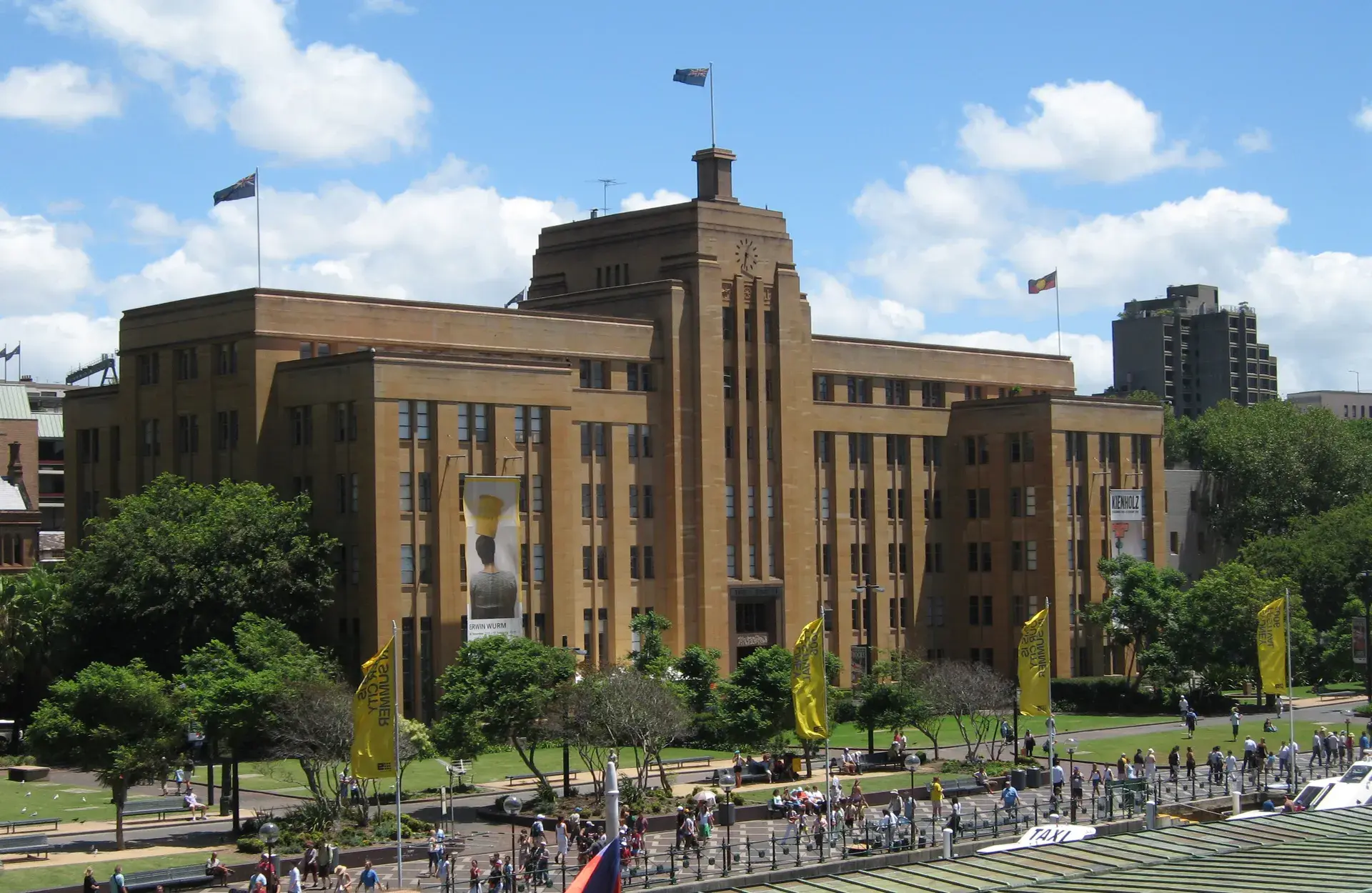
The Museum of Contemporary Art Australia sits precisely on the fault line of Australian history—the 1788 landing site of the First Fleet. Today, this landmark serves as a cultural anchor on the western edge of Circular Quay, bridging colonial harbour history and modern city life. The grand, waterside building features a striking art deco facade that houses cutting-edge contemporary art.
Architectural Contrasts on the Harbour
The museum's original structure features an Inter-War Stripped Classical style with Art Deco embellishments. Constructed from Maroubra yellow sandstone over a red granite base, the building retains high-relief maritime symbols carved directly into its central facade. Symbols such as a ship's wheel, anchor, and propeller serve as surviving markers of the building's previous role as a state shipping command center.
In 2012, a $58 million expansion introduced a stark architectural contrast. Designed by architect Sam Marshall, the five-storey Mordant Wing features overlapping cubist modular blocks in geometric black, white, and brown, juxtaposing the symmetrical 1950s sandstone.
Layers of Sydney's History
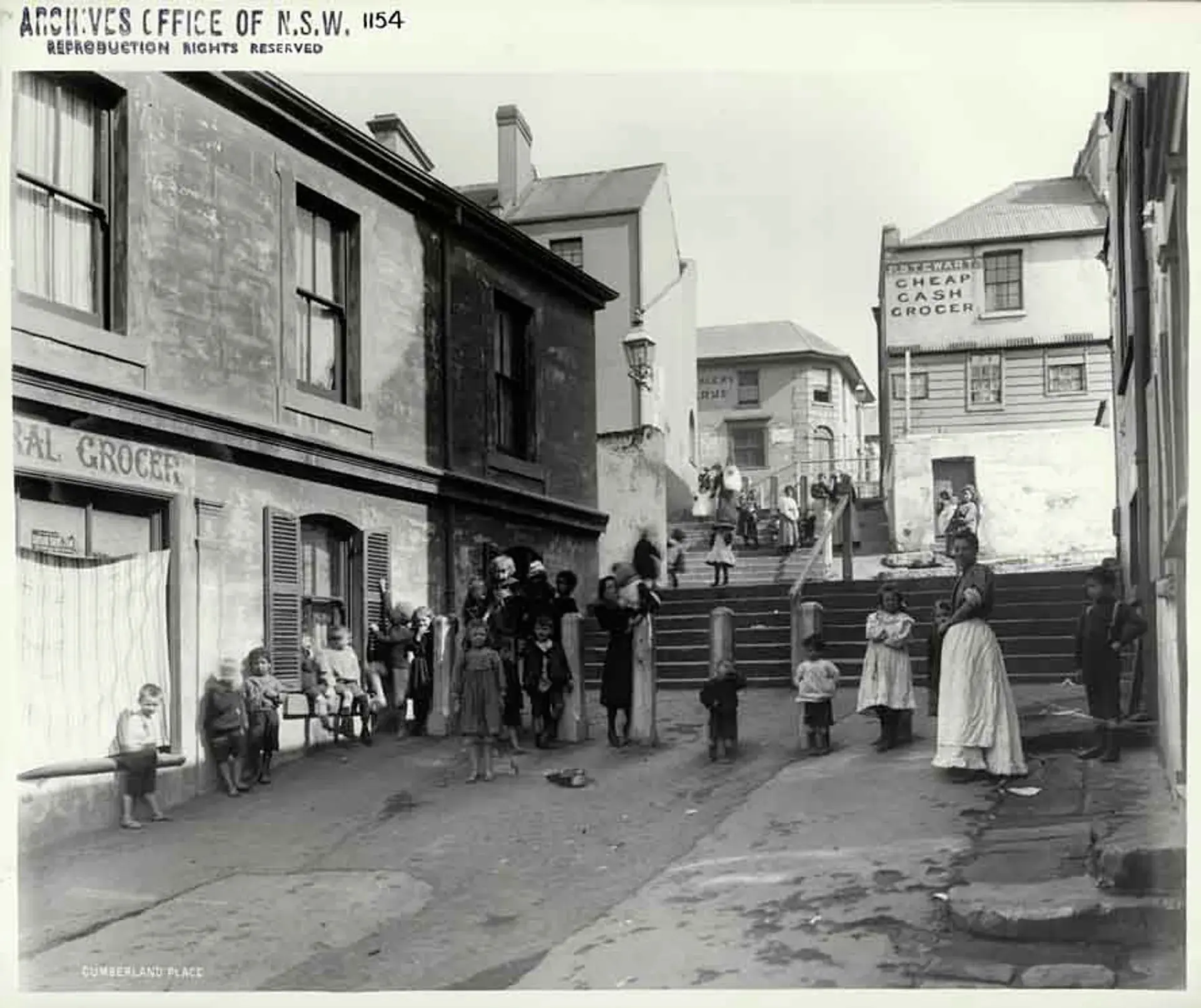
Located at 140 George Street in The Rocks, the site rests on the traditional lands of the Gadigal people of the Eora Nation, historically known as Tallawoladah. It marks the location of First Contact between Indigenous Australians and European colonisers. Governor John Hunter established Australia's first government dockyard here in 1797, followed by convict-built Commissariat Stores that operated between 1809 and 1813.
These earlier structures were demolished in 1939 to make way for the Maritime Services Board (MSB) headquarters, though completion was delayed by World War II until 1952. Despite the demolition, the original foundation stone from the Commissariat Store remains on the site, and individual sandstone blocks from the 19th-century stores still bear the personal initials carved by the convict masons who quarried them. Furthermore, archaeological remnants of the 1797 dockyard are preserved directly beneath the 2012 Mordant Wing extension.
A Hub for Contemporary Art
After the MSB vacated the premises in 1989, the New South Wales state government granted a long-term lease. Supported by a bequest from artist John Power and the University of Sydney, the building was transformed and officially opened in November 1991 as the Museum of Contemporary Art.
Today, it functions as Australia's leading public museum for contemporary art, maintaining a permanent collection of more than 4,000 Australian works. The facility includes rotating temporary exhibition galleries, the National Centre for Creative Learning, and an official museum store. A popular rooftop café provides elevated views over the active ferry hubs of Circular Quay, Sydney Harbour, and the Sydney Opera House.
FAQ
What was the building used for before it became a museum?
Before opening as an art museum in 1991, the building served as the headquarters for the Maritime Services Board. It was completed in 1952 on the site of former colonial stores, and maritime symbols like a ship's wheel and anchor remain carved into its sandstone facade today.
Are there any colonial remains at the museum site?
Yes, archaeological remains of a 1797 government dockyard are preserved directly underneath the museum's 2012 Mordant Wing extension. The site also features the original foundation stone from an 1809–1813 Commissariat Store.
What can visitors find inside the Museum of Contemporary Art Australia?
The museum houses over 4,000 Australian contemporary artworks, rotating temporary exhibition galleries, the National Centre for Creative Learning, a museum store, and a rooftop café offering views of the Sydney Opera House.