Evangelische Pfarrkirche Hallstatt: Lakeside Church
The Landmark on Lake Hallstatt
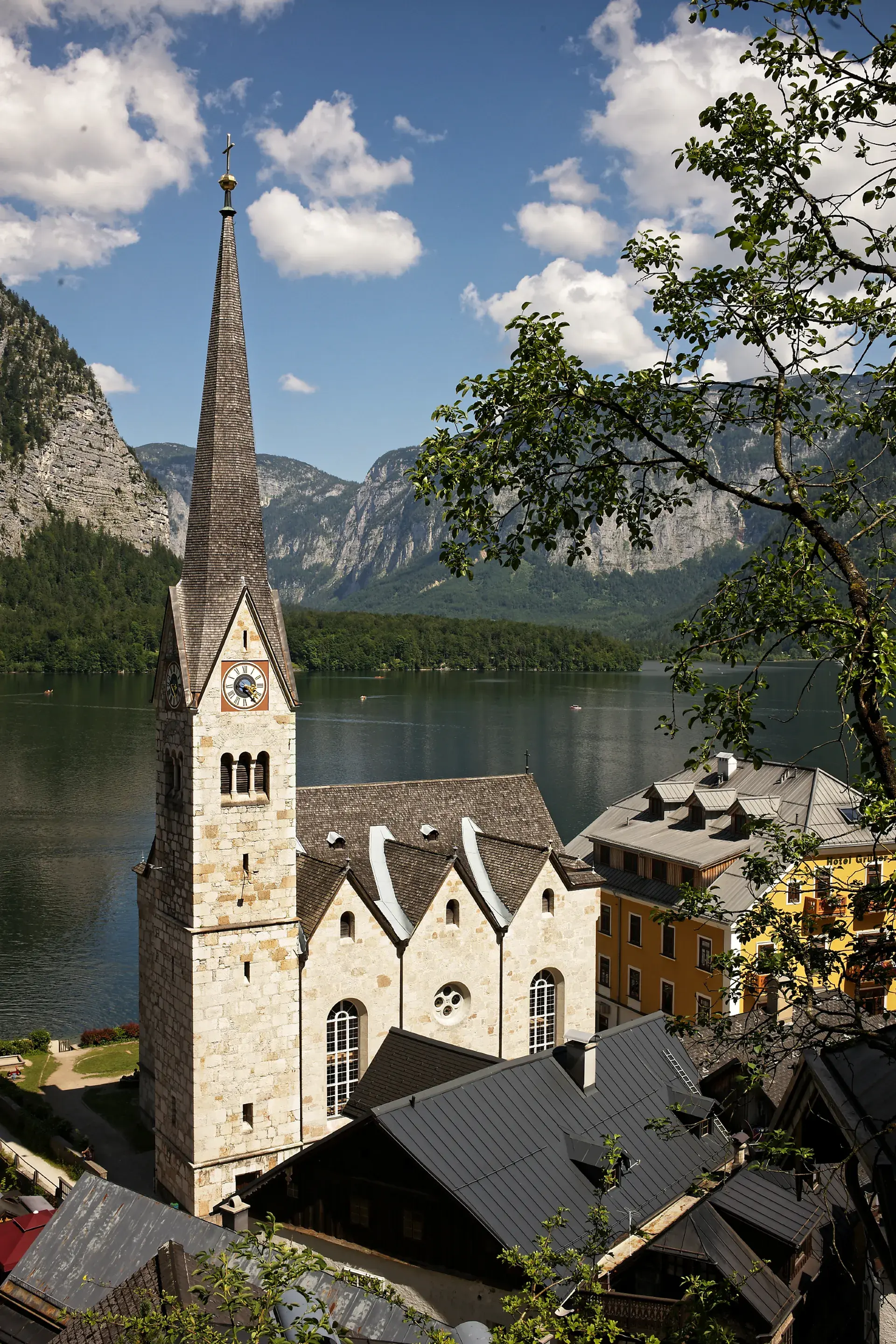
The Evangelische Pfarrkirche Hallstatt, also known as the Christuskirche, is a prominent Lutheran church situated at Landungsplatz directly along the shoreline of Lake Hallstatt. Built from ashlar limestone in the Neo-Gothic style, the building features a tall, slender steeple, pointed-arch tracery windows, and a hall nave configured to seat approximately 550 worshippers.
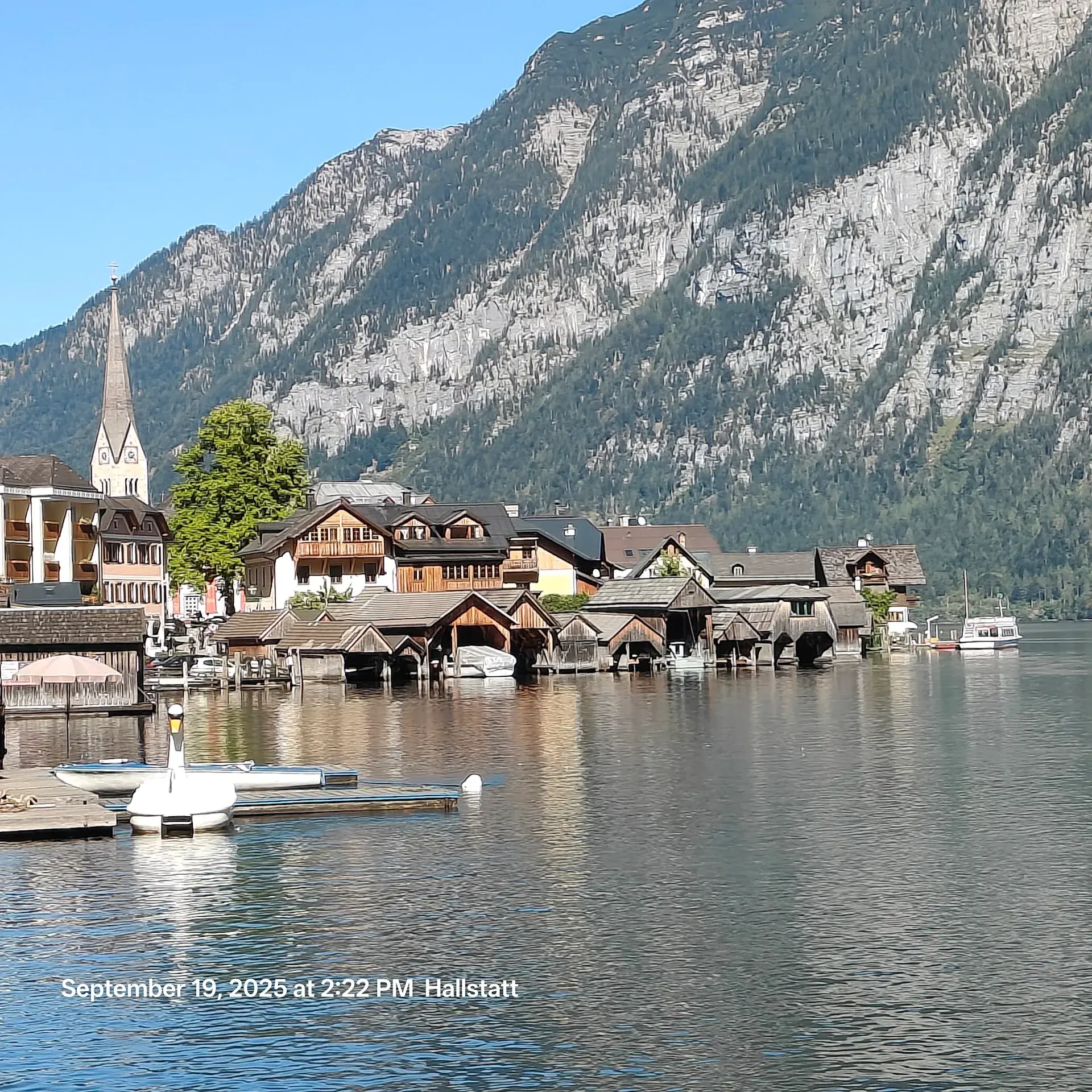
Because the church stands directly at the water's edge, its vertical spire reflects across the surface of the lake against the steep, dark limestone slopes of the Dachstein mountains. While this spire forms the quintessential silhouette of Hallstatt seen in worldwide photography, it belongs not to an ancient Catholic shrine, but to a 19th-century Protestant sanctuary built after centuries of religious persecution.
Centuries of Resistance and Underground Worship
Lutheranism gained an early following throughout the Salzkammergut region during the 16th century, finding particular strength among local salt miners and transport workers. Following an anti-Counter-Reformation rebellion by miners in 1601—during which workers smashed salt-boiling pans, dismantled bridges, and blocked lake shipping—archiepiscopal troops suppressed the uprising, executed its leaders, and rescinded local privileges.
Protestant worship subsequently moved underground for generations. In 1734, state authorities cracked down on crypto-Protestants, rounding up more than 300 adult men from Hallstatt and neighboring communities in the middle of the night. These men were placed onto salt barges and forcibly deported to Transylvania during the Transmigration campaigns.
From Modest Prayer House to Neo-Gothic Spire
Conditions began to shift in 1781 when Emperor Joseph II issued the Patent of Toleration, allowing non-Catholics limited rights to practice their faith. In 1785, roughly 500 local Protestants constructed an unadorned prayer house (Bethaus). Under Imperial Austrian law, such prayer houses were strictly forbidden from including church towers, bells, or formal architectural entrances resembling traditional churches.
The Hallstatt congregation achieved independent parish status in 1836 thanks to an endowment from the Princess of Thurn und Taxis. Full legal equality arrived when Emperor Franz Joseph I enacted the Protestant Patent of 1861. With legal restrictions lifted, the congregation dismantled the old Bethaus to construct a proper church.
Designed in 1857 by Munich architect Ludwig Lange, construction commenced in 1859 and concluded with the church's dedication in October 1863. Funding for the project relied on outside charitable support, including contributions from the German Gustav-Adolf-Werk.
Wartime Losses and Topographical Division
During World War I, the Christuskirche suffered the requisition of its church bells and metal organ pipes by the Imperial military, requiring replacement and recasting efforts during the interwar and postwar eras.
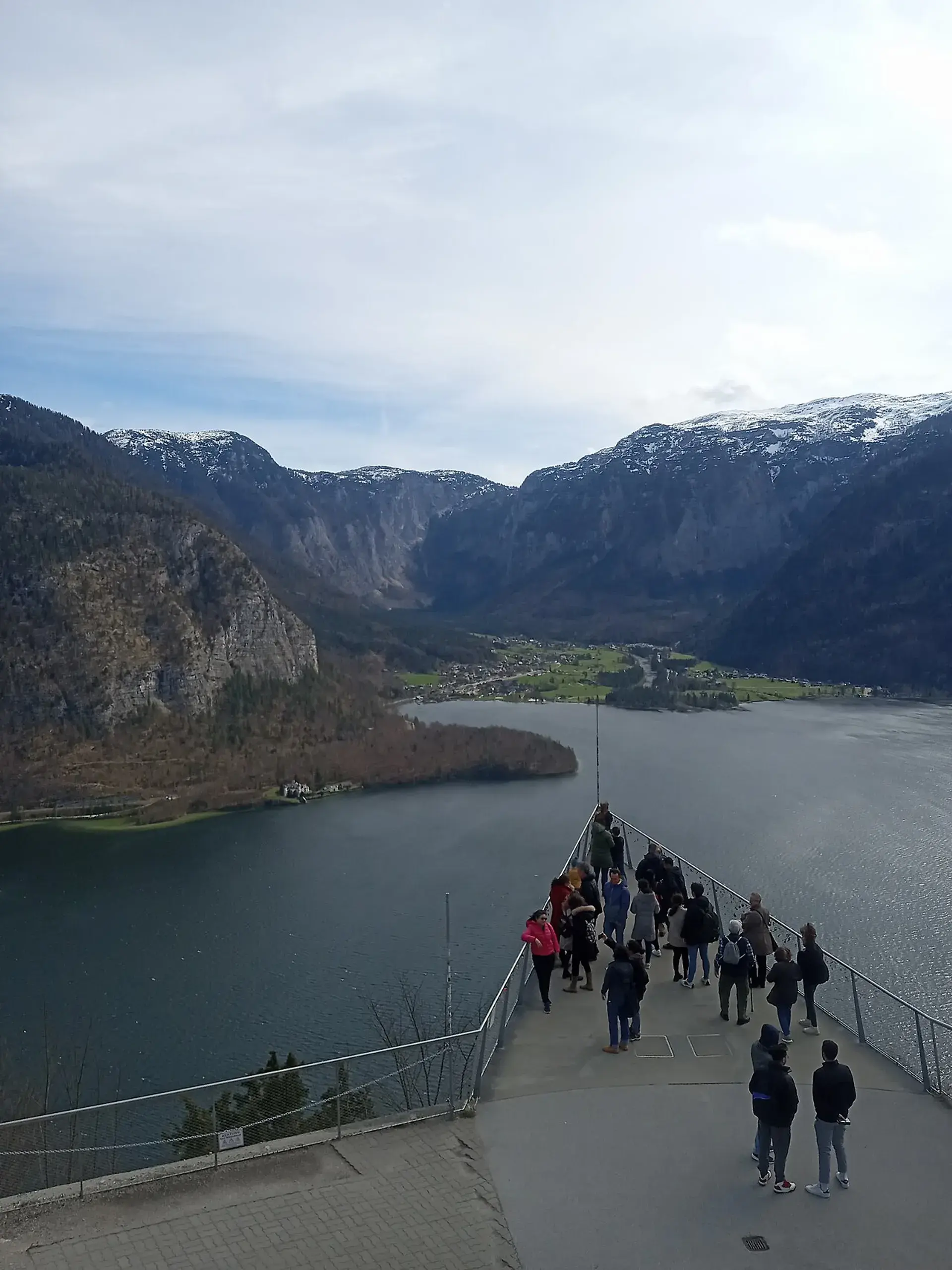
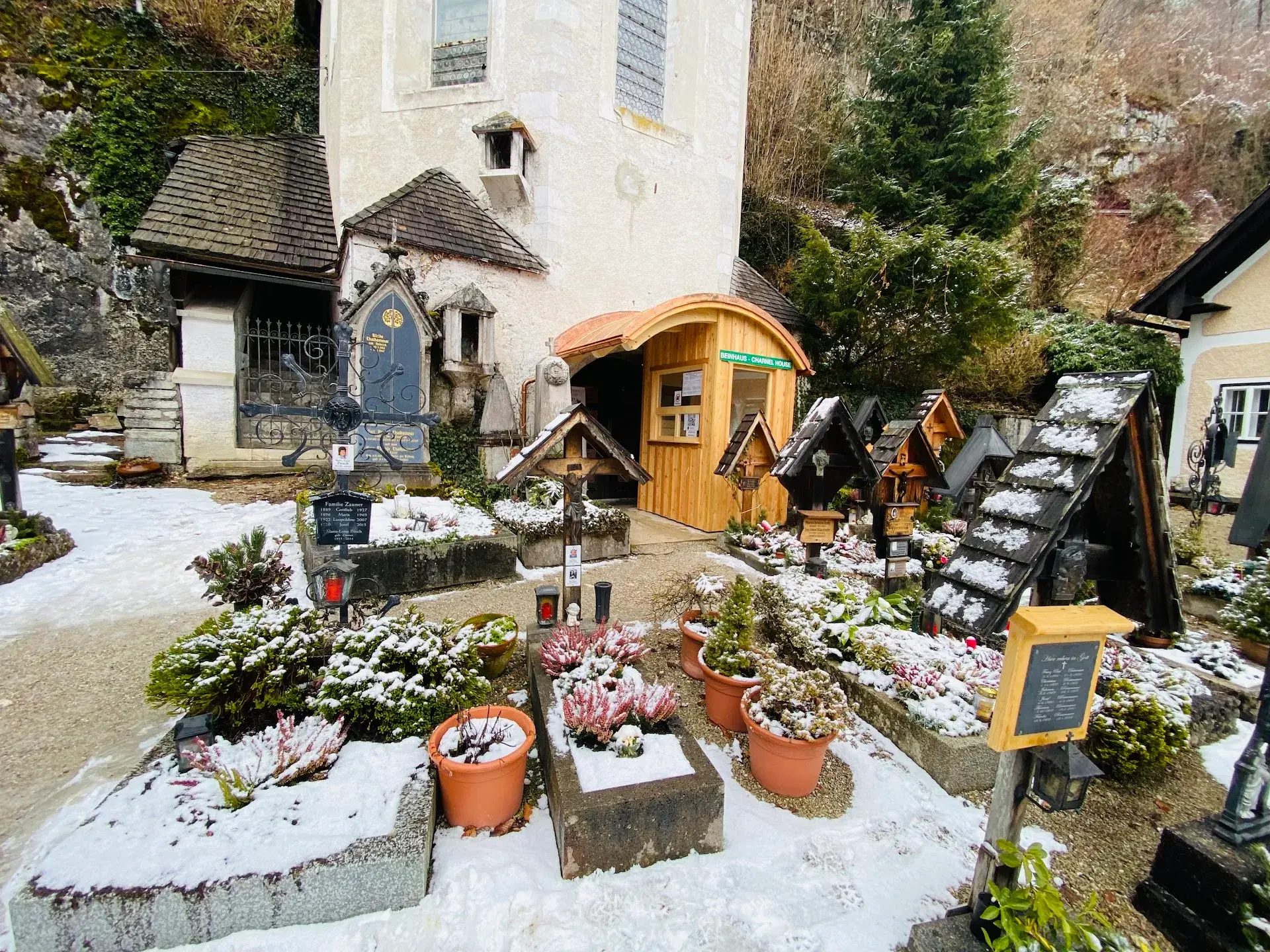
The church also illustrates Hallstatt's vertical arrangement. Hemmed in by steep mountain walls and devoid of flat ground, the town divides its religious architecture topographically. The 19th-century Protestant Christuskirche anchors the lower landing pier and lakeshore, whereas the Catholic parish church of Maria am Berg sits on the rock terrace high above.
Modern Parish and Public Access
Today, the church serves as the active center of the Protestant parish of Hallstatt-Obertraun. It opens daily throughout the year to the public from 10:00 to 18:00 with free admission. In addition to regular Sunday services and Christmas Vespers, the church functions as a cultural venue hosting classical and organ concerts during the summer months.
FAQ
What denomination is the Evangelische Pfarrkirche Hallstatt?
It is an active Lutheran church belonging to the Evangelical Church of the Augsburg Confession in Austria.
Who designed the church and when was it built?
The church was designed in 1857 by Munich architect Ludwig Lange. Construction began in 1859, and the building was dedicated in October 1863.
What structure stood on this site prior to 1863?
The site was previously occupied by an unadorned prayer house (Bethaus) built in 1785 under the Patent of Toleration, which forbade steeples, bells, or church-like portals.
What are the visiting hours and admission fees?
The church is open daily year-round from 10:00 to 18:00, and admission is free.