Parroquia San Miguel and the Hallstatt Beinhaus
The Chapel and Ossuary of Saint Michael
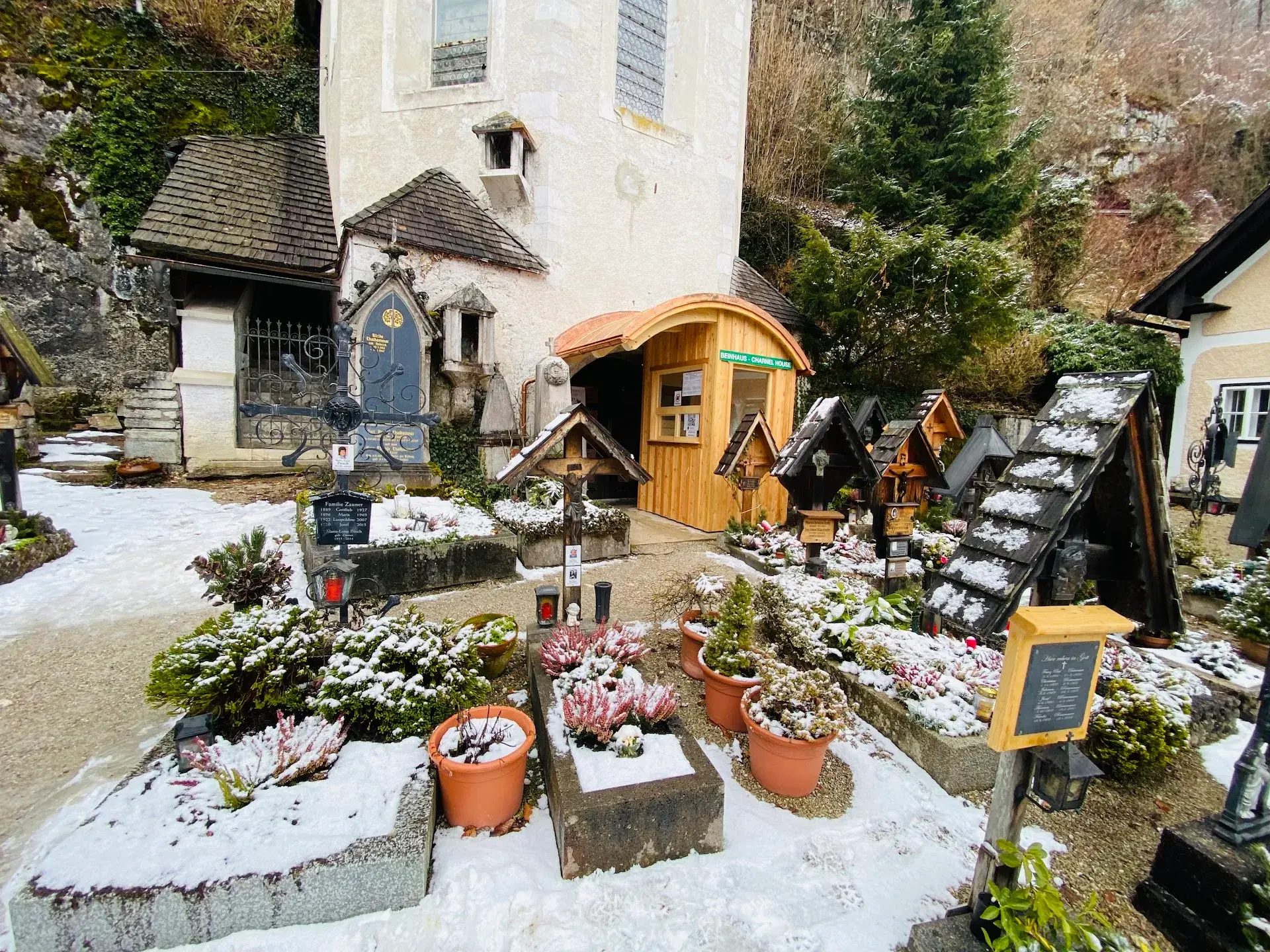
Perched along the Kirchenweg steps above Marktplatz, Saint Michael's Chapel (Michaelskapelle) is a 12th-century Gothic structure located in the cemetery directly behind Hallstatt's Catholic Parish Church. The lower level of the chapel houses the Beinhaus, or charnel house, an ossuary containing approximately 1,200 human skulls arranged neatly alongside stacked limb bones.
Among the collection, roughly 610 skulls feature intricate hand-painted artwork and inscriptions marking names and dates. Organized along stone ledges according to family lines, these relics rest above rows of bleached long bones, creating an enduring memorial shaped by alpine geography.
Land Scarcity and Alpine Burial Traditions
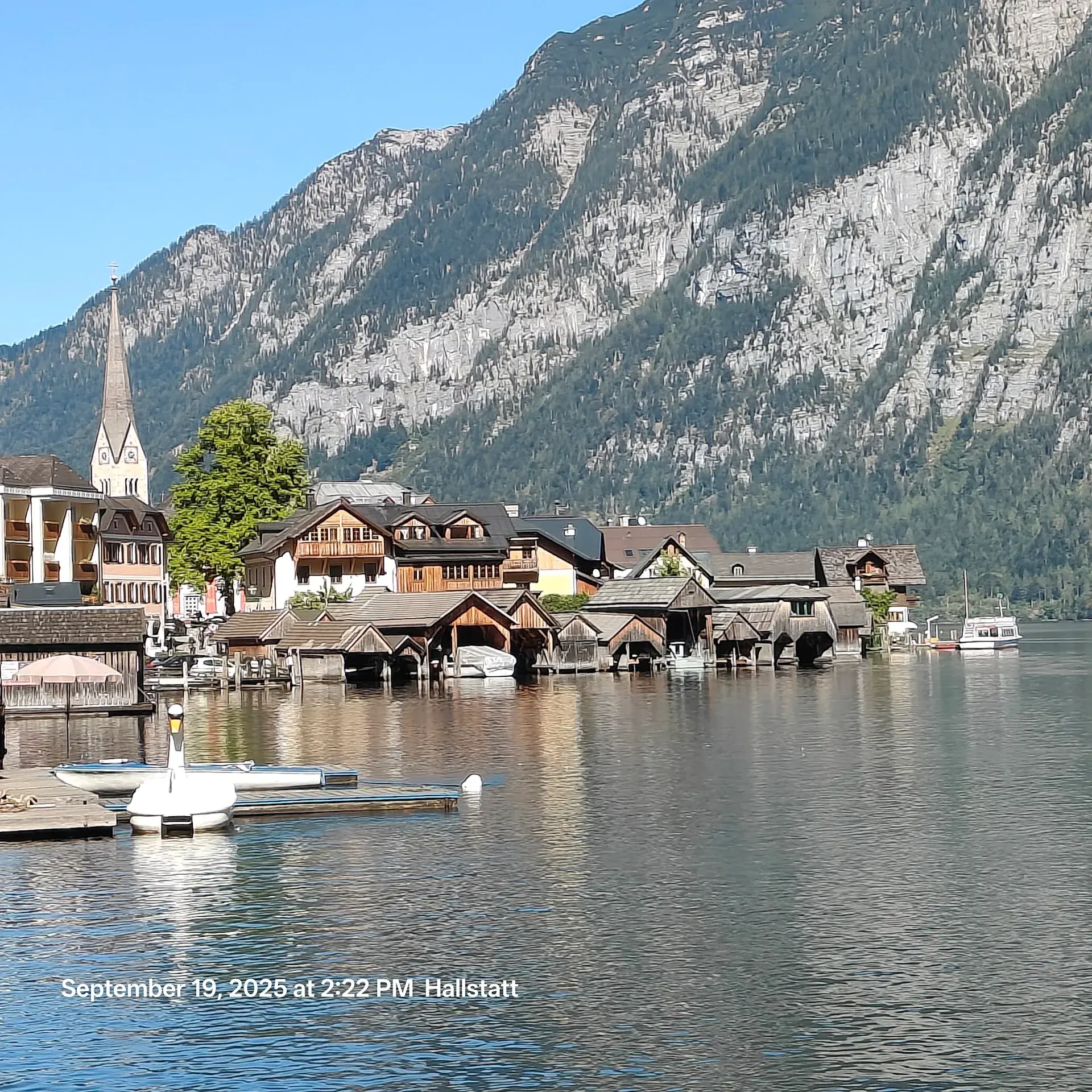
The origins of the Beinhaus stem from Hallstatt's extreme topographical limits. Hemmed in tightly between the steep slopes of the Plassen mountain and the waters of Lake Hallstatt, the settlement lacked sufficient flat terrain for cemetery expansion. Because cremation was historically prohibited by the Catholic Church, burial plots in the parish cemetery were temporary by necessity.
After 10 to 15 years, graves were routinely reopened to make space for the recently deceased. The exhumed remains underwent a secondary burial process: bones were cleaned and exposed to the sun and moonlight for weeks to bleach naturally. Once treated, they were transferred into the chapel ossuary.
The Art and Symbolism of Painted Skulls
Transferring bare bones into a communal ossuary posed the risk of erasing individual identities. To preserve the memory of loved ones, local families began commissioning painters and gravediggers around 1720 to decorate skulls with names, initials, death years, and decorative motifs.
These painted designs carried clear symbolic meanings. Oak leaves were applied to signify strength and honor, ivy represented eternal life, laurel wreaths stood for victory over death, and roses or floral sprays symbolized love and purity. A central black cross was commonly rendered across the forehead. Artistic styles evolved across eras, transitioning from dark, heavy wreaths in the 1700s to vibrant floral patterns in the 1800s, and eventually to minimalist ivy sprigs and simple lettering in the 20th century.
Modern Preservation and Contemporary Additions
Today, the Beinhaus remains a consecrated Roman Catholic sacred site and protected historic monument administered by the local parish. It welcomes visitors during seasonal hours for an admission fee.
While the rise of modern cremation brought a gradual end to regular bone transfers in the 20th century, Hallstatt residents still retain the legal right to request interment in the ossuary through their wills. The most recent skull added to the collection entered the Beinhaus in 1995. Belonging to a local woman who died in 1983, the skull was sun-bleached, inscribed, and placed near the central cross, distinguished by a visible gold dental crown.
FAQ
Why were skulls painted in Hallstatt's Beinhaus?
Because severe land constraints required burial plots to be reused after 10 to 15 years, exhumed skulls were placed in a communal ossuary. Families painted them with names, dates, and symbolic motifs so individual identities would not be lost.
What do the painted symbols on the skulls represent?
Oak leaves symbolized strength and courage, ivy represented eternal life, laurel wreaths marked victory over death, and roses stood for love and purity.
When was the most recent skull placed in the Beinhaus?
The newest addition was placed in the ossuary in 1995, honoring the last will of a local Hallstatt woman who passed away in 1983.
Discover Hallstatt like never before
Dive into Hallstatt hidden stories and secret spots with Ciceru interactive tours.
Explore tour
Audioguide
Quizzes
Maps
Solo
Couples
Groups & families

© Photo by R. Chen via Google Maps · Google Places