Maria am Berg: Hallstatt's Parish Church
A Cliffside Sanctuary Above Hallstatt
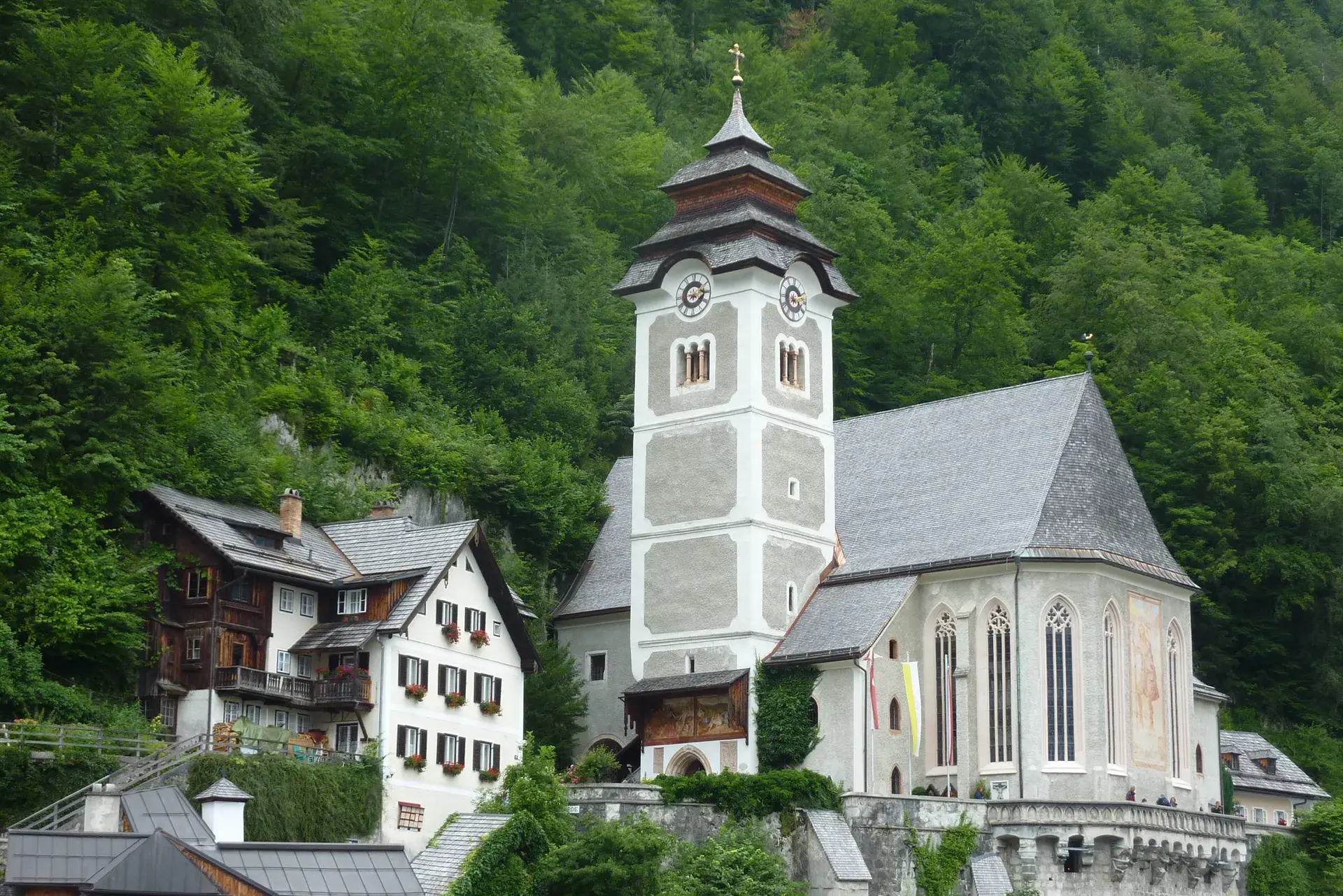
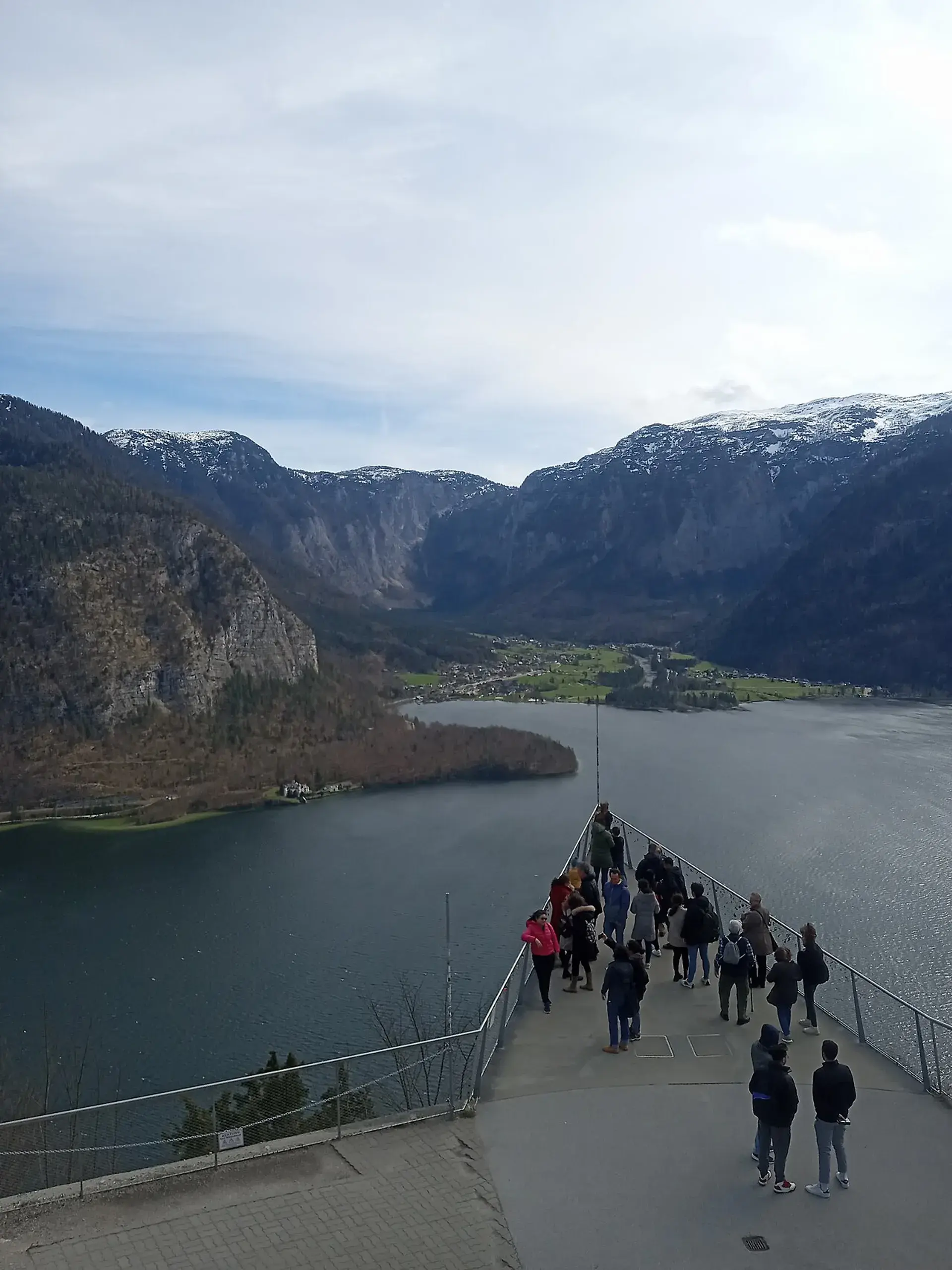
Perched on a steep rock terrace above the village and lake, the Catholic Parish Church of the Assumption of Mary (Katholische Pfarrkirche Mariä Himmelfahrt), commonly known as Maria am Berg, marks the upper boundary of Hallstatt's historical settlement. Because the dramatic terrain between the mountain cliffs and the water left virtually no flat ground, medieval builders were forced to carve narrow shelves directly out of the bedrock to support both the church and its surrounding churchyard.
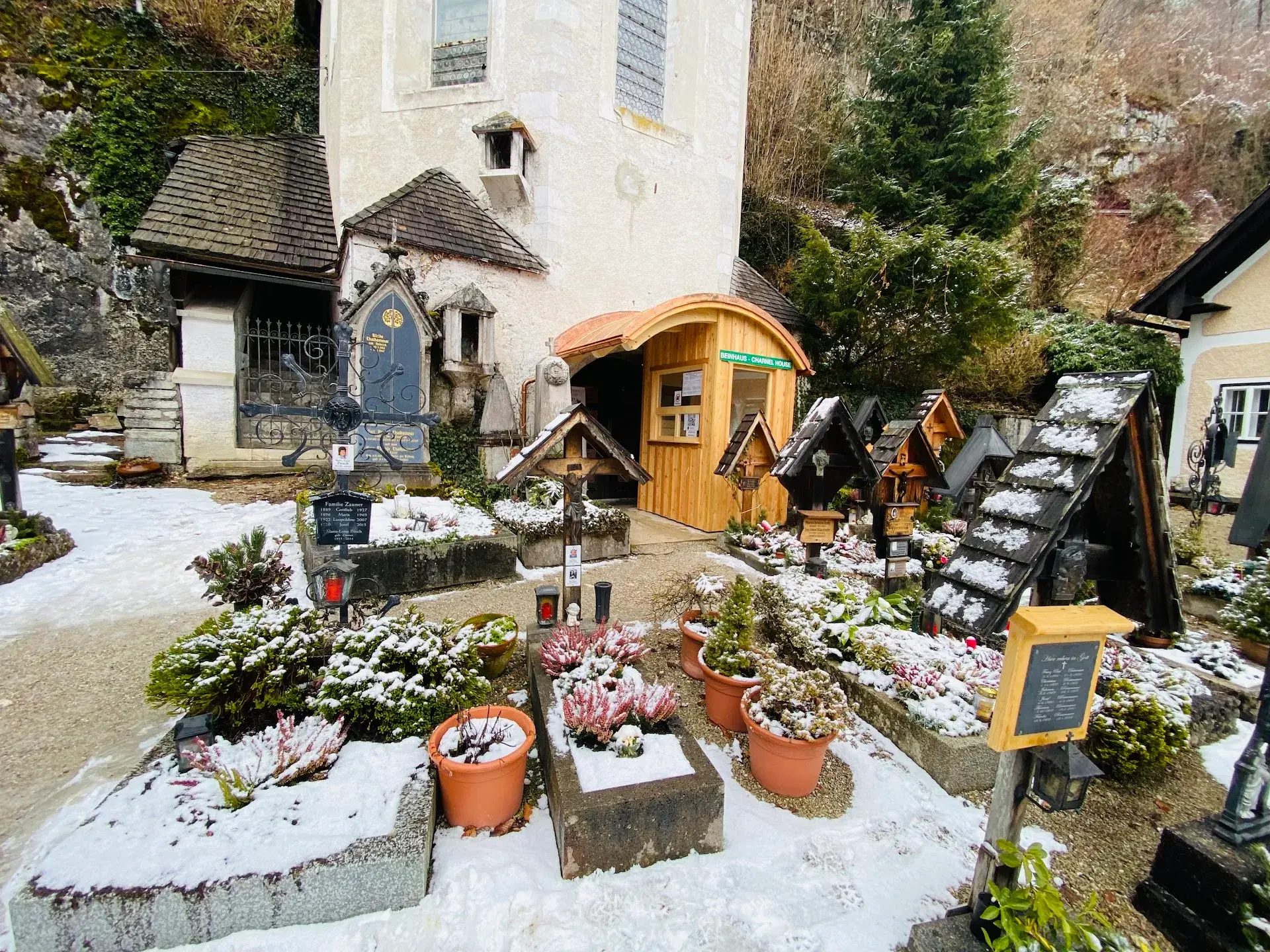
This severe shortage of level land directly shaped local burial customs. The church shares its rocky ledge with a terraced mountainside cemetery and St. Michael's Chapel, home to Hallstatt's famous charnel house (Beinhaus), where decorated skulls were preserved when cemetery plots had to be reused.
History Forged by Salt Wealth
A stone predecessor stood on the mountain terrace by roughly 1180, providing the massive lower masonry that forms the base of the present tower. Following an expanded Romanesque structure consecrated in 1320, the community embarked on a major rebuilding project funded by the region's prosperous salt-mining industry. Between the sheer cliff face and the drop to the lake, builders completed a two-aisled late-Gothic hall church by 1505.
In 1519, craftsmen added a south entrance portal decorated with frescoes in the Danube School style. Local salt miners (Knappen) and salt-production officials played a vital role across centuries, financing and safeguarding the church's artwork. In 1750, a fire in the rectory destroyed the early parish archives, and the tower was subsequently crowned with its distinctive Baroque helmet later that year.
The Double Choir and Gothic Interior
Maria am Berg features an architectural rarity: a double choir. Rather than terminating in a single central apse, the church's two-aisled design ends in two equal, parallel chancels set side-by-side. Each chancel is visually anchored by its own prominent altar, establishing an unusual dual focal point at the front of the sanctuary.
The right chancel features the late-Gothic Marian winged altar, crafted between 1510 and 1520 and attributed to Leonhard Astl. The master woodcarver incorporated a subtle signature into the piece: during the season of Advent, when the altar wings are adjusted, the name "nhart Astl" becomes visible, carved into the hem of the high priest's robe in the relief scene of Christ's Circumcision.
The left chancel houses a neo-Gothic Cross Altar (Kreuzaltar), created between 1888 and 1895 by master teachers and students from the Hallstatt Woodworking School (Holzfachschule).
The Miners' Altar and the 30-Year Art Heist
The church is also home to the 15th-century Miners' Altar (Knappenaltar), which originally stood in the salt miners' chapel on the Salzberg. In 1987, the altar was the target of a high-profile art theft when an Italian couple cut four Gothic panel paintings directly from their frames.
For three decades, the church displayed black-and-white photographs in the empty spaces. In 2017, the art theft unit of the Italian Carabinieri finally tracked down and recovered the stolen panels during an attempted sale. Following careful restoration, the historic panels were reinstalled in the church in 2018.
Atmosphere and Ongoing Parish Life
Maria am Berg continues to operate as an active Roman Catholic parish church within the Deanery of Bad Ischl and Diocese of Linz, hosting regular liturgical services, seasonal celebrations, and weddings. It is also preserved as a cultural and historic landmark accessible along Hallstatt's elevated walking paths.
The transition from the crowded lakefront paths up to the rock terrace creates a striking sensory change. The bustle of the lakeside crowds falls away, replaced by the wind coming off the water, the crunch of cemetery gravel underfoot, and the cool, stone-muffled silence inside the vaulted Gothic hall.
FAQ
Why does Maria am Berg have a double choir?
Unlike traditional single-nave layouts, the church was built as a two-aisled late-Gothic hall. This design terminates in two parallel, equal-sized chancels set side-by-side, each housing its own altar.
Where is the hidden artist signature inside the church?
Sculptor Leonhard Astl hid his signature ('nhart Astl') inside the late-Gothic Marian altar. It is carved into the hem of the high priest's robe in the Circumcision relief and is only visible when the altar wings are turned for Advent.
What happened to the stolen panels of the Miners' Altar?
Four Gothic panels were cut from the Miners' Altar and stolen in 1987. After 30 years of displaying black-and-white photos in their place, the Italian Carabinieri recovered the original panels in 2017, and they were restored and reinstalled in 2018.