Spittelberg Christmas Market: Vienna's Historic Lanes
Origins and Transformation of Spittelberg
The Spittelberg quarter in Vienna's 7th municipal district (Neubau) traces its name to the Wiener Bürgerspital, the municipal citizens' hospital that acquired hillside vineyards here in 1525 to finance patient care. Situated on a slope overlooking the city Glacis, the settlement was leveled during the 1683 Ottoman Siege due to its strategic elevation, but it was quickly rebuilt as a dense suburban community outside Vienna's fortified walls.
During the 18th and 19th centuries, moral regulations established in the city center—including Empress Maria Theresa's chastity commission—drove illicit entertainment beyond the imperial core. Spittelberg developed into a bustling red-light and leisure quarter known as a Krawallviertel, populated by taverns, brothels, and private drinking halls. The area's entertainment culture expanded further after Emperor Joseph II relaxed theatrical regulations in 1776, encouraging itinerant stages and satirical cabaret performers to establish roots in the neighborhood.
Grassroots Preservation and the Amerlinghaus Squat
By the early 1970s, decades of decline left the historic housing stock in poor condition, and the district was slated for comprehensive demolition to make way for high-density modern developments. In the summer of 1975, residents, students, and local artists occupied the vacant, historic Amerlinghaus at Stiftgasse 8, initiating one of Vienna's first major cultural squats.
The prolonged activist movement succeeded in halting the redevelopment plans. The municipality abandoned demolition and instead initiated a comprehensive restoration of the quarter’s late-Baroque and Biedermeier architecture. To celebrate this urban renewal and support the neighborhood’s growing enclave of independent artisans, community members formed the Verein Spittelberg and inaugurated the area's first Advent market in 1980 as a grassroots alternative to the central municipal Christkindlmarkt.
The Market and Eco-Event Standards
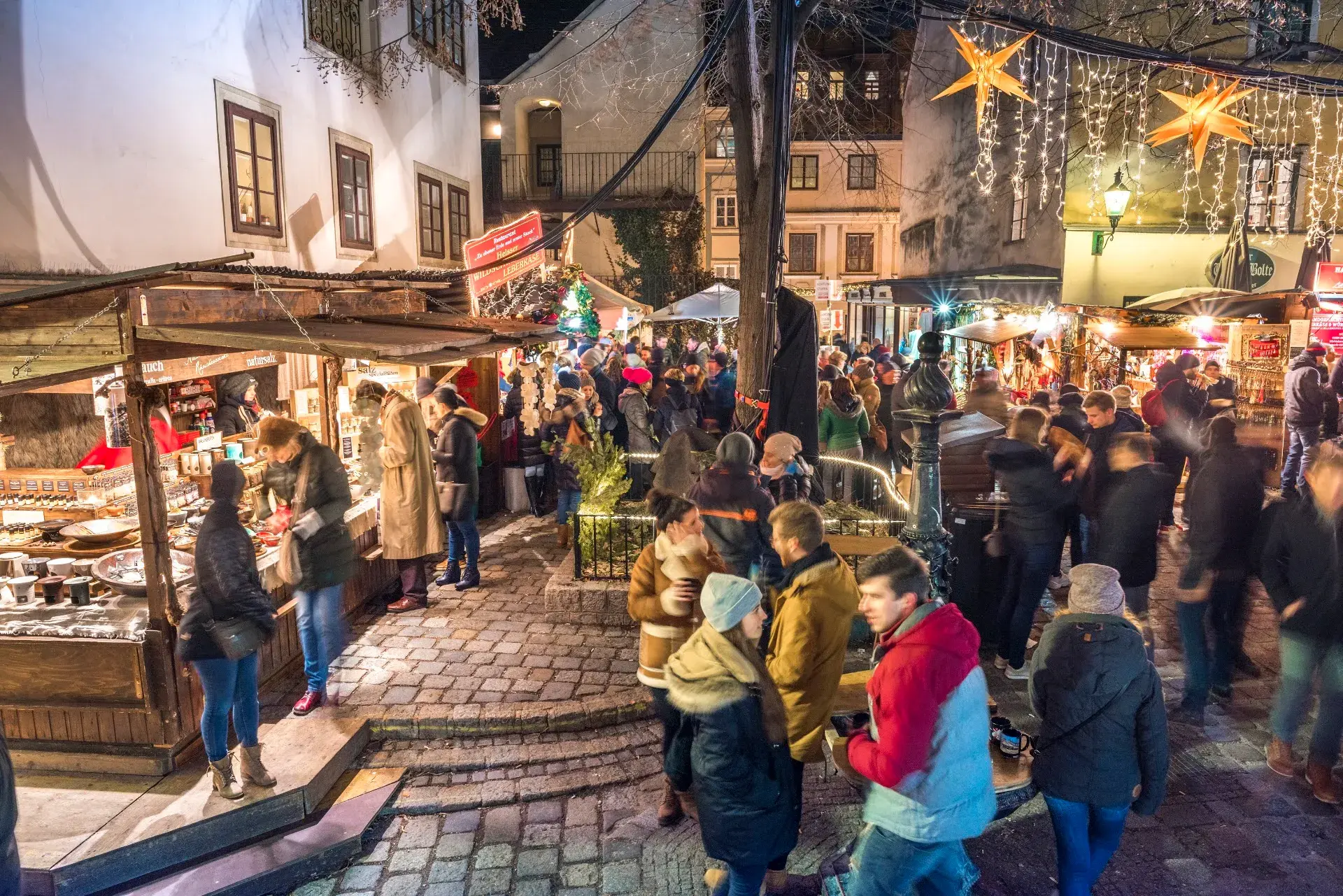
Today, the Spittelberg Christmas market occupies a network of pedestrianized cobblestone streets behind the MuseumsQuartier, including Spittelberggasse, Gutenberggasse, Schrankgasse, and Stiftgasse. Operating annually from mid-November through December 23, the market hosts approximately 120 to 125 stalls positioned directly against pastel-colored facades, historic entry arches, and inner Pawlatschen courtyards.
The gathering holds official municipal certification as an Öko-Event. This classification mandates strict waste-reduction measures, requiring vendors to provide certified organic food and beverages along with fair-trade products. Crafts on offer reflect the area's artisan focus, featuring ceramics, handblown glass, leather goods, woodwork, and woolen textiles.
Because the stalls sit within narrow two- to three-storey architectural canyons rather than a sprawling plaza, the lanes trap warm air, rising steam from spiced punch (Punsch and Glühwein), and the scent of freshly fried garlic potato cakes (Erdapfelpuffer) above the granite cobblestones.
Local Lore and the 1994 Artisan Schism
Spittelberg’s history is reflected in several unique architectural and cultural landmarks. Above the doorway of the historic tavern Zur Witwe Bolte at Gutenberggasse 13 (formerly Zum goldenen Löwen), a stone inscription reads: "Durch dieses Thor im Bogen ist Kaiser Joseph geflogen, 1778" ("Through this arched gate flew Emperor Joseph II, 1778"). According to local lore, the emperor was visiting the tavern incognito when a dispute over the bill or his conduct toward the hostess led the innkeeper to physically throw him into the street.
The market’s commitment to independent craftsmanship also triggered later developments in Vienna's holiday landscape. In 1994, when municipal authorities transferred management of the market from the grassroots Verein Spittelberg to an external commercial operator, a group of protesting craftspeople broke away. These artisans founded the divina art association and relocated to Resselpark, where they established the Art Advent market in front of the Karlskirche.
FAQ
Where is the Spittelberg Christmas market located?
The market is located in Vienna's 7th municipal district (Neubau), directly behind the MuseumsQuartier, primarily running along Spittelberggasse, Gutenberggasse, Schrankgasse, and Stiftgasse.
What dates does the Spittelberg Christmas market operate?
The market opens annually in mid-November and runs through December 23, operating during weekday afternoons and weekend mornings into the evening.
Why is the Spittelberg market designated an Öko-Event?
The market holds an official municipal Öko-Event designation because participating vendors adhere to strict waste-reduction regulations and are required to sell certified organic food and beverages alongside fair-trade items.
What is the story behind the inscription at Zur Witwe Bolte?
The inscription at Gutenberggasse 13 commemorates an incident from 1778 when Emperor Joseph II, visiting the tavern incognito, was reportedly thrown into the street by the innkeeper following a dispute over the bill.
Discover Wien like never before
Dive into Wien hidden stories and secret spots with Ciceru interactive tours.
Explore tour
Audioguide
Quizzes
Maps
Solo
Couples
Groups & families

© Photo by Weihnachtsmarkt am Spittelberg via Google Maps · Google Places