Grand Place Brussels: History, Guilds & Town Hall
Origins of Brussels' Lower Market
The Grand Place originated on reclaimed marshland along a tributary of the River Senne. Historically known as the Nedermerckt (Lower Market), the site developed into the commercial nucleus of Brussels, functioning as a trading hub for bread, cloth, and agricultural goods. Located in the lower city, the market square served as a civic and mercantile balance to the aristocratic power center on the Coudenberg in the Upper City.
During the 15th and 16th centuries, rivalry between the municipal magistrate and regional rulers took physical shape on the square. Between 1401 and 1455, the local magistrate erected the Gothic Town Hall to project civic autonomy. To counterbalance this municipal influence, the Duke of Brabant constructed an administrative building directly opposite between 1504 and 1536, which later became known as the King's House.
Brussels walking tour with audio and quizzes: Grand Place and Sablon
2 hours10 stopsAudio guideStart any day, at your own paceTicket on your phone · 30-day refundArchitectural Monuments: Town Hall and King's House
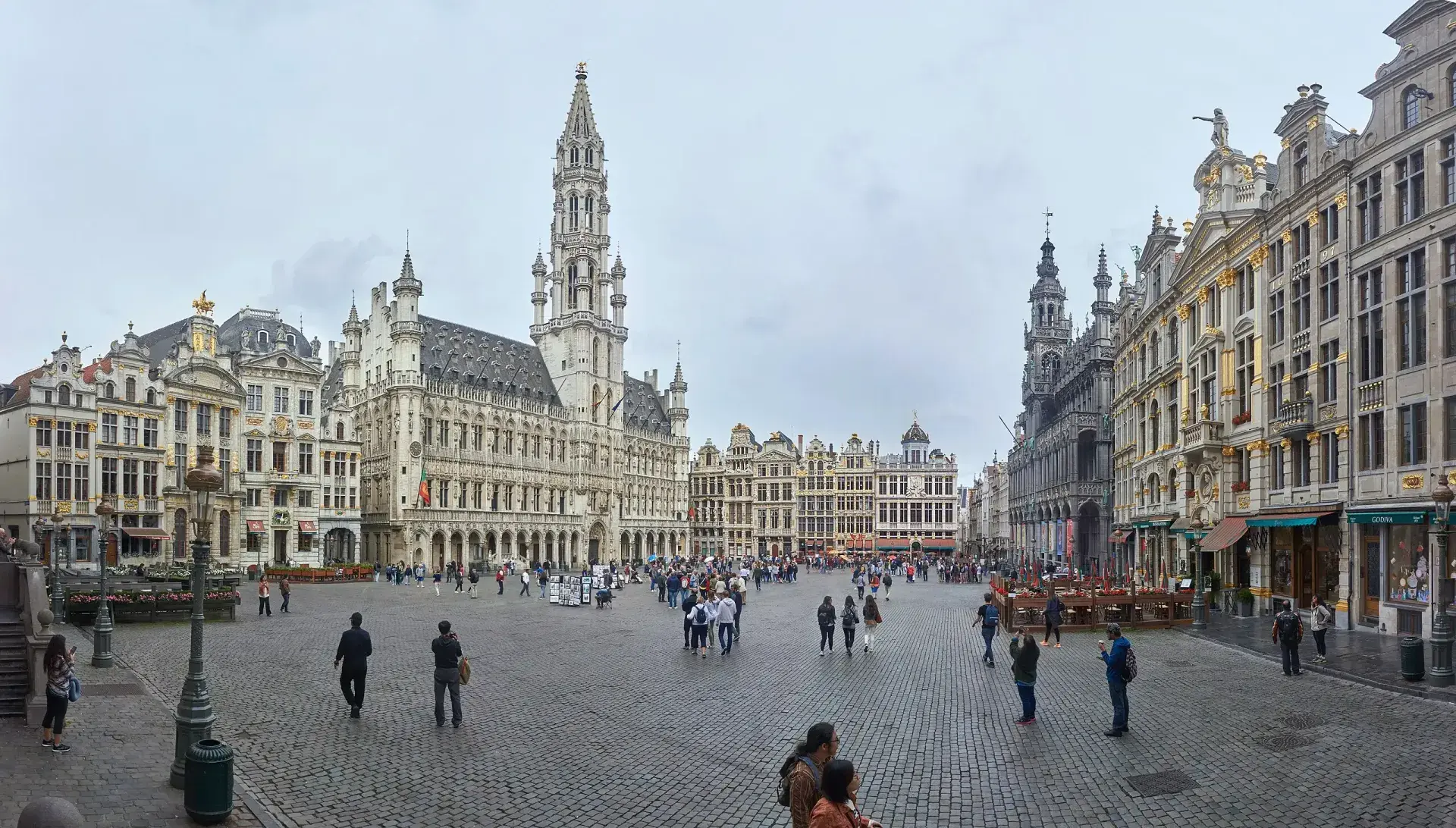
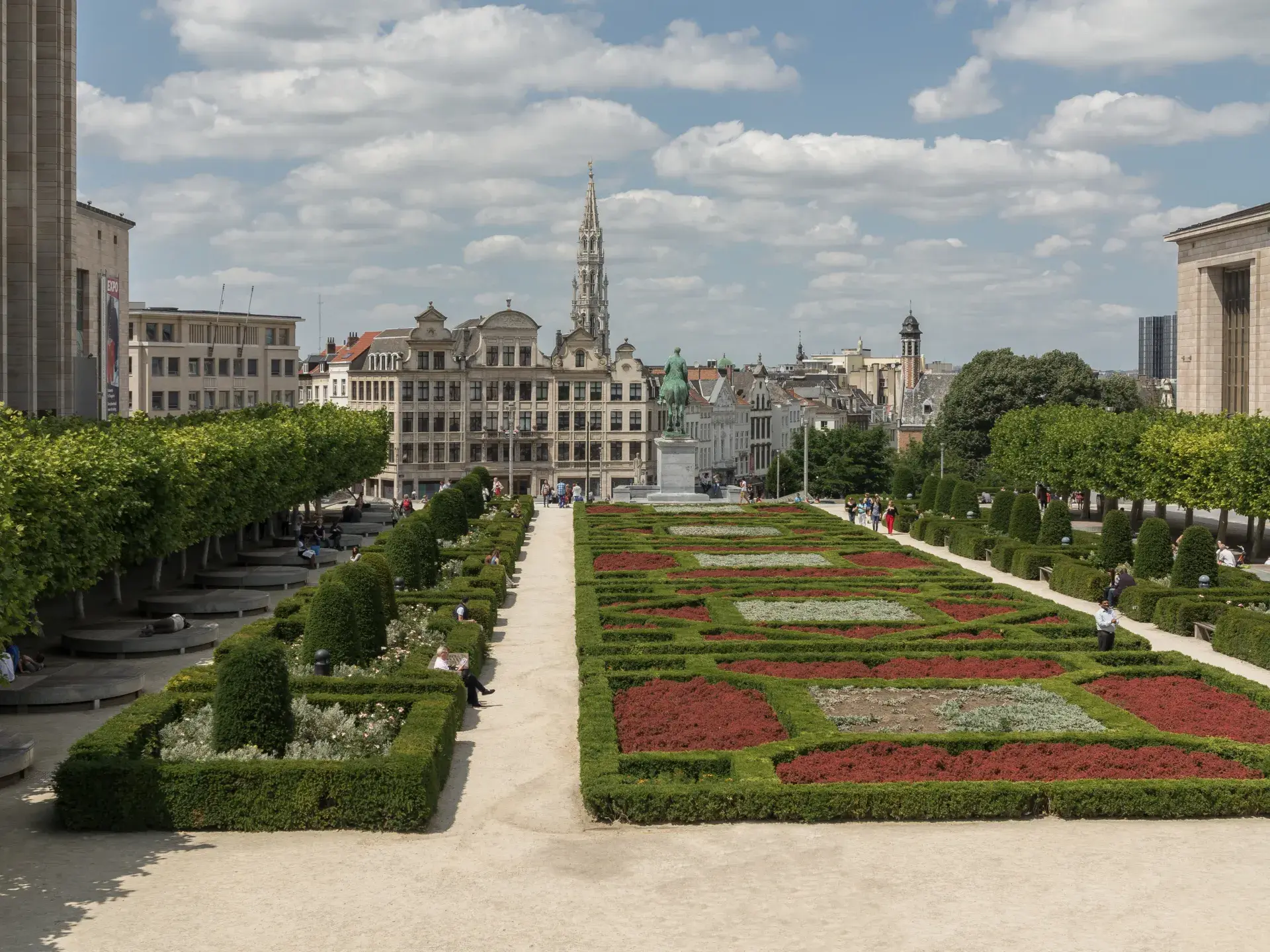
Enclosed by tall stone facades and paved with porphyry cobblestone, the quadrangle measures approximately 68 by 110 metres. Its most prominent structure is the Brabantine Flamboyant Gothic Town Hall. The building features a 96-metre spire crowned by a 2.7-metre statue depicting Saint Michael the Archangel slaying a demon. While a long-standing urban legend claims the architect leaped from the spire upon discovering the tower was off-center, the building's asymmetry actually resulted from phased construction. Master builders constructed the longer left wing between 1401 and 1421, while the right wing was added between 1444 and 1449 within the constraints of preexisting street lines.
Directly across the square stands the neo-Gothic King's House, rebuilt by architect Victor Jamaer between 1873 and 1896, which houses the Brussels City Museum. The building carries contrasting names: while designated the Maison du Roi in French, no monarch ever lived there. Its Dutch name, Broodhuis (Breadhouse), references its medieval origins as a covered bread market.
The 1695 Bombardment and Rapid Rebuilding
During the Nine Years' War, French artillery under the command of Marshal de Villeroy bombarded Brussels from August 13 to 15, 1695. The artillery barrage destroyed nearly every structure facing the square, leaving only sections of the King's House and the stone shell and tower of the Town Hall standing.
Between 1696 and 1700, the square underwent rapid reconstruction. The municipal administration enacted strict architectural rules to guarantee visual harmony while allowing individual merchant corporations to present their wealth. Within five years, the square was rebuilt with late-17th-century Italianate and Flemish Baroque guildhalls. A major restoration initiative initiated in 1883 by Mayor Charles Buls preserved these facades and rebuilt the King's House. In 1998, the Grand Place was inscribed on the UNESCO World Heritage List for its late-17th-century civil architecture.
Guild Emblems and Secular Heritage
The Baroque and classicist guildhalls surrounding the square feature facades displaying the emblems of their respective trades. The boatmen's hall, Le Cornet, features a gable sculpted in the form of a ship's stern. Le Sac, belonging to the coopers and carpenters, displays carved woodworking tools, while the archers' guildhall, La Louve, depicts Romulus and Remus with a she-wolf.
These buildings also hold political significance. The guildhall Le Cygne (The Swan) served as a meeting place for Karl Marx and was the founding site of the Belgian Workers' Party in 1885. Notably, despite Brussels' historic Catholic roots, no church, cathedral, or chapel faces the square; the perimeter was reserved entirely for secular municipal administration and trade.
Modern Civic Use and Cultural Events
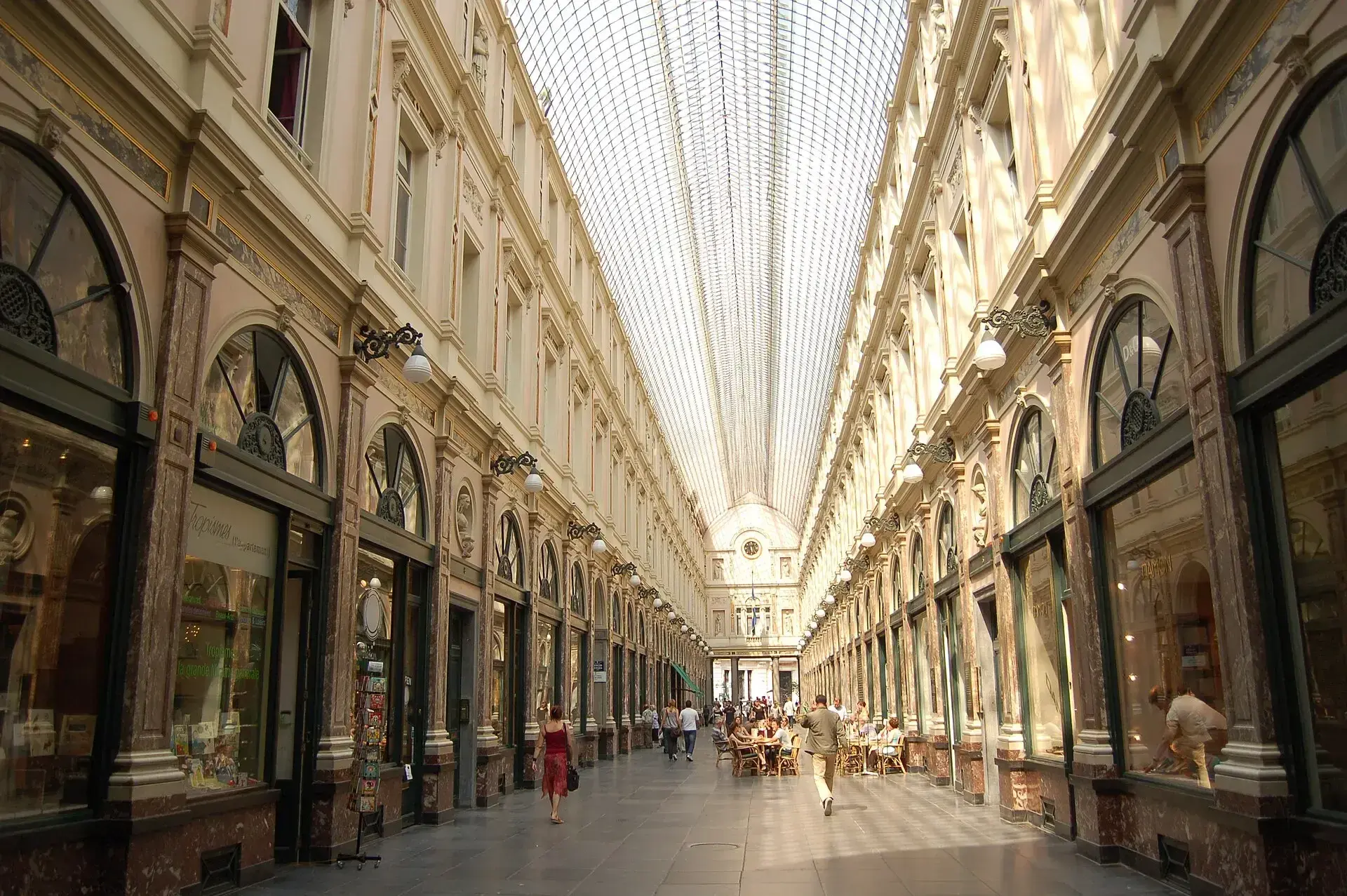
The Grand Place is a fully pedestrianized civic space connecting medieval lanes to landmarks such as the Galeries Royales Saint-Hubert, the Bourse, and the Manneken Pis. After routine municipal administrative offices moved to the Brucity center in 2023, the Town Hall maintained its role for civil weddings, guided tours, mayoral receptions, and official ceremonies.
The square regularly accommodates large cultural events. Every even-numbered year in mid-August, the Flower Carpet blankets the cobblestones with more than 500,000 cut blooms covering over 1,600 square metres. In early July, the Ommegang pageant concludes on the square, reenacting the 1549 Joyous Entry of Emperor Charles V. During the winter season, the Plaisirs d'Hiver festival brings an official Christmas tree and facade light projections to the historic quadrangle.
FAQ
Why is the Brussels Town Hall asymmetrical?
The asymmetry is due to construction timelines rather than an architect's error. The Town Hall's left wing was built between 1401 and 1421, while the right wing was constructed decades later between 1444 and 1449 by different master builders working within preexisting street boundaries.
Are there any churches facing the Grand Place?
No. Despite Brussels' Catholic history, no church, chapel, or cathedral stands on the Grand Place. The square was historically preserved exclusively for commerce and secular civic administration.
What caused the destruction of the Grand Place in 1695?
During the Nine Years' War, French artillery under Marshal de Villeroy bombarded Brussels from August 13 to 15, 1695. The attack leveled nearly all the buildings around the square, leaving only the stone shell of the Town Hall and parts of the King's House intact.