Royal Museums of Fine Arts of Belgium: Art & History
Origins and the Chaptal Decree
The Royal Museums of Fine Arts of Belgium traces its beginnings to the Napoleonic era. On 1 September 1801, Napoleon Bonaparte issued the Chaptal Decree, establishing regional art repositories across French-governed territories and designating Brussels as a major administrative hub. The museum opened to the public in 1803 inside fourteen rooms of the Palace of Charles of Lorraine.
The initial inventory relied heavily on artworks confiscated from churches and religious establishments by French Revolutionary authorities, later supplemented by repatriations from Paris. Following Belgian independence in 1830, the rapid expansion of the national collection prompted the need for a dedicated, permanent home for the country's artistic heritage.
Brussels walking tour with audio and quizzes: Grand Place and Sablon
2 hours10 stopsAudio guideStart any day, at your own paceTicket on your phone · 30-day refundArchitecture and Campus Setting
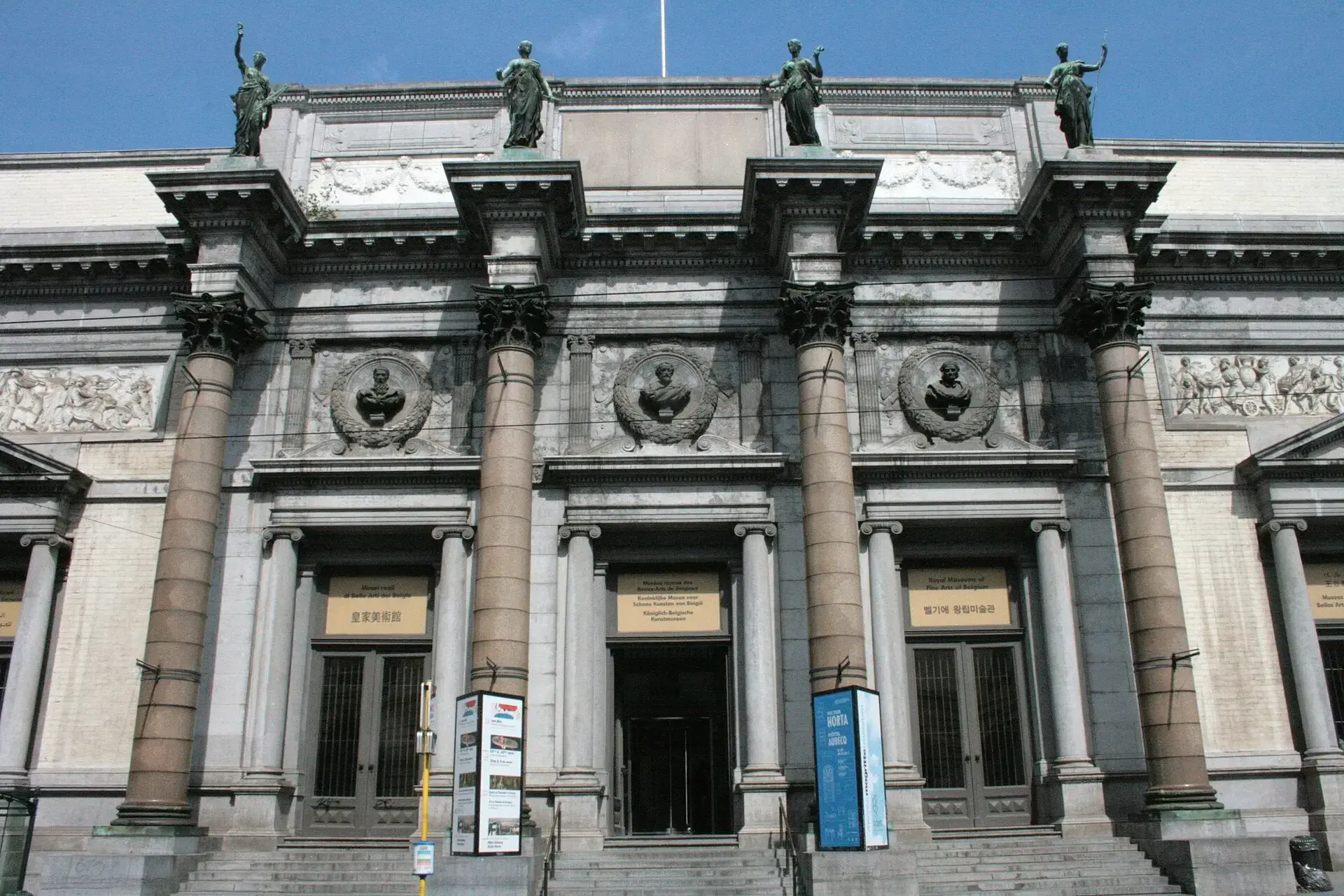
To house the growing national collections, court architect Alphonse Balat designed a monumental Beaux-Arts palace at Rue de la Régence 3. Built between 1880 and 1887 under the reign of King Leopold II, the building was designed to permanently display the Old Masters collection.
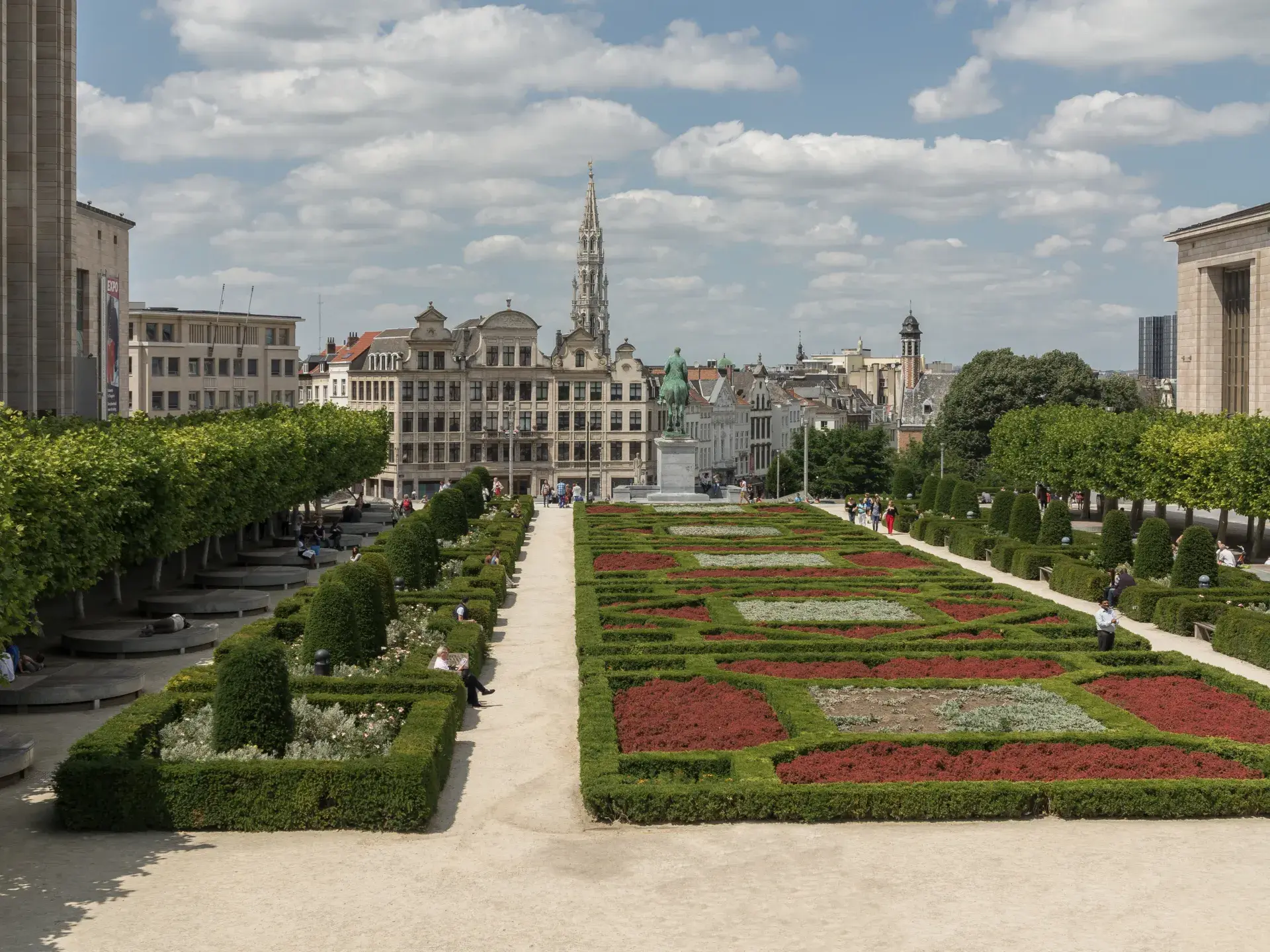
The main entrance hall features tall stone columns leading into a high-ceilinged, two-storey central courtyard. Balat integrated skylit galleries to channel natural light directly onto large-scale Baroque canvases. The complex occupies a prominent geographical position at the crest of the Mont des Arts garden promenade on Coudenberg hill. In this location, the institution forms a physical link between the Lower City around the Grand-Place and the Upper City's Royal Palace.
Component Museums and Collections
Today, the federal cultural institution is managed under the Belgian Federal Science Policy Office (BELSPO). The overall collection comprises more than 20,000 paintings, sculptures, and drawings dating from the 15th through the 21st centuries, with roughly 2,000 works on physical display at any given time.
The complex consists of six distinct museum entities:
- Old Masters Museum: The core historic collection covering Flemish Primitives, Dutch and Flemish Renaissance works, and Baroque masters.
- Magritte Museum: Located in the Neoclassical Hôtel Altenloh on Place Royale since 2009, this venue holds over 200 works by Surrealist artist René Magritte.
- Fin-de-Siècle Museum: A subterranean space opened in 2013 dedicated to late 19th- and early 20th-century art (closed in January 2024 for construction and reorganisation).
- Modern Museum: Dedicated to modern artistic movements.
- Meunier Museum: An off-site artist home and studio museum.
- Wiertz Museum: An off-site studio museum (closed in late 2024 for structural and entrance renovations).
As Belgium's most visited art institution, the complex welcomes hundreds of thousands of visitors each year, with the Old Masters Museum and Magritte Museum serving as the primary accessible hubs.
Notable Masterpieces
Among the institution's most prominent holdings is the original 1793 canvas The Death of Marat by Jacques-Louis David. David was banished from France as a regicide following the fall of Napoleon and the Bourbon Restoration. He spent his final years in exile in Brussels until his death in 1825, after which his descendants bequeathed the historic painting to Belgium.
The Old Masters collection also features Landscape with the Fall of Icarus, which served as the inspiration for W. H. Auden’s celebrated poem "Musée des Beaux-Arts." Long attributed directly to Pieter Bruegel the Elder, modern technical and pigment examinations indicate the painting is an early copy dating to roughly the 1560s to 1600, executed after a lost Bruegel composition.
FAQ
What museums make up the Royal Museums of Fine Arts of Belgium?
The complex comprises six entities: the Old Masters Museum, the Magritte Museum, the Fin-de-Siècle Museum, the Modern Museum, and two off-site studio museums, the Meunier Museum and the Wiertz Museum.
How did Jacques-Louis David's The Death of Marat end up in Brussels?
After the fall of Napoleon and the Bourbon Restoration, Jacques-Louis David was exiled from France as a regicide. He lived in Brussels until his death in 1825, and his family subsequently bequeathed the 1793 canvas to Belgium.
Is Landscape with the Fall of Icarus an original Pieter Bruegel the Elder painting?
Pigment and technical analysis indicates that the museum's canvas is an early copy from circa the 1560s to 1600, based on a lost original composition by Pieter Bruegel the Elder.