Musical Instruments Museum Brussels: Art & History
The Old England Building and Art Nouveau Architecture
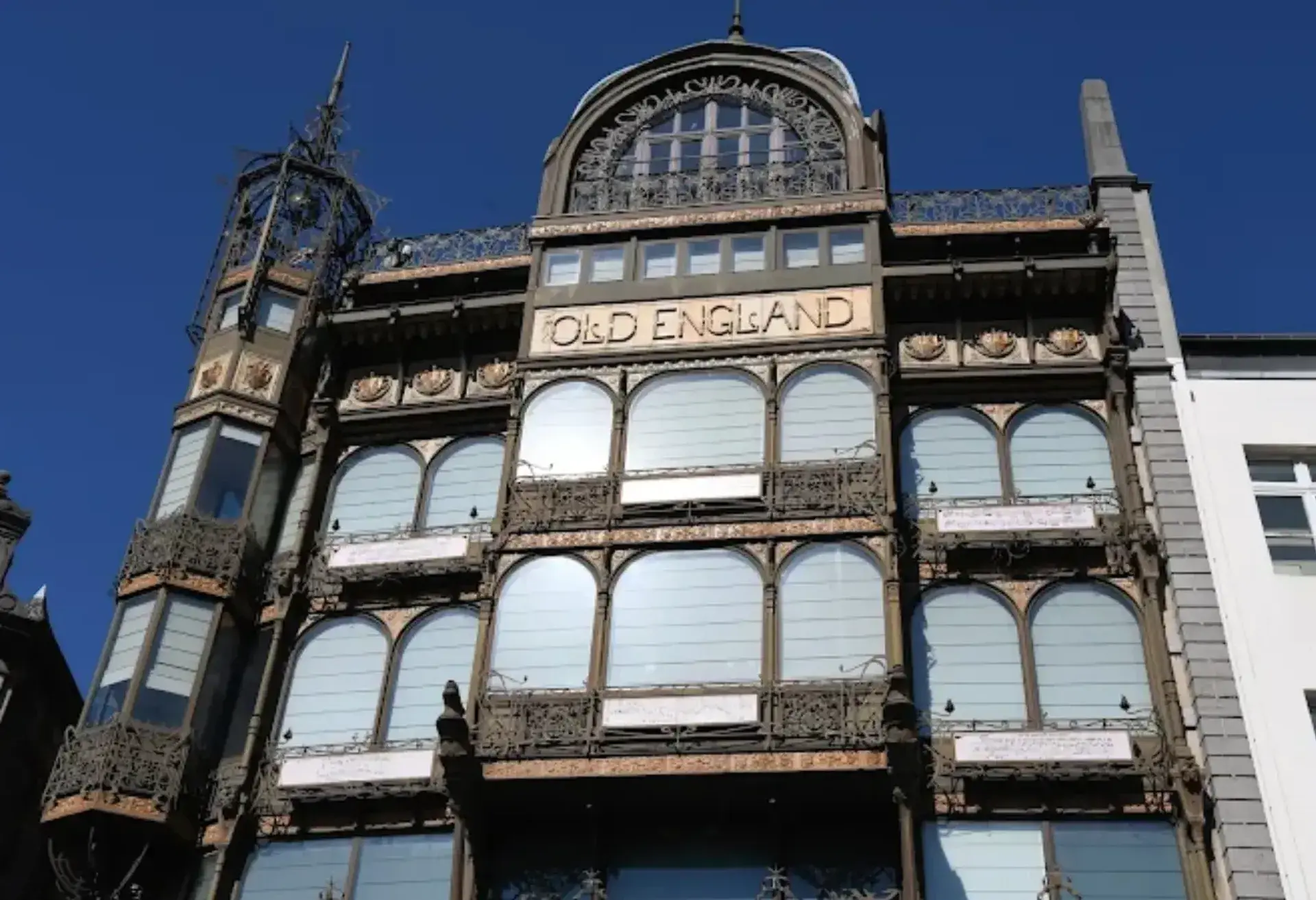
The Musical Instruments Museum (MIM) is housed within one of the most prominent Art Nouveau landmarks in Brussels. Located at Rue Montagne de la Cour 2, the museum's primary structure was originally constructed in 1899 as a flagship department store for the British retail firm Old England. Designed by Belgian architect Paul Saintenoy, the store specialized in high-end British textiles, garments, and tailored fashion.
Saintenoy chose an industrial aesthetic that diverged from the conventional stone masonry of the surrounding neighborhood. The building was constructed using an exposed skeleton of structural steel and black-painted wrought iron, paired with sweeping glass curtain walls intended to illuminate multi-level retail spaces with natural daylight. An ornate corner turret tops the exterior, designed entirely as a decorative landmark rather than an accessible or functional interior space. Today, the gilded title "Old England" remains preserved across the exterior frieze above the entrance canopy. The Art Nouveau structure is linked internally to an adjacent late-18th-century Neoclassical building designed by Barnabé Guimard.
Brussels walking tour with audio and quizzes: Grand Place and Sablon
2 hours10 stopsAudio guideStart any day, at your own paceTicket on your phone · 30-day refundInstitutional History and Restoration
The Musical Instruments Museum was founded in 1877 under the Royal Conservatory of Brussels and later became part of the federal Royal Museums of Art and History. When the Old England department store ended commercial operations in the 1970s, the Belgian state purchased the complex between 1978 and 1979 to protect the architecture from decay and create a dedicated home for the national collection of musical instruments.
A thorough restoration spanned the 1980s and 1990s, rehabilitating the stained glass and the intricate iron filigree of the facade. The complex officially reopened as the Musical Instruments Museum in 2000.
The Instrument Collections and Ravel's Luthéal
The museum holds an international collection of more than 7,000 instruments, with roughly 1,100 to 1,200 pieces exhibited across four thematic gallery floors. These exhibitions are divided into sections dedicated to traditional instruments, orchestral instruments, keyboard and stringed instruments, and mechanical or early electronic instruments.
Among the earliest electronic exhibits are historical instruments such as the Theremin and the Ondes Martenot. A major centerpiece of the collection is the world's earliest known surviving saxophone, crafted in the 1840s by Belgian inventor Adolphe Sax. The museum displays this piece alongside several of Sax's experimental hybrid brass and woodwind prototypes. Another rare mechanical holding is the only known functioning copy of the luthéal, an intricate piano modification mechanism specifically written into musical compositions such as Tzigane by Maurice Ravel.
Auditory Exploration and Visitor Amenities
The museum utilizes an infrared audio system to illustrate the collection's sound capabilities. Proximity sensors placed at individual showcases communicate with wireless headsets, automatically transitioning from silence to historical audio samples of bagpipes, harpsichords, carillons, or brass as visitors step into range.
Beyond exhibition spaces, the museum facility houses an active chamber music concert hall, an instrument conservation workshop, a specialized library, an archive, and a gift shop. On the top floor, a restaurant and café offers panoramic views across central Brussels.
Location on the Mont des Arts
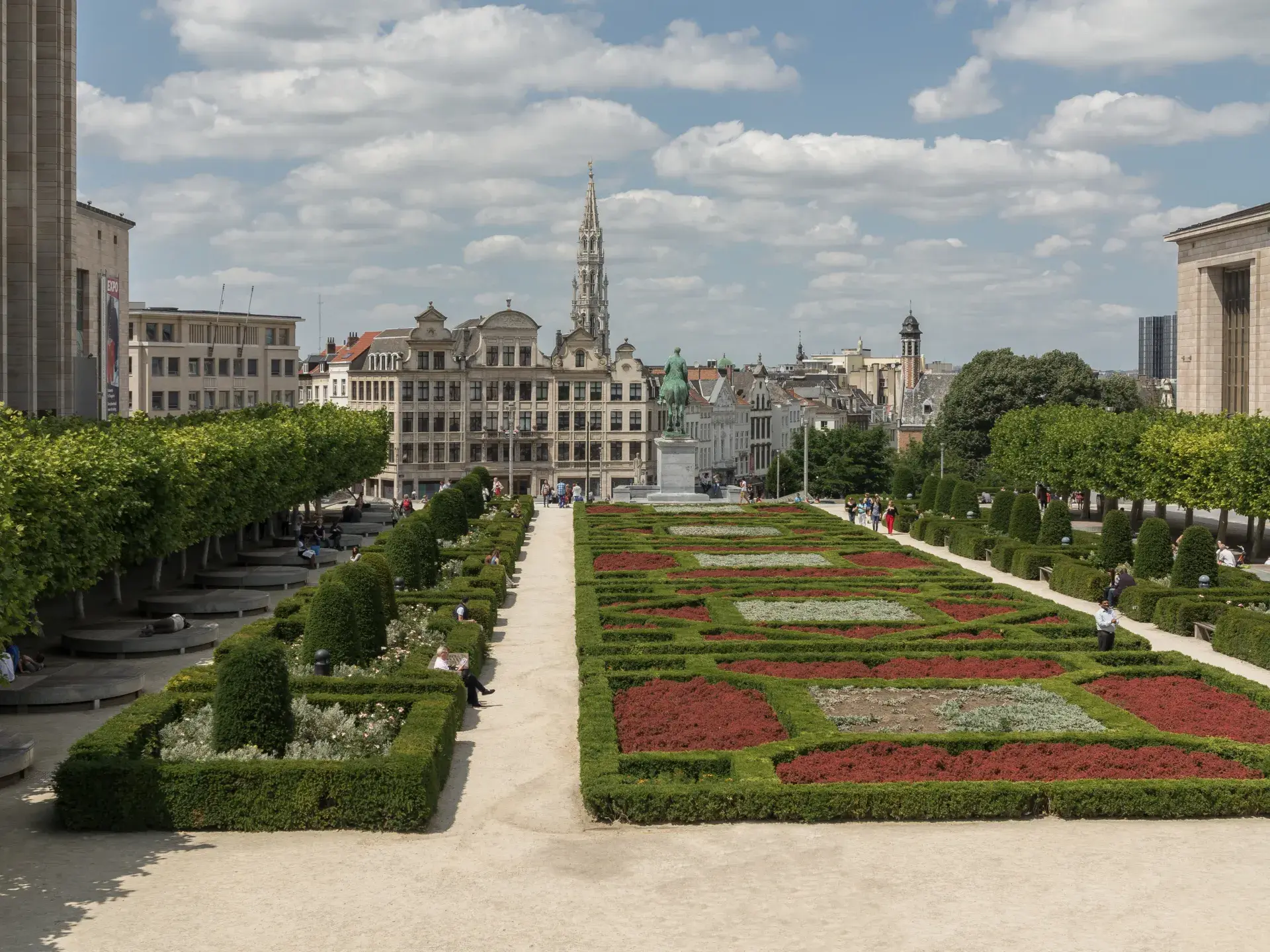
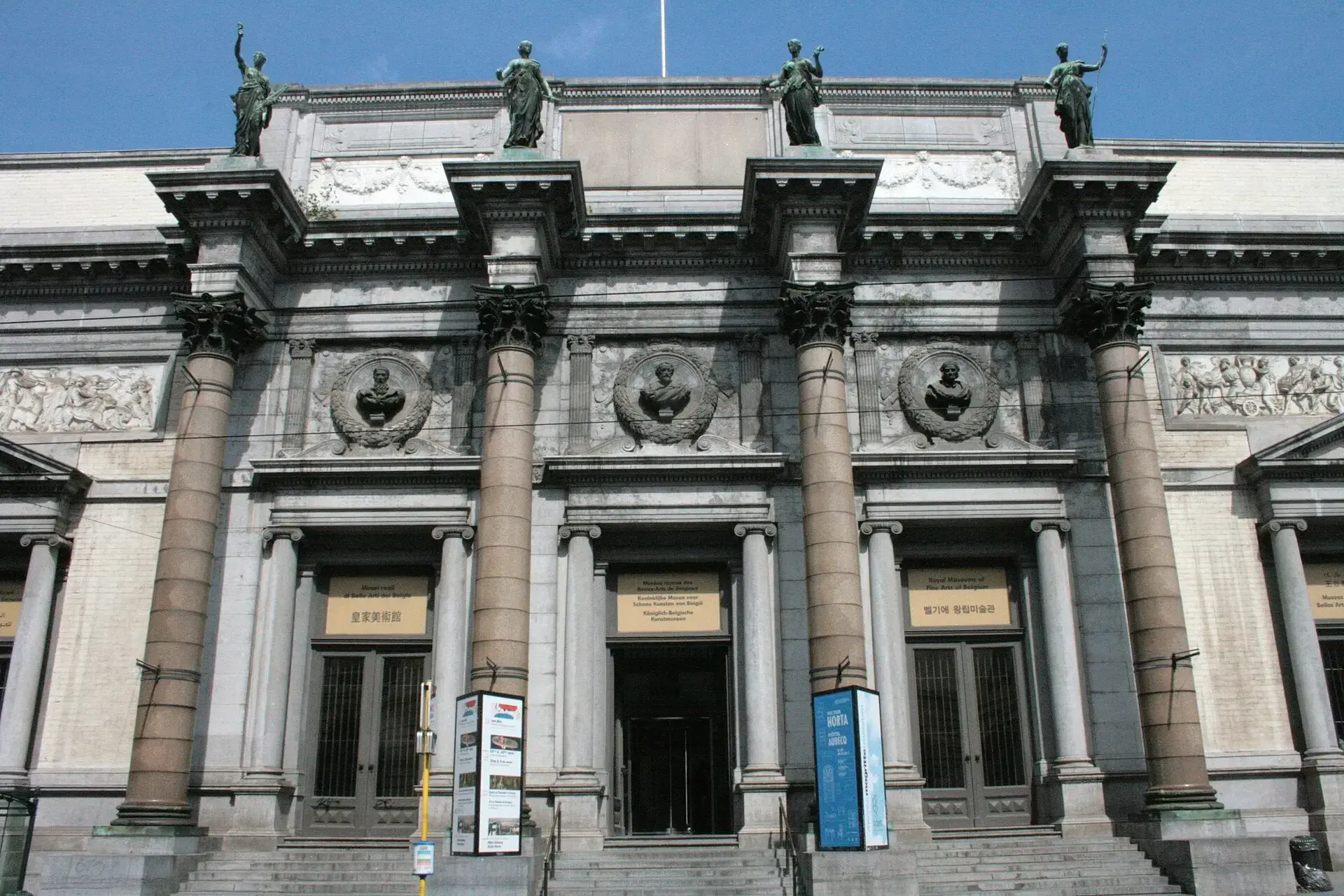
Positioned on the slope of the Mont des Arts, the museum functions as a visual transition between Brussels's lower historic center and the upper royal district. The building's dark iron-and-glass exterior stands in contrast to the pale limestone facades of Place Royale directly uphill. The museum forms an integral anchor of the Mont des Arts cultural zone, situated within walking distance of the Magritte Museum, the Royal Museums of Fine Arts of Belgium, and the Coudenberg Palace.
FAQ
What was the Musical Instruments Museum building originally built for?
The building was designed in 1899 by architect Paul Saintenoy as a flagship department store for the British firm Old England, selling high-end textiles and fashion.
What notable historical instruments are kept at the museum?
The museum holds the earliest known surviving saxophone, built in the 1840s by Adolphe Sax, experimental hybrid instruments, the only functioning copy of the luthéal, and early electronic instruments including the Theremin and Ondes Martenot.
How does the museum's audio guide system operate?
Visitors wear infrared wireless headsets that trigger recorded historical audio clips automatically when stepping directly in front of designated instrument display cases.
Does the museum feature a view of the city?
Yes, a restaurant and café located on the building's top floor provides panoramic views across central Brussels.