Place du Grand Sablon: History and Sights in Brussels
The Origins and Name of the Grand Sablon
Place du Grand Sablon (known in Dutch as the Grote Zavel) is an elongated, gently sloping triangular square located in the upper town of Brussels. Its name originates from the silt and fine sand—sablon in French and zavel in Dutch—typical of the marshy ground that once sat just beyond Brussels' first medieval city wall.
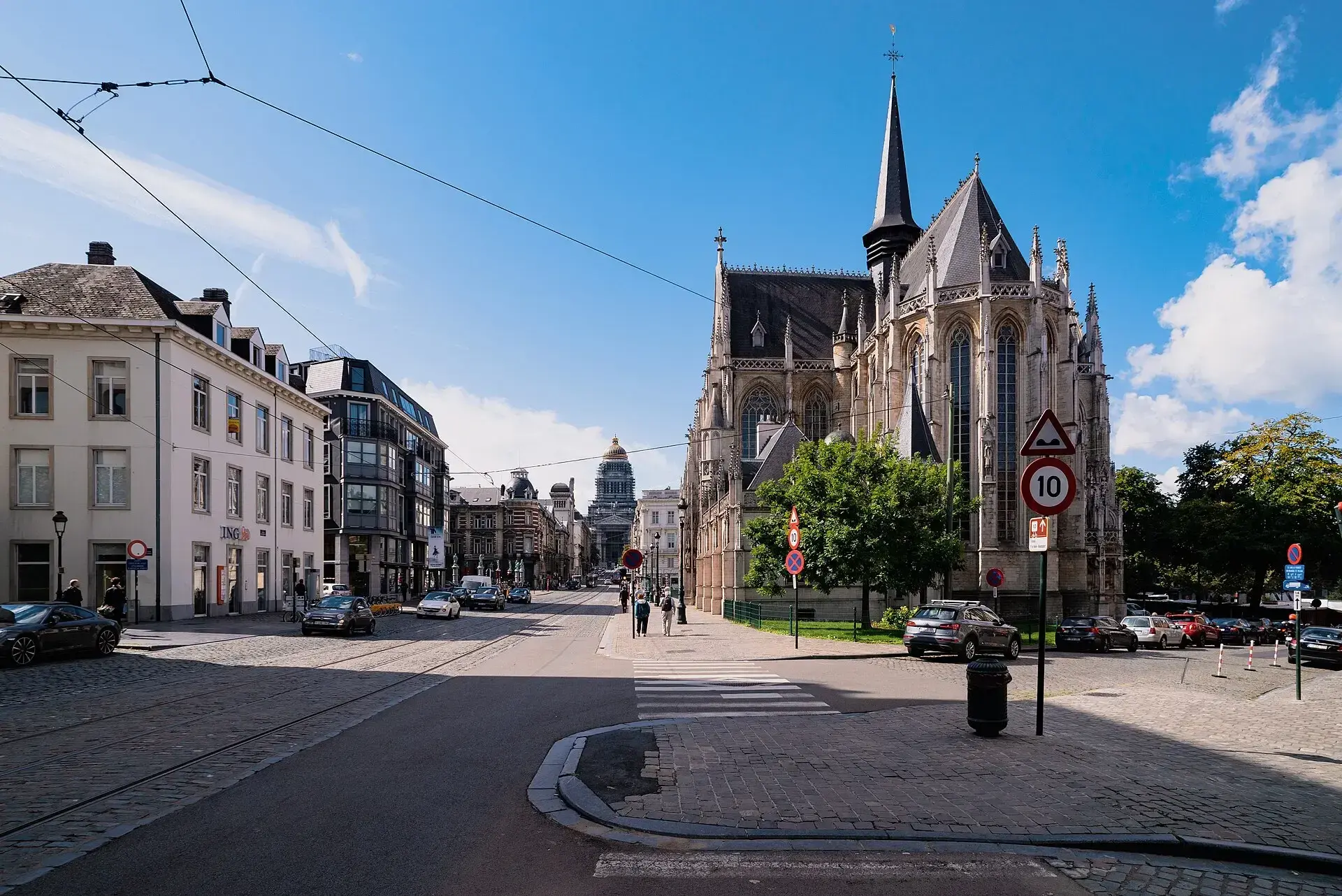
During the 13th century, this area functioned in part as an overflow cemetery for Saint John's Hospital. Transformation began in 1304 when the hospital ceded a tract of land to the Guild of Crossbowmen. The guild erected a modest chapel that subsequently evolved into the monumental 15th-to-16th-century Brabantine Gothic Church of Our Lady of the Sablon, which borders the southeastern end of the square facing the landscaped Place du Petit Sablon.
Brussels walking tour with audio and quizzes: Grand Place and Sablon
2 hours10 stopsAudio guideStart any day, at your own paceTicket on your phone · 30-day refundAristocratic Estates and the Fountain of Minerva
Between the 16th and 18th centuries, the square’s location close to the ducal and royal palace on Coudenberg hill made it an attractive residential enclave for nobility. Influential dynasties, including the families of Egmont and Thurn und Taxis, constructed grand private mansions around its perimeter.
At the center of the square stands the Fountain of Minerva, a monument sculpted from white Genoese marble by Jacques Bergé and erected in 1751. The monument was funded by a bequest from Thomas Bruce, 2nd Earl of Ailesbury and 3rd Earl of Elgin. Implicated in Jacobite plots against King William III, Bruce fled London in 1696 and spent more than four decades residing in Brussels exile. Choosing to remain even after receiving clearance to return to Britain, Bruce provided funds in his will to construct the fountain as an expression of gratitude for the city's hospitality.
Market Traditions, Sport, and "Sablonisation"
Following the French Revolution and into the 20th century, the square transitioned from an aristocratic enclave into a practical marketplace. It hosted trade for horses, fodder, fish, dairy, and vegetables, surrounded by artisan workshops. During the 19th and early 20th centuries, the cobblestone square served as an open-air arena for balle pelote, a traditional bare-handed ball game. National championship matches held on the square drew substantial crowds and were attended by the Belgian monarch.
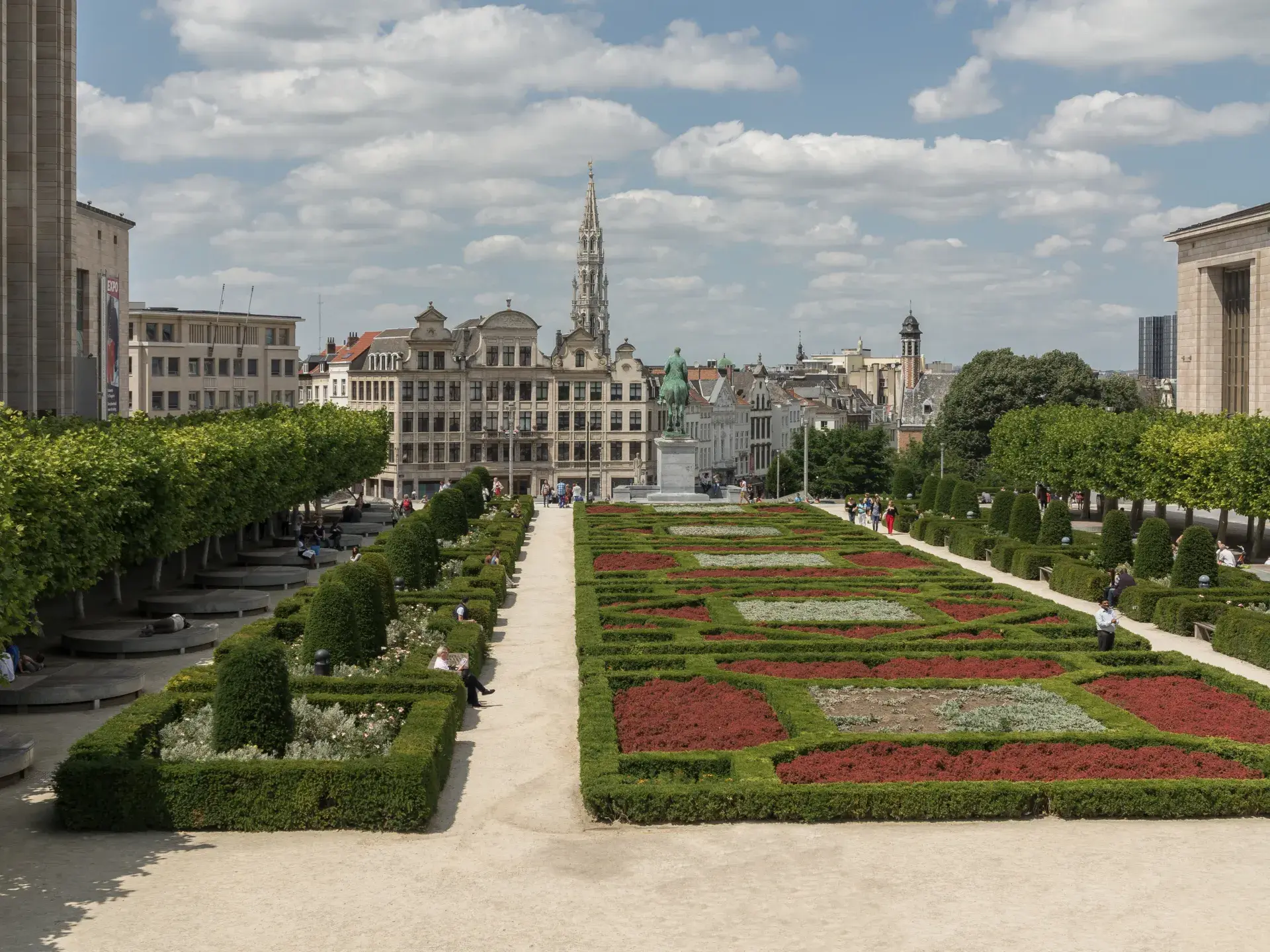
In the late 1960s, antique dealers displaced by urban renewal projects around the Mont des Arts relocated to the Grand Sablon. This influx sparked an upscale commercial transformation so pronounced that sociologists and urban planners coined the term "sablonisation" to define rapid, high-end gentrification.
Modern Boutiques, Antiques, and City Geography
Today, Place du Grand Sablon is recognized as an international center for fine-art galleries and antique dealerships. On Saturdays and Sundays, it hosts the long-running Marché des Antiquaires, attracting collectors of antiques and vintage books. The square also stands as Brussels' primary luxury chocolate district, housing flagship establishments including Wittamer—an official purveyor to the Belgian Royal Household—alongside Neuhaus and Pierre Marcolini.
The square's perimeter is lined with outdoor cafés and brasserie terraces. Every year on November 20, students from the Université Libre de Bruxelles and Vrije Universiteit Brussel gather at the Grand Sablon to inaugurate the annual Saint-Verhaegen parade. Geographically, the square remains a key link between the aristocratic Royal Quarter above to the east and the working-class Marolles quarter downhill to the southwest.
FAQ
What does the name Sablon mean?
The words sablon (French) and zavel (Dutch) translate to fine sand or silt, describing the sandy wetland terrain that originally lay outside the medieval city walls.
Who funded the Fountain of Minerva on the Grand Sablon?
The fountain was funded through the will of Thomas Bruce, 2nd Earl of Ailesbury, an exiled British peer who lived in Brussels for over 40 years and commissioned the monument to thank the city for its hospitality.
What is meant by the term sablonisation?
Sablonisation is a sociological and urban planning term coined after antique dealers relocated to the square in the late 1960s, triggering rapid commercial gentrification and upscale turnover.