St. Luke's Bell Tower: A Medieval Jajce Landmark
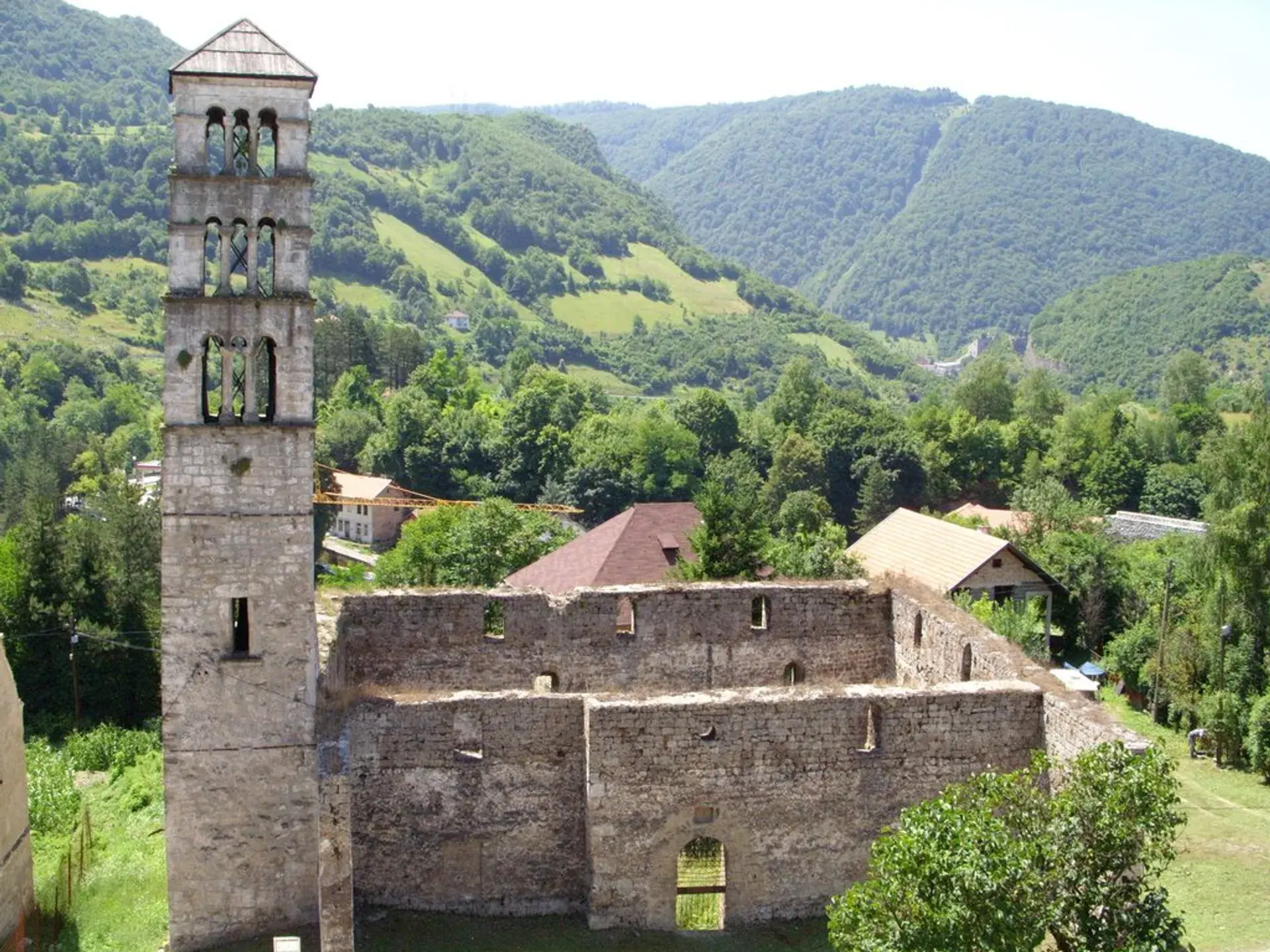
St. Luke's Bell Tower is a national monument of Bosnia and Herzegovina located in the historic center of Jajce. Standing at a height of 23.15 meters, it is a prominent landmark and the only preserved medieval bell tower on the continental part of the Balkans. The tower stands beside the ruins of the former Church of St. Mary, a testament to the city's layered religious and political history.
Royal and Sacred Origins
The tower's story begins in the 15th century. It was added to the existing Church of St. Mary after April 1, 1459, when Jelena Branković brought the relics of St. Luke the Evangelist to Jajce. The relics were part of her dowry for her marriage to Stjepan Tomašević. This event gave the new bell tower its name.
In November 1461, the adjacent church became the coronation site for King Stjepan Tomašević, the last king of Bosnia. The skeletal remains believed to belong to the king are now preserved in the nearby Franciscan Monastery of Saint Luke.
Architectural Style
Built by local craftsmen, St. Luke's Bell Tower displays a Late Gothic style with Renaissance overtones. Some analyses also identify Romanesque elements alongside Gothic doors and windows, suggesting a construction date in the late 15th or early 16th century. This blend of styles indicates a regional architectural character, showing a 'delayed adoption of styles from Dalmatia' and reflecting Jajce's position within larger cultural networks.
A Story of Transformation
Following the Ottoman conquest, the site underwent a profound change. In 1528, the Church of St. Mary was converted into a mosque and named after Sultan Suleiman the Magnificent. The building suffered damage from several fires over the centuries. A final, devastating fire in 1832 left only the walls of the former church and mosque standing.
Through these transformations, the St. Luke's Bell Tower remained largely intact. The Austro-Hungarian administration declared the tower and the adjacent ruins cultural monuments on June 27, 1892. Today, the tower stands as a solitary Christian symbol next to the footprint of a building that served both Christian and Islamic faiths.
The Tower in Modern Times
St. Luke's Bell Tower is a significant tourist destination, attracting visitors interested in its unique history. For locals, it serves as a tangible connection to the city's past. In 2015, the story of the relics came full circle when a portion of St. Luke's relics, which had been moved to Dubrovnik after the Ottoman conquest, was returned to the Franciscan Monastery in Jajce after 552 years.
FAQ
Why is St. Luke's Bell Tower significant?
St. Luke's Bell Tower is significant as it is the only preserved medieval bell tower in the continental Balkans. It is a national monument of Bosnia and Herzegovina and a key symbol of Jajce's complex history.
What happened to the church next to the bell tower?
The Church of St. Mary was converted into the Sultan Suleiman Mosque in 1528. The building was later destroyed by a fire in 1832, which left only its walls standing.
When was St. Luke's Bell Tower built?
The bell tower was constructed in the first half of the 15th century, following the 1459 arrival of the relics of St. Luke in Jajce.
Who was crowned in the church next to St. Luke's Bell Tower?
King Stjepan Tomašević, the last Bosnian king, was crowned in the Church of St. Mary in November 1461.