Čaršijska Mosque: Konjic's Historic Bazaar Landmark
Historic Gateway on the Neretva
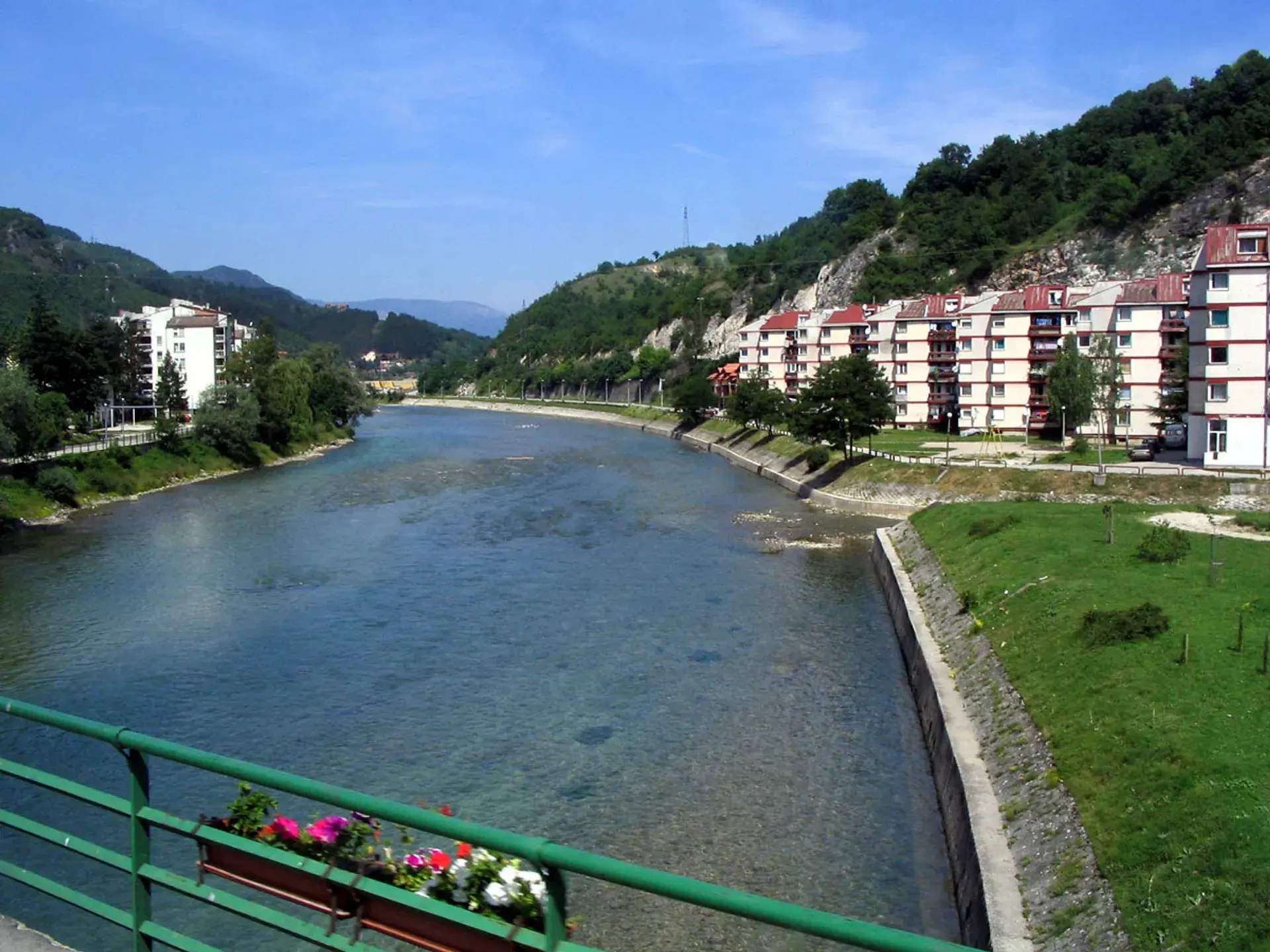
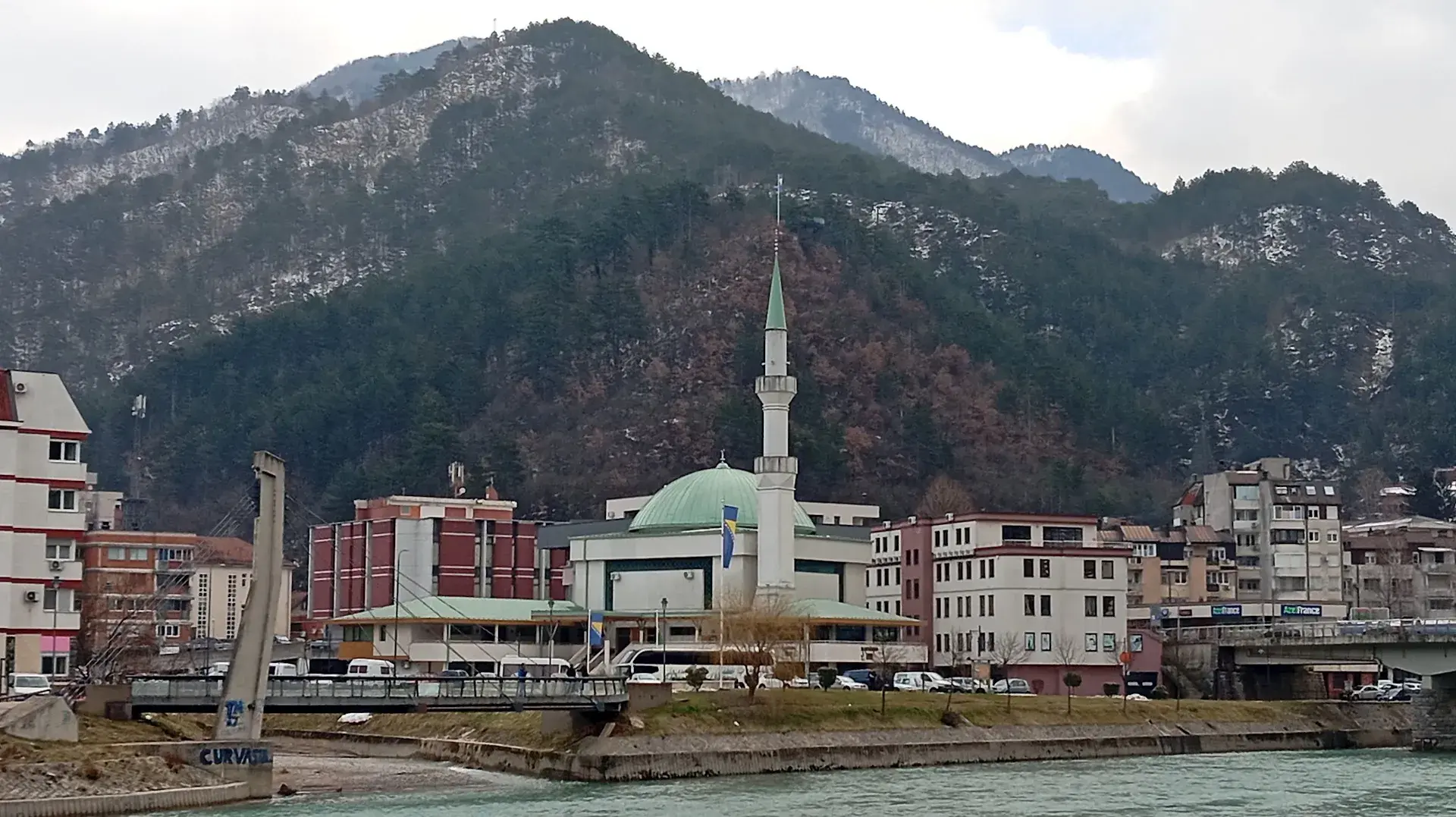
Situated on the right bank of the Neretva River in Konjic, the Čaršijska Mosque—also known as the Junuz-Čauš Mosque—anchors the historic old market quarter (Stara čaršija). Konjic historically formed a vital geographic threshold between Bosnia and Herzegovina, where trade caravans navigated the primary overland corridor linking Sarajevo to the Adriatic coast via Dubrovnik. Positioned immediately beside the seventeenth-century Old Stone Bridge (Stara kamena ćuprija), the mosque served as the focal point of commerce and civic life in the bazaar.
Regarded as the oldest mosque in Konjic, the site was founded during the sixteenth century prior to 1579 and was formally recorded in the 1585 Ottoman tax census for the Sanjak of Herzegovina. Its pious foundation (vakuf) historically funded a mekteb, a medresa, and seven market shops. An Arabic chronogram set above the main stone portal records that Ibrahim, son of Hadži Abdija, financed an extensive renovation of the building in 1623–1624 (1033 AH). In March 2006, the complex was designated a National Monument of Bosnia and Herzegovina by the Commission to Preserve National Monuments.
Architectural Features and Layout
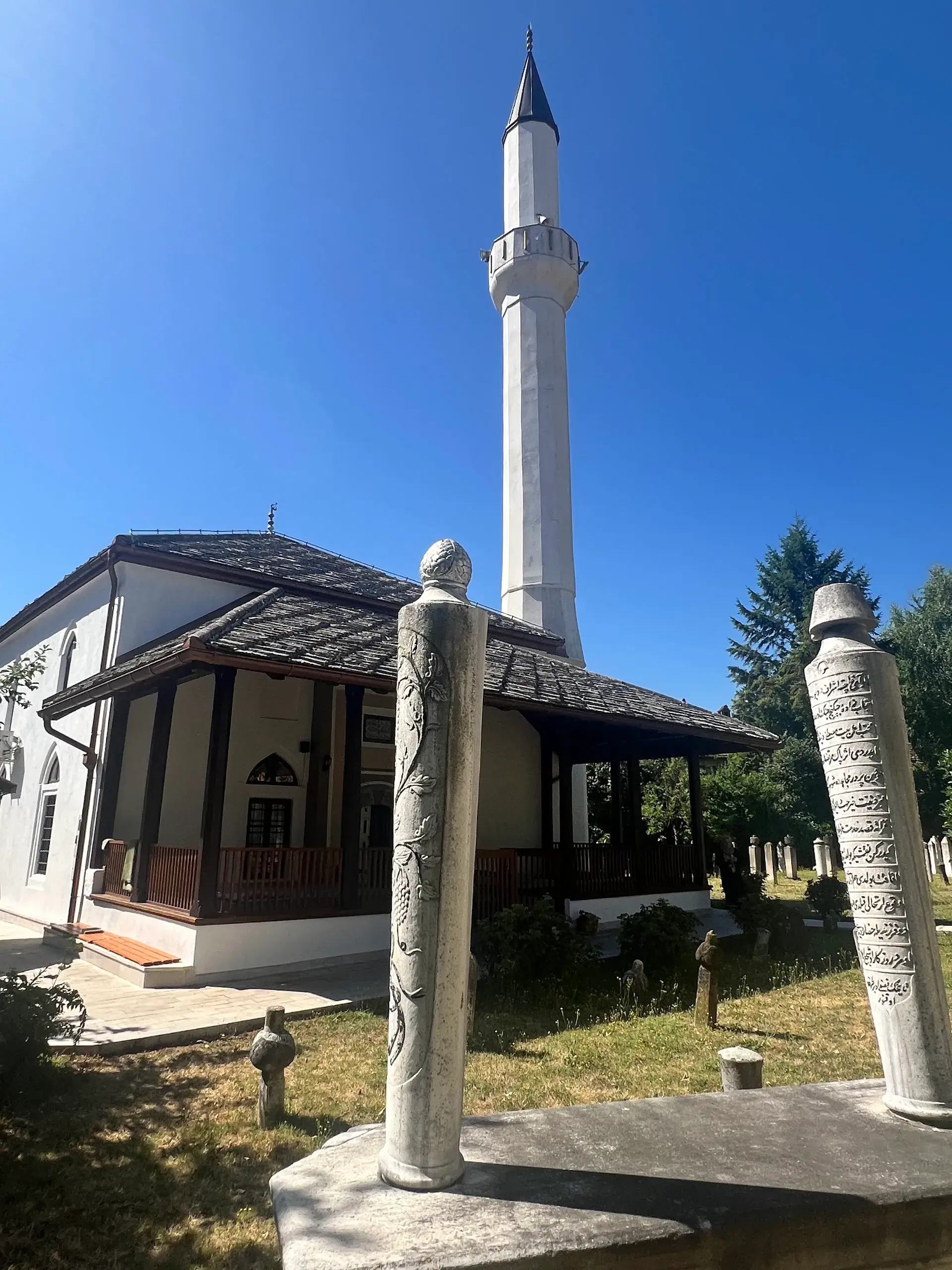
The complex exemplifies classical Ottoman provincial stone construction. Designed as a single-space stone mosque, the structure measures approximately 10.50 by 14.90 meters on the exterior, with an internal square prayer hall measuring 8.50 by 8.50 meters. An open exterior porch flanks the front facade, supported by ten timber pillars beneath deep wooden eaves.
From the exterior, the mosque is crowned by a four-pitched hipped roof that conceals an inner octagonal wooden dome. Adjoining the prayer hall is a slender stone minaret reaching approximately 30 meters in height, constructed from dressed limestone and porous tufa (sedra).
Wartime Damage and Restoration
Over centuries of regional turmoil, the building survived multiple destructive episodes. In 1917, during World War I, Austro-Hungarian military authorities stripped the mosque's protective lead roof covering to harvest raw metals for wartime manufacturing. To safeguard the exposed structural masonry, the vault was coated in pitch and tar, remaining sealed in that manner until a comprehensive restoration was executed in 1922.
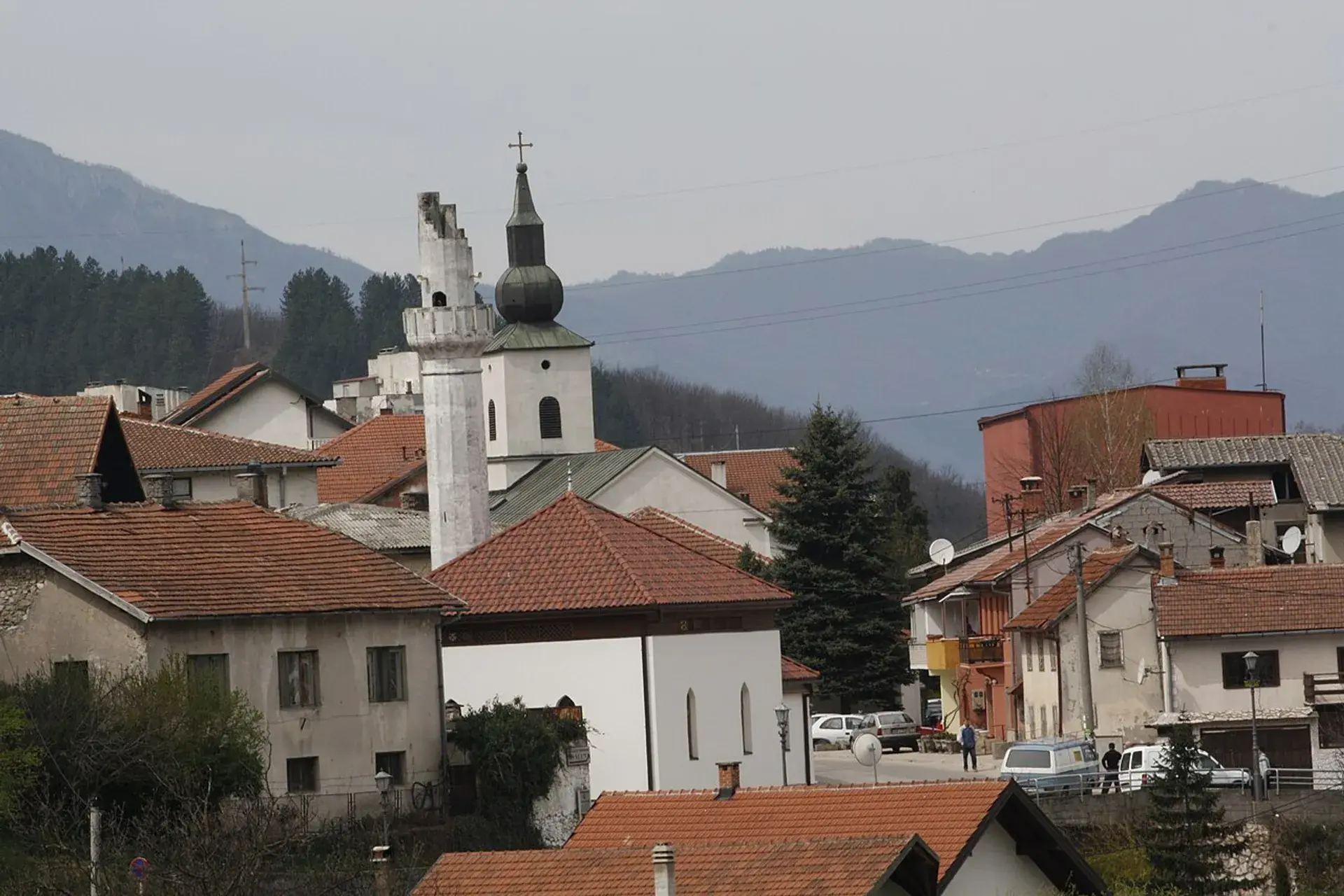
During the 1992–1995 conflict in Bosnia and Herzegovina, the mosque sustained multiple direct hits from artillery fire, resulting in heavy damage to the roof, perimeter walls, and interior. The upper section of the minaret was destroyed and had to be completely dismantled before undergoing a complete reconstruction between 2004 and 2005.
Courtyard Graveyard and Historical Artifacts
The walled courtyard (harem) houses several historic burials. Among them is the stone sarcophagus (kubura) and carved headstone of Derviš Pasha Dedaga Čengić, an Ottoman army commander who was mortally wounded during combat operations against Montenegrin forces in 1874 and died in Konjic while being transported toward Sarajevo. Another prominent feature within the courtyard is an unmarked, scriptless gravestone (nišan), which local oral tradition identifies as the final resting place of Junuz-čauš, the mosque's namesake.
The mosque also holds an interesting place in regional modernization: parish records indicate that as early as 1966, the call to prayer was automated via amplified tape recordings rather than relying solely on a muezzin climbing the 30-meter minaret.
Modern Community Role
Today, the Čaršijska Mosque remains an active daily house of worship administered by the Medžlis of the Islamic Community of Konjic. It serves as the architectural core of the pedestrianized bazaar district, where craft workshops, traditional cafes, and riverside dining terraces line the surrounding riverfront streets.
FAQ
When was the Čaršijska Mosque founded?
Ottoman tax records and archival defters establish that the mosque was founded in the sixteenth century prior to 1579, making it the oldest documented mosque in Konjic.
Why was the mosque roof covered in pitch in 1917?
Austro-Hungarian military authorities stripped the building's lead roofing for wartime metal supplies, requiring the masonry vault to be sealed with tar and pitch for protection until 1922.
Who is buried in the mosque's courtyard graveyard?
The courtyard contains the stone sarcophagus of Ottoman military commander Derviš Pasha Dedaga Čengić, who died in 1874, as well as an unmarked stone traditionally attributed to the patron Junuz-čauš.
Discover Konjic like never before
Dive into Konjic hidden stories and secret spots with Ciceru interactive tours.
Explore tour
Audioguide
Quizzes
Maps
Solo
Couples
Groups & families

© Photo by Önder Taşçı via Google Maps · Google Places