Ornamented Mosque: Travnik's Colorful Ottoman Landmark
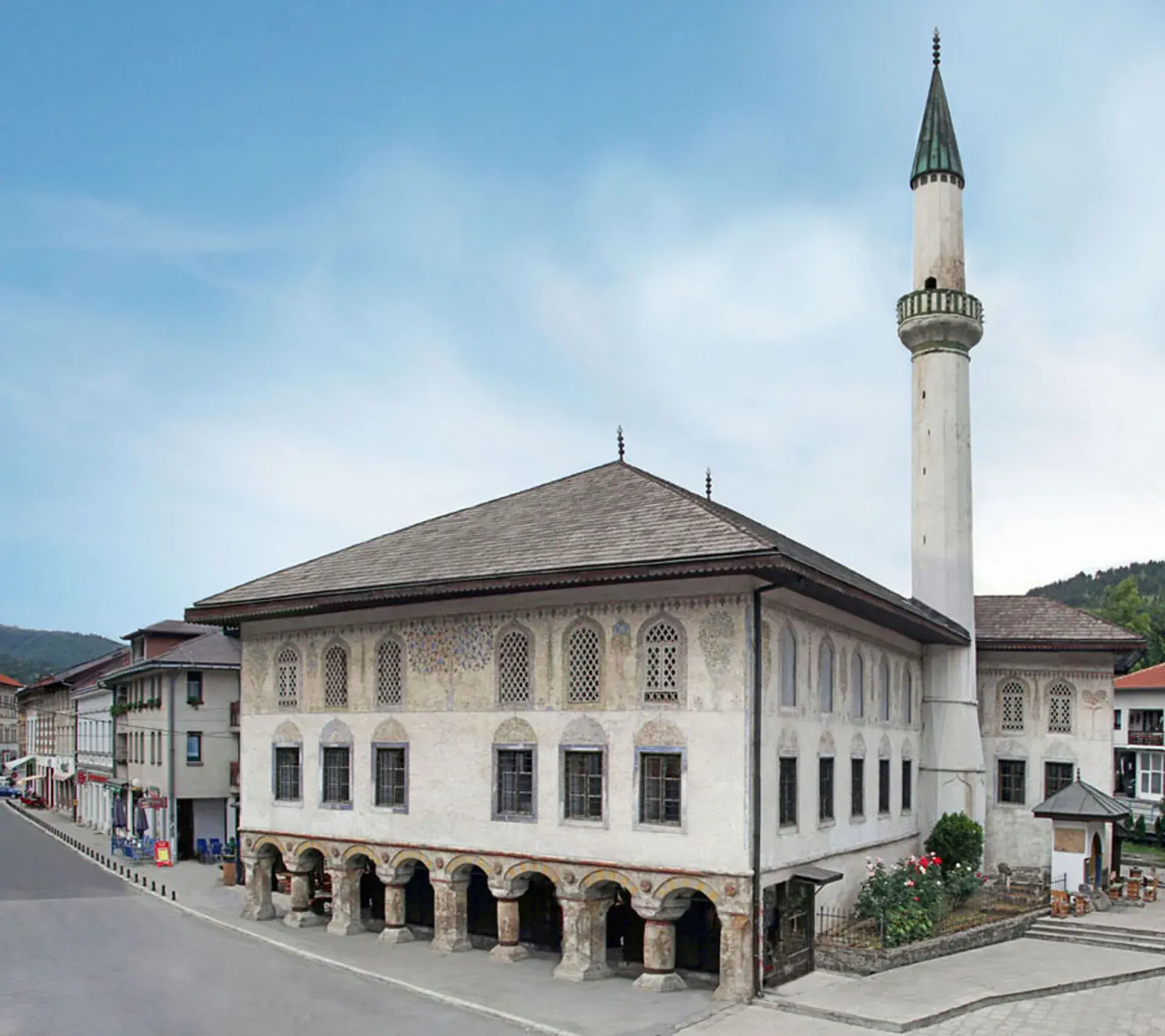
The Ornamented Mosque, known locally as Šarena Džamija or the Sulejmanija Mosque, is a celebrated example of Ottoman architecture in Travnik, Bosnia and Herzegovina. Located in the city's historic 'lower čaršija' (bazaar) district, this national monument is renowned for its vibrant botanical ornamentation and unique structural design, reflecting Travnik's past as a center of Ottoman power.
A History of Reconstruction and Resilience
The mosque's story begins in the latter half of the 16th century with an initial structure built by Gazi-aga. In 1757, it was completely rebuilt by the Bosnian governor Ahmed Pasha Ćamil and became known as 'Ćamilija'. A devastating fire in 1815 led to another major reconstruction by Bosnian Vizier Sulejman-pasha Skopljak. He lavishly decorated the building, giving it the current appearance and the popular name 'Sulejmanija' or 'Šarena Džamija' (Colorful Mosque).
The building has demonstrated remarkable resilience, inexplicably surviving a catastrophic city fire in 1903. Though it sustained some damage during World War II, the mosque miraculously survived the Bosnian War of 1992-1995, a conflict that saw the destruction of much of the country's Islamic architectural heritage. A comprehensive restoration in the 1980s helped preserve its historical appearance and distinctive ornaments.
Unique Architectural Features
The Ornamented Mosque stands out for several highly unusual architectural characteristics. Most notably, its minaret is positioned on the left side of the building, a significant deviation from traditional Islamic architecture where minarets are typically placed on the right. The structure measures approximately 21.88 meters in length and 16 meters in width.
Another rare feature is the integration of a covered marketplace, or 'bezistan', directly beneath the prayer hall. This ground-floor bazaar, originally featuring ten shops, made the mosque a combined religious and commercial hub. The interior is also noteworthy, with the gallery and window arches adorned with exquisite Arabic calligraphy, including the names of Prophet Muhammad's closest companions.
The Mosque in Modern Travnik
Today, the Ornamented Mosque remains an active place of worship for Travnik's Muslim community. It is also one of the city's most significant cultural landmarks and tourist attractions. The bazaar on the ground floor continues to operate with bustling shops, maintaining the building's dual function. Income generated from these shops contributes to the mosque's upkeep, preserving this unique link between faith, commerce, and daily life. Visitors are welcome but are encouraged to observe appropriate dress codes and respect prayer times.
FAQ
Why is it called the Ornamented or Colorful Mosque?
It is called the Ornamented Mosque (Šarena Džamija, meaning Colorful Mosque) because of the vivid decorations and botanical ornaments added during its reconstruction in the early 19th century by Sulejman-pasha Skopljak.
What is unique about the Ornamented Mosque's architecture?
The mosque has two very unique features: its minaret is on the left side, which is highly unusual in Islamic architecture, and its ground floor contains a functioning bazaar, or 'bezistan', with shops directly beneath the prayer hall.
What is the history of the Ornamented Mosque?
The original mosque was built in the late 16th century. It was rebuilt in 1757, and then reconstructed and elaborately decorated again after a fire in 1815 by Vizier Sulejman-pasha Skopljak, which gave the mosque its current appearance.
Can you visit the Ornamented Mosque in Travnik?
Yes, the Ornamented Mosque is a major cultural landmark and tourist attraction in Travnik. It serves as an active place of worship, so visitors are asked to respect prayer times and adhere to an appropriate dress code.