Ancient Stadium of Philipopolis: Roman Ruins in Plovdiv
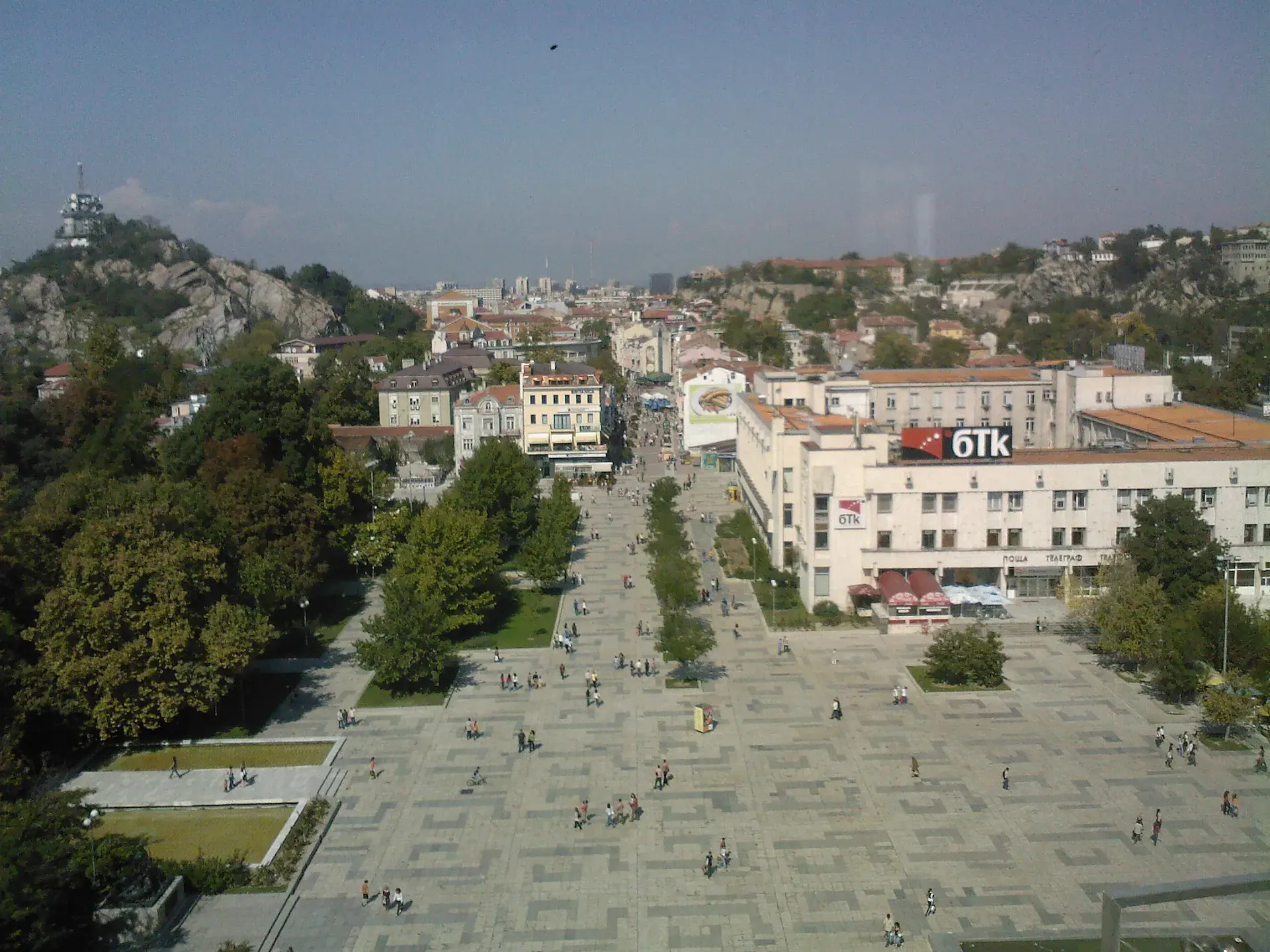
A massive ancient Roman racetrack lies hidden directly beneath the modern shops, cafes, and pavement of Plovdiv's busiest pedestrian street. Located at Dzhumaya Square, the Ancient Stadium of Philipopolis anchors Knyaz Alexander I Street and serves as the primary transition point connecting the modern commercial downtown to the historic Old Town. At this bustling intersection, observers can peer down from the pedestrian street level into the remarkably preserved tiers of the ancient Roman stadium.
A Subterranean Roman Marvel
Constructed in the early 2nd century AD under Roman Emperor Hadrian, the 240 to 250-meter-long stadium is one of only about 12 preserved structures of its kind worldwide, modeled after the ancient Delphi Stadium. Unusually for Roman architecture of the era, it was built within the fortified city walls, fitted into the natural terrain between the Sahat Tepe and Taksim Tepe hills.
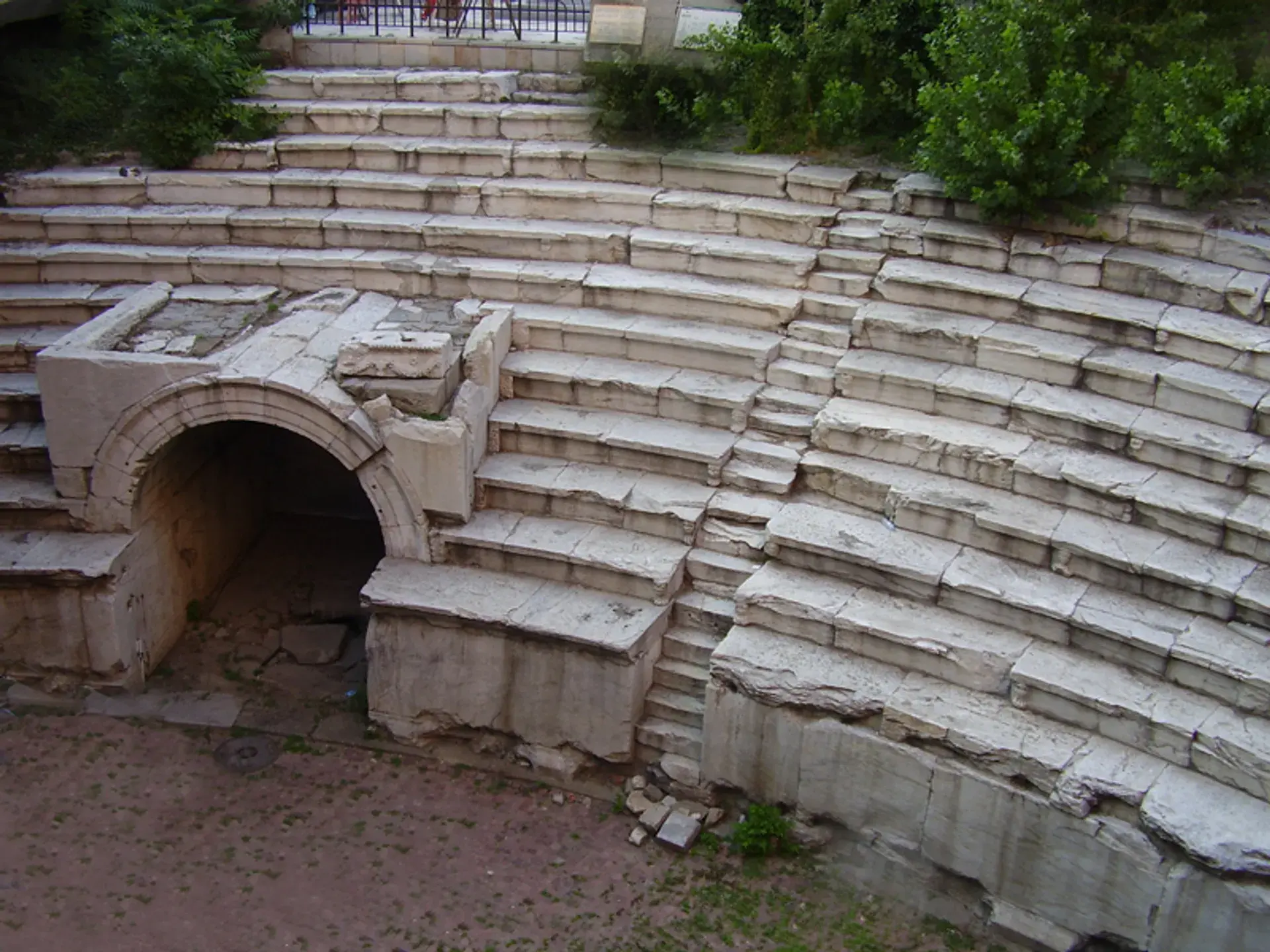
The massive arena featured 14 rows of solid marble seating tiers capable of holding up to 30,000 spectators. The ends of the marble bench rows feature distinctive carvings in the shape of stylized lion paws. Greek inscriptions carved into specific marble seat blocks indicate designated VIP seating reserved for high-ranking ancient civic officials and prominent figures.
Games of Antiquity and Rediscovery
During its peak, the venue hosted athletic competitions, poetry and music contests, gladiator battles, and animal fights. These events were modeled after the Greek Pythian Games. Excavations at the stadium's central entrance revealed the remains of an ancient Roman hydraulic water clock used during these elaborate spectacles.
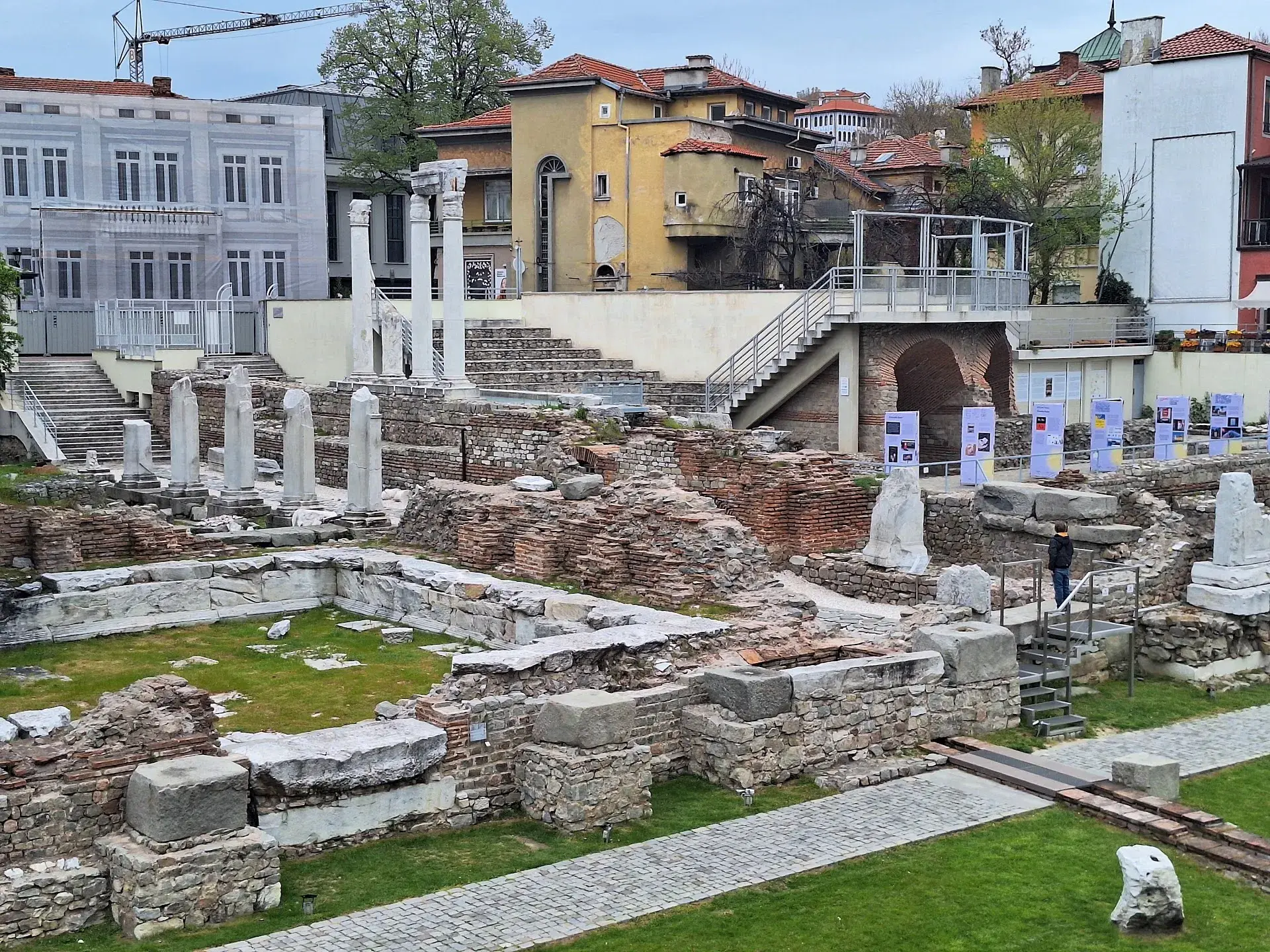
After the fall of the Roman Empire, the stadium fell into disuse. Over centuries of urban rebuilding during the Byzantine and Ottoman periods, it was completely buried beneath soil and modern structures. The stadium was rediscovered in 1923 during modern street reconstruction. This discovery led to major excavations in the 1970s led by archaeologist Liliya Botusharova, which uncovered the northern curved end (known as the sphendone), vaulted access passageways, a section of the city defense wall, and a 4th-century Roman aqueduct arch.
Viewing the Ruins Today
Today, the exposed northern section sits beneath street level at Dzhumaya Square, accessible 24/7 for free viewing. This arrangement creates a striking multi-layered visual effect, with 2nd-century Roman white marble seating rows situated immediately beneath modern street-level cafes and pedestrian crowds.
While the majority of the stadium remains submerged beneath the city, brass markings set into the modern pavement allow walkers on the shopping street to trace the exact footprint of the hidden racetrack. Additionally, fragments of the original marble seating are preserved and visible to visitors through glass floor panels in the basements of modern commercial shops along the street. A municipal visitor center operates beneath the square, offering archaeological displays and a 3D animated film recreating the ancient games.
FAQ
How big was the Ancient Stadium of Philipopolis?
The stadium measured approximately 240 to 250 meters in length and 50 meters in width, featuring 14 rows of solid marble seating that could accommodate up to 30,000 spectators.
Is the Ancient Stadium of Philipopolis open to the public?
Yes, the exposed northern curved section at Dzhumaya Square is accessible 24/7 for free viewing. There is also a municipal visitor center and museum located beneath the street level.
Can the entire stadium be seen today?
No, the majority of the stadium remains submerged beneath Knyaz Alexander I Street. However, its footprint is marked by brass outlines on the modern pavement above, and some marble seating fragments are visible through glass floors in the basements of modern shops.