Roman Forum of Philippopolis: Plovdiv Ruins
Beneath the shadow of a 1970s post office lies the largest Roman civic square in Bulgaria, marking the exact center of city life for over two millennia. The Roman Forum of Philippopolis demonstrates a remarkable continuum of urban planning, with modern Plovdiv's main civic square occupying the exact geographical center utilized by the ancient Romans.
A Center of Ancient Urban Life
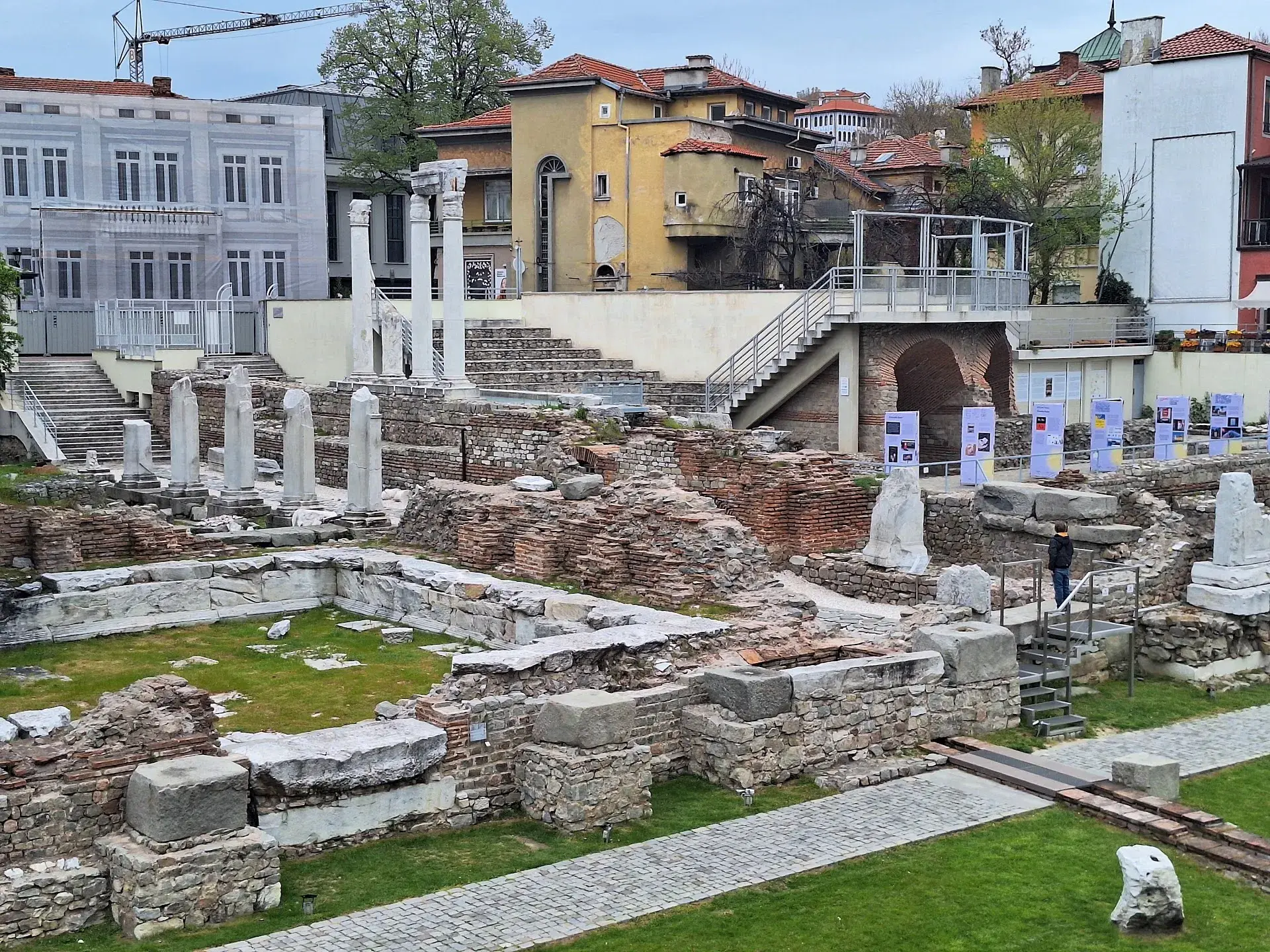
Covering approximately 20 hectares, with 11 hectares currently excavated, the Roman Forum of Philippopolis stands as the largest Roman forum complex in Bulgaria. At its core is a 143-by-136-metre open plaza that once served as the administrative, commercial, and religious heart of the ancient city.
The complex was strategically positioned near the intersection of the city's primary street axes, the Cardo Maximus and Decumanus Maximus, which met just outside the eastern entrance. Along the northern edge of the forum, the complex housed vital civic structures, including the Odeon, the Ancient City Library, the Treasury building, and rows of commercial shops framed by grand marble porticoes.
Architectural Evolution and Decline
Initial construction of the forum began in the late 1st century AD under Emperor Vespasian. The site evolved through four main construction phases up to the 4th century AD. Early structures featured sandstone Roman-Doric colonnades built under Domitian, which were later upgraded to elaborate marble Roman-Corinthian structures under Emperors Trajan and Hadrian.
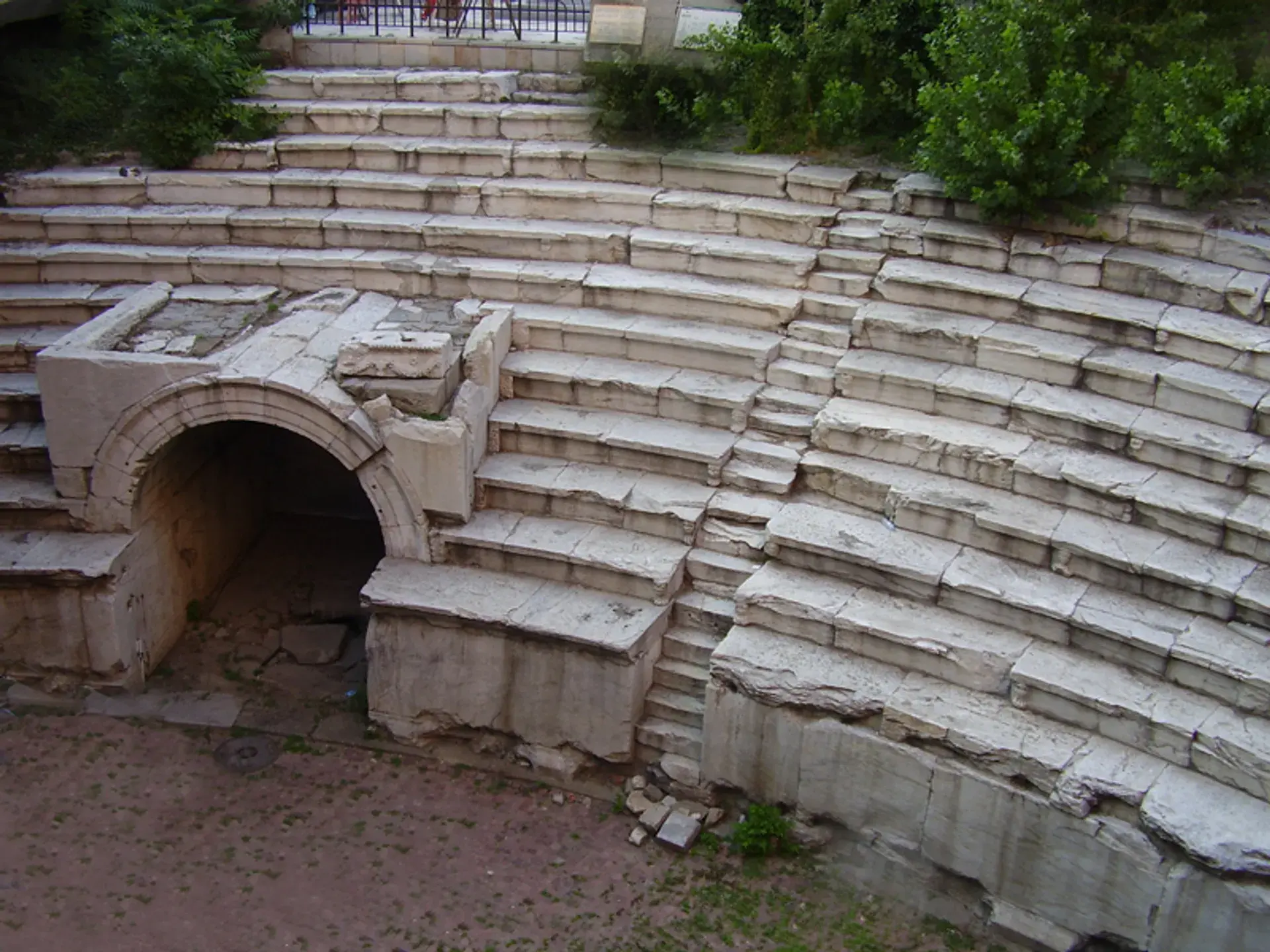
The Odeon, located at the northeast corner of the complex, originally served as a 2nd-century city council hall before being converted into a 350-seat theatre. The complex eventually suffered significant damage during the 3rd-century Gothic invasions. Later, between the 10th and 12th centuries, the site was spoliated and covered by a medieval necropolis, hiding the ancient ruins for centuries.
Modern Rediscovery and Integration
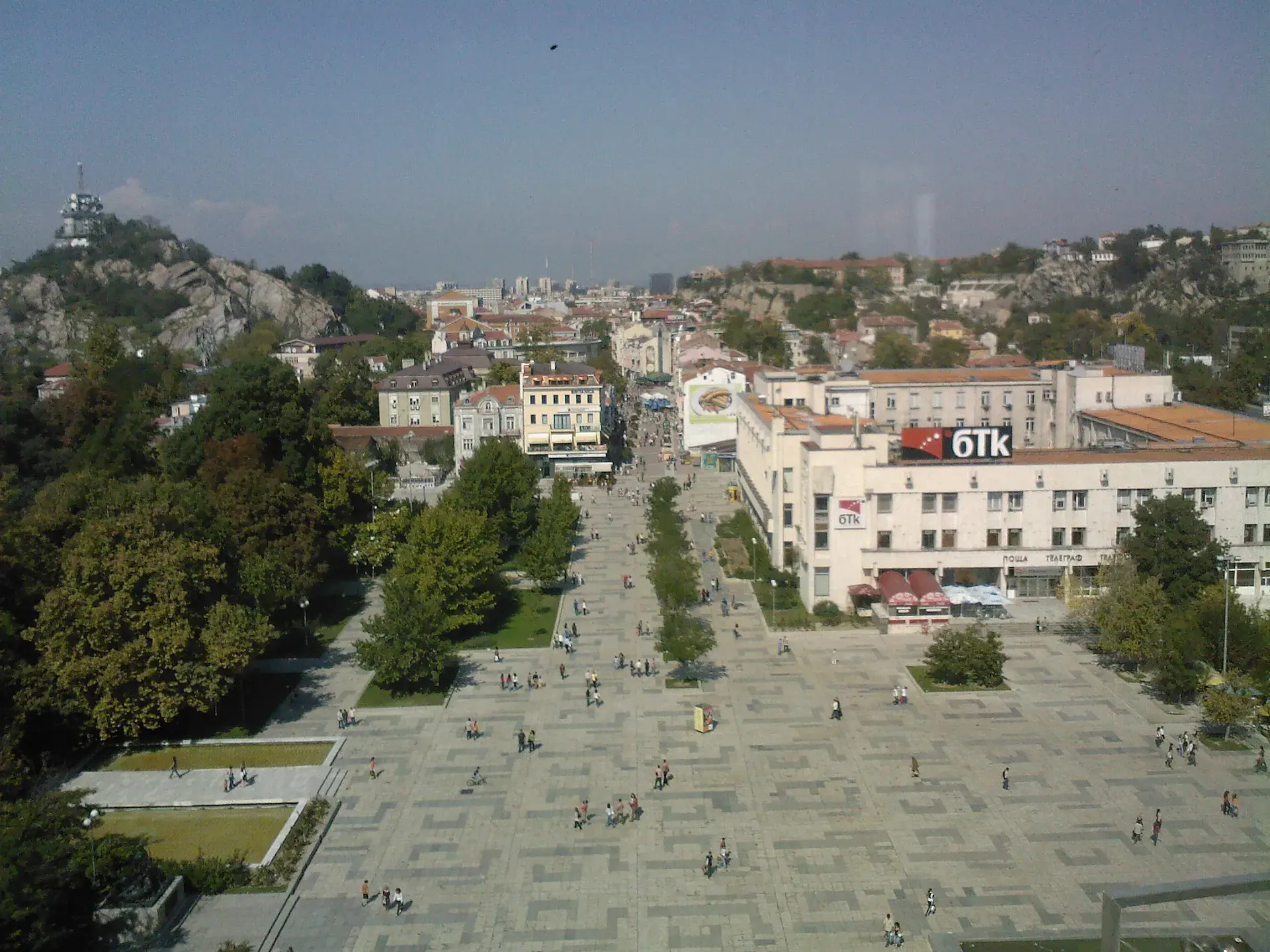
The ruins remained concealed until 1971, when they were unexpectedly rediscovered during excavations for Plovdiv's Central Post Office. Today, modern 20th-century city infrastructure directly bisects the ancient complex. The post office sits directly on top of the western section of the forum, while a road tunnel and a boulevard physically divide the Odeon from parts of the main plaza.
Despite these modern intrusions, the site functions as an open-air archaeological park integrated directly into the city center pedestrian zone. The sunken excavated sections are visible from the modern elevated paving of Central Square. Pedestrians can look down into the sunken pits to observe the rough textures of exposed Roman stone walls, red brickwork, and marble column bases embedded below street level. The restored Odeon has found new life as an outdoor venue for local concerts and theatrical performances.
Hidden Curiosities
Archaeological excavations at the site have yielded several remarkable discoveries. Researchers uncovered an inscription fragment containing a public notice and an invitation for gladiator fights. Additionally, the complex housed the first epigraphically recorded official city treasury for the combined Roman provinces of Thrace and Moesia.
Another notable find occurred inside a gallery in the Odeon, where archaeologists discovered a hoard of 87 silver coins. Experts believe this treasure was hidden by a local resident fleeing the 3rd-century Gothic invasion.
FAQ
Where is the Roman Forum of Philippopolis located?
The site is located at modern Central Square in Plovdiv, serving as the southern anchor of the pedestrian route along Knyaz Alexander I avenue leading toward the Ancient Stadium.
What ancient structures were part of the forum?
The complex included a 143-by-136-metre central plaza, the Odeon, the Ancient City Library, the Treasury building, and rows of commercial shops framed by marble porticoes.
When was the forum rediscovered?
The ancient ruins were concealed beneath a medieval necropolis until they were rediscovered in 1971 during construction excavations for Plovdiv's Central Post Office.