Central Square Plovdiv: Modern Hub Over a Roman Forum
A Modern Hub Over an Ancient City
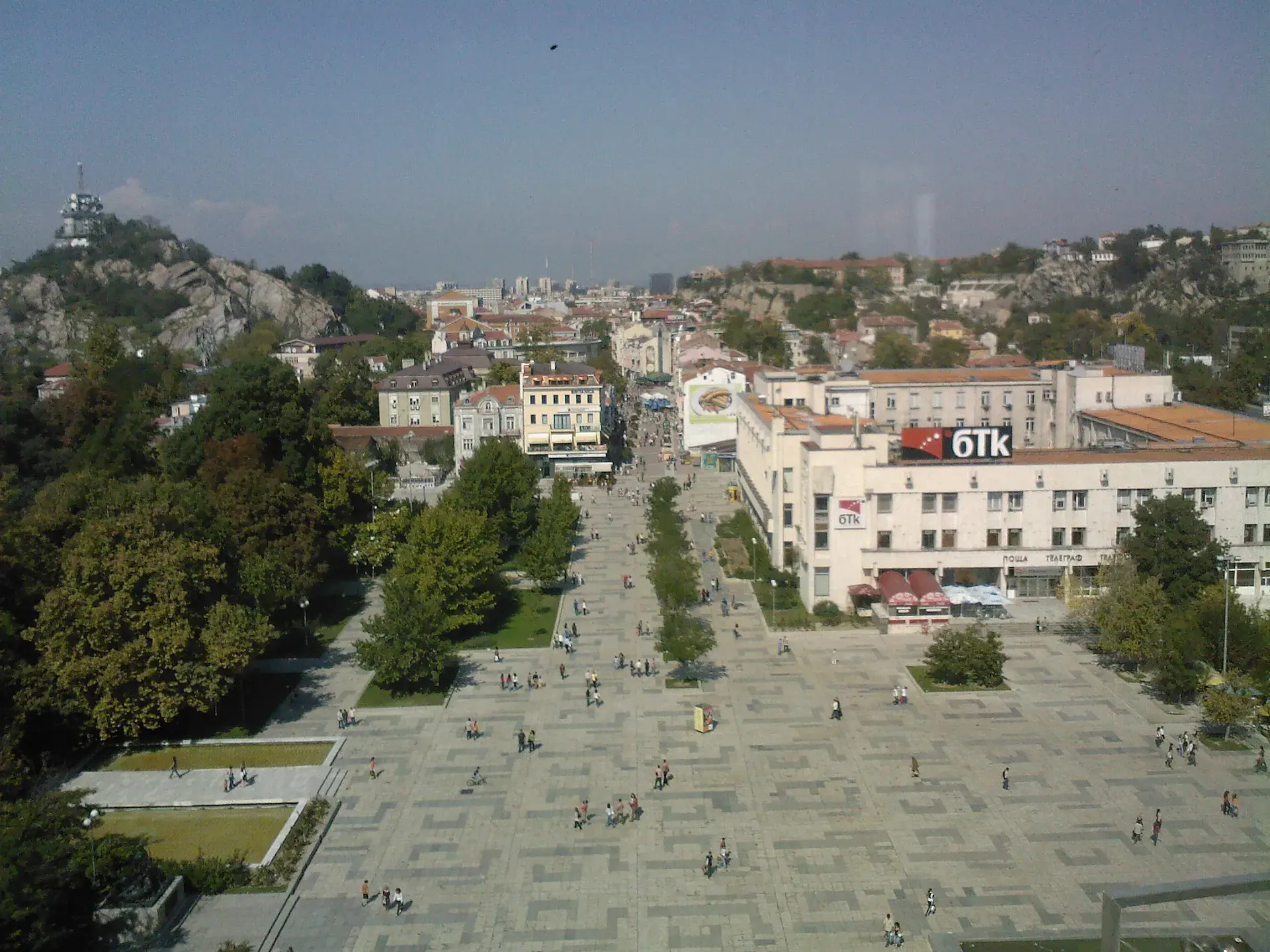
Central Square, known locally as Ploshtad Tsentralen, is Plovdiv's main municipal square. It serves as the southern starting point for Knyaz Alexander I Street, which forms part of Europe's longest continuous pedestrian street spanning approximately 1,750 meters. The plaza seamlessly connects modern civic life to the city's ancient past, acting as a bridge between the bustling shopping district and the tranquil greenery of Tsar Simeon's Garden.
The square is bounded by several prominent landmarks, including the Ramada Plovdiv Trimontium Hotel and the Brutalist architecture of the Central Post Office. Directly beneath and alongside these modern structures lies a vast archaeological site, revealing the 2,000-year-old epicenter of Roman Philippopolis.
The Forum of Philippopolis
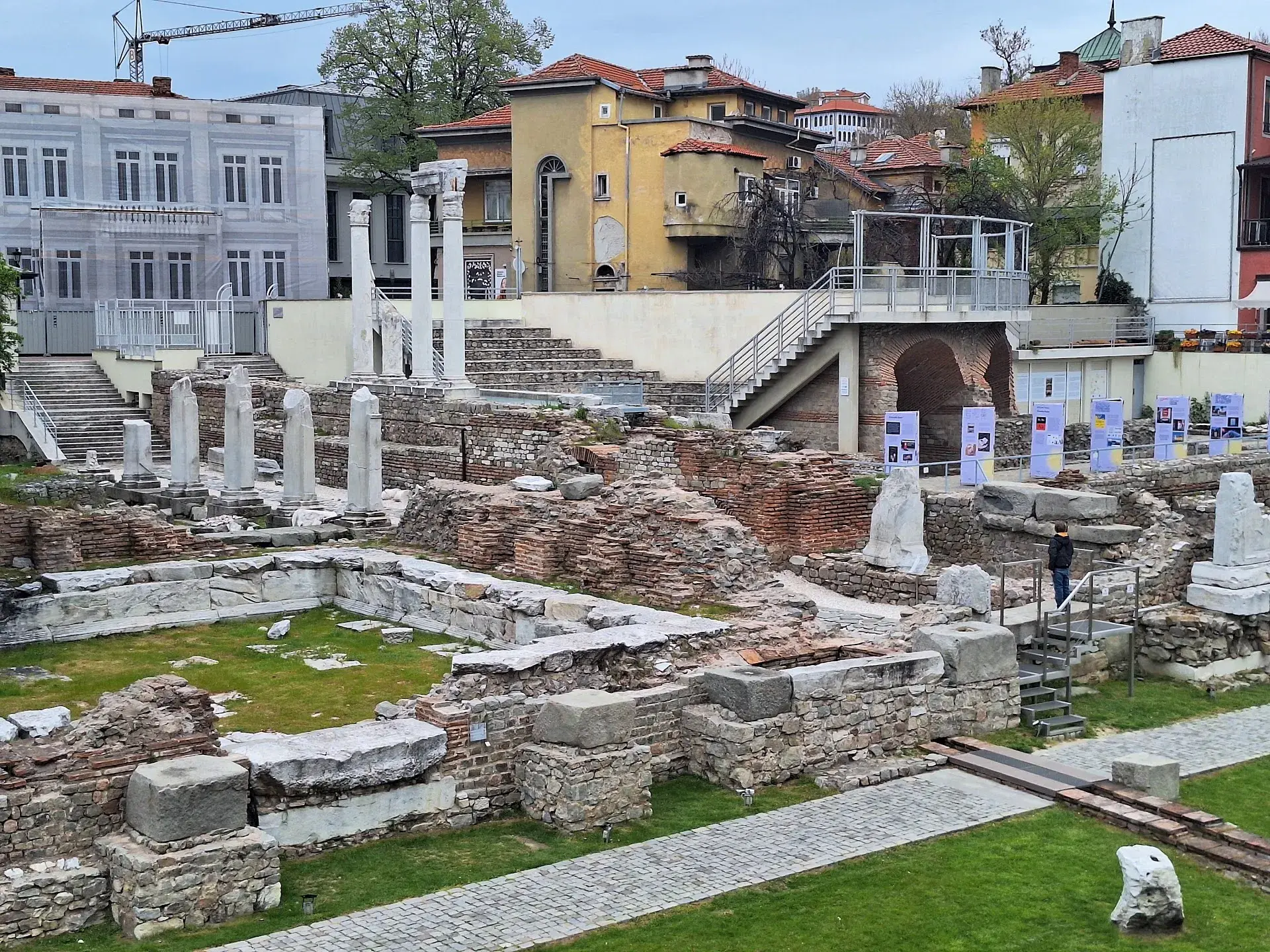
The plaza overlays the ancient Forum of Philippopolis, which was built under Emperor Vespasian in the 1st century AD. It is the largest Roman forum in Bulgaria. The total ancient site covers 20 hectares, with 11 hectares currently excavated. The forum underwent four major construction phases through the 4th century AD.
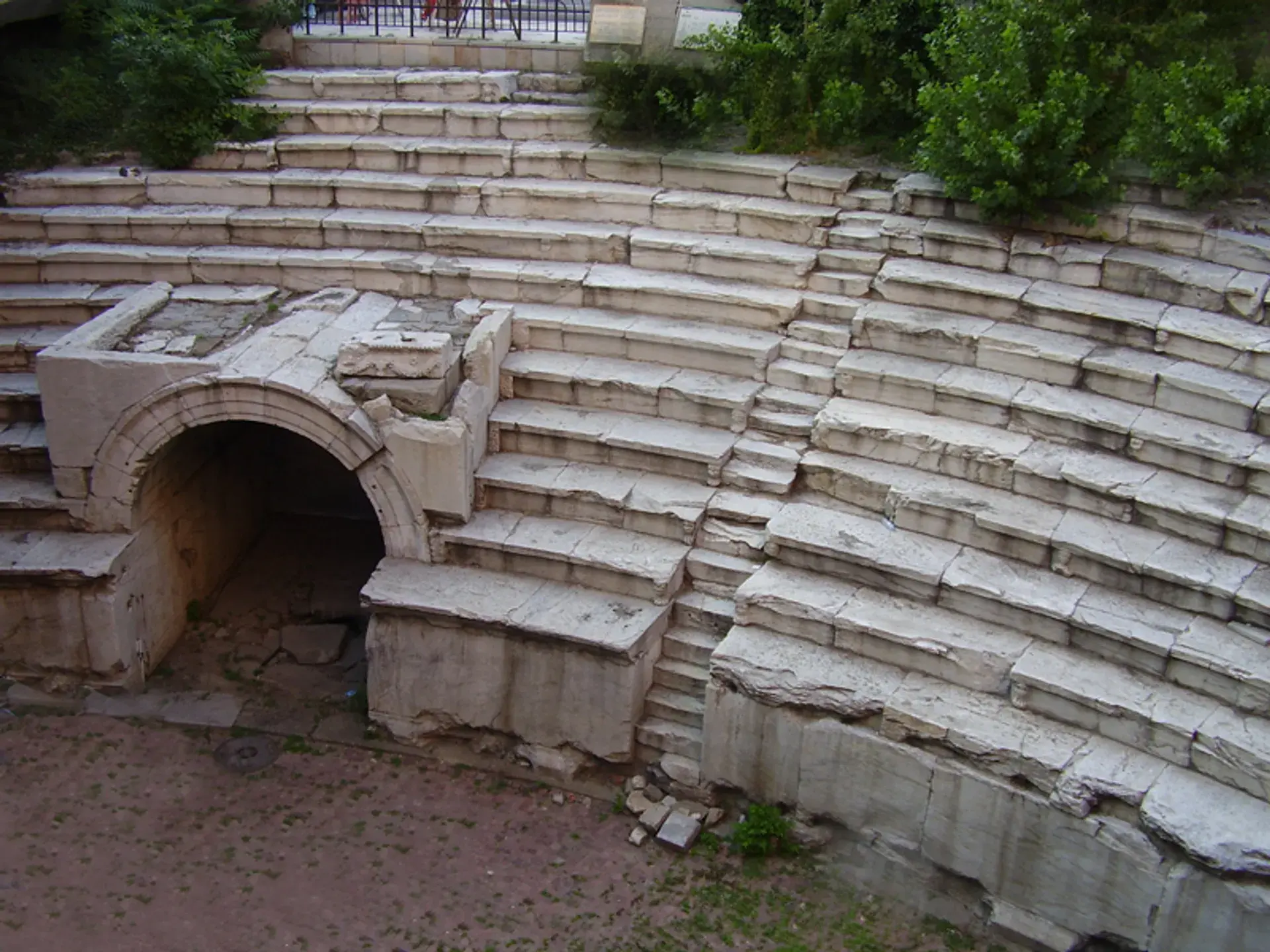
In antiquity, the forum served as the administrative, commercial, and religious heart of the city. The two main Roman roads, Cardo Maximus and Decumanus Maximus, intersected just outside its eastern entrance. The northern side of the forum was framed by essential civic structures, including the Odeon, a city library, and a treasury. Artifacts recovered from the site reveal a thriving market where local Thracian grain, timber, and honey were traded for fine ceramics and bronze vessels from as far away as Roman Italy. Additionally, excavations along the northern administrative section uncovered stone inscriptions announcing ancient gladiator games.
Following the decline of the Roman forum, the site saw different uses. Between the 10th and 12th centuries, the northern portion near the Odeon was repurposed as a city necropolis.
Discovery and 21st-Century Redesign
The ancient ruins were accidentally discovered in 1971 during municipal construction for the central post office. Throughout the late 20th century, urban developments bisected the archaeological site. However, a major urban redesign in 2019, timed for Plovdiv's tenure as European Capital of Culture, successfully integrated the excavated features into the modern pedestrian plaza.
During this 2019 reconstruction, a time capsule was buried directly inside the Roman Forum site. It contains digital photos, historical records, and messages intended for future generations.
Civic Life and Striking Contrasts
Today, Central Square functions as a car-free urban pedestrian plaza and an open-air archaeological display. Exposed Roman streets, foundations, and re-erected columns are fully integrated into the public space. The location offers a striking sensory and visual contrast: the massive, heavy concrete of the 20th-century Central Post Office looms directly over 2,000-year-old carved stone columns and ancient street paving.
Beyond its historical significance, the square remains a vital public gathering space. It regularly hosts seasonal markets, outdoor cultural events, and civic celebrations, maintaining its status as a lively focal point in Plovdiv.
FAQ
What ancient ruins are located at Central Square in Plovdiv?
Central Square sits directly over the 1st-century AD Forum of Philippopolis. It is the largest Roman forum in Bulgaria, featuring exposed ancient streets and re-erected columns.
When was the Roman forum under Central Square discovered?
The ruins of the ancient forum were accidentally discovered in 1971 during the construction of the city's Central Post Office.
What was the historical purpose of the Forum of Philippopolis?
The forum was the commercial, administrative, and religious heart of the ancient city. It contained an Odeon, a library, and a treasury, and served as a bustling market trading Thracian goods for Roman imports.
What happened to Central Square in 2019?
In 2019, the square underwent a major redesign for Plovdiv's tenure as European Capital of Culture. The project integrated the ancient ruins into a modern pedestrian plaza and included the burial of a time capsule within the Roman Forum site.