Djumaya Mosque: Plovdiv's Historic Ottoman Landmark
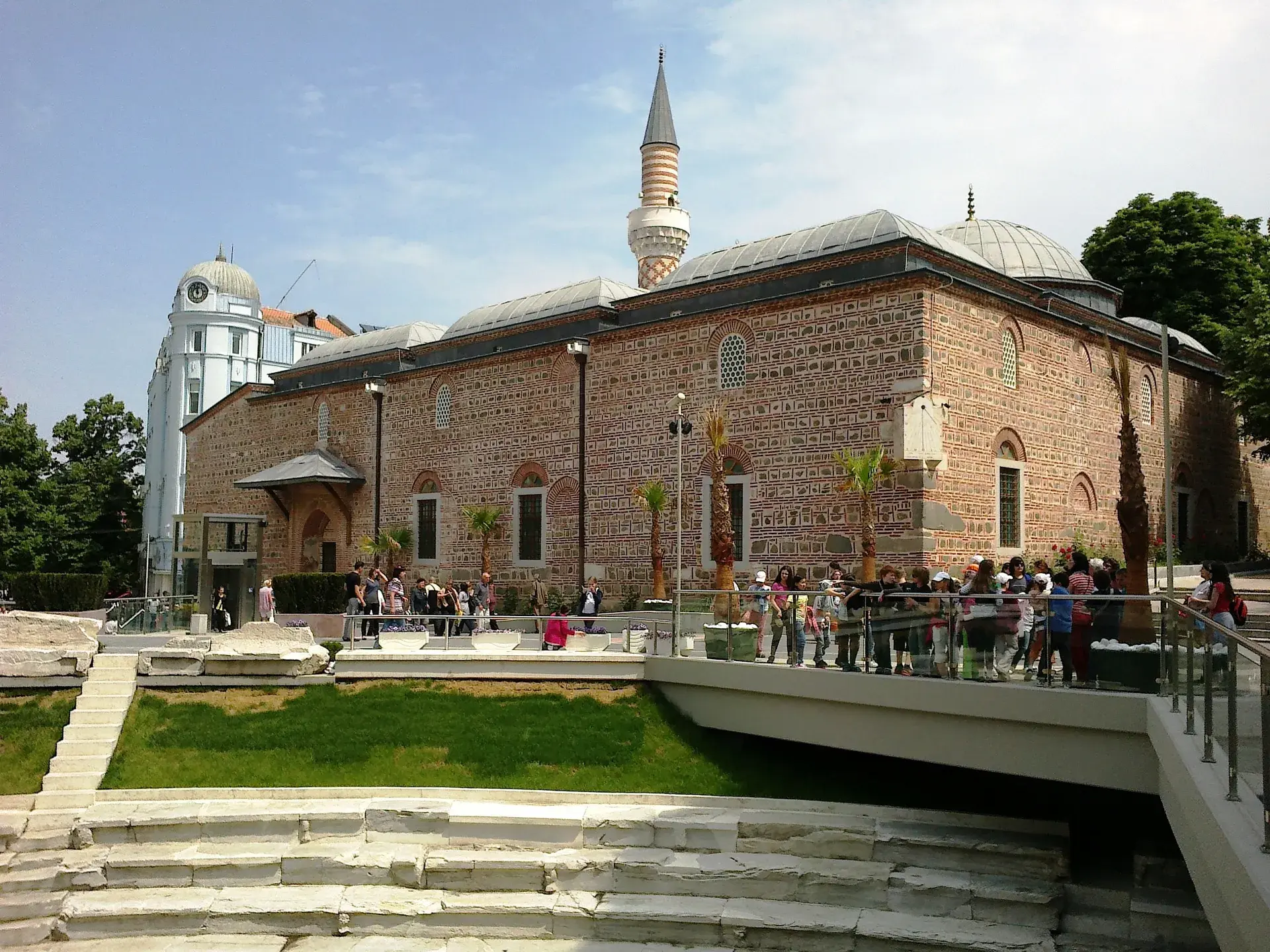
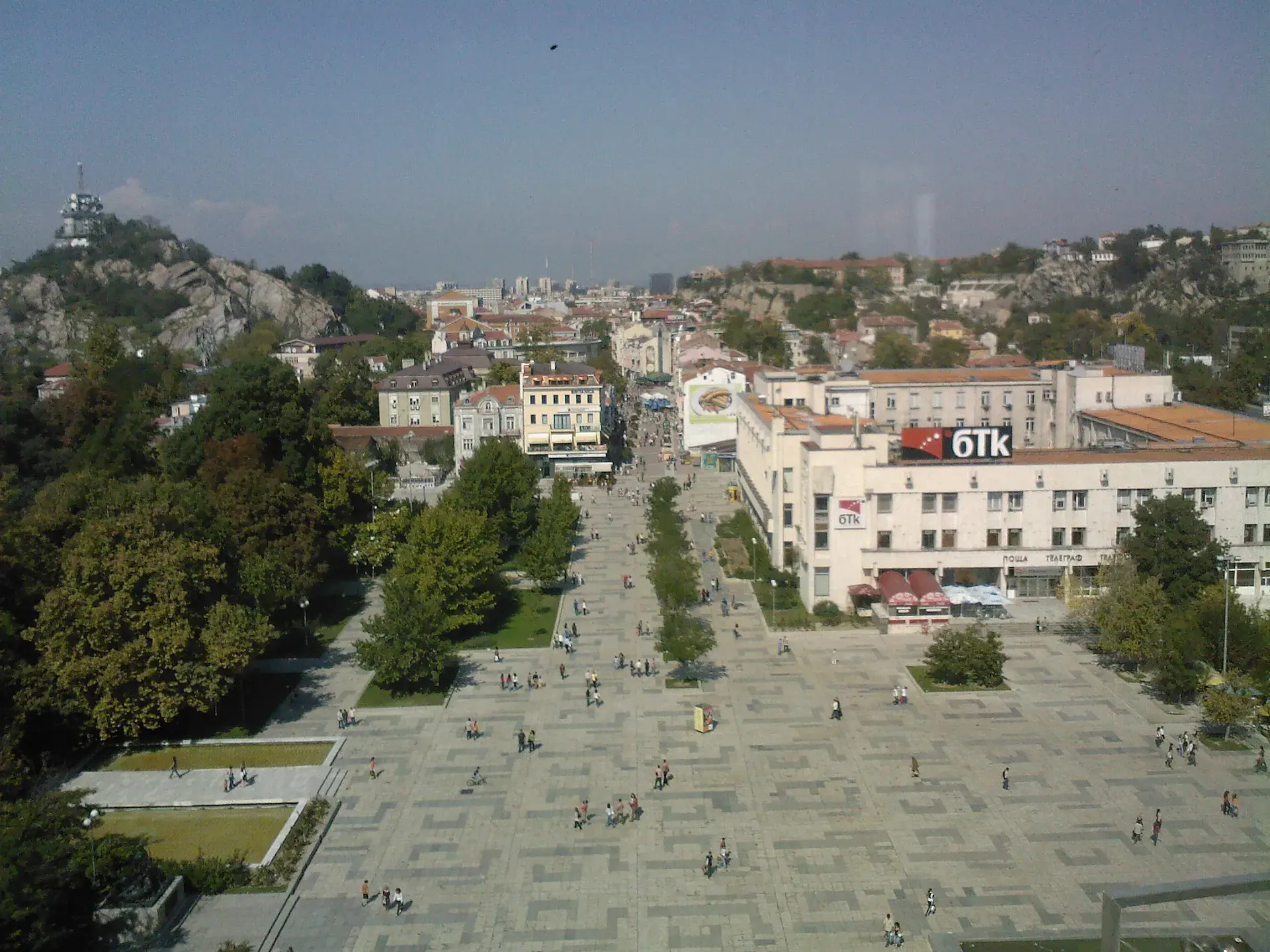
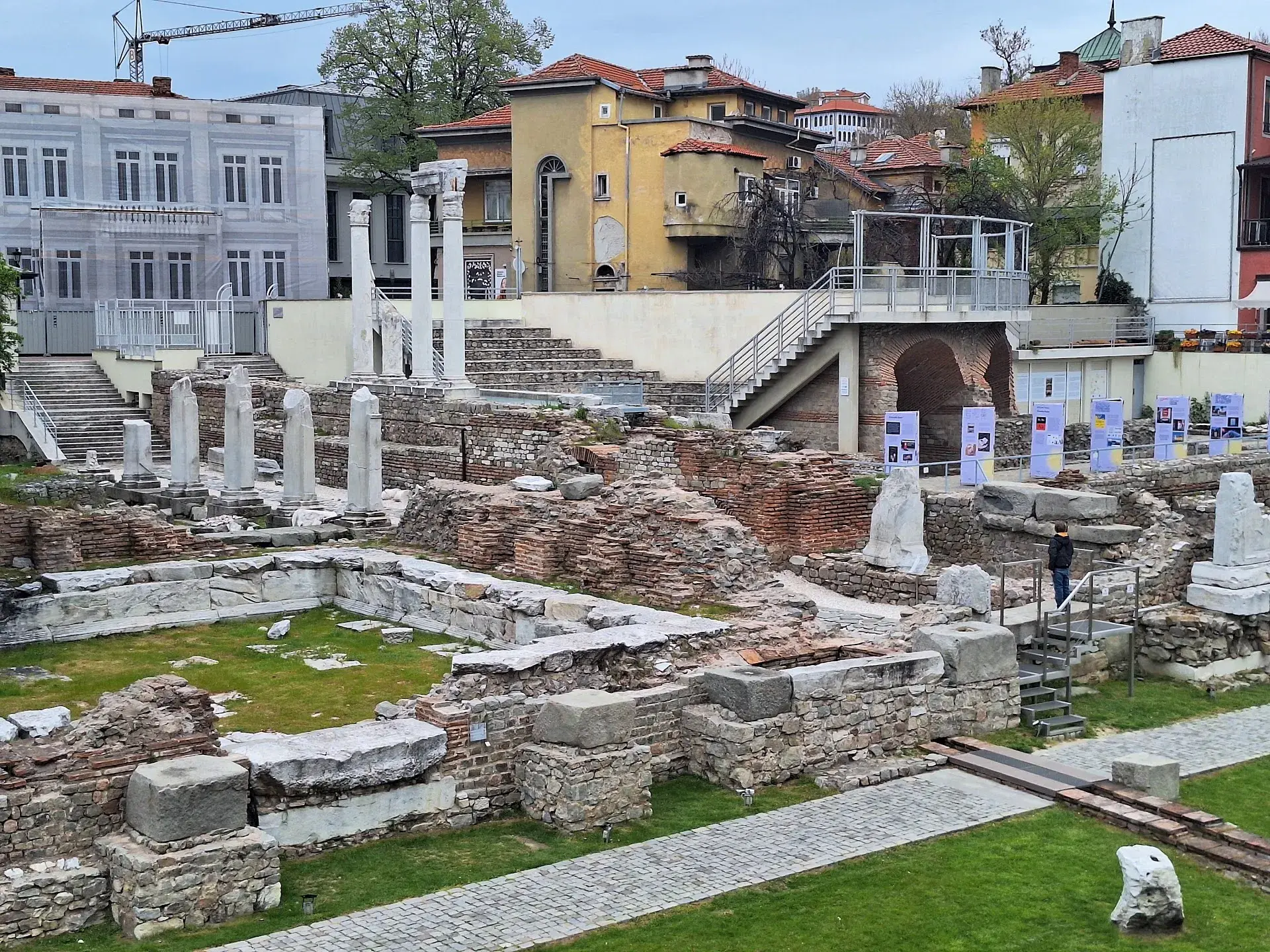
Where an Ottoman minaret watches over a Roman stadium, centuries of empires collide at a single crossroads. Located at the precise intersection of Plovdiv's main pedestrian shopping boulevard, the Old Town, and the Kapana district, Djumaya Mosque anchors the city as a symbol of continuous evolution across the Roman, Byzantine, Bulgarian medieval, and Ottoman eras. From Dzhumaya Square, the excavated marble seating of the 2nd-century Roman Stadium of Philippopolis sits directly below the soaring minaret of this 15th-century Ottoman mosque, creating a striking visual timeline of the city.
Architectural Marvels of the Early Ottoman Era
Known officially as Ulu Dzhumaya Mosque, the imposing rectangular structure features an uncommon early roof plan. Unlike later classical Ottoman mosques dominated by a single central dome, Djumaya retains nine equal lead-capped domes arranged symmetrically over a prayer hall measuring 33 by 27 meters.
The exterior walls demonstrate a unique hybrid building technique that blends Byzantine and medieval Bulgarian construction methods. The masonry alternates two courses of red brick with every single course of cut stone. At the northeast corner stands a tall, slender minaret adorned with a red-brick diagonal square mesh pattern set against white plaster.
A Legacy of Transformation
Constructed shortly after the Ottoman conquest of Plovdiv between 1363 and 1364, the first foundation was built on the former site of the Bulgarian cathedral church of Sveta Petka Tarnovska. During the 15th-century reign of Sultan Murad II, the mosque was demolished and completely rebuilt into its current multi-domed form, earning the nickname Muradiye in honor of the ruler.
Historically, worshippers entered through an eastern entrance. The northern door originally connected directly to a bustling outdoor bazaar through a portal. Over time, the eastern door was bricked up, making the northern bazaar entrance the primary entry point. Further renovations in the late 18th and early 19th centuries introduced extensive interior wall paintings, including floral motifs, garlands, and Quranic medallions.
Modern Worship and Sensory Elements
Today, Djumaya Mosque functions as Plovdiv's primary active Muslim temple, hosting daily prayers and Friday congregational services. Inside, soft interior light falls across extensive woven prayer carpets, carved woodwork, and the late Ottoman floral wall frescoes. The rhythmic Call to Prayer broadcasts from the minaret, sounding over the open sunken Roman Stadium pit below.
The northern wing of the mosque houses a traditional cafe and pastry shop facing Dzhumaya Square. The scent of dark roasted Turkish coffee, cardamom, and honeyed baklava drifts from the outdoor seating area, adding a rich sensory layer to the historic intersection. The site remains open to non-Muslim visitors outside of prayer hours, provided they adhere to modest dress and shoe removal customs.
FAQ
Can non-Muslims visit Djumaya Mosque?
Yes, non-Muslims can visit the mosque outside of prayer hours (typically between 9:00 AM and 5:00 PM). Visitors must adhere to standard mosque etiquette, which includes wearing modest dress and removing shoes before entering.
When was Djumaya Mosque built?
The original mosque was constructed between 1363 and 1364. It was later demolished and completely rebuilt into its current nine-domed form during the 15th-century reign of Sultan Murad II.
What architectural style is Djumaya Mosque?
It is an early Ottoman multi-domed mosque. Unlike later classical Ottoman designs that feature one massive central dome, Djumaya features nine equal lead-covered domes and exterior masonry that utilizes Byzantine and medieval Bulgarian brick-and-stone techniques.