St. Konstantin & Elena Church in Plovdiv
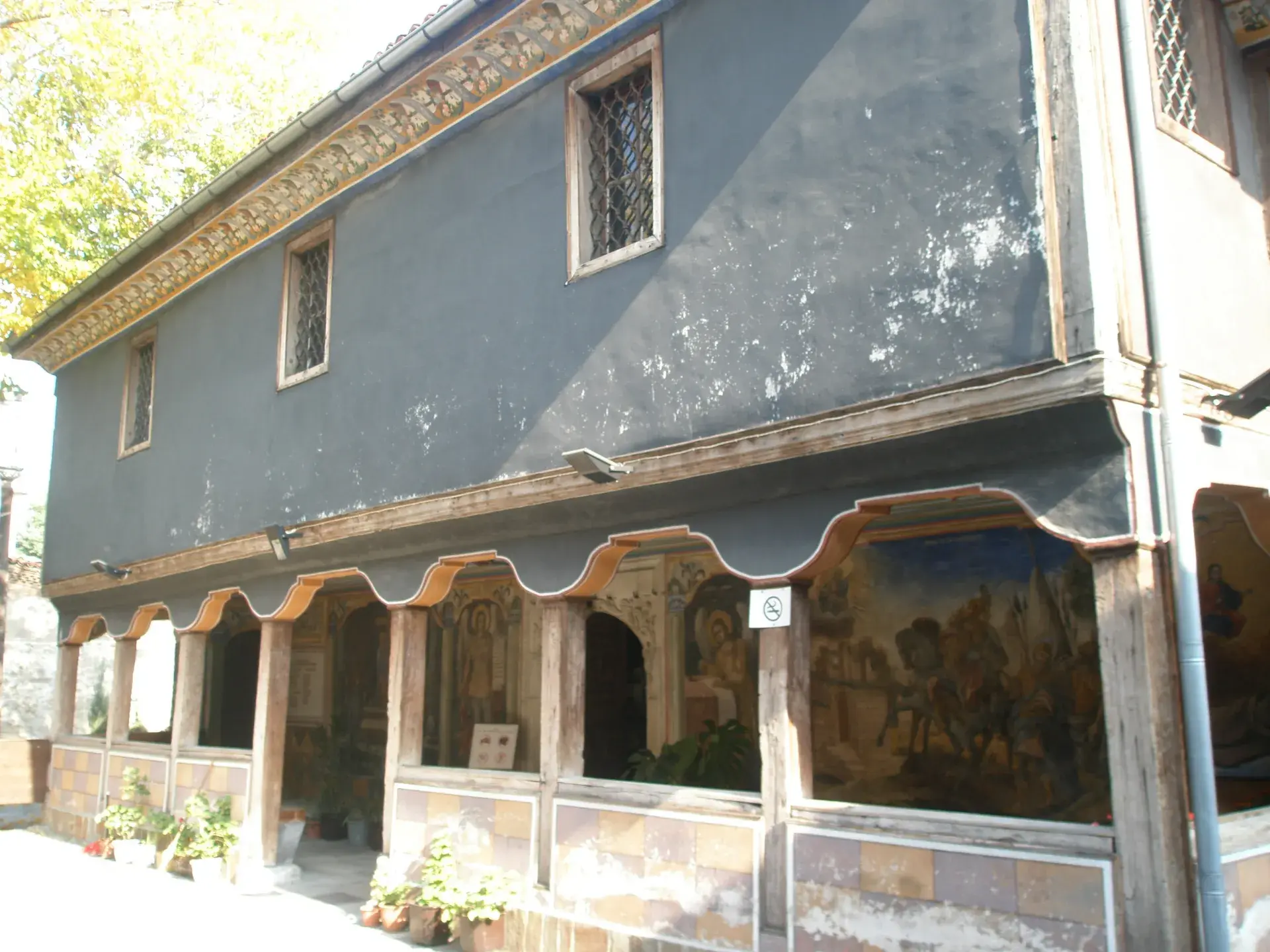
Beneath the floorboards and altars of Plovdiv's oldest functional church lie the remnants of Roman walls, ancient martyrs, and centuries of defiance. Located at 24 Saborna Street in the Old Town, St. Konstantin & Elena Church serves as Plovdiv's oldest operating Christian sanctuary. High six-to-eight-meter stone walls separate the enclosed garden from the pedestrian street, offering a peaceful, monastery-like retreat marked by a bright white 13-meter standalone bell tower with a copper cap.
Roman Foundations and Ancient Martyrs
The site has hosted a Christian sanctuary since approximately 337 AD. Positioned on the acropolis fortress wall near the city's eastern gate, the original structure honored 38 local Christians. According to church tradition, this group included Saints Severian and Memnos, who were beheaded on the grounds in 304 AD during the persecutions of Emperor Diocletian.
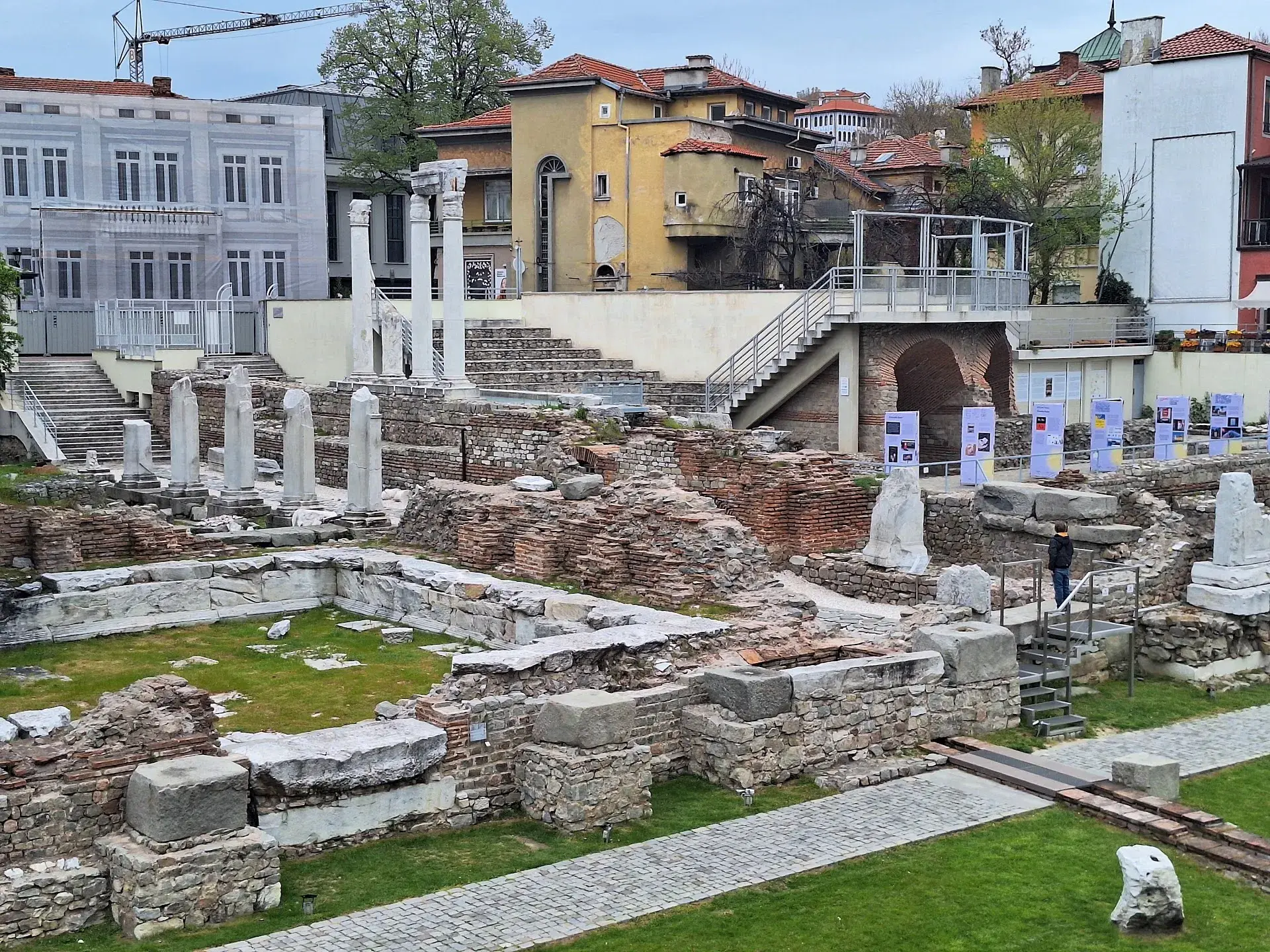
The site physically encapsulates Plovdiv's chronological transition from Roman fortification to an early Christian hub. Archaeological excavations beneath the church apse in the 1950s revealed the foundations of an ancient rectangular defense tower. This structure originally guarded the adjacent Roman-era Hisar Kapia gate.
Surviving Ottoman Rule
During Ottoman rule, strict limitations were placed on the height and size of Christian churches. In 1578, German theologian Stephan Gerlach documented his visit to the sanctuary, describing the building as dark and small.
After centuries of fires and rebuilding, the church fell into complete roofless ruin by 1830. Its resurgence began when community members organized a major campaign to finance a new structure. Church trustee Todor Moravenov raised funds for the project, while community leader Valko Chalakov secured the required Ottoman imperial decree. Master builder Petko Petkov constructed the present 26-meter-long basilica between 1832 and 1836.
Masterpieces of the National Revival
The church interior offers a dramatic visual contrast to its bright exterior. It features a gilded Viennese Baroque iconostasis, an unusual addition for Orthodox churches in the region. A preserved receipt from March 17, 1836, confirms the woodwork was crafted in Vienna by master carver Yoan Pashkula.
The sanctuary is adorned with icons painted by prominent National Revival masters, including Zahari Zograf, Dimitar Zograf, and Stanislav Dospevski. Wall frescoes were later added in the 1860s by Stefan Andonov and Atanas Gyudzhenov. A small icon of Saints Constantine and Helena is also housed inside, which local tradition claims possesses miracle-working powers.
An Active Cultural Anchor
Today, St. Konstantin & Elena Church operates as an active Bulgarian Orthodox church. It is open daily to visitors free of charge and hosts regular services, including Sunday morning Divine Liturgy. The scent of burning beeswax candles and the sound of traditional Orthodox chanting frequently fill the space.
Within the enclosed courtyard, the stone complex houses a small, permanent gallery. Guests can view historic icons dating from the 14th to the 18th centuries, including early iconostasis panels saved from previous iterations of the sanctuary.
FAQ
Where is St. Konstantin & Elena Church located?
The church is located at 24 Saborna Street in the Old Town architectural reserve of Plovdiv, directly adjacent to the ancient Roman-era Hisar Kapia gate.
Is St. Konstantin & Elena Church still active?
Yes, it functions as an active Bulgarian Orthodox church that is open daily to visitors free of charge and hosts regular services, including Sunday morning Divine Liturgy.
What makes the church's iconostasis unique?
Unusually for Orthodox churches in the region, the gilded Baroque wooden iconostasis was crafted in Vienna. It was made by master carver Yoan Pashkula, verified by a preserved receipt dated March 17, 1836.
What archaeological discoveries were made at the church?
Excavations beneath the church apse in the 1950s uncovered the foundations of an ancient rectangular Roman defense tower that originally guarded the Hisar Kapia gate.