Luža Square: Historic Civic Heart of Dubrovnik
The Civic Heart of the Republic of Ragusa
Positioned at the eastern terminus of the Stradun, Luža Square (Trg Luža) served as the primary administrative, ceremonial, and commercial hub of the Republic of Ragusa. The site marks an early topographical boundary, originating at the contact point where the early rocky settlement of Laus met the mainland settlement of Dubrava after the marshy channel between them was filled in.
Throughout the Ragusan era, the square functioned as the civic stage where official government decrees and diplomatic announcements were read to the public. It was also the location where judicial sentences were handed down and public punishments were carried out. Following a gunpowder explosion at the Rector's Palace in 1435, the city's council bells were transferred to the Luža bell tower in 1463 to summon government assemblies and sound alarms during fires or hostile incursions.
Architectural Enclosure and Landmarks
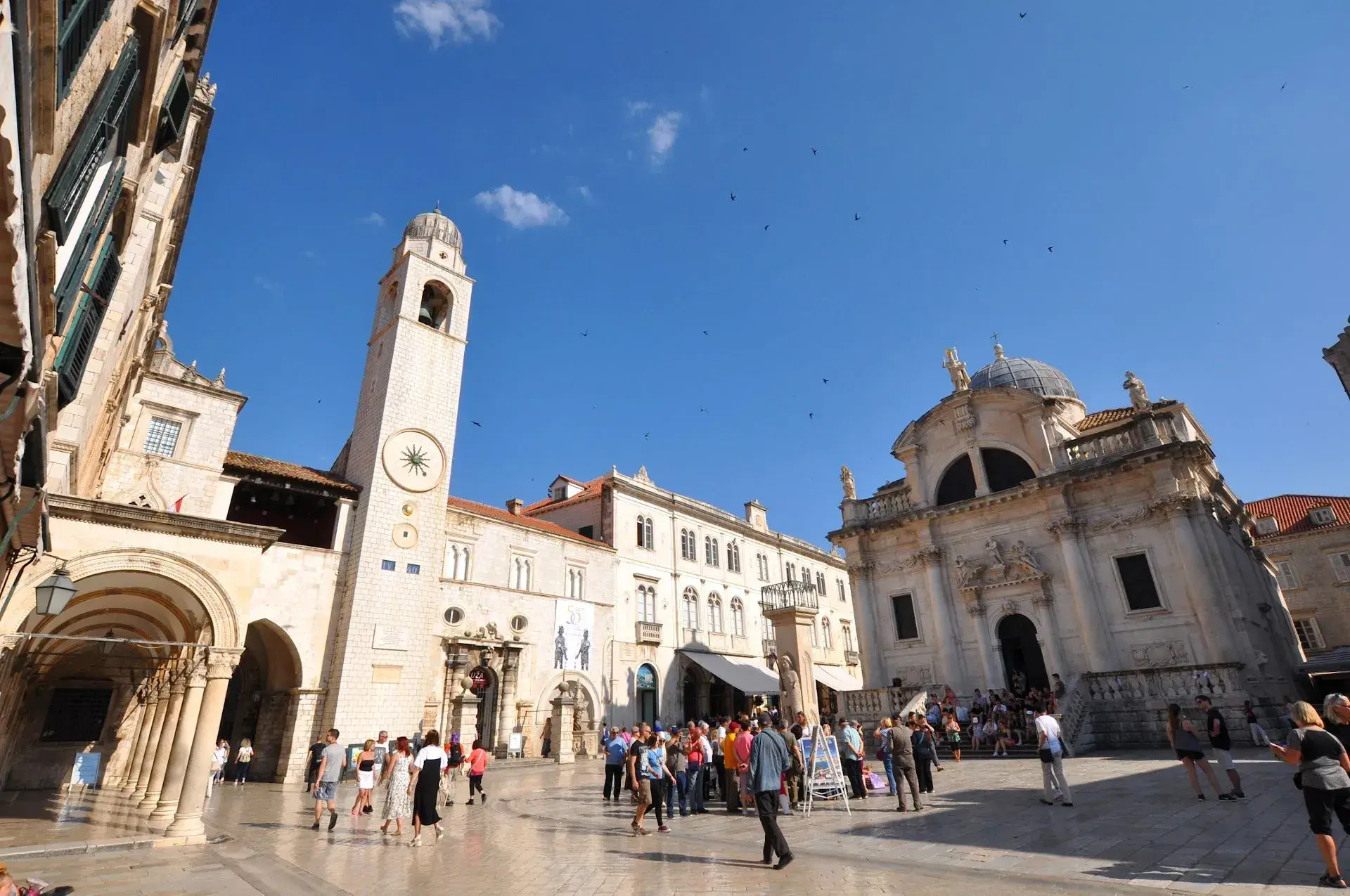
Luža Square is bordered by several of Dubrovnik's most significant historical monuments. To the north stands the 16th-century Sponza Palace, which survived the catastrophic 1667 earthquake largely intact while surrounding Romanesque and Gothic buildings collapsed. To the south sits the Baroque Church of Saint Blaise, rebuilt following the seismic destruction of its predecessor.
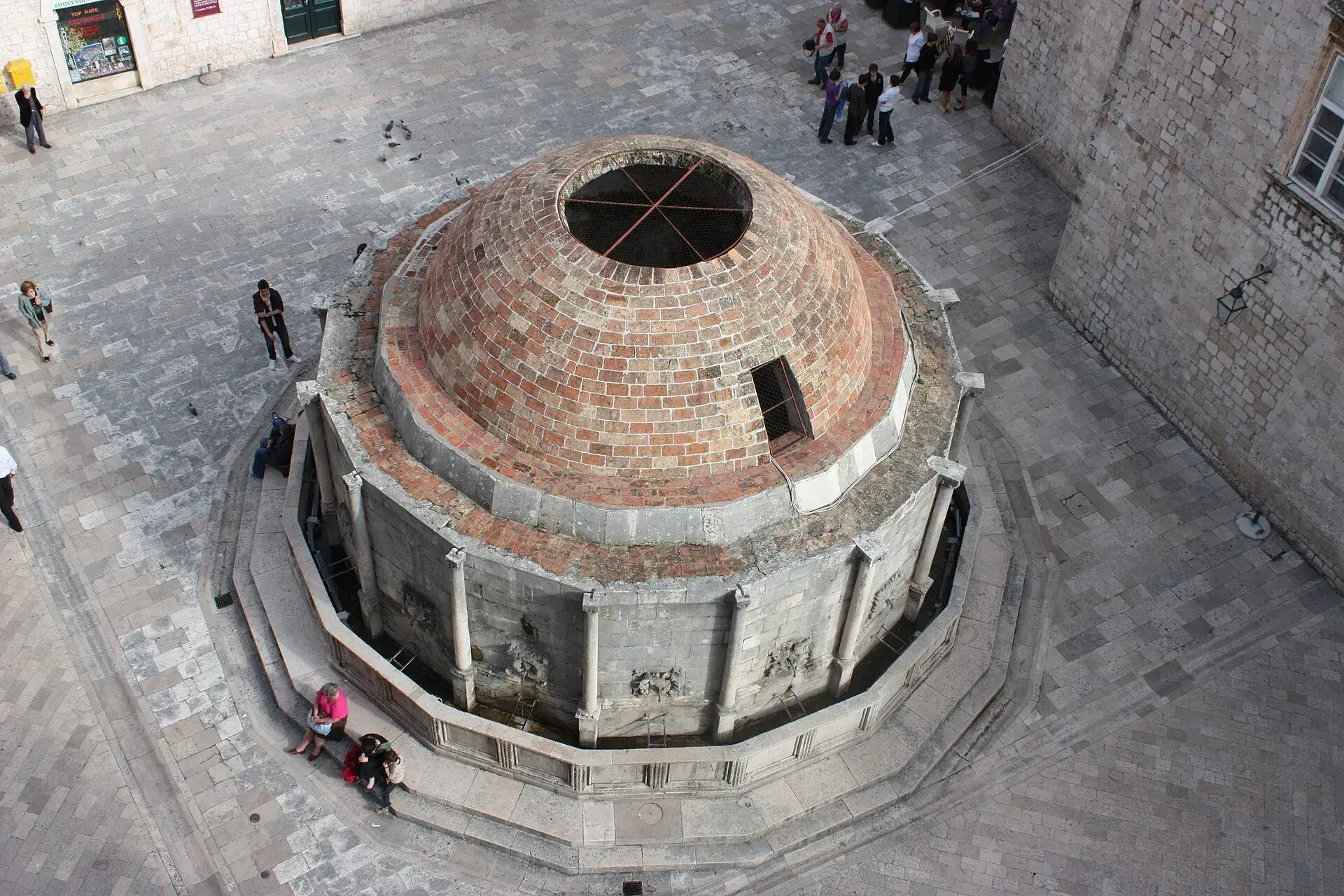
The eastern border is defined by the Bell Loggia, the City Guard, and the 31-meter City Bell Tower. Weakened by centuries of seismic activity, the bell tower was carefully dismantled and reconstructed between 1928 and 1929. Atop the tower, two hammer-bearing bronze automata strike the bell to mark the hours, sending metallic chimes echoing across the stone facades. Known locally as Maro and Baro or the Zelenci, the figures currently in place are replicas; the weathered 16th-century originals are preserved in the Cultural History Museum at the adjacent Rector's Palace. Cold freshwater trickles continuously from the stone spouts of the Small Onofrio’s Fountain near the square's eastern border.
Orlando’s Column and the Standard Cubit
At the center of Luža Square stands Orlando's Column (Orlandov stup), a carved stone pillar portraying the medieval knight Roland. According to local lore, Orlando was embraced as an emblem of Ragusan independence after reportedly helping to relieve the city from a medieval Saracen naval siege.
Beyond its symbolic value, the monument served an indispensable economic function. The right forearm of the sculpted knight served as the republic’s official unit of length, known as the dubrovački lakat (Dubrovnik cubit), measuring exactly 51.2 centimeters. Lines carved into the column's stone base allowed merchants and buyers to measure cloth and goods on-site to deter commercial fraud.
Modern Crossroads and Public Life
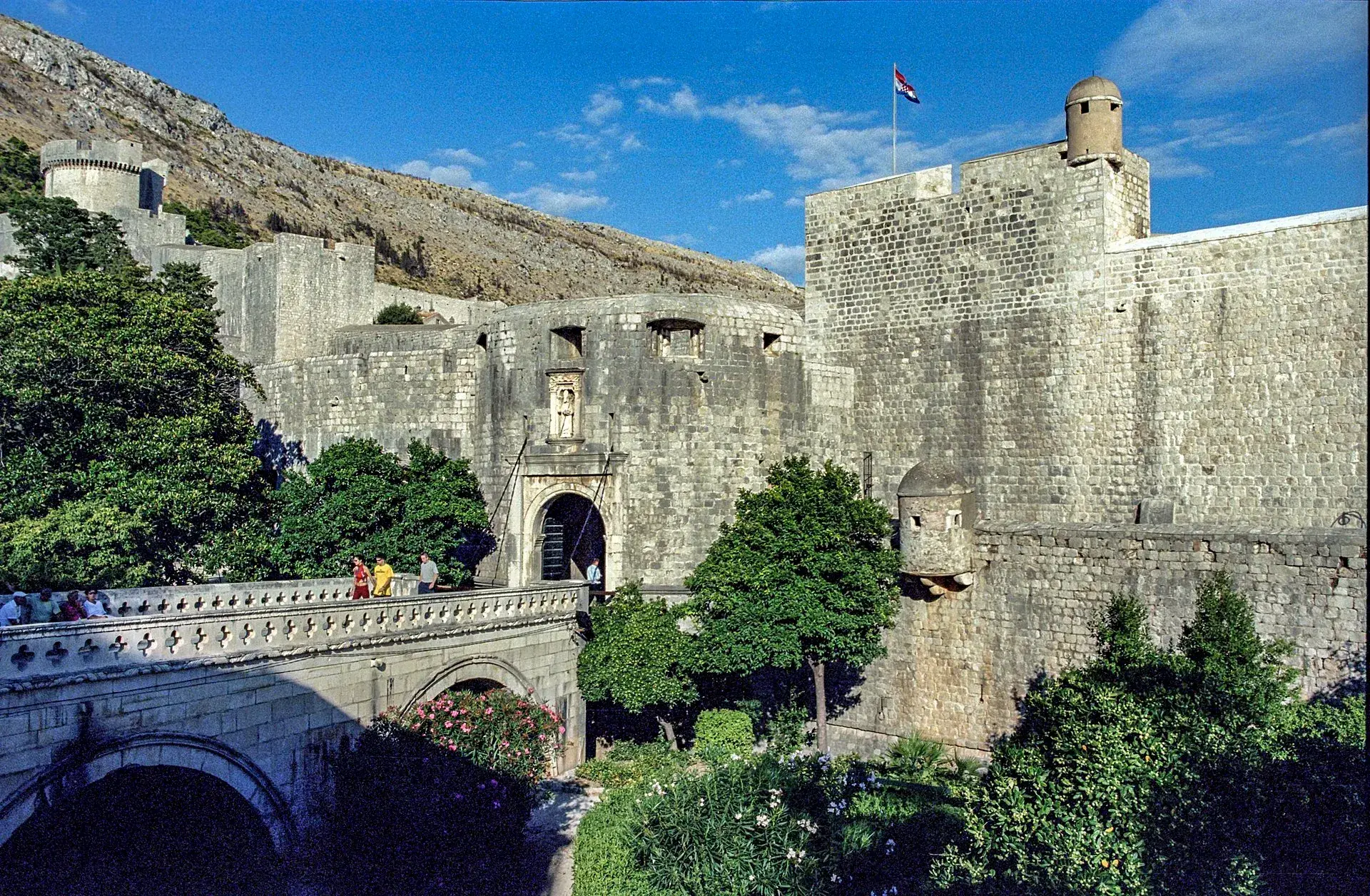
Today, Luža Square remains a completely free, open public space and one of the most active pedestrian crossroads in Dubrovnik's Old Town. An arched passage beneath the Bell Loggia and City Bell Tower links the square to the Old City Harbour and Ploče Gate, while other pathways lead toward Gundulić Square and the Rector's Palace complex.
The square continues its long tradition as a ceremonial stage. It hosts the opening ceremony of the Dubrovnik Summer Festival each July and serves as the terminal gathering point for the annual procession of the Feast of Saint Blaise on February 3. On regular days, visitors gather on the steps of the Church of Saint Blaise or sit outside at the terrace of the Gradska Kavana café, framed by the centuries-old architecture of Ragusa.
FAQ
What is the historical meaning behind Orlando's Column in Luža Square?
Orlando's Column served as a symbol of civic liberty, connected to a legend where the knight helped save Dubrovnik from a medieval naval siege. Practically, his right forearm measured 51.2 centimeters, serving as the official standard length (the dubrovački lakat) for market trade.
What does the name Luža mean?
The name Luža comes from the historic loggia (lođa) and bell belfry where Dubrovnik's public and civic bells were historically suspended.
Who are Maro and Baro on the City Bell Tower?
Maro and Baro, also known as the Zelenci, are two bronze automata atop the City Bell Tower that strike the hours with hammers. The current figures on the tower are replicas, while the 16th-century originals are housed in the Cultural History Museum at the Rector's Palace.