Český Krumlov Castle Bear Moat: History & Bears
The Bear Moat at Český Krumlov Castle
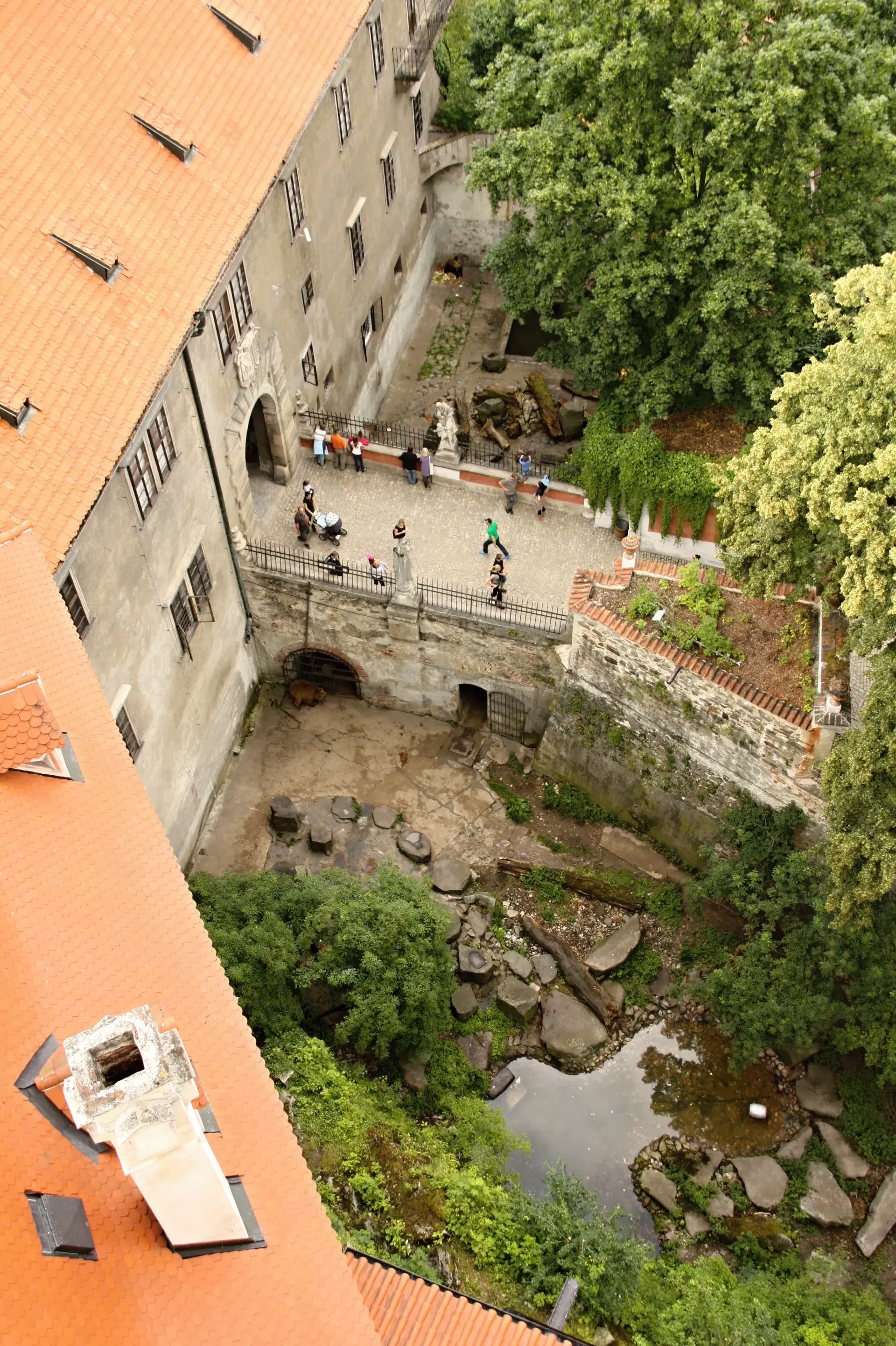
Beneath the stone bridge connecting the First and Second courtyards of Český Krumlov Castle lies the Medvědí příkop, or bear moat. Positioned at the castle entrance off the historic Latrán quarter, the moat originally served as a defensive feature guarding the entrance to the Upper Castle. In 1760, a stone bridge adorned with statues of the Virgin Mary and Saint Joseph replaced an earlier wooden drawbridge. Today, the shaded enclosure features climbing logs, a grassy bank, a natural pool fed by running water, and sheltered winter dens constructed beneath the bridge arches.
Heraldic Myth and Centuries of Tradition
The keeping of bears at Český Krumlov Castle traces back to the 16th century, when Wilhelm of Rosenberg (Vilém z Rožmberka) introduced the animals to the grounds. The bears served as living manifestations of the Rožmberk family coat of arms, which featured two bears acting as shield-bearers. This heraldic design stemmed from the family's claim of ancestral descent from Rome's noble Orsini family, whose name derives from the Latin ursus (bear). Historical archival research later proved this link was an intentional genealogical forgery fabricated in the 15th century by Oldřich II of Rožmberk to elevate the dynasty's prestige.
Historical records document the presence of bears specifically inside this defensive moat beginning in 1707, establishing the longest recorded castle-moat bear-keeping tradition in Czechia. After the Rožmberk lineage ended, the Schwarzenberg family revived the custom in 1857 by importing bears from Transylvania. With the exception of a gap between 1887 and 1907, bears have continuously inhabited the moat.
Resident Bears and Daily Care
The enclosure currently houses three brown bears (Ursus arctos): an older female named Marie Terezie, and a younger pair named Vilém and Polyxena. The younger bears arrived in 2017 after customs officers intercepted them at Václav Havel Airport in Prague, where they were being illegally smuggled out of Russia for use in an animal circus.
The moat functions under the state heritage administration as a rescue refuge and retirement enclosure, operated by head bearkeeper Jan "Míša" Černý with veterinary oversight from Plzeň Zoo. The keeper prepares daily enriched smoothies made with milk, water, honey, and omega-3 fish oil to support the bears' coat and bone health. To encourage natural foraging, treats are hidden inside large woven wicker balls or placed high on trees, requiring the animals to stretch and climb.
Seasonal Habits and Future Plans
The castle bears do not enter complete winter hibernation. Instead, they experience a reduced-activity phase described by their keeper as "couch surfing" (gaučování), characterized by lower energy and decreased feeding. This state leaves them alert enough to participate in "Bear Christmas" (Medvědí Vánoce), held annually on December 24. During this event, keepers decorate fir trees with fruit and pastries while spectators gather on the bridge above.
The future of the moat enclosure remains a subject of ongoing discussion. The National Heritage Institute (NPÚ) signed a memorandum targeting an end to keeping wild predators in state castle moats by 2030. In response, castle administrators and public petitions have emphasized that the resident bears cannot be reintroduced to the wild and receive dedicated lifelong care within the historic space.
FAQ
Which bears currently live in the castle moat?
The moat houses three brown bears: an elderly female named Marie Terezie, and a younger pair named Vilém and Polyxena, who were rescued from illegal smuggling in 2017.
Why were bears originally brought to Český Krumlov Castle?
In the 16th century, Wilhelm of Rosenberg introduced bears to match the family coat of arms, which drew on a fabricated ancestral claim connecting the Rožmberks to the Italian Orsini family.
What happens during Bear Christmas at the moat?
Every year on December 24, keepers decorate fir trees in the moat with fruit and pastries for the bears, while members of the public gather on the bridge to bring gifts.
Do the castle bears hibernate during the winter?
No, they do not undergo full hibernation. Instead, they enter a lower-energy phase termed 'couch surfing' (gaučování), remaining awake enough to take part in winter activities.