Fountain and Plague Column in Český Krumlov
An Architectural Union in Náměstí Svornosti
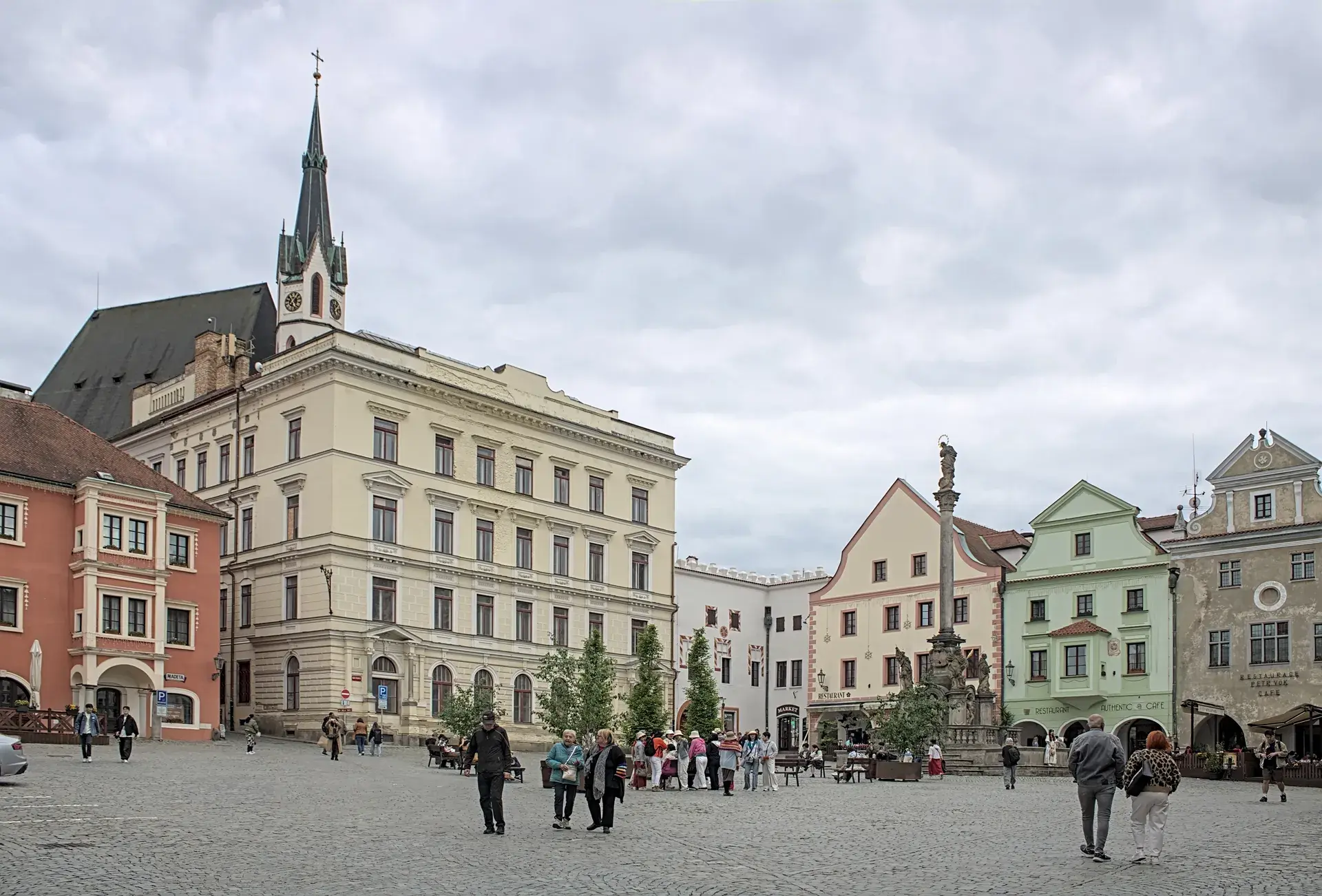
Standing at the centre of Náměstí Svornosti, the main quadrilateral market square of Český Krumlov's Inner Town (Vnitřní Město), the combined Fountain and Plague Column forms the focal landmark of the historic core. While it appears as a single unified Baroque ensemble, the monument is a composite structure created more than a century apart, merging an 18th-century religious votive pillar with a 19th-century municipal reservoir.
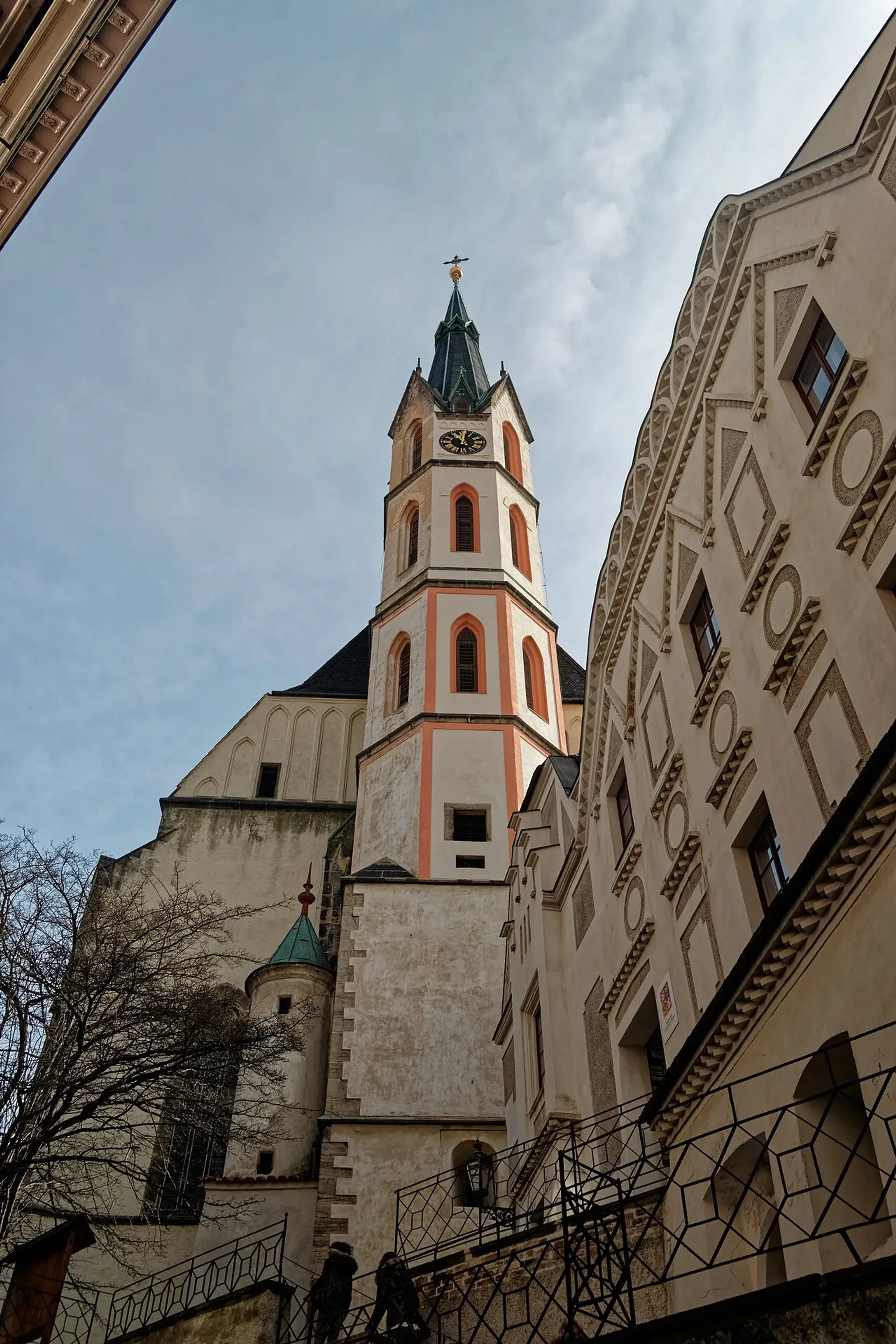
The square itself was laid out in the 13th century within a tight meander of the Vltava River and was documented as early as 1274 as the civic and commercial center of the settlement. Reached from Široká via Panská or Soukenická, the open plaza connects the nearby Church of St. Vitus to the river crossings that lead toward the castle.
The Baroque Marian Plague Column
The central pillar was commissioned during the Eggenberg and Schwarzenberg administrations following the severe plague epidemic that struck South Bohemia between 1680 and 1682. Created by the Prague Baroque sculptor Matěj Václav Jäckel between 1714 and 1716, the votive column served as an act of thanksgiving and spiritual protection against pestilence.
At the peak of the high Corinthian column stands a sculpture of the Immaculate Conception, depicting the Virgin Mary atop a crescent moon. Arranged below the pillar are eight protective saints positioned across two architectural levels. The upper tier features St. Wenceslas, St. Vitus, St. John the Evangelist, and St. Jude Thaddaeus. The lower tier displays the plague and patron saints St. Roch, St. Sebastian, St. Francis Xavier, and St. Gaetano.
Evolution of the Municipal Fountain
Long before the column was installed, the square served as a primary water source for town residents. Municipal regulations from 1388 and 1443 document early wooden water storage tanks on the site. In the 16th and 17th centuries, the space also held stone tanks known as haltýře, which were supplied with running municipal water specifically to keep freshwater fish alive for market trade. A stone Renaissance fountain, supplied with water piped from a municipal pond near the Upper Gate, was erected in 1577.
By 1843, the Renaissance fountain had fallen into disrepair and was dismantled. To save space in the market square, the town council decided to combine the replacement reservoir with the existing religious memorial. Between 1843 and 1844, stonemason Josef Hauber constructed a hexagonal stone basin directly around the base of Jäckel’s plague column. Hauber added access steps and fitted the balustrade with stone lion-head spouts, from which water continues to trickle into the deep reservoir.
Civic Setting and Heritage
The Fountain and Plague Column remains surrounded by significant historical architecture. Facing the square is the municipal Town Hall (No. 1), created around 1597 by joining older Gothic townhouses behind an arcaded ground floor and a unified Renaissance facade bearing the coats of arms of the Czech Kingdom, Český Krumlov, the House of Eggenberg, and the House of Schwarzenberg. Hidden behind this flat Renaissance parapet are the four distinct medieval pitched roofs of the original residences.
Today, Náměstí Svornosti serves as the principal civic meeting point of Český Krumlov. The Town Hall continues to house local administrative offices and the tourist information centre, while the square hosts pedestrian activity, seasonal craft and Christmas markets, and events during the annual Five-Petalled Rose Celebrations.
FAQ
When were the plague column and the fountain built?
The Marian plague column was sculpted by Matěj Václav Jäckel between 1714 and 1716. The surrounding hexagonal fountain basin was added more than a century later, built by stonemason Josef Hauber between 1843 and 1844.
Why was the plague column erected?
The monument was erected as a votive thanksgiving following the cessation of the devastating plague epidemic that hit Český Krumlov from 1680 to 1682.
Which figures are depicted on the column?
The column is topped by the Immaculate Conception and features eight saints across two tiers: St. Wenceslas, St. Vitus, St. John the Evangelist, and St. Jude Thaddaeus on the upper level, and St. Roch, St. Sebastian, St. Francis Xavier, and St. Gaetano on the lower level.