Church of St. Vitus in Český Krumlov: Gothic History
History and Rosenberg Heritage
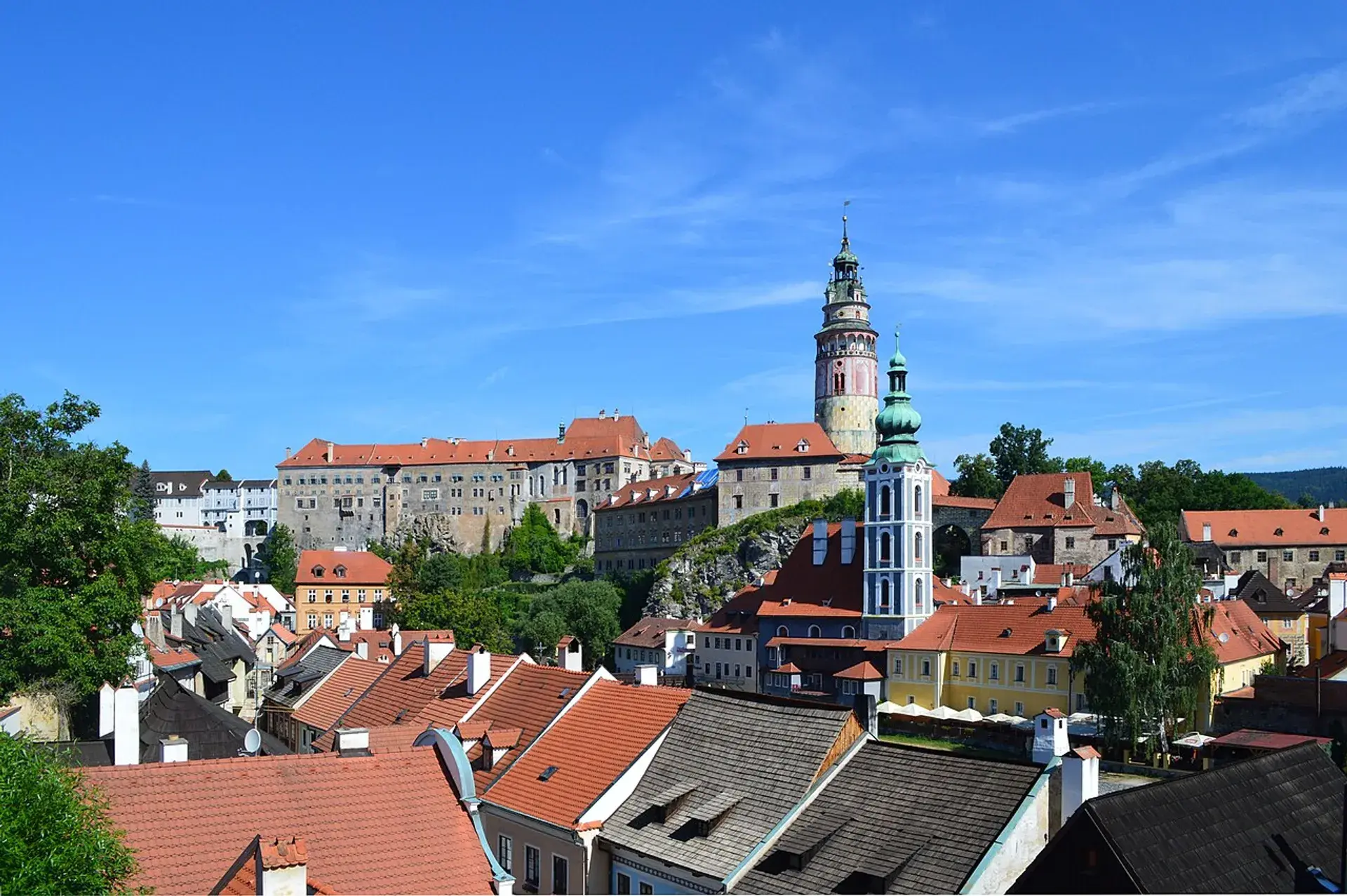
The Church of St. Vitus (Kostel svatého Víta) stands as Český Krumlov's primary spiritual landmark and the town's second most significant architectural monument, serving as an urban counterbalance to Český Krumlov Castle across the river bend. The site was originally founded in 1309, and its parish was established in 1317 by Peter I of Rosenberg.
To serve the growing residential population of the Rosenberg estate, a comprehensive Late Gothic reconstruction commenced in 1407 under the direction of Master Jan, a stonemason from a prominent Prague family. Construction culminated with the church's consecration in 1439 by Leonard of Laiming, the Bishop of Passau. A local legend tells that the church grounds were originally surrendered by a town baker on the condition that a weekly mass be held in perpetuity for him and his wife.
Architectural Evolution and Interior Highlights
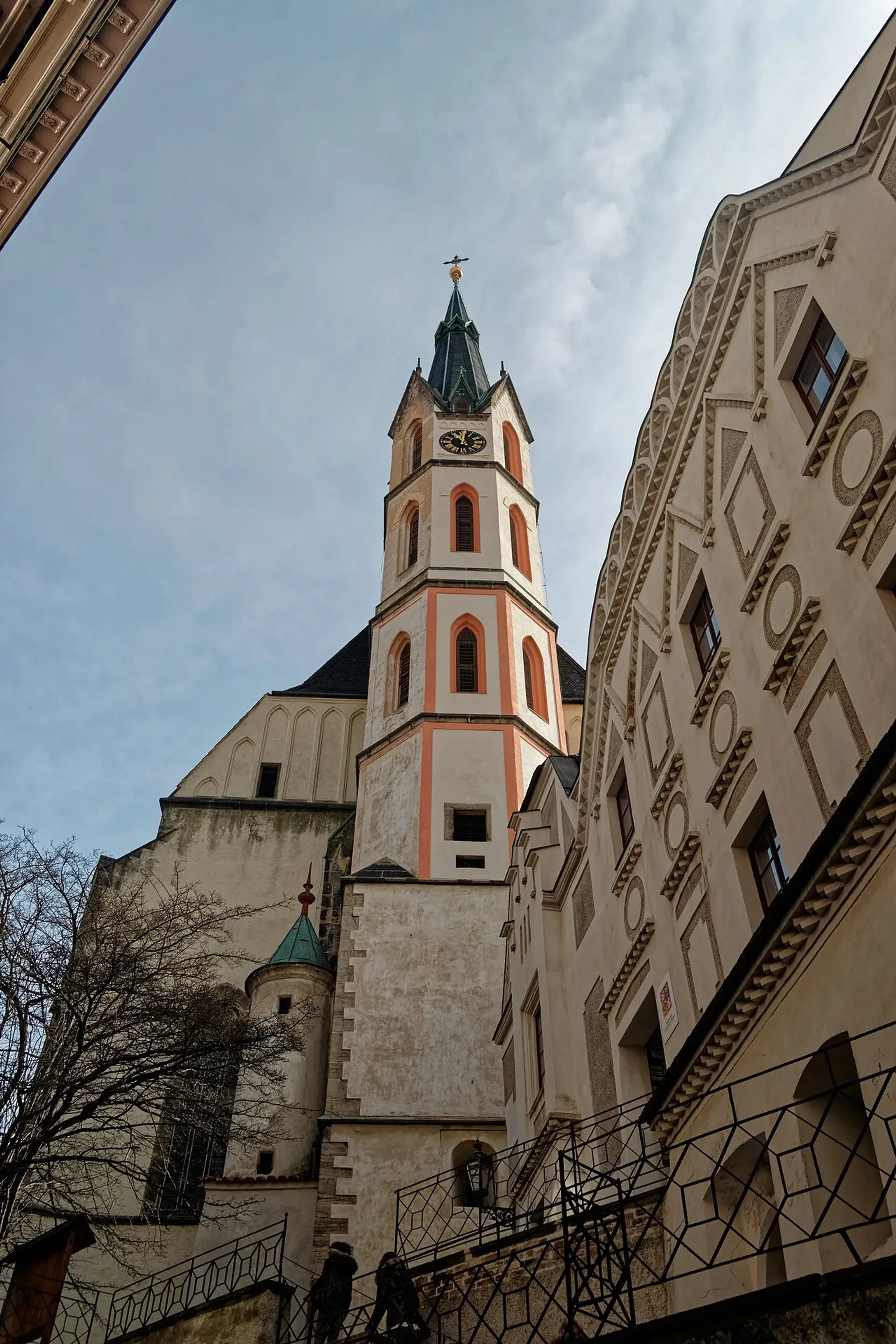
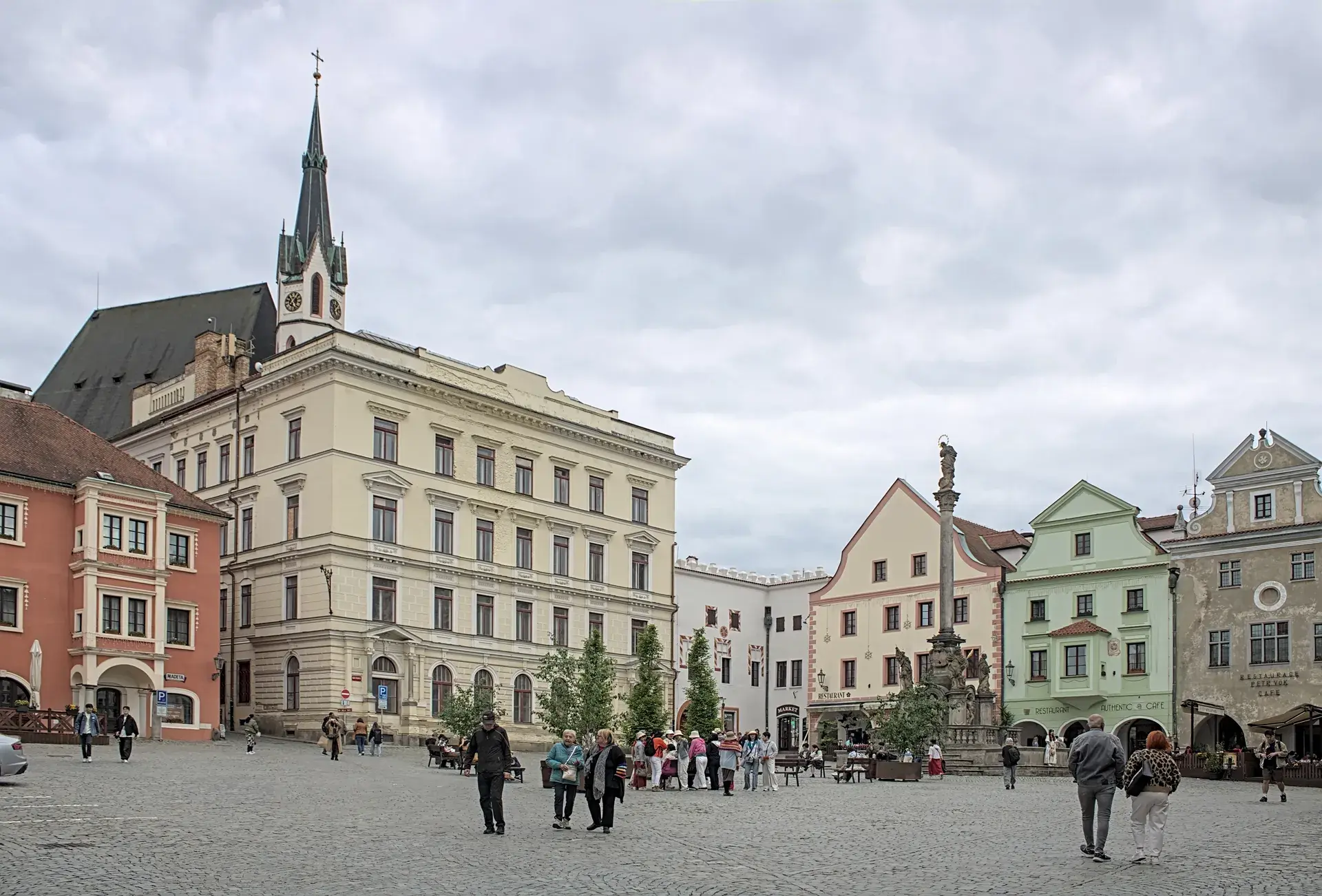
St. Vitus is configured as a Late Gothic, three-nave hall church crowned with an octagonal tower. The building's exterior silhouette underwent a major transformation between 1893 and 1894, when its earlier Baroque onion dome was replaced with the current Neo-Gothic spire. In 1500, local burghers financed the construction of a western music gallery within the nave.
Over the centuries, prominent patrons added ornate secondary spaces. Between 1725 and 1726, Prince Franz von Schwarzenberg and his wife Eleonore Amalie funded the construction of the Chapel of St. John of Nepomuk. Another notable addition is the Resurrection Chapel, which features illusionistic portal wall paintings completed in 1777 by František Jakub Prokyš. The interior also holds two historic pipe organs: a smaller 1716 Baroque organ embellished with carved wooden acanthus leaves and painted polychrome marble details, and a romantic Neo-Gothic main organ installed in 1908.
Shifting Traditions and Holy Grounds
Throughout the medieval era, official services inside the main nave were conducted in Czech. Because of this, German-speaking residents attended separate religious services in the adjoining Chapel of St. Jerome between 1389 and 1602.
The interior once housed a monumental Rosenberg family mausoleum along with an altar featuring an equestrian statue known as the Rosenberg rider. In later centuries, however, both were dismantled and removed under pressure from the local Jesuit order. Outside the building, the surrounding grounds functioned as the main parish cemetery until 1585, when a devastating bubonic plague outbreak exhausted all available burial plots, compelling the town to relocate its cemetery across the Vltava River.
Current Status and Visiting
In 1995, the Church of St. Vitus was declared a National Cultural Monument of the Czech Republic. Located on Horní street near the Horní terrace—a viewpoint framing the river and castle—the building functions as an active Roman Catholic parish church. It hosts regular masses and religious services alongside classical music concerts. The main nave remains accessible to the public with free admission.
FAQ
When was the Church of St. Vitus built?
The church was initially founded on the site in 1309 and organized as a parish in 1317. A major Late Gothic expansion started in 1407 under Master Jan, concluding with the church's consecration in 1439.
Is the Church of St. Vitus open to visitors?
Yes. The main nave is open to the public with free entry. The church also remains an active Roman Catholic place of worship that regularly hosts masses and classical music performances.
What happened to the Rosenberg family monuments inside the church?
The church formerly contained a large Rosenberg family mausoleum and an altar featuring a 'Rosenberg rider' statue, but both were completely removed in later centuries under pressure from the local Jesuit order.