Barber's Bridge in Český Krumlov: History & Lore
A Historic Crossing on the Vltava
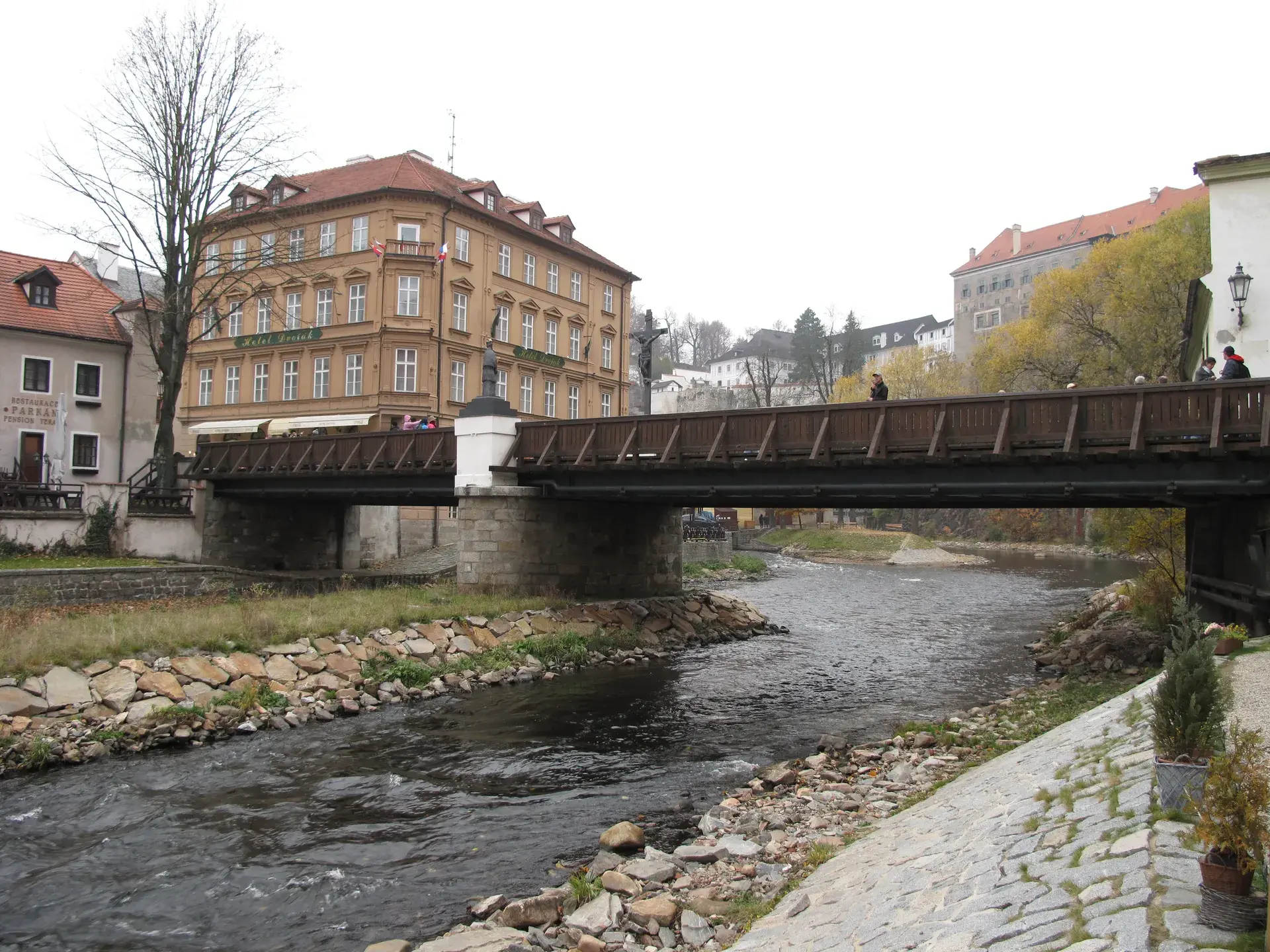
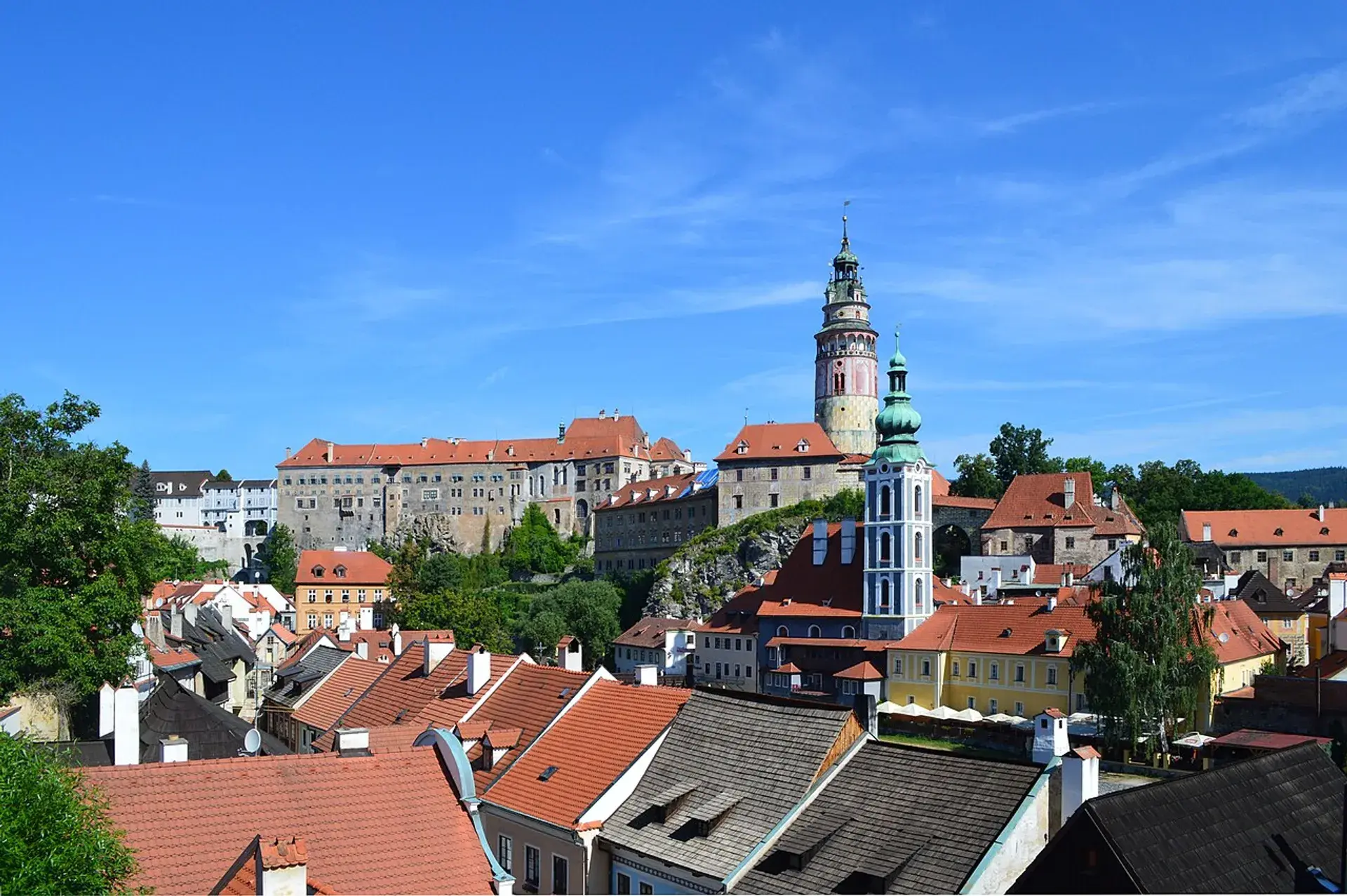
Barber’s Bridge (Lazebnický most) spans the Vltava River in Český Krumlov, forming a direct pedestrian link between the Latrán district beneath the castle and the Inner Town. Set against a dramatic horseshoe bend in the river, the bridge is situated within the town's historic center, which was inscribed as a UNESCO World Heritage site in 1992 for its preserved Gothic, Renaissance, and Baroque architecture.
Today, the wooden promenade is one of the town’s primary gathering points and thoroughfares. Pedestrians cross to take in views of the castle towers, riverside facades, and passing rafts, accompanied by the rumble of wooden planks underfoot and the sound of water flowing over nearby river weirs.
The Origins of the Name and Architecture
The name of the bridge derives from a historical bathhouse (lázeň) and barber shop that once stood directly adjacent to the crossing. In earlier centuries, a town barber also functioned as a local surgeon and dentist.
The layout of the bridge dates back to 1834, constructed with a central support, stone abutments, and a timber deck. Among its defining features are religious monuments, including a cross and a statue of Saint John of Nepomuk.
In early 2024, Barber’s Bridge underwent a comprehensive reconstruction, closing from January until roughly May. Years of exposure had caused fungal rot in the wooden timber deck, while the supporting 1950s steel girders could no longer be safely repaired. During the restoration, the original stone abutments were preserved and the historic statues were reinstalled onto the renewed timber span.
The Legend of Don Julius and the Barber’s Daughter
Barber’s Bridge is intertwined with one of Český Krumlov’s most notorious historical episodes. In 1601, Holy Roman Emperor Rudolf II purchased Český Krumlov Castle from the House of Rosenberg. A few years later, in 1605, he sent his eldest illegitimate son, Don Julius Caesar d'Austria, to reside there. Julius suffered from profound mental instability and bouts of severe violence.
As the story goes, Don Julius became involved in 1607 with Markéta Pichlerová, the daughter of local barber Zikmund Pichler. Legend recounts that during a violent rage inside the castle, Julius attacked and stabbed Markéta before hurling her out of a high window. Miraculously, her fall onto the jagged rocks below was broken by a medieval rubbish heap, a bizarre stroke of luck reminiscent of other famous defenestrations in Bohemian history.
After surviving the drop, Markéta went into hiding. To force her return, Julius imprisoned her father for five weeks. Markéta ultimately relented and returned to the castle. According to contemporary accounts recorded by Rosenberg chronicler Václav Březan, the tragic reunion ended in mid-February 1608 when Julius murdered her in a final fit of violence.
Following the scandal, Emperor Rudolf II refused to protect his son from the consequences of the crime. The emperor ordered Julius to be permanently confined to the castle apartments, where the nobleman died in squalor in June 1609. The connection to the Pichler family ensured that the memory of the barber and his daughter remained etched into the geography of Český Krumlov through the name of the bridge.
FAQ
Why is it called Barber's Bridge?
It is named after a former bathhouse and barber shop that stood nearby, where the town barber practiced grooming along with basic surgery and dentistry.
When was Barber’s Bridge rebuilt?
The bridge underwent a full reconstruction between January and May 2024 to replace rotting timber and damaged 1950s steel girders, while keeping its original stone abutments and statues.
What is the legend associated with Barber's Bridge?
Local lore recounts that Don Julius d'Austria, the illegitimate son of Emperor Rudolf II, resided in the castle and murdered Markéta Pichlerová, the daughter of the local town barber, in 1608.