State Castle & Chateau Český Krumlov: History & Guide
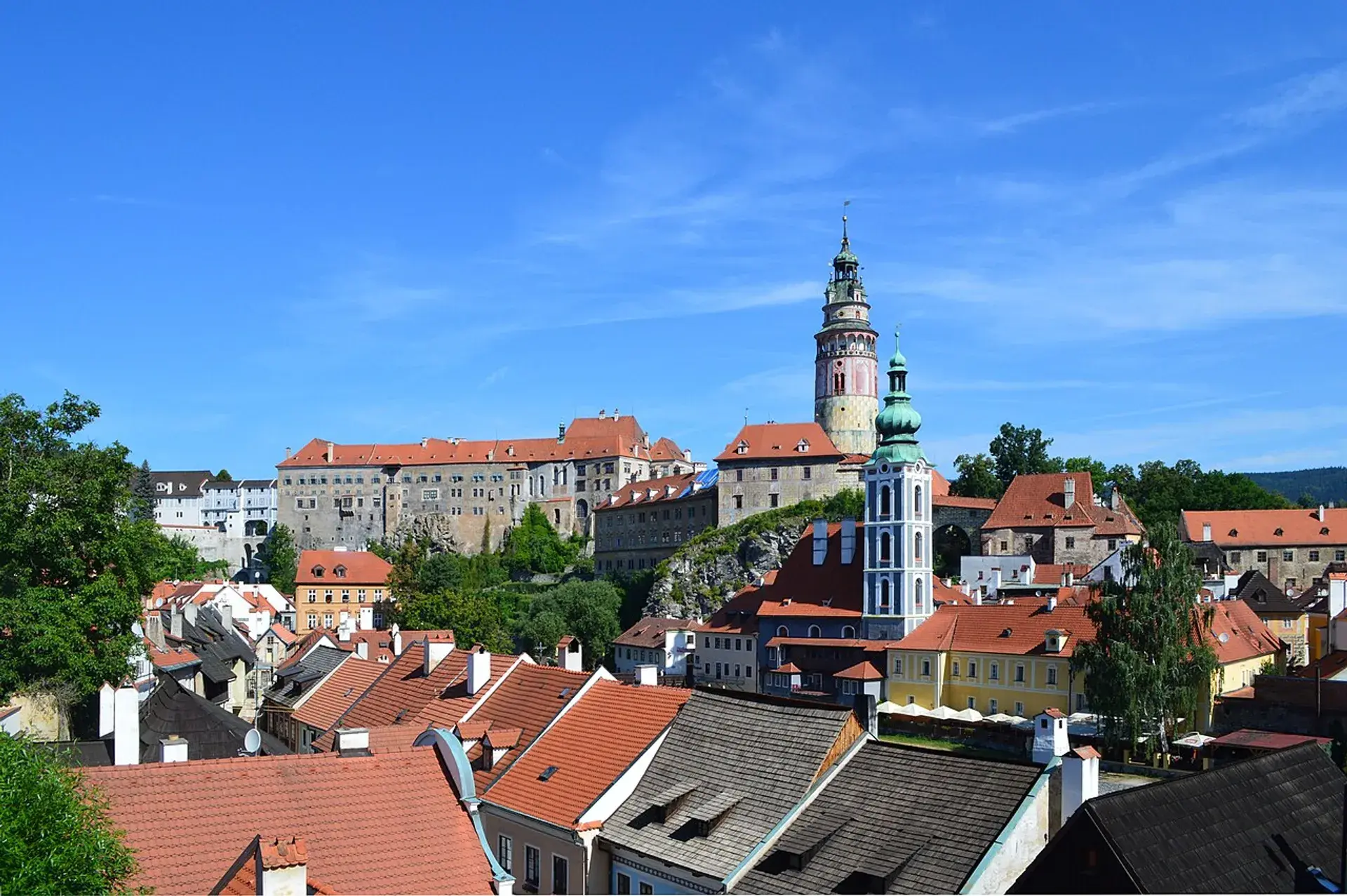
Perched on a rocky promontory overlooking a sharp bend in the Vltava River, the State Castle & Chateau Český Krumlov serves as the defining architectural landmark of the town. Spanning five courtyards, more than forty buildings, and expansive formal gardens, it stands as the second-largest castle complex in Czechia. The entire ensemble gained international recognition in 1992 when it was inscribed as a UNESCO World Heritage site.
History of the Rožmberk Dynastic Seat
The castle was founded prior to 1250 by the Lords of Krumlov, a branch of the noble Vítkovci family. In 1302, ownership passed to the Rožmberk family, who established the complex as their principal administrative seat for more than three centuries. During the late 16th century, Supreme Burgrave Vilém of Rožmberk transformed the medieval Gothic stronghold into a Renaissance residence.
Architect Baldassare Maggi remodeled the fortress's signature tower in 1581, and artist Bartoloměj Beránek-Jelínek added painted frescoes across its exterior in 1590. Financial strain eventually forced the last Rožmberk ruler, Petr Vok, to sell the castle to Emperor Rudolf II in the early 17th century. The estate later transferred to the Eggenberg dynasty (1622–1719) and subsequently to the Schwarzenberg family (1719–1947), both of whom incorporated extensive Baroque and Rococo updates before the property was nationalized.
Layout of the Courtyards and Palaces
The castle grounds form a pedestrian connection between the lower Latrán district and the elevated upper reaches of the complex. Entry to the first courtyard is gained through the Red Gate from Latrán. Historically known as the Rejdiště—a term translating roughly to "animal romping grounds"—this area originally operated as an agricultural corral.
Beyond the first enclosure lies the second courtyard, also designated as the Lower Castle. Higher up, the third and fourth courtyards house the residential palace of the Upper Castle, while the monumental multi-tiered Cloak Bridge (Plášťový most) spans the deep ravine beyond, connecting the palaces to the castle gardens.
The Castle Tower and the Lower Castle
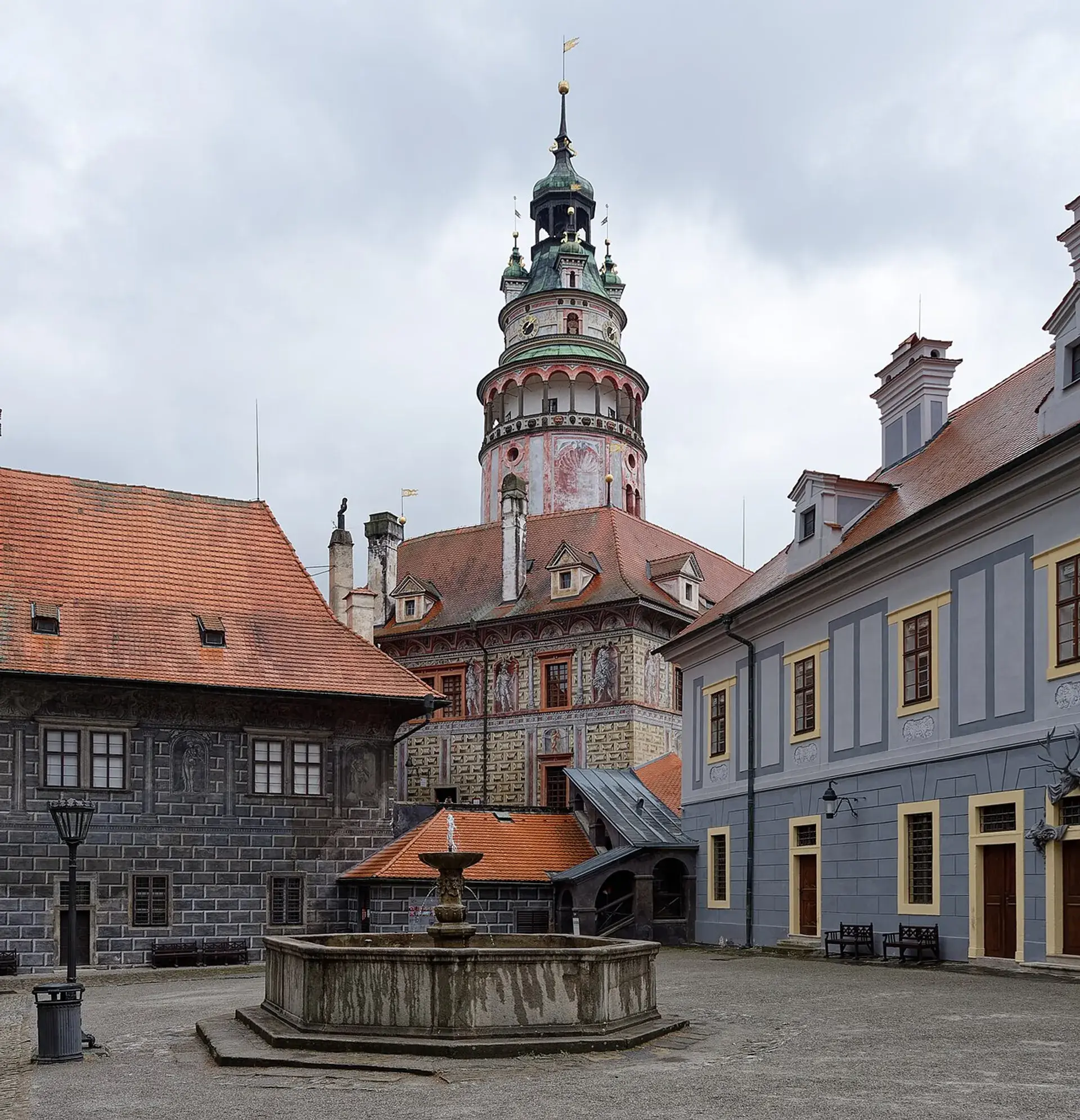
The second courtyard contains several notable administrative and residential structures. Among them is the New Burgrave building, notable for its dusk-grey chiaroscuro facade decoration. The courtyard also houses the Little Castle (Hrádek), the Dairy, and a large four-story structure known as the Mint. Despite its name, the Mint never produced currency and was originally constructed purely for residential use.
The dominant visual feature of the courtyard is the Castle Tower, often celebrated through writer Karel Čapek’s phrase as "the towerest of all towers." Rising from a Gothic foundation topped with a Renaissance copper dome, the structure features a 162-step spiral staircase. The ascent reveals an architectural transition from rough medieval stonework at the base to smooth, painted plaster near the top gallery. Within the tower hangs a functioning medieval bell dating to 1406, and the upper gallery provides 360-degree views of the historic center below.
The Bear Moat
Situated between the first and second courtyards, the defensive moat serves as a dedicated bear habitat. Castle lore connects the presence of bears to Rožmberk claims of ancestral descent from Italy’s Orsini family, referencing the Italian word orso (bear). Bears have been housed continuously in the castle moat since 1707. Today, the moat serves as an official rescue enclosure for European brown bears previously maintained in improper conditions.
Visitor Access and Operations
The castle courtyards, grounds, and viewing areas over the Bear Moat remain accessible year-round without an admission fee. Paid admission is required for designated interiors, including the Castle Tower, the Baroque Theatre, and guided tours of the Upper Castle palace. The central ticket office operates out of the former Mint in the second courtyard.
FAQ
Is an admission ticket required to enter the castle grounds?
Access to the castle courtyards, grounds, and views into the Bear Moat is free and open year-round. Ticketed admission is only required to visit the Castle Tower, the Baroque Theatre, and interior palace tour routes.
Why are bears kept at Český Krumlov Castle?
Bears have been kept in the castle moat between the first and second courtyards since 1707, originating from a tradition linking the Rožmberk family to the Italian Orsini family. The enclosure now operates as a rescue habitat for European brown bears.
What is the historical significance of the Castle Tower?
The Castle Tower blends a medieval Gothic base with a Renaissance copper dome and painted facade added in the late 16th century by Baldassare Maggi and Bartoloměj Beránek-Jelínek. It houses an original bell cast in 1406 and features a 162-step spiral climb to an observation deck.